
A Carjam or MotorWeb report on any used car before signing has a reputation as money well spent, even before a finance application. The $20 it costs typically surfaces odometer rollbacks, finance already recorded against the vehicle, or earlier write-off history. The lender will pull one anyway; knowing first is what usually happens.
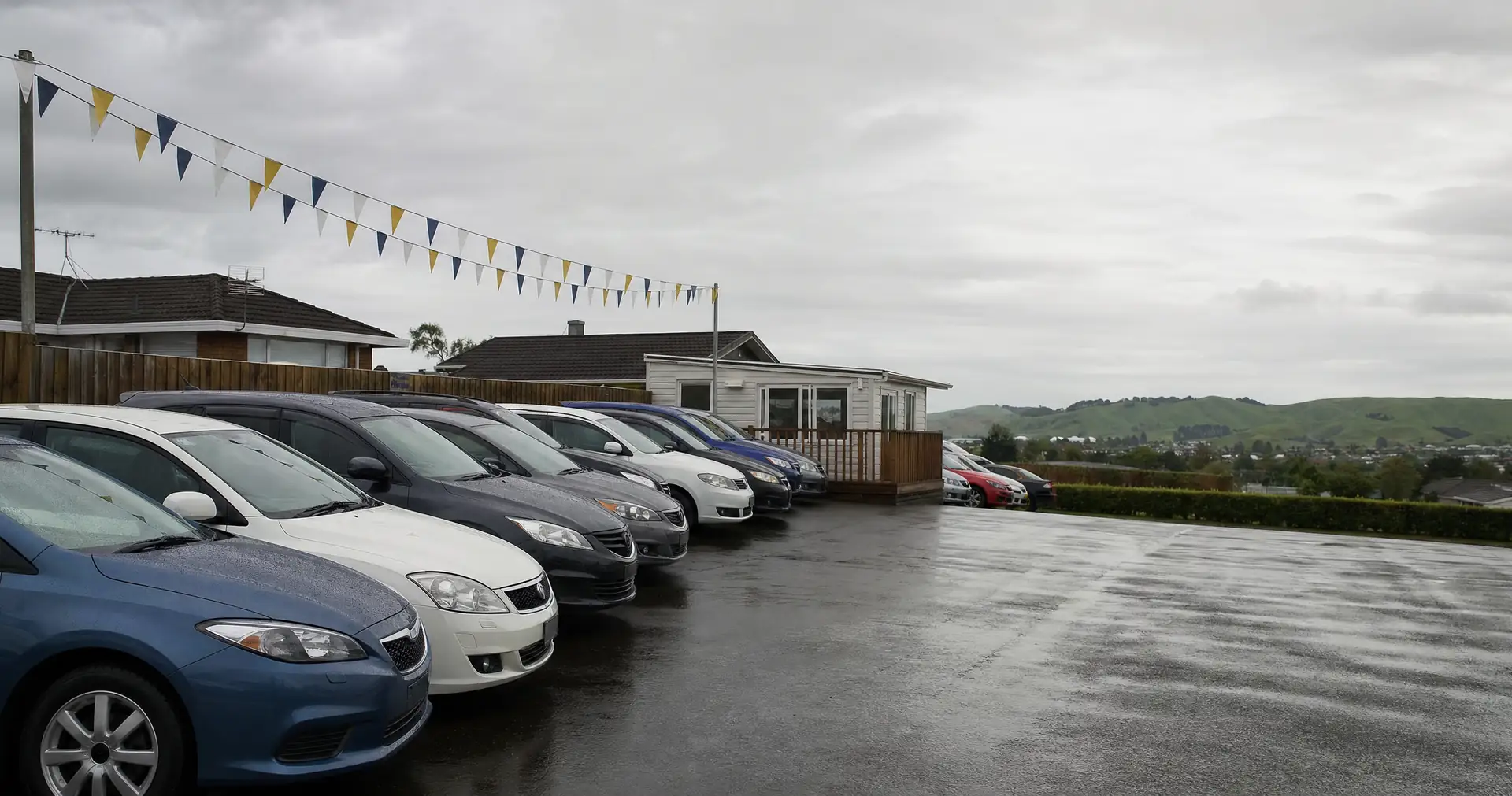
Used car finance.
Financing a pre-owned car in the NZ market.
Your estimated repayment
Weekly
$102/week
$205 /fortnight $444 /month
$18,000
$0
8.50% p.a.
4 years
Apply for a formal estimate
We are not a finance company. Indicative only. Not a quote or offer of credit. Actual rates, fees, and repayments depend on your circumstances and the lender's decision.
Overview
The short version.
A used car loan is any car loan secured against a pre-owned vehicle, which in practice covers the majority of car finance written in New Zealand. The country's fleet skews older than Australia's or most of Europe's (the NZTA-reported average light-vehicle age has sat around 14 to 15 years for some time), and a healthy share of that fleet is financed second-hand rather than as new.
The loan structure mirrors a standard secured car loan, but rate and term are tuned to the specific car: a three-year-old Corolla with 60,000 km finances differently from a ten-year-old Legacy with 180,000 km. Age, odometer, whether the car is NZ-new or a used import, and its mechanical condition all feed into what the lender will write and for how long.
Who this suits
This loan type is built for:
- Buyers in the $12,000 to $25,000 bracket, which is where most mainstream used stock sits in New Zealand and where finance is most competitively priced.
- Second-or-third-car households looking at 3 to 7 year-old stock with some remaining warranty, where finance terms of 4 to 5 years line up reasonably with expected useful life.
- Trade-up buyers moving from a first car into a more capable family vehicle, often rolling a small existing trade-in into the deposit on the next loan.
- Pragmatic buyers who have decided that depreciation on a new car doesn't suit their budget and prefer to let someone else take the first three years' hit.
How it differs
How it differs from a standard car loan.
- Rates reflect the age and mileage of the vehicle. A 3-year-old NZ-new car with full service history often prices close to a new-car rate, while a 10-year-old import with patchy history commonly sits 2 to 3 percentage points higher because the asset-backed risk is different.
- Lenders apply loan-term caps based on vehicle age. Many won't write a loan that matures when the car is older than 15 years, which means an 11-year-old car realistically maxes out at a 4-year term. Some lenders will not lend at all past certain age thresholds.
- Mechanical inspection requirements are more common than most buyers realise. On anything over 5 years old or 100,000 km, several lenders expect an AA or VTNZ pre-purchase report in the file, particularly for private-sale purchases where there's no dealer warranty.
- NZ-new versus used-import matters. NZ-new vehicles come with continuous service history, known specification, and no compliance surprises. Used imports (mostly from Japan) are a known quantity to NZ lenders but can attract slightly different pricing and occasional extra documentation, especially where the odometer or compliance history has any flags.
What you need
What the lender will ask for.
- NZ driver licence, 3 months of bank statements, and 3 months of payslips or equivalent evidence of income.
- The vehicle's details including VIN, registration plate, year, make, model, and current odometer reading so the lender can pull a Carjam or similar report.
- A copy of the sale and purchase agreement (for dealer sales) or the handwritten agreement (for private sales) confirming the price and parties.
- Pre-purchase inspection report for older or higher-mileage vehicles, typically AA, VTNZ, or a comparable NZ-recognised inspection.
- Current WoF and registration confirmation, and evidence that comprehensive insurance will be in place before settlement (usually a loan condition).
Tips from us
How to set yourself up for a good outcome.
Borrowing over a slightly shorter term than the maximum the lender approves is the usual pattern. A 4-year term on a 7-year-old car keeps the position in positive equity throughout; a 6-year term on the same car is almost certainly underwater by year three, which makes selling or refinancing awkward if circumstances change.
Factoring mechanical risk into the budget alongside the loan payment is the common pattern. A 10-year-old car is statistically more likely to need a cambelt, brake job, or suspension work during the loan term, and that cost doesn't disappear because the car is financed. Budgets with headroom for these items are often named as the stronger approach.
Dealer finance and independent finance both have their place. A franchised dealer on a certified used car can sometimes match or beat independent pricing because the manufacturer finance arm is subsidising the deal. On older or private-sale stock, an independent lender comparison (through an independent broker) usually wins on rate.
Common questions
Used car finance FAQ.
Do NZ lenders lend on older cars, or is there an age cap?
Most lenders will finance cars up to around 10 to 12 years old at the point of application, and cap the loan term so the car is no older than 15 years at the end of the loan. A few specialist lenders go older, but rates step up and terms get shorter. Beyond about 15 years, financing becomes materially harder.
Why does the interest rate depend on the age and mileage of the car?
Because the lender's security is the vehicle itself. A newer, lower-kilometre car holds value more predictably, giving the lender a more stable asset to recover value from if things go wrong. Older or higher-mileage cars are more volatile in resale value, so the rate reflects that additional asset-side risk.
Is it harder to finance a used import than an NZ-new car?
Not dramatically, because Japanese imports are a known part of the NZ used market and lenders are comfortable with them. You may see slightly tighter documentation on compliance history and odometer verification, and rates can sit a little higher where the vehicle age or import date is ambiguous, but approvals are routine for clean stock.
Do I need a mechanical inspection before the lender will approve a used car loan?
It depends on the age, mileage, and sale type. For private sales on older or higher-kilometre cars, many lenders expect an AA, VTNZ, or equivalent pre-purchase inspection in the file. For franchised-dealer sales on certified used stock under warranty, a separate inspection is often not required because the dealer provides equivalent assurance.
What deposit should I plan on for a used car loan?
A deposit of 10 to 20% of the purchase price meaningfully improves both approval odds and the indicative rate, from what we see. On a $20,000 car, that is $2,000 to $4,000. Zero-deposit used-car finance exists but typically sits at the higher end of the rate range, and the balance is usually in negative equity from day one, which is painful if an early sale becomes necessary.
Should I finance through the dealer or through an independent lender?
Both paths have their place. Franchised dealers on certified used stock sometimes have subsidised finance that's hard to beat. Independent brokers and comparison services commonly win on older stock, private sales, and cases where you want to shop the rate across multiple lenders rather than take the single number the dealer offers.
You might also want
Keep exploring
Last reviewed: 23 April 2026
Ready to apply for car finance?
Our finance partner compares multiple NZ lenders, so one application is checked against a spread of them rather than a single book.