Skip to content
Carfinance.org.nz
Genesis car finance calculator
Genesis logo Premium brand

Genesis finance calculator

Published 23 April 2026 · Last reviewed 17 July 2026 · Disclaimer

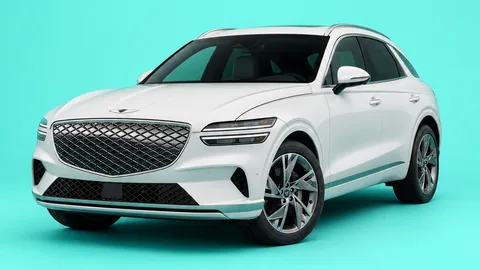
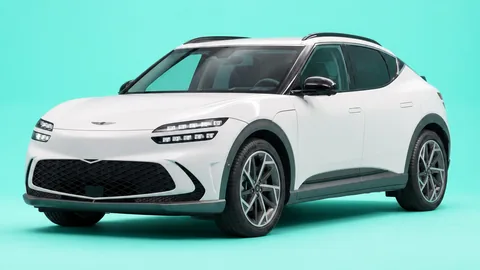
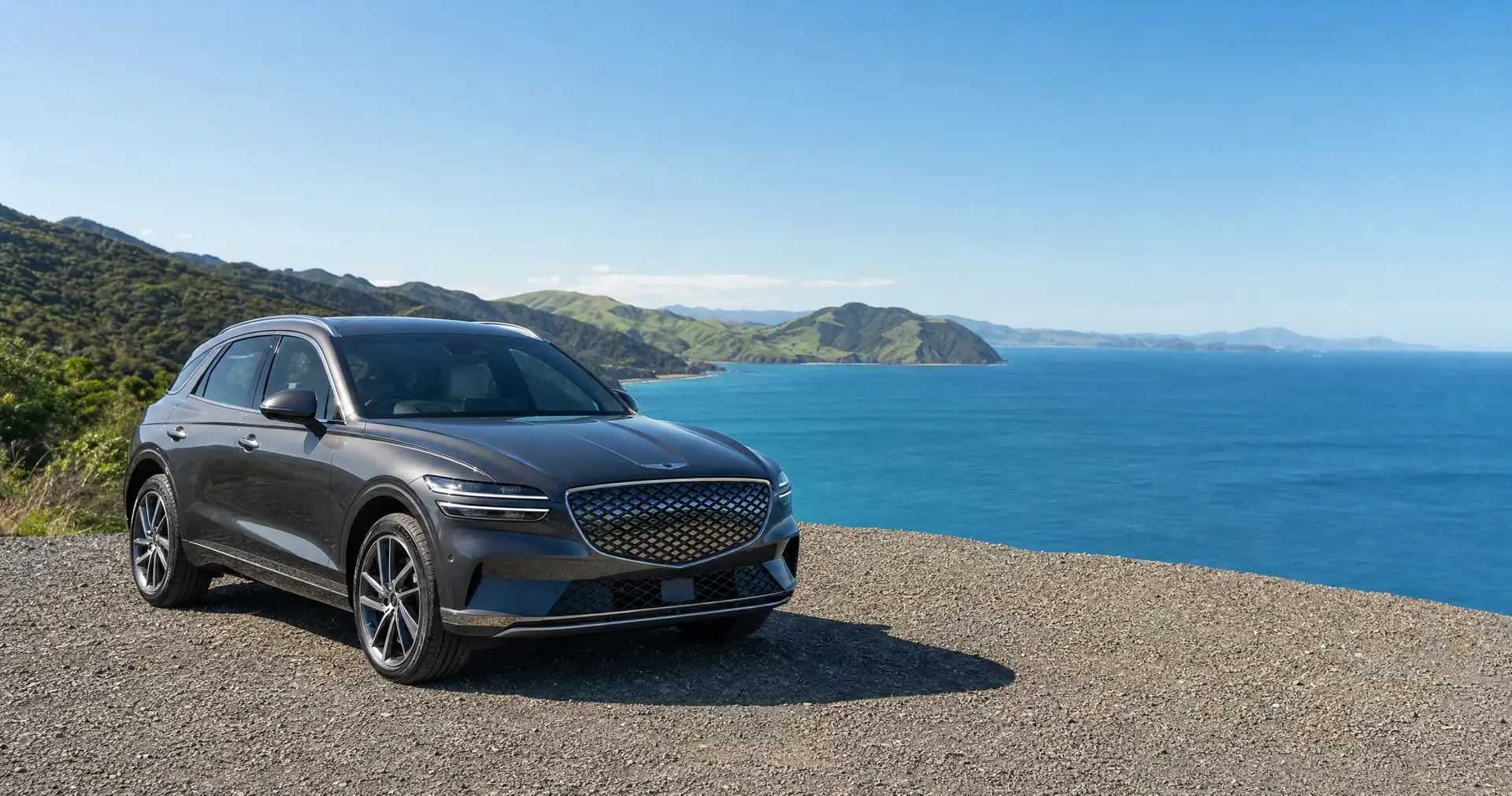
Genesis is Hyundai's premium arm, present in the New Zealand used market primarily as imports rather than through official NZ-new distribution. The NZ-available lineup includes the GV70 and GV80 SUVs, the G70 compact executive sedan, and the Electrified GV70 and GV60 EVs (Carjam). Because most NZ Genesis stock consists of used imports, finance applications typically target import stock rather than dealer-supplied new vehicles. Loan sizes typically run from about $40,000 on a used G70 through to around $120,000 on a used GV80.

Your estimated repayment

Weekly

Disclaimer

$329/week

$658 /fortnight $1,426 /month
$72,000
$0
7.00% p.a.
5 years
Apply for a formal estimate

We are not a finance company. Indicative only. Not a quote or offer of credit. Actual rates, fees, and repayments depend on your circumstances and the lender's decision.

Genesis GV70 finance Genesis car finance calculator Not a lender. Not a broker.

How financing a Genesis usually goes

  1. The week, on a badge still building recognition

    The calculator above is free and asks for nothing. Genesis is young in New Zealand and its used pool is thin, so most buyers are comparing new stock, where the term does the heavy lifting on the weekly figure.

  2. A formal application, once that number suits

    A car finance provider takes it from there and comes back with real terms. The credit decision stays with them.

Calculate repayments

Indicative only. Not a quote or offer of credit.

Why this brand finances well

What lenders look for in a Genesis.

  • Warranty coverage on Genesis imports is typically not officially documented in New Zealand; confirm any claimed coverage with the seller or importer. Used-import Genesis stock sits outside dealer servicing packages, so finance structures are relatively straightforward and lender approval turns on vehicle condition and price rather than on manufacturer warranty tier.
  • Because most NZ Genesis stock consists of used imports rather than new dealer sales, the residual-value picture is determined more by global used-market trends than by NZ-specific factors. Lenders typically assess Genesis imports on their mechanical condition and market comparables rather than on manufacturer backing.
  • Electrified GV70 and GV60 EVs may qualify for some NZ lenders' EV loan tier where the vehicle is documented as low-mileage or near-new, though EV tier availability on imported Genesis electric models varies by lender. Where available, EV tier typically sits 0.5 to 1.5 percentage points below standard used-car rates.
  • Shared Hyundai Motor Group platforms and drivetrains give lenders cross-reference data. The GV70 shares its longitudinal rear-wheel-drive platform with the G70, GV80, and Kia Stinger (not the transverse Santa Fe platform; only the 2.5T petrol engine is shared with Santa Fe and Sonata N Line). The GV60 sits on the E-GMP platform with Ioniq 5 and Kia EV6.
  • Used-import Genesis pricing is driven by global market availability and direct-import dealer margins, rather than manufacturer incentives or captive-finance subvention. A broker or direct-import dealer can typically offer transparent pricing on available stock.

Buyer notes

Where to get the best Genesis rate.

Genesis imports are typically sourced through direct importers or used-car dealers rather than official Studio channels. A broker quote on the specific G70, GV70, GV80, or GV60 you're considering, comparing the vehicle's import provenance and any claimed warranty coverage. On an Electrified GV70 or GV60 import, confirm with the lender whether the vehicle qualifies for EV loan tier on used-import terms, because tier eligibility depends on documentation of the vehicle's condition and mileage rather than manufacturer backing.

Apply for a Genesis loan

No sign-up on our site. Our finance partner compares NZ lenders and returns a formal estimate after the lender's credit assessment.

New vs used

Financing a new Genesis vs a used one.

Genesis stock in New Zealand is almost entirely used imports rather than new dealer sales. The finance conversation splits less between ages and more between ICE and Electrified variants, and between early-import and more-recent models. Import availability and pricing vary substantially depending on current global market conditions and direct-importer stock levels.

Path 1

Used Genesis (direct-import stock)

Broker first; compare import sources and warranty claims

  • Genesis imports in NZ come from direct importers, used-car dealers, or private-sale channels, not from an official brand distributor.
  • Broker finance on Genesis imports typically comes from mainstream NZ lenders assessing the vehicle on its condition, mileage, and import documentation.
  • Electrified GV70 and GV60 imports may qualify for EV loan tier where documentation supports low mileage and recent manufacture, though tier eligibility is lender-specific.
  • Import pricing and availability fluctuate based on global used-market conditions and direct-importer stock levels, so the finance cost itself is the main lever after finding the vehicle.

Verdict

A broker quote on the specific used G70, GV70, GV80, or GV60 once you have identified available import stock. Broker rates on Genesis imports are typically competitive because there's no captive-finance arm backing the nameplate in NZ. Confirm any claimed factory warranty or service history directly with the importer before finalising the loan.

Path 2

Used Genesis (private-sale or older stock)

Older imports may have thinner documentation

  • Older or private-sale Genesis imports may carry limited or no factory-warranty documentation, shifting the risk assessment onto vehicle condition and mileage.
  • Lender residual-value data on Genesis imports is thinner than on established premium brands because these vehicles are sourced globally rather than as local cohorts.
  • A pre-purchase inspection (VTNZ, AA, or franchised dealer) is more critical on Genesis imports than on new-car sales because warranty claims are harder to enforce.
  • Broker rates on older Genesis imports reflect the lender's assessment of the vehicle's condition and documentation, rather than manufacturer backing.

Verdict

For older used Genesis stock (pre-2018 models) or private-sale purchases, a broker quote is essential because lender criteria tighten on vehicles with limited import documentation or service history. Pre-purchase inspection is more critical when manufacturer warranty coverage isn't documented.

Rule of thumb

Genesis imports in NZ are a broker-first scenario because there's no captive-finance arm and warranty documentation is typically unverified. On Genesis imports, the bigger constraint is import-stock availability and confirmed warranty coverage rather than finance pricing.

Total cost of ownership

What a Genesis really costs beyond the finance line.

Genesis running costs in New Zealand depend heavily on the vehicle's age and import status. Older imports may lack documented factory servicing, so independent servicing becomes a live cost, and any claimed service history is confirmed with the importer rather than assumed. Insurance and tyres remain the significant monthly variables across the range.

  • Servicing and consumables

    Genesis imports in NZ typically require independent servicing because factory-backed servicing isn't documented. Costs run $150 to $280 per month on GV70 and GV80 ICE models. Electrified GV70 and GV60 run lower because EV servicing is lighter. Any claimed service history is commonly confirmed with the importer at purchase, and older imports may have limited records.

    $150 to $280 per month (independent or dealer)
  • Insurance (full cover)

    G70 around $1,500 to $2,000. GV70 mid-range at $1,700 to $2,400. GV80 flagship $2,200 to $2,900. Electrified GV70 and GV60 sit at the top of their ICE-equivalent band because higher value and more complex repair cost.

    $1,500 to $2,900 per year
  • Home charging (Electrified models)

    Based on 12,000 to 15,000 km a year on a typical NZ off-peak plan. GV60 RWD at the lower end (smaller battery, efficient). Electrified GV70 and GV60 Performance at the top of the band because higher weight and performance use cases.

    $500 to $1,100 per year
  • Road User Charges

    Applies to Electrified GV70 and GV60 EVs since April 2024. At 14,000 km a year that's approximately $1,064 in RUC alone, plus home-charging electricity. ICE Genesis models (G70, GV70, GV80 petrol) don't attract RUC. No diesel variant in the current NZ Genesis lineup.

    $76 per 1,000 km (EV), not applicable (ICE)
  • Tyres

    G70 on 18 to 19-inch $1,400 to $1,800. GV70 on 19 to 20-inch $1,600 to $2,200. GV80 and GV60 Performance on 20 to 22-inch $2,100 to $2,700. Premium tyre sizing pushes figures above mainstream SUV equivalents.

    $1,400 to $2,700 per set
  • Fuel (ICE and non-Electrified models)

    Based on 13,000 to 15,000 km a year at NZ pump prices. G70 petrol at the low end. GV70 petrol mid-range. GV80 V6 petrol at the top of the band.

    $2,000 to $3,800 per year

Worth knowing

GV70 petrol vs Lexus NX350h at the same finance weekly

A $90,000 used GV70 petrol import and a $90,000 used NX350h sit at a similar weekly repayment, but the running costs differ. An imported GV70 carries no local factory servicing package, so independent servicing runs indicatively $900 to $1,500 a year, while the NX350h is typically dealer-serviced through an established local network. Fuel spend sits higher on the petrol GV70 because the NX350h is hybrid; insurance is close on a like-for-like sum insured.

Resale and equity

How Genesis resale shapes your finance decision.

50 to 60%

value retained, 3-year-old GV70

45 to 55%

value retained, 3-year-old G70

45 to 52%

premium-brand market average (German)

Genesis residuals in New Zealand are determined by global used-market trends rather than by local NZ-specific factors, because these are imports not domestic cohorts. Early Genesis imports (2015-2018 models) show residuals broadly in line with German-premium equivalents at the same age in the global used market, though NZ availability is thin. Electrified GV70 and GV60 import residual data is even thinner because these models only recently appeared on NZ import channels.

For finance this means the practical term choice should account for the vehicle's import status and documented service history. A four to five year term is a sensible fit on most Genesis imports because it aligns with the point at which older imports show higher maintenance risk and resale becomes harder. Six or seven year terms on Genesis imports carry more residual uncertainty than on established premium brands because NZ import data is still being written and the outcome at trade-in is less predictable.

On Genesis imports, a four to five year term balances the vehicle's likely maintenance trajectory against residual risk. Longer terms carry more uncertainty than on established premium brands because NZ import data is limited and warranty coverage is typically not documented. Confirm the import's service history and any claimed warranty coverage before setting the loan term.

Things to avoid

Genesis finance traps we flag honestly.

An opinionated list. The commercial side of this site has no incentive to tell you these things, so we do.

Assuming factory warranty on an import when warranty is not documented

Many Genesis imports are sold with minimal or no documented factory warranty in New Zealand. Sellers may claim coverage that cannot be verified by the lender or by you later. Always confirm warranty status with the importer in writing before signing and budget for independent servicing throughout the loan term.

Overpaying for an import based on unverified service history

Older Genesis imports may carry service records from overseas that are hard to verify locally. Lenders discount the value of unverifiable maintenance history, which can lower their residual estimate and raise your rate. Request a pre-purchase inspection to confirm mechanical condition rather than relying on claimed service records.

Betting on EV loan tier on an Electrified import without confirming lender eligibility first

Electrified GV70 and GV60 imports may qualify for EV tier on some lenders' books, but tier eligibility depends on the vehicle's age, mileage, and documentation. Assuming EV tier at 0.5 to 1.5 percentage points lower and then finding the lender applies standard rate costs $700 to $2,000 in unexpected interest over five years. Confirm tier eligibility before committing to the purchase.

Seven-year terms on a Genesis import with thin residual data

Genesis imports in NZ have limited residual history compared to established premium brands. A seven-year term pushes you past the point where lender data becomes predictive, raising refinance risk at trade-in. A four or five year term aligns better with the import's typical maintenance trajectory and reduces residual uncertainty.

Drivetrain economics

Hybrid vs petrol vs EV on a Genesis.

Genesis imports in New Zealand span turbo-petrol ICE (G70, GV70, GV80) and full battery-electric (Electrified GV70, GV60) variants. There is no diesel variant in the NZ Genesis lineup and no conventional or plug-in hybrid currently imported. The drivetrain choice is effectively petrol versus electric.

Petrol (G70, GV70, GV80 turbo-petrol variants)

Standard secured rate, no RUC, Hyundai Motor Group drivetrains

  • Turbo-petrol 2.0T and 2.5T drivetrains are shared within the Hyundai Motor Group (2.5T appears in Sonata N Line and Santa Fe). The Genesis 3.5T Lambda twin-turbo V6 is shared within the Genesis range (G80, GV80, G90), not with other Hyundai models.
  • Financed at the standard secured used-car rate; no drivetrain premium or discount applies.
  • No Road User Charges; fuel is the only per-kilometre variable cost.
  • Independent servicing on imports typically costs $150 to $280 per month; budget accordingly rather than assuming factory-backed maintenance.

Electric (GV60, Electrified GV70)

EV loan tier may apply to low-mileage imports, subject to RUC

  • Some NZ lenders apply their EV loan tier to low-mileage Electrified Genesis imports, typically 0.5 to 1.5 percentage points below the equivalent petrol rate, though tier availability depends on vehicle documentation and lender criteria.
  • E-GMP platform shared with Hyundai Ioniq 5 and Kia EV6, so lenders can reference cross-brand reliability data for confidence.
  • Road User Charges of $76 per 1,000 km apply since April 2024 on all driving, not only on electric kilometres.
  • Factory warranty on imports is typically not documented in New Zealand; confirm any claimed coverage before signing and budget for independent servicing.

Break-even heuristic

Practical rule on Genesis drivetrains in New Zealand: if annual distance is above 12,000 km with home charging available, an Electrified GV70 or GV60 import may undercut the petrol equivalent on total five-year cost, though the calculation depends heavily on import purchase price and whether the vehicle qualifies for EV loan tier. Under 10,000 km a year, the petrol GV70 is typically the simpler choice because the EV cost advantage shrinks once RUC and initial-purchase premium are accounted for.

Case study

Worked example: financing a 2020 Genesis GV70 2.5T import

The buyer

Auckland-based professional, age 38, clean credit, $130,000 salary plus $45,000 partner income, replacing a 2015 used Toyota RAV4 petrol that had reached 140,000 km. Looking for a step up in interior quality and drivetrains while staying within a $100,000 total vehicle budget.

The scenario

Sourcing a 2020 Genesis GV70 2.5T AWD through an Auckland-based direct importer for $92,000. No claimed factory warranty on the import; the importer provides a 1-year mechanical warranty on engine and gearbox only. Trade-in value on the 2015 RAV4: $18,000. No extended warranty or servicing packages rolled in because the import carries no factory coverage.

The outcome

Monthly household cash-flow impact is roughly $1,285 before running costs.

Insurance on the 2020 import runs around $1,600 to $1,900 per year (higher than the RAV4 due to the higher vehicle value and premium-brand repair costs), representing a meaningful step-up from the RAV4's $950 a year.

Fuel spend is similar to the RAV4 because the 2.5T Genesis delivers comparable consumption; however, the buyer should budget for independent servicing at $150 to $200 per month once the importer's 1-year warranty window closes.

The importer's 1-year mechanical warranty covers engine and gearbox faults but does not extend to suspension, electrical, or interior components. The buyer plans to arrange a full pre-purchase inspection (VTNZ, $450) before finalising the purchase to surface any hidden defects outside the warranty scope.

At year 5 the 2020 GV70 2.5T is expected to be worth approximately $45,000 to $55,000 based on typical global used-market depreciation curves for the era, though the actual outcome depends heavily on local import availability and condition at that time. Earlier trade-in (year 3 or 4) is considered more prudent than pushing to year 6 or 7, given the limited NZ residual history and the vehicle's import status.

Illustrative example. Not a promise of approval or rate. Your circumstances and the lender's own credit decision will determine your actual outcome.

Affordability check

What does a car loan cost against an income?

This one works backwards. It takes an income, assumes tax and ACC take about 28% of it, and shows the loan sizes that land at 10% and 15% of what is left, over 5 years at 7%. Those are this page's assumptions, not a lender's rules.

Not an affordability assessment. A lender's decision takes in your other debts, your actual expenses, and your credit history, none of which this knows about. Plenty of loans get written either side of these numbers.

$70,000
$20k $250k

At 10% of take-home

$30,000

At ~$135/week

At 15% of take-home

$45,000

Leaves less room for everything else

Indicative only. Not a quote or offer of credit.

Apply this to the calculator

Common questions

Genesis finance FAQ.

Can I finance a Genesis import in New Zealand if warranty is not documented?

Yes. Most Genesis vehicles on the NZ used market are imports without documented factory warranty in New Zealand. Lenders finance these vehicles based on their condition, mileage, and market comparables rather than on manufacturer backing. Any claimed warranty coverage is commonly confirmed with the importer in writing before signing, and independent servicing is widely budgeted for throughout the loan term.

Does the Electrified GV70 or GV60 qualify for EV-specific finance rates in NZ if it's an import?

Possibly, depending on the vehicle's age, mileage, and documentation. Some NZ lenders apply their dedicated EV loan tier to low-mileage Electrified Genesis imports, typically 0.5 to 1.5 percentage points below the equivalent petrol rate. EV tier eligibility is commonly confirmed with the broker before committing to the purchase, because tier eligibility isn't automatic on used imports and depends on the lender's assessment.

What warranty can I expect on a Genesis import bought from an NZ dealer or importer?

Factory warranty on Genesis imports isn't officially documented in New Zealand. Some importers offer limited mechanical warranties (typically 1 year on engine and gearbox). Factory coverage from Hyundai doesn't transfer to used imports in NZ. Always obtain any claimed warranty in writing from the seller before purchase and request a pre-purchase inspection to confirm the vehicle's mechanical condition independently.

How much deposit is typical when financing a Genesis import in New Zealand?

15 to 25% is the common range on Genesis imports. On a $90,000 GV70 import that's $13,500 to $22,500. Higher-value GV80 purchases often see lenders suggest 20 to 30% deposit because the absolute loan size matters on affordability assessments. A larger deposit typically trims 0.5 to 1 percentage point off the offered rate.

Can I finance a Genesis import in New Zealand with no manufacturer warranty in place?

Yes. Most Genesis imports in NZ carry no official factory warranty, and lenders finance these vehicles on standard used-car terms based on mechanical condition and price. Some lenders may request a pre-purchase inspection report to confirm the vehicle's condition independently. Buyers commonly arrange a VTNZ or AA pre-purchase inspection ($400 to $500) before finalising the purchase to surface potential defects outside the seller's limited warranty scope (typically 1 year on engine and gearbox only).

How does Genesis import finance compare to Lexus or BMW import finance in New Zealand?

Rates are structurally similar because all three brands source used imports in NZ without official manufacturer backing. The key difference is that Lexus and BMW have deeper import availability and clearer residual trends on the NZ used market, so lenders can price these imports with more confidence. Genesis imports are thinner, so rates may carry a small premium (0.5 to 1.5 percentage points) to reflect higher residual uncertainty. Warranty status is commonly confirmed with the importer for all three brands before signing.

What happens to my Genesis import finance if I trade the car in halfway through the loan?

If trade-in value exceeds the outstanding balance, the surplus goes toward the next purchase. If balance is higher (negative equity), the shortfall rolls into your new loan. Because Genesis import residual data is limited, negative equity risk on a five-year term is modestly higher than on established premium brands, which is why a four year term with a reasonable deposit (20% or more) is the typical structure for imports.

Can I finance a Genesis older than 10 years in New Zealand?

Lenders generally cap vehicle age at 12 to 15 years at the end of the loan term. Most Genesis models available for import into NZ are post-2010 manufacture, so age limits are not a primary constraint. The bigger constraint is finding older Genesis imports with documented service history and no accident damage. A pre-purchase inspection on any Genesis older than 5 years is what confirms mechanical condition independently.

Does it matter whether my Genesis import comes from Korea, Australia, or another market?

Yes. Genesis models are manufactured in Korea for global sale, so most NZ imports come from Korea, Japan, or Australia. Lenders assess imports based on documented service history and mechanical condition rather than country of origin. Confirm the import's service records and any claimed factory warranty with the importer in writing; Australian imports may carry some documentation that Korean imports lack. Request a pre-purchase inspection to verify condition independently regardless of origin.

How should I compare an imported Genesis against a new Lexus or BMW from an NZ dealer on finance?

New dealer stock from Lexus or BMW comes with documented factory warranty and roadside assistance, which lenders factor into the residual estimate and which reduces your risk. Genesis imports come without factory backing in NZ, so you pay lower absolute interest on a lower purchase price, but you carry higher risk of unexpected repair costs mid-loan. Calculate the five-year total cost (purchase + interest + servicing + insurance) for both scenarios before deciding. A pre-purchase inspection on the import is mandatory.

Can I roll an existing car loan into a Genesis import loan?

Most NZ lenders will let you, though the affordability check tightens on higher-value premium applications. Where $12,000 is owed on the current car and a $90,000 GV70 import is being bought, the new loan becomes around $102,000 less any deposit or trade. Keeping rolled-in negative equity under 15% of the new Genesis's value is widely preferred; beyond that, clearing the old loan through private sale first is usually cleaner, particularly on premium SUVs where the absolute loan size already sits at the upper end.

What is the typical total cost of ownership for a financed Genesis import GV70 over 5 years?

For a $90,000 used GV70 2.5T import on a five-year loan at 8.2%, finance totals approximately $104,000 (principal plus interest). Add insurance ($8,000 to $10,000), tyres across one or two changes ($2,500 to $4,000), servicing ($9,000 to $12,000 at $150-200 per month), and fuel ($12,000 to $15,000 at 15,000 km a year) for a rough all-in of $135,500 to $155,000 over five years. Because there's no official Genesis new-car channel in New Zealand, imports carry no factory-backed servicing package, so independent servicing costs are a major line item.

About this article
Published
23 April 2026
Last reviewed
17 July 2026

Methodology

All repayment figures on this page are calculated live from the inputs entered into the calculator using the standard amortised-loan formula. Indicative rates reflect publicly-advertised NZ secured-car and EV-tier pricing across mainstream lenders in the twelve months preceding the last review date. Genesis import prices are observed from recent TradeMe, Tradingpost, and direct-importer listings at review date. Warranty coverage on Genesis imports is not officially documented in New Zealand, so any claimed coverage is confirmed with the importer rather than assumed. Running-cost figures draw from AA New Zealand, Consumer NZ, and EECA Gen Less public guidance for premium-SUV servicing bands. Because Genesis imports in NZ are sourced from global markets, residual-value data is thinner than on established premium brands. We review annually or sooner if import availability, lender policy, or Road User Charge rules change.

Sources

Apply for Genesis finance.

Our finance partner compares NZ lenders and returns a formal estimate after the lender's credit assessment. Calculator inputs travel through to the application so nothing gets re-typed.

Disclaimer

A car loan runs for years, and the repayment comes out of the same pay that covers everything else. This site exists to show you that weekly number before you sign anything. The payment that catches people out is the one that's fine on a good week and tight on a bad one.

Carfinance.org.nz receives a commission from Simplify when a visitor applies through this site and their application is approved. We refer every visitor to the same partner because they compare multiple New Zealand lenders on the applicant's behalf, so the referral is not driven by a sponsored deal. Simplify sets its own terms and fees and discloses them directly; anything you agree to happens on their side, not ours. Every figure shown on this site is a modelled estimate based on the inputs entered; the actual rate, fees, and repayments are set by the lender after assessing the applicant's circumstances and its own credit decision. Carfinance.org.nz is a calculator and information tool. We are not a lender, not a broker, and not a registered financial adviser. Any decision about whether a specific loan suits a specific situation is best made after talking with the lender, and for amounts that materially affect the household, with a registered financial adviser.