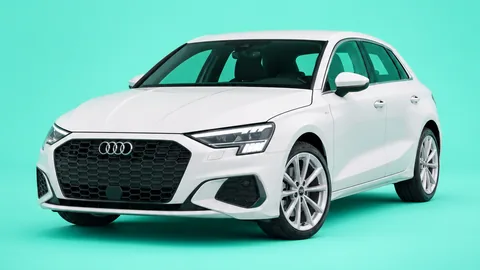
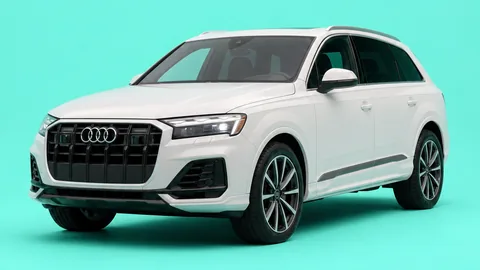
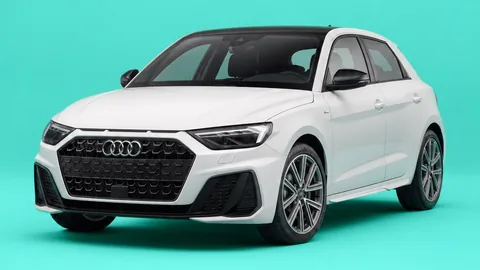
On a new Audi with an active Financial Services campaign, the captive often wins cleanly because Audi NZ subsidises the rate on selected stock. On a used Audi, an independent broker almost always beats dealer-yard finance markups, typically by 1 to 2 percentage points, because the referred lender builds commission into its rate. Owners commonly get both quotes on the same car before signing.
The Audi Future Value Guarantee (AFVG) is a balloon-structured product offered on new Audi. It keeps the weekly low by deferring 35 to 45% of purchase price as a residual due at year 3 or 4, at which point you pay out, hand the car back, or refinance. It works cleanly when you intend to replace the Audi at term end. It works poorly when refinance rates have moved against you or you decide to keep the car beyond the original term.
Not directly, but indirectly through residual value. Quattro variants typically hold resale firmer than front-wheel-drive equivalents on the Q3, Q5, and A4 because demand in rural and ski-region markets (Otago, Central North Island, Wanaka) broadens you pool. Stronger residuals give lenders confidence for sharper loan-to-value ratios, which can marginally improve the rate.
15 to 25% is the common range on a premium brand like Audi, higher than the 10 to 20% typical on mainstream brands. On a $65,000 Q5 that's $9,750 to $16,250. A larger deposit keeps the loan-to-value ratio within the lender's preferred premium-car range and typically improves the offered rate by 0.5 to 1.5 percentage points.
Most NZ premium-car lenders cap the vehicle age at 12 to 15 years at loan-end date, so a 10-year-old A4 is fine for a 3-year term but often falls outside a 5-year term. The A4 and Q5 are still widely accepted at that age because parts supply and service network coverage are strong. Older A6, A7, Q7, and Q8 variants can face tighter underwriting due to the repair-cost risk profile.
Most mainstream NZ secured-car lenders apply their EV loan tier to NZ-new Q4 e-tron, Q6 e-tron, and e-tron GT, typically 0.5 to 1.5 percentage points below the standard premium secured-car rate. TFSI e plug-in hybrid variants sometimes qualify for a narrower PHEV or efficient-vehicle tier depending on the lender. Confirm tier eligibility when the broker quotes because it varies across the lender panel.
Indirectly, yes. Audi NZ offers a 5-year or 150,000 km new-vehicle warranty (whichever comes first) on current NZ-new cars (the Audi NZ site lists the terms for specific vehicles). An Audi still under factory warranty is a lower residual-value risk for the lender, which typically supports sharper pricing and reduces the need for add-on MBI. An out-of-warranty Q7 or RS variant often sees a slightly higher rate and a stronger case for separate MBI coverage.
If your trade-in is worth more than the balance still owing, the dealer pays out the old loan and any the surplus comes off your next car. If the trade-in value is below the outstanding balance (negative equity), the shortfall rolls into the next loan. A4 sedans can slide into negative equity on a 7-year loan because resale softens faster than on a Q5 or Q7, so keeping the term to 4 or 5 years matters more on the sedan line than on the SUV line.
EOFY campaigns through Audi Financial Services are genuine subvented rates on stock Audi NZ wants to clear, not marketing framing. Read the terms carefully: they typically require a 20 to 30% deposit, a 3-year term, and drive-away pricing that's not negotiable below RRP. The sharper rate often justifies the structure, but benchmark against a broker quote on a comparable used or nearly-new Audi before committing.
The three German premium brands sit within a narrow running-cost band in New Zealand. Audi typically runs slightly below Mercedes-Benz on insurance on equivalent variants and broadly comparable with BMW on servicing and tyres. Quattro AWD variants add a small tyre-wear overhead over front-wheel-drive equivalents. Drivetrain choice (petrol versus diesel versus PHEV) is a materially bigger cost lever than the badge difference between the three brands.
Yes, if the Audi is genuinely used for business and the business is GST-registered, the GST on the purchase price is claimable under a chattel mortgage structure, typically $8,000 to $12,000 on a Q5. Inland Revenue fringe-benefit tax rules apply where the Audi is also available for private use, and FBT calculations materially affect the overall structure cost. Structure choice is an accountant question rather than a lender one.
For a $65,000 used Q5 on a 5-year loan at an indicative 8%, finance costs total about $79,000 (principal plus interest). Add insurance (around $13,500), servicing and consumables (around $12,500), tyres (around $3,500), fuel or diesel plus RUC (around $18,000 at 15,000 km a year), for a rough all-in of $127,000 over 5 years. These figures are indicative and depend on drivetrain, distance driven, and claims history.