
2008-2012 used (E90)
$12,000Cheapest entry point, mostly JDM imports. Typical 150,000+ km. Specialist pre-purchase inspection commonly rated as essential on this generation.
Weekly
$54.83
Monthly
$237.61
The benchmark executive sedan and the volume used-BMW finance application in New Zealand.
Last reviewed: 24 April 2026
Your estimated repayment
Weekly
$137/week
We are not a finance company. Indicative only. Not a quote or offer of credit. Actual rates, fees, and repayments depend on your circumstances and the lender's decision.
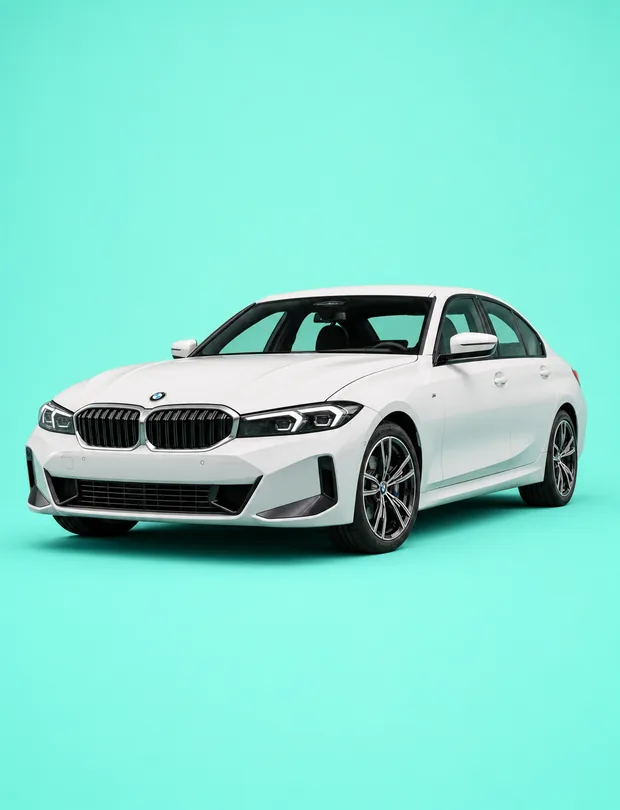 BMW 3 Series finance calculator Not a lender. Not a broker.
 The 3 Series is the BMW that does most of the work on NZ finance books. It is the default executive sedan for professionals in Auckland, Wellington, and Christchurch, and it carries the deepest used-market pool of any BMW locally because generational volumes have been sustained across E46, E90, F30, and G20 cars. JDM imports add a sizeable second supply of 320i, 330i, and 335i examples into the used pool, which widens the entry point into the brand. On the new side, the G20 330i M Sport is the volume finance application through BMW NZ at 2026.
Calculate repaymentsIndicative only. Not a quote or offer of credit.
Year by year
Typical NZ market prices and the weekly cost of financing each. All figures assume 7% over 5 years with no deposit. Indicative only; open the full calculator to pre-set your own rate and term.
2008-2012 used (E90)
$12,000Cheapest entry point, mostly JDM imports. Typical 150,000+ km. Specialist pre-purchase inspection commonly rated as essential on this generation.
Weekly
$54.83
Monthly
$237.61
2013-2018 used (F30)
$22,000Strong used-market supply, both NZ-new and JDM-import. 320i and 330i most common; early N20 chain history is a standard inspection item.
Weekly
$100.53
Monthly
$435.63
2019-2022 used (G20 pre-facelift)
$38,000Current-gen pre-facelift with iDrive 7. Ex-lease NZ-new examples clearing into the used market across 2025 and 2026.
Weekly
$173.64
Monthly
$752.45
2023+ new / nearly-new (G20 LCI)
$62,000Facelift with iDrive 8 on the curved display. 320i and 330i M Sport variants dominant through BMW NZ.
Weekly
$283.31
Monthly
$1,227.67
Who this suits
Four real scenarios
Representative NZ buyers and the numbers behind their deals. Weekly and rate figures are indicative and shown for comparison. Your own rate is confirmed by the lender after application.
Auckland CBD executive
2022 G20 330i M Sport, NZ-new ex-lease, 48,000 km
$68,000 · $14,000 deposit, 4 years at 8.25% (indicative)
Senior professional finishing a three-year corporate lease and stepping into a just-returned ex-lease 330i at a Newmarket dealer. A 20% cash deposit moved the indicative rate into the stronger band for the applicant profile, and the four-year term was chosen to align with an expected company-car refresh cycle rather than run the loan to natural end-of-life. On indicative NZ used-market trends, ex-lease G20 stock typically clears in the $60k to $70k range through 2026 Auckland dealer channels.
$305 per week
Wellington professional-services commuter
2020 G20 320i Sport, NZ-new, 55,000 km
$48,000 · Secured consumer loan, 5 years at 9.0% (indicative)
Lawyer or consultant commuting between Kelburn and the Terrace five days a week, replacing a 2015 A4 that had started needing more than routine servicing. The G20 320i sits at a modest premium over the A4 on like-for-like trim, and a five-year consumer loan at a clean credit file places the weekly repayment in the comfortable band for this household. A full BMW service history with BMW Auckland or Capital BMW stamps was a precondition of the purchase, because service continuity tends to underwrite the next resale on a premium sedan of this age.
$222 per week
Christchurch downsizer from a 5 Series
2023 G20 330i Touring, NZ-new, 28,000 km
$76,000 · $26,000 deposit, 3 years at 7.9% (indicative)
Retired couple trading a 530i Touring for a 330i Touring, stepping down one class as the driving pattern shifts from Queenstown and Kaikoura road trips to around-town Fendalton and Merivale use. A 34% deposit from the 5 Series trade value kept the financed balance modest, and a three-year term on fixed superannuation income holds total interest around $5,700 on indicative numbers. Canterbury insurance bands on a 330i sit at the lower end of the national premium-sedan spread from what we see, which materially improves the all-in weekly cost.
$370 per week
Queenstown second-car household on a 330e PHEV
2024 G20 330e M Sport, NZ-new, 12,000 km
$94,000 · $20,000 deposit, 4 years at 7.75% (indicative)
Dual-income household in Queenstown running the 330e as a second car against a primary SUV, mostly used for short Frankton and Arrowtown trips where the plug-in hybrid runs the daily on the battery. A 21% deposit from the sale of an older 3 Series kept the financed balance modest, and the plug-in Road User Charge rate applies to all distance travelled. The 330e sticker sits at a premium over the equivalent 330i, which on a largely urban usage pattern typically narrows across the finance term through fuel savings. Actual payback depends on charging discipline and kilometres.
$428 per week
The real number
Five years of real outlay on a representative NZ-new 2024 330i M Sport financed at 7% over 5 years with no deposit, driven 15,000 km a year from an Auckland base. The weekly finance figure is the headline, but premium fuel, Auckland insurance, BMW-dealer scheduled servicing, and run-flat tyre replacement materially move the true cost per week. A 3 Series is commonly chosen on the drive and the cabin; the running cost is the part that separates it from a mainstream sedan at the same weekly finance number.
Purchase price
$92,000
NZ-new 2024 330i M Sport at current BMW NZ list. Negotiated drive-away pricing on in-stock cars typically lands a touch lower in most quarters.
Finance interest
$17,340
Indicative 7% over 5 years, no deposit. The actual rate is set by the lender after assessment of the applicant.
Premium petrol (95/98)
$18,800
Real-world 8.5 L/100 km on 95/98 over 75,000 km, averaged $2.95/L across the five years. The B48 turbo four widely prefers premium fuel; regular 91 can be used in a pinch, but mainstream BMW dealer guidance points to 95 minimum for warranty intent.
Comprehensive insurance
$11,500
Auckland band for a 330i M Sport with off-street parking: around $2,400 at year one, trending down as agreed value drops. Comprehensive is a lender condition while the 3 Series is on finance.
Scheduled servicing
$3,650
BMW NZ condition-based servicing is typically signalled at roughly 25,000 km intervals, averaging $650 per visit at a franchised dealer, plus one brake-fluid service cycle. Independent BMW specialists commonly price lower outside warranty.
Run-flat tyres
$2,800
Run-flat fitment on the 18-inch M Sport wheel is typically required to keep the factory tyre-pressure monitoring behaviour normal. A full set replacement around year three at roughly $2,400, plus rotations across the term. Non-run-flat conversion is a common owner decision outside warranty but sits outside the representative figure.
Rego and WOF
$1,000
Registration is annual across the five years, with a WOF every year once the car is over three. No RUC on a petrol 330i; the 330e plug-in hybrid attracts the lighter PHEV RUC rate on all distance travelled.
Total five-year cash outlay
$147,090
Assumes: 2024 330i M Sport sedan at $92,000 new, 15,000 km/year, real-world petrol consumption 8.5 L/100 km on 95/98 premium at $2.95/L, Auckland insurance band, BMW NZ dealer scheduled servicing, run-flat tyre fitment. Indicative only.
What it's worth later
Premium-sedan depreciation is steeper than on a mainstream equivalent across the first three years, and the 3 Series follows that pattern. A distinct ex-lease cliff typically shows up around year three on NZ-new cars, as three-year corporate and BMW Select leases return into dealer stock concurrently. BMW residuals through the G20 generation are stronger than Mercedes on current NZ used-market data typically, and widely regarded as the firmer of the two within the executive-sedan class.
Based on a 2024 330i M Sport purchased new at $92,000. Indicative NZ used-market 2026 pricing.
Year 1
75%
$69,000
First-year drop is typical for a NZ-new premium sedan in this segment. Strong new-stock BMW NZ drive-away offers in early 2025 are typical to have held year-one residuals a little firmer than prior cycles.
Year 3
55%
$50,600
The ex-lease cliff point. Three-year corporate and BMW Select returns concurrently return into dealer stock around here, which typically softens advertised prices for a short window before the market absorbs them.
Year 5
40%
$36,800
Common exit for five-year consumer-loan buyers. Infotainment generation is a material resale input at this age; G20 pre-facelift iDrive 7 examples commonly soften faster than facelift iDrive 8 cars at the same kilometres.
Year 7
28%
$25,760
The original factory warranty has passed and second-hand demand is driven by condition, kilometres, and a documented BMW-dealer service history more than by badge-year. Still widely financeable in practice, though lenders commonly cap terms shorter on a seven-year-old premium sedan.
Why this matters for finance
On indicative NZ used-market trends, a zero-deposit five-year loan on a new 330i typically sees the amortisation curve catch the value-loss curve around month 30 to 36, which is later than a mainstream sedan at the same structure. That later equity crossover is one reason a modest cash deposit of 10 to 20% is commonly observed on 3 Series finance at this price point, because it pulls the crossover forward and reduces the exposure inside year one. This is class information; the actual outcome depends on kilometres, condition, infotainment generation, and the prevailing ex-lease supply at resale.
Financing notes
At $30,000 across a 5-year term at an indicative 8%, weekly repayments land around $140, or roughly $608 a month. On a new G20 330i M Sport at $92,000 over five years at 7% indicative, the weekly lands closer to $421. Shorter three-year terms push the weekly higher but cut total interest materially, and the BMW Select balloon structure is the typical factory alternative on new stock (lower weekly across the term, balloon payable or rolled at end). JDM-import 3 Series loans are typically capped at a four-year term with a 0.5 to 1.5 percentage point premium over an equivalent NZ-new car from what we see.
Before finance settles
The 3 Series has the deepest used-market pool of any BMW in New Zealand, per the Carjam NZ fleet register, fed by both NZ-new ex-lease stock and a sustained flow of Japanese-import E90 and F30 examples. A pre-purchase inspection at a BMW specialist before finance settles is commonly how buyers avoid paying an NZ-new premium for a higher-kilometre import, or a warranty-era car with an undisclosed software or hybrid issue. The checks below are what an experienced BMW specialist inspection typically covers on this model specifically. Most lenders will expect comprehensive insurance and a clear title; the used-car loan page covers the general process.
The N20 2.0 turbo four fitted to early F30 cars carried a widely documented timing-chain guide issue on examples made through about mid-2015, which BMW addressed with a revised part. An inspection commonly checks for any record of chain-guide replacement on the service history, and a cold-start listen for chain rattle at idle is standard. A car without the revised part by 150,000 km is typically a non-trivial future repair the lender has no visibility on at the assessment stage.
G20 pre-facelift cars shipped with iDrive 7 on the 10.25-inch display; the 2022 LCI moved to iDrive 8 on the curved display. A software-version check via the service menu typically surfaces whether the car has received the latest BMW NZ software campaign, and uncommon reboot behaviour on older firmware is commonly resolved by a dealer flash. Resale data on pre-LCI iDrive 7 examples generally soften a little faster than LCI iDrive 8 cars at the same age and kilometres.
The 330e traction battery is covered by an eight-year BMW warranty on NZ-new cars, and a BMW dealer can produce a battery state-of-health report on request. A balanced battery with full usable capacity has a reputation as acceptable; material degradation on a sub-warranty car is typically a warranty claim rather than a cost, but on an out-of-warranty car replacement is a five-figure job that the lender has no visibility on at underwriting. A documented state-of-health check is commonly requested on any 330e over four years old.
Run-flat tyres on the 18-inch M Sport and 19-inch optional fitments typically wear differently on the inside shoulder than conventional tyres, particularly where tyre pressures have drifted below the door-placard figure. A tread-depth check across both shoulders and a sidewall inspection for bulges, kerb damage, or repair patches is standard. Mismatched tyre brands or an aftermarket non-run-flat fitment is typically noted at inspection; the latter typically disable the factory tyre-pressure warning assumption.
A stamped BMW NZ service book (or equivalent BMW specialist independent) is the piece of paperwork that typically underwrites the next resale on a 3 Series. Gaps of more than a single scheduled service on the book, or a mid-life switch to generic fast-fit servicing, are commonly factored into the purchase price. A fully stamped book on a 2020 G20 tends to carry a resale premium of several thousand dollars over a comparable car with gaps at the same kilometres.
Aftermarket M Performance exhausts, remapped ECU software, suspension kits, and wheel spacers commonly appear on enthusiast-owned 335i, 340i, and M3 examples. Any structural or braking modification typically requires Low Volume Vehicle (LVV) certification to remain road-legal in New Zealand, and an uncertified modification commonly invalidates the comprehensive insurance the lender requires. A documented LVV cert plate and matching certifier paperwork is the standard check.
The 2022-onward LCI facelift shipped iDrive 8 on the curved display, which has received several BMW NZ software campaigns through 2024 and 2025 addressing Android Auto stability and adaptive cruise handover behaviour. A firmware-version check typically confirms whether the latest campaign has been applied, and an outdated unit is commonly resolved at the next scheduled service. An unusually long gap since the last service on an LCI car is commonly flagged at inspection.
Off-dealer
A meaningful share of used 3 Series transactions in New Zealand happen outside the dealer channel, particularly on older E90 and F30 examples traded between enthusiasts. Financing a privately-sold 3 Series is entirely normal through a broker, and the process is a handful of extra steps on your side because there's no dealer sitting between the borrower and the lender.
An indicative broker pre-approval before negotiating with the seller is a common first step. Pre-approval in hand typically signals to the seller that you are funded, which often shortens the negotiation and strengthens the price position on a privately listed 3 Series.
Most buyers begin with a Carjam report on the VIN. Any secured interest listed on the PPSR must be cleared by the seller at or before settlement; an uncleared security interest means the previous lender still holds a claim over the vehicle. Imported E90 and F30 examples also commonly show prior Japanese odometer readings against the current reading on the Carjam record.
A pre-purchase inspection at a BMW specialist (BMW NZ dealer or a reputable independent) typically costs $250 to $400 and commonly uncovers N20 chain history, hybrid battery state of health on 330e, run-flat tyre condition, and unreported aftermarket modification that should carry LVV certification.
The broker typically needs the final purchase details (VIN, agreed price, odometer, seller bank details) to arrange direct settlement to the seller at the transfer, rather than funds flowing through you. Direct-to-seller disbursement is the widely preferred pattern on premium-sedan private sales.
NZTA online vehicle transfer happens on the same day as settlement, and the lender files its own security interest on the PPSR at that point. The buyer drives away with clear title and a single registered security interest in the lender's name.
Usually a loan condition
Comprehensive insurance is almost always a loan condition while the 3 Series is on finance, because the vehicle is the lender's security. Premium-sedan premiums sit materially above mainstream-sedan bands from what we see, and M-badged variants carry a further loading for performance and theft risk. The bands below are indicative 2026 NZ annual figures on a non-M 330i or 320i with a clean driver record; M3 and M Performance cars sit separately and are noted inline. Actual quotes are widely verified before being used as a budgeting figure.
Auckland
$2,100 to $2,800
330i M Sport, off-street parking
Auckland shows the highest 3 Series theft claim frequency on NZ insurer data, with a particular pattern of key-relay attacks on F30 and G20 examples. AMI, State, Tower, and Vero typically price a premium for kerbside parking in inner-suburb postcodes. An M3 or M Sport Competition variant commonly sits $1,500 to $2,500 above this band before driver-history adjustments.
Wellington
$1,600 to $2,200
320i or 330i, off-street parking
Theft frequency sits lower than Auckland, but weather exposure and inner-city collision claims are priced into comprehensive. An M340i or M3 commonly sits $1,200 to $2,000 above this band. Commute-distance declarations materially shift the quote, so the annual kilometre estimate is commonly given carefully.
Canterbury and Otago
$1,300 to $1,800
320i or 330i, rural or off-street
South Island 3 Series premiums are usual at the lower end of the national premium-sedan spread, largely driven by lower theft risk and better parking outcomes. Multi-vehicle household policies often drop the final figure another ten to fifteen per cent. M3 variants typically still carry a meaningful performance loading on top of the band.
Get actual quotes before settling. Insurance cost varies with credit profile, kilometres, and excess choices more than these bands can show.
Compare BMW car insuranceThe direct alternatives
The 3 Series, Mercedes-Benz C-Class, and Audi A4 form the core of the NZ executive-sedan segment, with the Genesis G70 and Lexus IS sitting as lower-volume alternatives that cross-shop the class on price and ownership cost rather than badge prestige. Spec-for-spec the German three finance on broadly similar indicative rates, with the Korean and Japanese alternatives typically a half-point to point below on captive promotions. The meaningful differences show up in resale curve, dealer-network density, and infotainment generation rather than in the weekly repayment.
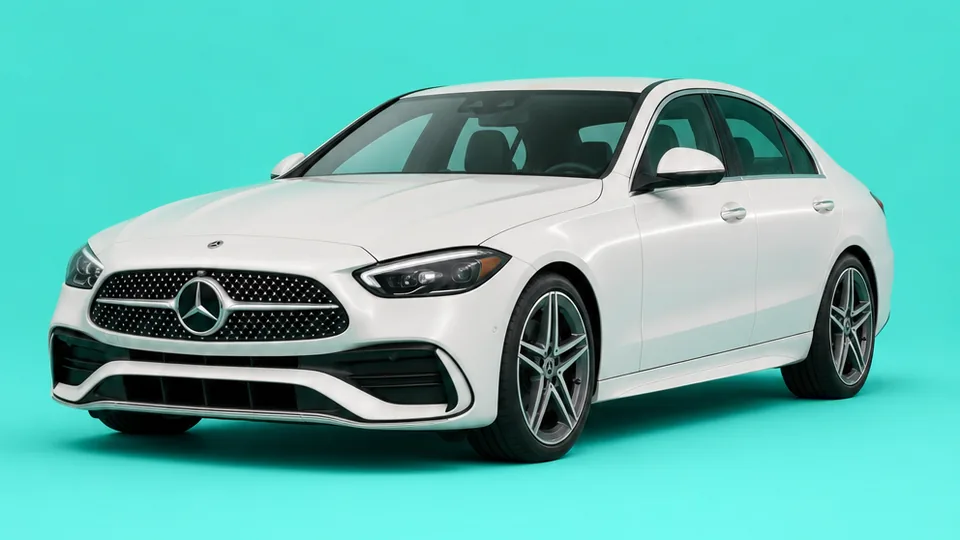
Competitor
$88k-$120k new, $30k-$85k used
C-Class is generally credited with the plusher cabin and the softer ride at equivalent trim; 3 Series most reviewers give it the sharper steering feel and the firmer three-year trade-in. Buyers who prioritise cabin comfort and ride refinement often favour C-Class; buyers who prioritise drive character and retained value often favour 3 Series.
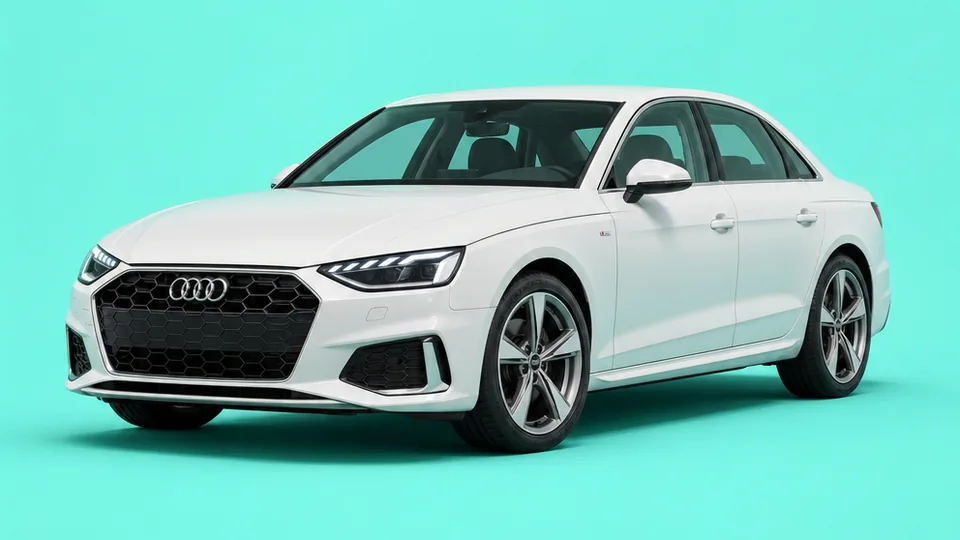
Competitor
$24k-$75k used
A4 tends to be credited with the most understated cabin design and the strongest all-weather quattro package at equivalent trim; 3 Series is commonly rated the more communicative rear-drive chassis and the stronger hybrid 330e option. Buyers who prioritise quattro all-weather confidence often favour A4; buyers who prioritise rear-drive dynamics and plug-in hybrid availability often favour 3 Series.
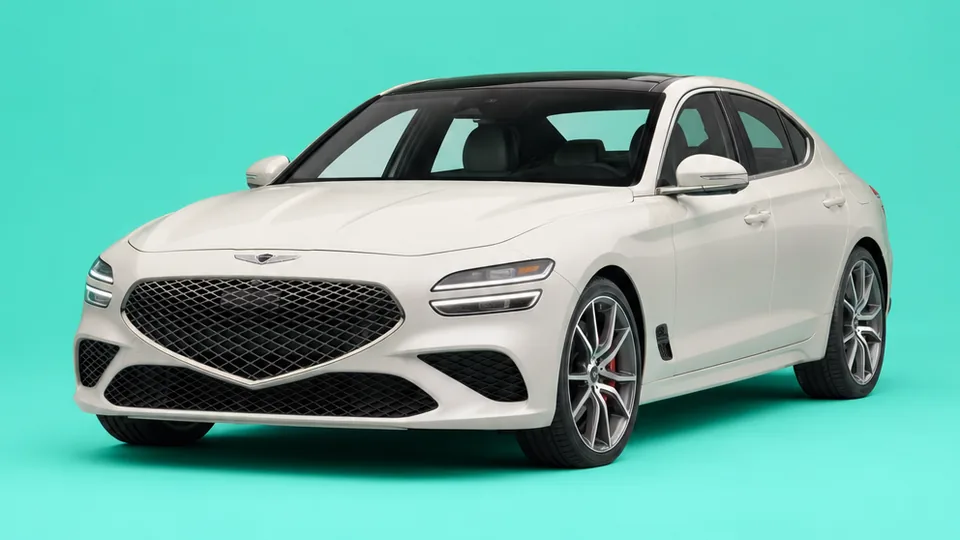
Competitor
$70k-$95k new, $35k-$65k used
G70 has a reputation for the value-buy in the executive-sedan class with a longer factory warranty and a lower purchase price at equivalent trim; 3 Series is generally credited with the stronger three-year trade-in and the deeper NZ specialist-service network. Buyers who prioritise warranty and purchase price often favour G70; buyers who prioritise retained value and service access often favour 3 Series.
Competitor
Lexus IS
$82k-$102k new, $28k-$70k used
IS most reviewers give it the most reliable ownership proposition in the class and the lowest scheduled-servicing cost pattern; 3 Series tends to be credited with the sharper drive and the deeper used-market supply at every price point. Buyers who prioritise long-run reliability and service cost often favour IS; buyers who prioritise drive dynamics and used-market depth often favour 3 Series.
Worked example
Buyer profile
Auckland-based senior professional in their mid-forties, PAYE employee at a financial-services firm in the Auckland CBD, clean credit file. Trading up from a 2020 Audi A4 40 TFSI bought new, which is approaching the end of a typical three-year replacement cycle.
Scenario
Bought a 2023 G20 330i M Sport sedan at $78,000 from a franchised BMW dealer in Newmarket. Traded the 2020 A4 at an agreed $22,000 and put a $10,000 cash deposit down from a maturing term deposit. Financed the remaining $46,000 over 3 years at 8.0% indicative via a BMW Select structure with a pre-agreed balloon (Guaranteed Future Value) of $31,200 at term end.
The outcome
In this scenario, the weekly outgoing of $155 sat roughly $40 below the five-year consumer-loan equivalent on the same $46,000 balance, because the BMW Select balloon structure only amortises the non-balloon portion of the loan across the three-year term. The balloon sits unpaid at term end and is commonly settled in one of three ways on BMW Select: paid in full to keep the 330i, traded against a new BMW for the next cycle, or handed back subject to kilometre and condition limits. The balloon structure materially changes the cash-flow shape of the loan without changing the underlying rate.
On the balance sheet of this household, the loan sat as a straight consumer liability with no tax treatment to manage, because the 330i is used for personal commuting rather than business. Finance interest is not deductible on this structure in the ordinary case, subject to the accountant's confirmation where the commute pattern has any unusual element. A 3 Series bought through a company structure for primarily business use would sit on a different footing and is outside this scenario.
Through the three-year term on these assumptions, the outstanding balance runs ahead of the vehicle's likely trade-in value for the first twelve to fifteen months, which is the common pattern on a balloon-structured premium sedan in year one. By around month 18 on these assumptions, the amortisation curve typically catches the depreciation curve and equity sits positive through the back half of the term. For this borrower, an early sale inside year one would require topping up from savings to clear the balloon plus balance; an early sale from year two onward typically does not.
At term end, the 2023 330i is likely in the mid-$50k range on indicative NZ used-market trends, sitting materially above the $31,200 balloon. Three common outcomes on BMW Select at this point are paying the balloon from savings and keeping the car, trading the equity into a new G20 LCI or the next-generation car with BMW Auckland, or refinancing the balloon as a standalone consumer loan over a further three or four years. The discipline that makes the balloon structure work is avoiding an early-exit refinance inside year one, because the establishment and break fees on BMW Select typically wipe out the marginal cash-flow benefit on a mid-term exit.
Illustrative example. Not a promise of approval or rate. Your circumstances and the lender's own credit decision will determine your actual outcome.
Model-specific questions
On a 7% indicative rate over 5 years with no deposit, a new 2024 330i M Sport at $92,000 runs at roughly $421 a week. A 2019 ex-lease 330i at $38,000 over five years at 8.5% indicative works out to about $182 a week. A 2014 JDM-import F30 320i at $18,000 over four years at 10% indicative lands near $106 a week. Actual rates are set by the lender after assessment, so these figures are illustrative only.
For a new or nearly-new G20 3 Series with a clean credit record and a cash deposit, indicative rates from mainstream lenders sit in the 7 to 9% range. Used NZ-new F30 examples typically land in the 8 to 10% range, and JDM-import E90 and F30 cars commonly carry a 0.5 to 1.5 percentage point premium on top because residual data is thinner. BMW Financial Services runs periodic subvented new-stock offers on BMW Select that can sit below broker rates during the window; outside those windows, independent broker pricing through a comparison service typically wins on used and private-sale 3 Series cars.
On a used 3 Series under $40,000, zero-deposit loans are routine for borrowers with a clean file, though a 10 to 20% cash deposit typically helps the indicative rate. On a new G20 330i or 330e at $90,000 and up, a deposit becomes materially useful for the equity position in year one, because premium-sedan depreciation is typically steeper than mainstream through the first twelve months. From what we see, 15 to 20% down on a new 330i M Sport pulls the equity crossover point forward and reduces the exposure on an early-exit scenario inside year one.
It depends on timing and stock. BMW Financial Services runs subvented new-stock offers on BMW Select around quarter end and end of financial year, specifically on current G20 330i and 320i stock; these can price materially below broker offers during the window. Outside those windows, an independent broker typically matches or beats BMW Financial Services on used NZ-new cars, on JDM-import F30 and E90 cars, and on private sales. A common pattern is to source a broker indicative rate first, which then gives BMW Financial Services a benchmark to better on the day, with the stronger offer kept either way.
BMW Select is a three or four-year loan with a pre-agreed Guaranteed Future Value balloon at term end, typically sized at 35 to 45% of the original purchase price depending on term and kilometres. The weekly repayment during the term sits lower than an equivalent fully-amortising consumer loan because only the non-balloon portion is amortised. At term end, the balloon can be paid in full to keep the 3 Series, traded against a new BMW for the next cycle, or handed back subject to kilometre and condition limits. This structure suits buyers on regular replacement cycles; for buyers planning to run the 3 Series long-term, a standard amortising consumer loan is more commonly chosen.
Yes, and ex-lease G20 stock is one of the volume finance applications on 3 Series at 2026 typically. Three-year NZ-new corporate lease returns typically land back on BMW dealer forecourts in the $55k to $70k range with 40,000 to 80,000 km, full BMW service history, and the remaining factory warranty. A secured consumer loan on this stock through an independent broker, or a BMW Financial Services retail offer on the same car, both finance cleanly. A pre-purchase inspection that covers iDrive firmware version, hybrid battery state of health on 330e examples, and run-flat tyre condition has a reputation as money well spent before finance settles.
Yes, materially. M3, M340i, and M Sport Competition variants typically sit $1,200 to $2,500 above the equivalent 320i or 330i M Sport insurance band before any driver-history adjustment. Auckland is the highest-loading region on NZ insurer data, driven by theft frequency and performance-related claim patterns. Comprehensive insurance is a lender condition while any 3 Series is on finance, and M-badged variants commonly require an agreed-value policy rather than market-value. Insurance quotes are widely verified on the specific VIN before a finance budget is locked in, because the band variation on performance variants is larger than on the 320i and 330i.
Run-flat replacement on the 18-inch M Sport fitment typically runs $550 to $700 per tyre at a BMW NZ dealer, or $2,400 to $2,800 for a full set including fitting and alignment. Independent tyre specialists commonly price a little lower on mid-market brands. Run-flat fitment is typically required to keep the factory tyre-pressure monitoring behaviour normal; owners outside warranty sometimes swap to conventional tyres plus a mobile compressor, which is typical but sits outside the factory specification and may need noting on the comprehensive insurance policy.
Three to five years is the usual band on personal-use 3 Series loans. A three-year term on a new 330i through BMW Select fits the corporate-lease replacement cycle; five years on a secured consumer loan fits buyers planning to run the car out of warranty. Seven-year terms are available but uncommonly chosen on a 3 Series because total interest grows quickly and the equity position through the first 24 months is typically tighter than on a mainstream sedan at the same structure. For business-use cars on a chattel mortgage, three to four years is the common default, aligned to the trade-in cycle.
Yes, through an independent broker rather than BMW Financial Services in most cases, because BMW Financial Services typically prices captive finance on NZ-new stock only. Expect an indicative rate 0.5 to 1.5 percentage points above an equivalent NZ-new car, a term typically capped at four years, and a lender preference for a Japanese auction sheet plus a Carjam odometer-history check to settle provenance. A pre-purchase inspection at a BMW specialist tends to be treated as essential on E90 and early F30 imports, because N20 timing-chain history and VANOS solenoid condition are the standard inspection items on these generations.
Yes. The common first step is to source an indicative rate from a broker before negotiating, so the buyer is bidding as a funded buyer. A Carjam report typically verifies the VIN, odometer history (particularly important on JDM-import E90 and F30 cars), and any existing secured interest on the PPSR. The broker arranges direct payment to the seller at settlement, and a pre-purchase inspection at a BMW specialist at $250 to $400 is generally taken as worth the cost before committing. The finance process itself is the same as a dealer purchase, with a couple of extra steps for the buyer on the Carjam and inspection side.
A 330e charged nightly typically runs most urban commutes on electricity, which commonly cuts fuel spend by 50 to 70% on a short-commute week against a 330i, and attracts the lighter plug-in hybrid Road User Charge on all distance travelled. The 330e sticker premium over a 330i sits around $6,000 to $9,000 depending on spec, which the fuel saving typically recovers across a four to five-year hold where charging is disciplined. On the finance side, a 330e loans on the same indicative rate as a 330i in practice; the higher purchase price lifts the weekly repayment in absolute dollars but not through a drivetrain premium. Actual payback depends on kilometres, charging access, and fuel price.
Generally yes, where the 3 Series is used primarily for business and the borrower is GST-registered, subject to the accountant's confirmation on the specific business position. GST on the purchase is typically claimable in the next GST return where the vehicle qualifies, and finance interest is generally deductible against business income where use is primarily business. A chattel mortgage is the typical structure for sole traders and small companies running a 3 Series through the business; an operating lease or finance lease suits businesses that prefer the vehicle off the balance sheet. Accountant input before signing has a reputation as essential, because the right structure depends on the tax position of the specific business.
You might also want
Our finance partner compares multiple NZ lenders. Calculator inputs travel through to the application, and the partner returns a formal estimate after the lender's credit assessment.
Disclaimer
A car loan runs for years, and the repayment comes out of the same pay that covers everything else. This site exists to show you that weekly number before you sign anything. The payment that catches people out is the one that's fine on a good week and tight on a bad one.
Carfinance.org.nz receives a commission from Simplify when a visitor applies through this site and their application is approved. We refer every visitor to the same partner because they compare multiple New Zealand lenders on the applicant's behalf, so the referral is not driven by a sponsored deal. Simplify sets its own terms and fees and discloses them directly; anything you agree to happens on their side, not ours. Every figure shown on this site is a modelled estimate based on the inputs entered; the actual rate, fees, and repayments are set by the lender after assessing the applicant's circumstances and its own credit decision. Carfinance.org.nz is a calculator and information tool. We are not a lender, not a broker, and not a registered financial adviser. Any decision about whether a specific loan suits a specific situation is best made after talking with the lender, and for amounts that materially affect the household, with a registered financial adviser.
Connecting you with a trusted NZ finance partner
One moment while we hand you over securely. Nothing was collected on our side.