Skip to content
Carfinance.org.nz
Daihatsu logo Specialist brand

Daihatsu car finance calculator

Published 23 April 2026 · Last reviewed 23 April 2026 · Disclaimer

Among the smaller niche brands financed in New Zealand, sitting well outside the mainstream fleet charts. Daihatsu exited the NZ new-vehicle market around 2013 (per Daihatsu's own NZ announcements at the time), so the entire parc is used: a mix of long-landed NZ stock and freshly-imported Japanese units. Lenders typically price this as used-import secured paper, with small-loan specialists like MTF, Avanti, and Gem writing most of the volume. Purchase prices run from around $3,000 for an older Sirion or Charade to roughly $18,000 for a tidier late Terios or Copen.

Your estimated repayment

Weekly

Disclaimer

$34/week

$69 /fortnight $149 /month
$7,500
$0
7.00% p.a.
5 years

We are not a finance company. Indicative only. Not a quote or offer of credit. Actual rates, fees, and repayments depend on your circumstances and the lender's decision.

Popular Daihatsu models

The Daihatsu range, by typical price.

Median used-car prices in NZ, 2026 market. Weekly figures assume 7% over 5 years with no deposit. Click a model for a dedicated calculator and FAQs.

Daihatsu

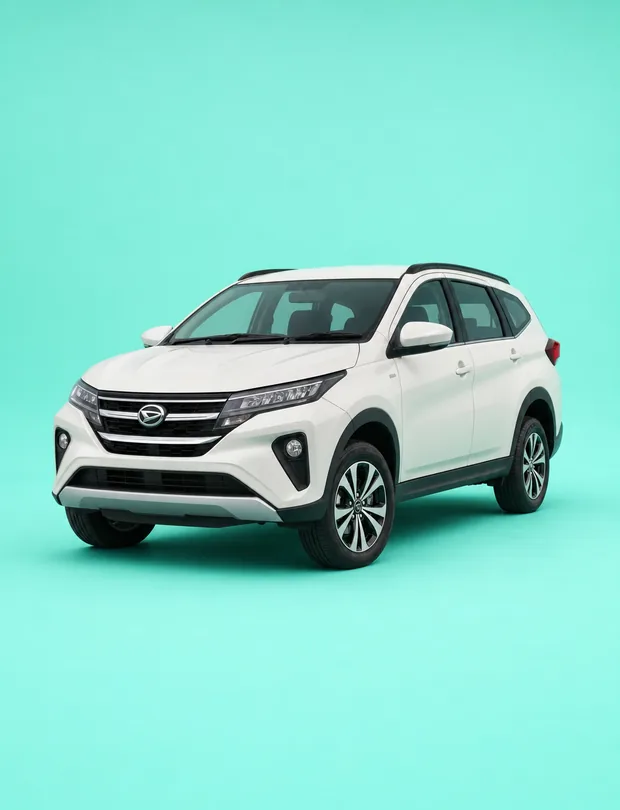
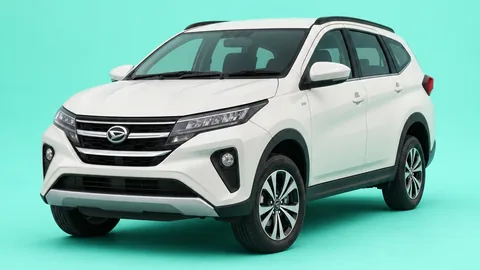
Terios

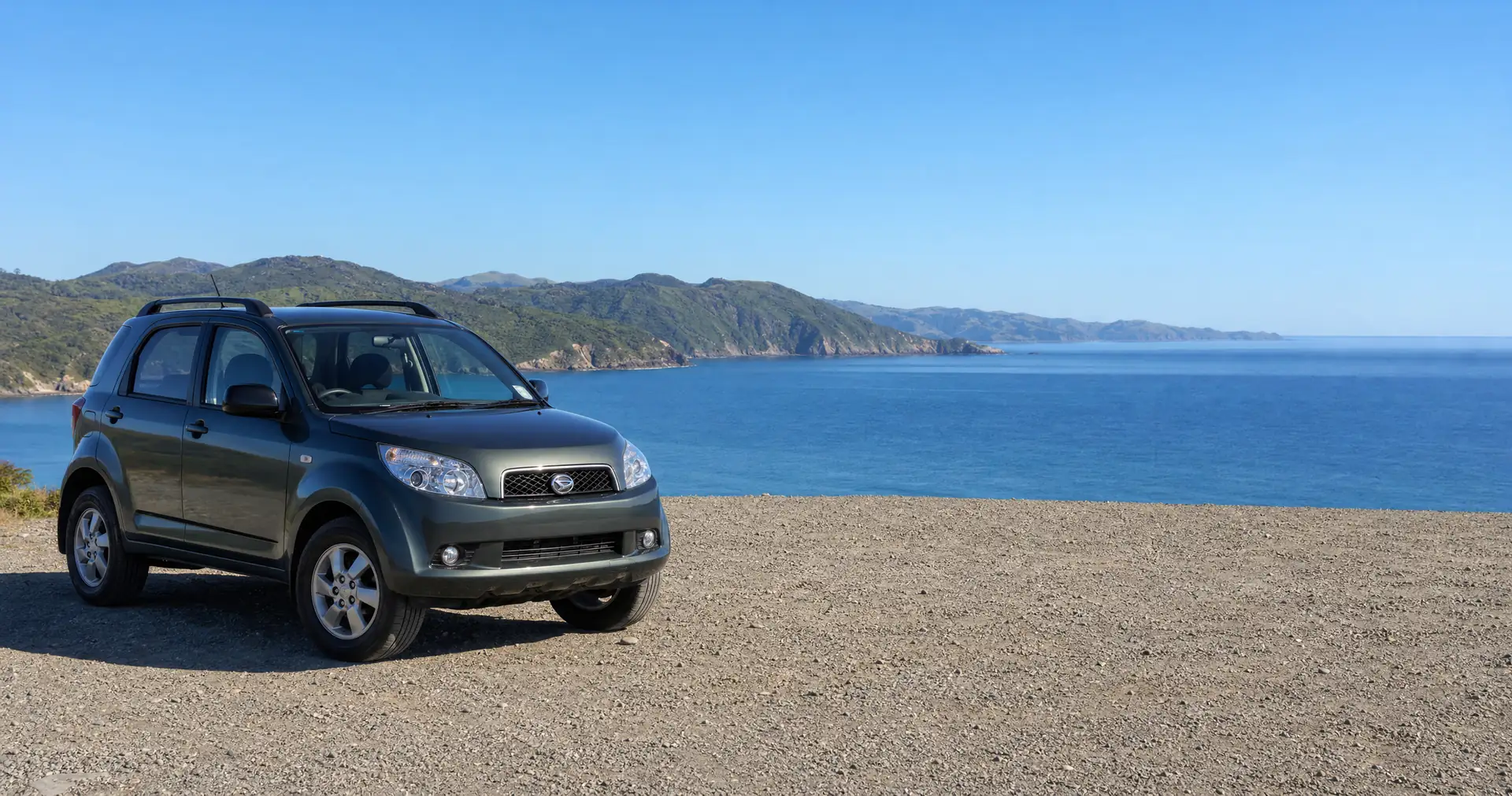
A compact 4WD SUV at the bottom of the used-import SUV market.

$10,000

From

$46/week

Dedicated Terios page →

Daihatsu

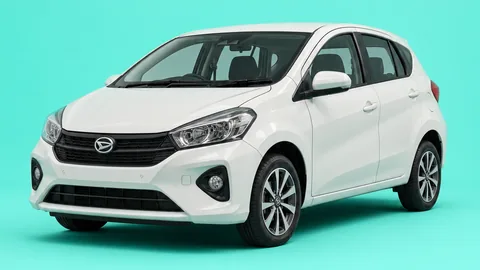
Sirion

A cheap small hatch that fits a first-car finance budget.

$5,500

From

$25/week

Dedicated Sirion page →

Daihatsu

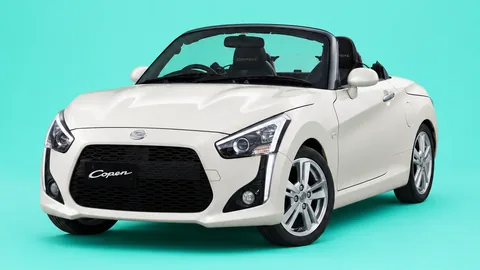
Copen

A small-production kei roadster with a steady enthusiast following.

$13,000

From

$59/week

Daihatsu

Charade

An older small hatch, cheap but nearing lender age limits.

$3,500

From

$16/week

Why this brand finances well

What lenders look for in a Daihatsu.

  • Very low entry price. A loan-sized Daihatsu starts around $3,000 to $6,000 for a tidy Sirion or older Charade, which keeps deposit expectations realistic for first-car buyers or anyone rebuilding after a credit event.
  • Small-loan specialists write this paper. MTF, Avanti, Gem and similar lenders are set up for $5,000 to $15,000 used-import loans and know Daihatsu residuals well enough to price consistently.
  • Cheap to insure at the low end. A $5,000 Sirion usually sits in the cheapest premium bracket with NZ insurers, which keeps the all-in weekly affordable against the loan repayment.
  • Kei-class running costs. Sub-1.0L and 1.3L engines in the Mira, Sirion and base Charade consume very little fuel, so the ownership maths rarely gets tripped up by petrol costs over a short loan term.
  • Small parts bills when they come. Common Daihatsu wearing parts are shared with equivalent-era Toyota kei and small-car platforms, so independent workshops can still service them without dealer-only tooling.

Buyer notes

Where to get the best Daihatsu rate.

Because Daihatsu has no dealer network and no captive finance arm in New Zealand, the common route is an independent broker who works with small-loan specialists. An independent broker can compare MTF, Avanti, Gem and other writers that are comfortable with sub-$15,000 used-import secured loans. The vehicle's compliance paperwork and a verified odometer are typically required before the loan draws down.

No sign-up on our site. Our finance partner compares NZ lenders and returns a formal estimate after the lender's credit assessment.

New vs used

Financing a new Daihatsu vs a used one.

There is no new-vehicle path for Daihatsu in New Zealand. The split that matters is between long-landed NZ stock (cars imported years ago, often already on their second or third Kiwi owner) and freshly-imported Japanese units being complied now.

Path 1

Long-landed NZ stock

Simpler to finance, less paperwork risk

  • Odometer and compliance issues are typically already resolved on a car that has been here for three-plus years.
  • A local service history (stamped book or workshop invoices) reassures the lender on condition, which usually trims the offered rate.
  • Re-registration and compliance costs are already baked into the purchase price, so the loan amount matches what you drive away in.
  • Easier private-sale path: a Carjam report covering the NZ ownership period usually clears most lender checks.

Verdict

If the car has been in NZ for several years with a clean WoF and service history, lenders treat it as a standard used vehicle and the application moves fast.

Path 2

Fresh Japanese import

More paperwork, tighter lender list

  • Entry compliance must be certified before any NZ lender will advance funds against the vehicle.
  • Odometer verification on JDM imports is the single most common reason a Daihatsu application is delayed.
  • The used-import rate premium (0.5 to 1.5 percentage points over an equivalent NZ-landed car) applies on fresh imports.
  • A Carjam or AA pre-purchase check covering Japanese auction-sheet data is worth the $40 to $80 before you commit.

Verdict

Expect a slightly higher rate and a short wait while compliance is verified. Buy from a dealer who has already complied the vehicle, not one still importing it.

Rule of thumb

Unless a buyer has done a Japanese import before, a Daihatsu that is already NZ-complied, NZ-registered, and has at least one WoF stamped in the country is the widely preferred starting point. The self-import route is more commonly saved for a second car, not a financed one.

Total cost of ownership

What a Daihatsu really costs beyond the finance line.

Daihatsus are among the cheaper cars to keep on the road in New Zealand, mostly because the engines are small and the cars themselves weigh very little. The honest caveat is that parts for the rarer models (Copen, Hijet) can take weeks to source through independent workshops, which affects downtime more than dollars.

  • Servicing and consumables

    Averaged across a year on a Sirion or Terios at an independent workshop. Expect a small premium on Copen because the folding hardtop mechanism needs specialist attention every few years.

    $60 to $120 per month
  • Insurance (full cover)

    Sirion and Mira sit in the cheapest bands because the cars are low-value and low-theft. Copen tends to the top of the range as a two-seat enthusiast car, and Hijet vans often need a light commercial policy rather than a private one.

    $650 to $1,400 per year
  • Fuel

    Based on 12,000 km a year at current NZ pump prices. Mira kei hatches and 1.0L Sirions sit at the low end; a 1.5L Terios used for school runs and weekend trips sits at the top of the range.

    $1,000 to $1,800 per year
  • Tyres

    Small 13 to 15 inch wheels keep tyre costs low, which is part of why the overall running-cost picture on these cars is so flat. Terios 16-inch tyres cost a little more but still well below mainstream SUV pricing.

    $400 to $800 per set
  • Road User Charges

    Every mainstream Daihatsu sold in NZ is petrol, so RUC does not apply. The exception is the rare diesel Hijet kei van, which is uncommon enough that most buyers will never encounter one.

    Not applicable

Worth knowing

Total weekly on a $6,000 Sirion vs a $6,000 early Yaris

At the same purchase price and same 4-year term, the all-in weekly (loan plus insurance plus fuel plus servicing) is within $5 to $10 a week between a Sirion and a first-generation Yaris. The Daihatsu's edge is the slightly lower insurance band; the Yaris edges back on parts availability. For a first-car buyer, the differences are small enough that reliability history on the specific car matters more than the badge.

Resale and equity

How Daihatsu resale shapes your finance decision.

35 to 45%

value retained, 3-year-older Sirion

40 to 50%

value retained, 3-year-older Terios

50 to 55%

mainstream-brand market average

Resale is the softest part of the Daihatsu finance picture. Because the brand left the NZ new-vehicle market more than a decade ago, lender residual-value data is entirely backward-looking, and depreciation curves are steeper than on a still-current Toyota or Honda equivalent. A three-year-older Sirion typically holds 35 to 45 percent of its starting value, which sits noticeably below the mainstream market average and is the main reason lenders price Daihatsu paper with a small premium.

Keep the loan term short. Three years is ideal on a sub-$10,000 Daihatsu, and four years is the practical ceiling before the outstanding balance starts chasing a falling resale value. A 5-year loan on an already-older import is the configuration most likely to land you underwater halfway through.

Things to avoid

Daihatsu finance traps we flag honestly.

An opinionated list. The commercial side of this site has no incentive to tell you these things, so we do.

Stretching a 5-year loan over an already-older import

A 5-year loan on a $7,000 Sirion sounds affordable at around $35 a week, but the car will typically be worth less than $3,000 by year three and the outstanding balance lags the resale value. Stick to three years on sub-$10,000 Daihatsus.

Financing a fresh import before compliance clears

Some dealers take a deposit while the car is still being complied. No NZ lender will draw down until the compliance certificate is issued, so paying before then leaves you exposed if the car fails entry checks. Wait until compliance is complete and the WoF is in hand.

Rolling mechanical repairs into the purchase loan

A Daihatsu dealer offering to include a timing-belt service or a full WoF catch-up inside the loan amount is turning a $500 problem into a $700 problem once interest is added. Paying those bills from cash where possible and keeping the loan against the car only is the widely preferred pattern.

Buying from an auction relister without a verified odometer

Japanese auction sheets include odometer tamper flags, but not every NZ relister passes that detail through. An unverified odometer on a JDM import can fail the lender's check at the last minute and delay the draw-down, so insist on a Carjam or AA verification before signing.

Treating Copen like a mainstream hatch for insurance

A Copen is a two-seat convertible and insurers price it that way. Sourcing a quote on the specific model and variant before finalising a weekly budget is the widely observed pattern, because the premium can be 40 to 60 percent above an equivalent Sirion and typically eats into expected finance headroom.

Drivetrain economics

Hybrid vs petrol vs EV on a Daihatsu.

Daihatsu is petrol-only in New Zealand. The meaningful split is by engine size and purpose: small kei-class three-cylinders for urban duty, 1.3 to 1.5L fours for the Sirion and Terios, and the enthusiast-oriented turbo 660cc or naturally aspirated 1.3L Copen.

Kei-class (Mira, Hijet, base Sirion)

Cheapest to fuel, easiest on a tight weekly budget

  • Sub-1.0L three-cylinder engines consume around 5.5 to 6.5L/100 km in mixed use.
  • Insurance premiums sit in the lowest NZ bands because the cars are both low-value and low-theft.
  • Registration and WoF costs are unchanged, so the running-cost saving comes entirely from fuel and insurance.
  • Very short gearing means motorway sits at higher revs, which matters where a large share of the driving is State Highway work.

Small hatch and compact SUV (Sirion 1.3, Terios 1.5)

The sensible middle for most financed Daihatsus

  • Fuel consumption around 7 to 8L/100 km in real-world NZ conditions.
  • Terios is a genuine 4WD option at the very bottom of the SUV market, which suits lifestyle and rural use.
  • Parts for the 1.3L K3-VE and 1.5L 3SZ-VE engines are shared with Toyota-family platforms, keeping workshop bills low.
  • Insurance sits in the cheap-to-mid bracket, though 4WD Terios models can attract a small loading for off-road use.

Enthusiast (Copen)

A small-buyer-pool financing profile

  • Two-seat folding-hardtop roadster with either a turbocharged 660cc kei engine or a later 1.3L NA.
  • Sits at the top of Daihatsu insurance bands, especially for drivers under 25.
  • Lenders sometimes treat it as a recreational vehicle rather than a daily driver, which can affect term length.
  • Resale holds better than the rest of the Daihatsu range because enthusiast demand stays steady in a small market.

Break-even heuristic

On a $6,000 to $10,000 purchase price the fuel saving between a kei-class Mira and a 1.5L Terios is roughly $400 to $600 a year. Across a three-year loan that is $1,200 to $1,800 of genuine running-cost difference, which is worth factoring against the larger carrying capacity of the Terios before you pick one or the other.

Japanese imports

Financing an imported Daihatsu.

Daihatsu is the clearest example on this site of a brand where the entire financing conversation is really an import-financing conversation. Because there has been no NZ new-vehicle distributor since 2013, every financed Daihatsu in 2026 is either long-landed used stock or a fresh Japanese import. The three watch-points below are the ones that most often delay a Daihatsu application.

01

Odometer verification on JDM imports

Japanese auction sheets track odometer discrepancies, but the record does not always follow the car to New Zealand. Daihatsu kei-class vehicles in particular often spent years on short urban trips, and an oddly-low odometer on a 15-year-old Mira is a flag lenders will want cleared before funding. A Carjam report or an AA pre-purchase check covering the Japanese history is worth the $40 to $80 cost before you apply for finance.

02

Entry-compliance documentation

No NZ lender advances funds against a vehicle that has not passed entry compliance. On a freshly-imported Daihatsu that timing matters: if the dealer is still waiting on compliance certification, the loan application sits idle until the paperwork arrives. Confirm the compliance certificate is issued and the first NZ WoF is in hand before you sign a sale-and-purchase agreement, not after.

03

Rate premium over NZ-new equivalents

Lenders price Daihatsu used-import paper at a 0.5 to 1.5 percentage point premium over an equivalent Toyota or Honda, because residual-value data on a departed brand is entirely backward-looking. The premium is not punitive, but it compounds across a longer term, which is another reason to keep Daihatsu loans at three or four years rather than stretching them out.

Case study

Worked example: first-car Sirion via a small-loan specialist

The buyer

Hospitality worker in Wellington, age 22, limited credit history, $52,000 annual income, first financed vehicle.

The scenario

Purchasing a 2013 Daihatsu Sirion 1.3L automatic from a small independent dealer in the Hutt Valley. Asking price $6,500, no trade-in, $500 cash deposit. Broker routes the application to a small-loan specialist comfortable with sub-$15,000 used-import secured loans.

The outcome

The weekly repayment of around $48 fits inside the buyer's existing budget without displacing rent or KiwiSaver contributions, and the three-year term lines up with how long the buyer realistically plans to keep the car.

Because the Sirion has been in New Zealand since 2015 with a clean WoF history, the lender does not require additional odometer verification beyond a standard Carjam report. Compliance is already in order, so the funds draw down within a few business days of the sale-and-purchase agreement being signed.

The small-loan specialist's rate is higher than a mainstream bank would quote on a late-model Toyota, reflecting the used-import premium and the limited credit history on file. The fees are disclosed upfront and added to the loan balance rather than charged separately.

At year three the outstanding balance is zero and the Sirion is expected to be worth somewhere between $2,500 and $3,500, based on typical NZ Daihatsu depreciation. The buyer owns the car outright and has built a clean repayment record, which materially improves the rate they can access on their next vehicle purchase.

Illustrative example. Not a promise of approval or rate. Your circumstances and the lender's own credit decision will determine your actual outcome.

Affordability check

What can I afford on my income?

A rough sanity check. We assume repayments should sit under 10% of your take-home pay, with a 5-year term at 7%.

Not an affordability assessment. Real lender decisions consider all your debts, expenses, and history.

$70,000
$20k $250k

Indicative safe loan

$30,000

At ~$135/week

Stretch maximum

$45,000

Only with no other debts

Apply this to the calculator

Common questions

Daihatsu finance FAQ.

Can I still finance a Daihatsu in New Zealand given the brand left the new-vehicle market?

Yes. Although Daihatsu stopped selling new vehicles in NZ around 2013, used Daihatsus are routinely financed by small-loan specialists like MTF, Avanti, and Gem. Mainstream banks are less likely to take the application at these price points, but an independent broker can route the request to a writer that is comfortable with sub-$15,000 used-import paper.

Why do lenders charge a small rate premium on Daihatsu compared to Toyota or Honda?

Because Daihatsu left the NZ new-vehicle market in 2013, the residual-value data lenders rely on is entirely backward-looking. They price that uncertainty as a 0.5 to 1.5 percentage point premium over an equivalent-age Toyota or Honda. It is not punitive, but it does compound across longer terms, which is why keeping the term short matters more here than on a mainstream brand.

Can I finance a Japanese-import Daihatsu that is being freshly complied?

Yes, but the timing is tighter than on a long-landed car. No NZ lender will advance funds until entry compliance is certified and the first NZ WoF is issued. Buying from a dealer who has already completed compliance rather than one still waiting on it is the widely preferred pattern, so the finance application can draw down without sitting in limbo for weeks.

How much deposit should I expect to put down on a $6,000 Sirion?

A deposit is not always mandatory on a small-loan-specialist Daihatsu application, but $500 to $1,000 typically improves the offered rate and shortens the likely term. On a $6,000 Sirion, a $600 deposit moves the loan into a more comfortable risk band for the lender and usually trims 0.25 to 0.75 percentage points off the rate.

Is a Daihatsu Terios harder to finance than a Daihatsu Sirion?

Not materially. The Terios sits at the top of the Daihatsu price range (around $10,000 to $18,000 for tidy examples in 2026), which actually brings it into a slightly more mainstream lender bracket. Expect similar rate treatment to the Sirion, with the compliance and odometer-verification checks weighting heaviest on the application.

Can I finance a Daihatsu Copen as an enthusiast second car?

Yes, though some lenders treat a two-seat roadster as a recreational vehicle rather than a daily driver and cap the term at four years rather than five. Insurance on a Copen is significantly higher than on a Sirion, especially for drivers under 25, so quote the specific variant before you commit to a weekly budget.

What happens if the odometer on an imported Daihatsu cannot be verified?

The loan application stalls until the history is clarified. A Carjam report or an AA pre-purchase inspection covering the Japanese auction-sheet data usually resolves the issue within a day or two, but on older kei-class Daihatsus the record can be patchy. If verification fails outright, most lenders will decline rather than advance funds against an unverified vehicle.

Can I finance a Daihatsu that is more than 15 years old?

Sometimes, but lenders become choosier as the car ages. Most NZ secured-car-loan products set a maximum vehicle age at loan-end date, typically between 12 and 15 years. A 12-year-old Sirion may clear a three-year loan but not a five-year one. Small-loan specialists are more flexible than banks on this, which is another reason they write most of the brand's paper.

Is it worth getting a pre-purchase inspection on a cheap Daihatsu?

Usually yes. An AA or independent workshop inspection costs $150 to $250 and checks the belt, brakes, rust, and any Japanese-import-specific issues. On a car worth $5,000 to $10,000, that spend pays for itself the first time it catches a $1,500 timing-belt job or a failed WoF item. Lenders also view an inspected car more favourably.

Does Daihatsu have a captive finance arm in New Zealand?

No. Because the brand exited the NZ new-vehicle market around 2013, there is no Daihatsu Financial Services or equivalent manufacturer-backed lender here. Every Daihatsu loan in NZ today is written by a third-party lender, most commonly a small-loan specialist that deals in used-import secured paper rather than a mainstream bank.

What is the typical total cost of ownership for a financed Sirion over three years?

For a $6,000 Sirion on a three-year loan at an indicative 13.95 percent, finance costs total roughly $7,400 (principal plus interest). Add insurance (~$3,000), servicing and consumables (~$2,700), and fuel (~$3,900 at 12,000 km per year) for a rough all-in cost of around $17,000 over three years. Your actual figures depend on distance, claims history, and the specific car.

Can I roll an existing car loan into a Daihatsu purchase?

Technically yes, but it rarely makes sense. Small-loan specialists will occasionally agree to roll $1,000 to $2,000 of negative equity into a new Daihatsu loan, but because Daihatsu depreciation is steeper than the mainstream average, you will be underwater on the new loan from day one. Clearing the old loan separately before buying is almost always the better outcome.

About this article
Published
23 April 2026
Last reviewed
23 April 2026

Methodology

Repayment figures on this page are calculated live from the inputs you enter into the calculator, using the standard amortised-loan formula. Indicative rates reflect publicly-advertised used-import secured-loan pricing from NZ small-loan specialists (MTF, Avanti, Gem and similar writers) observed in the twelve months preceding last review. Model prices are drawn from recent TradeMe and AutoTrader listings for each era. Running-cost ranges come from Consumer NZ, AA New Zealand, and NZTA public guidance. We review this page annually, or sooner if the Daihatsu used-import supply shifts meaningfully or if a major lender changes how it treats departed-brand paper.

Sources

Apply for Daihatsu finance.

Our finance partner compares NZ lenders and returns a formal estimate after the lender's credit assessment. Calculator inputs travel through to the application so nothing gets re-typed.

All brands

Disclaimer

A car loan is a commitment that runs for years, and repayments come out of the same pay cheque as everything else. Before committing, it is worth modelling the weekly and monthly cost against the household budget, which is what this site is built to help with. Borrowing at a level that stays comfortable on a bad week, not a good one, is widely regarded as the safer frame.

Carfinance.org.nz earns a commission from a partner brand when a visitor applies through this site and their application is approved. That commission is paid by the partner, not the applicant, and it does not influence the rate the lender offers. We refer every visitor to the same partner because they compare multiple New Zealand lenders on the applicant's behalf, so the recommendation is not driven by a sponsored deal. Every figure shown on this site is a modelled estimate based on the inputs entered; the actual rate, fees, and repayments are set by the lender after assessing the applicant's circumstances and own credit decision. Carfinance.org.nz is a calculator and information tool. We are not a lender, not a broker, and not a registered financial adviser. Any decision about whether a specific loan suits a specific situation is best made after talking with the lender, and for amounts that materially affect the household, with a registered financial adviser.