It depends on whether the Cannon is new or used and whether a GWM NZ subvention is running. On current-stock new Cannon or Cannon Alpha during a promotion window the dealer finance partner can be competitive on rate. Outside a promotion, or on any used Cannon, an independent broker almost always wins by 1 to 2 percentage points. Most buyers get a broker quote first and use it to benchmark the dealer offer.
Yes, in most cases. If the Cannon is primarily used for business, a chattel mortgage lets you claim the full GST component on purchase in the next return (around $6,783 on a $52,990 Cannon Alpha) and deduct the finance interest across the term. Depreciation runs at IRD rates against the balance sheet. Most accountants apply an 80% business-use threshold before recommending the chattel-mortgage path on a Cannon.
On rate, similar, through standard NZ lender product. On residual strength, Cannon sits a band below Hilux and Ranger, which shows up as a marginally tighter loan-to-value ratio or a slightly more cautious term-length decision. The bigger financial difference is the sticker price. Cannon typically lists at 70 to 80% of a like-spec Hilux or Ranger at like trim, which creates meaningful headroom on loan size or deposit.
The 7-year warranty on current new Cannon stock stays in force regardless of who funds the loan. It covers the bulk of a standard 4 or 5 year chattel mortgage, which makes dealer-bundled mechanical breakdown insurance duplicative. Declining it keeps the loan amount lower and typically saves $500 to $700 of interest across a 5-year term; a standalone MBI can be evaluated in year five once factory cover ends.
For fleets prioritising purchase price and early-ownership cost, yes. Cannon typically buys in 15 to 25% below a like-spec Triton, D-Max, or BT-50 and qualifies for the same chattel-mortgage and operating-lease products. On residual value at year four the three Japanese-platform utes remain stronger, so fleets running longer replacement cycles often prefer them. For 3 to 4 year replacement cycles, Cannon can lead on total cost.
For a used Cannon, 10 to 20% is the common range, around $4,000 to $8,000 on a $40,000 Cannon. GWM NZ subvented deals on new Cannon stock often require 20 to 30% to unlock the promoted rate. A deposit of 15% or more is particularly useful on a Cannon because lender residual data is still tightening, so a larger deposit meaningfully reduces negative-equity risk in years two and three.
Usually yes on current-generation Cannon stock that has been on NZ roads since 2021. Most NZ secured-vehicle loan products cap age at 12 to 15 years at loan-end, so a 5-year-old Cannon clears a 5-year term. Expect a rate 0.5 to 1.5 percentage points above a 2-year-old equivalent, a tighter loan-to-value ratio, and factory warranty remaining only on the current-generation NZ-new stock.
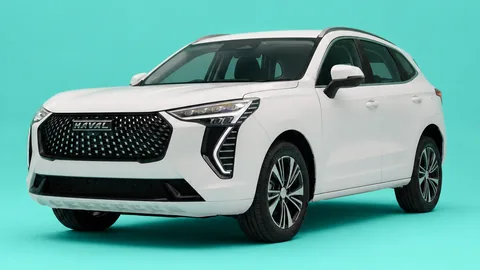
No. Haval-badged Jolion and H6 sit under GWM NZ distribution but are SUV-only and typically financed personally through a standard secured car loan, not a chattel mortgage. Cannon commercial structures (chattel mortgage, operating lease, finance lease) apply to the ute line specifically. Applying them to a personal Jolion or H6 usually fails IRD business-use tests and delays settlement.
No. GWM New Zealand refers finance applications to commercial-focused partner lenders rather than underwriting through a captive finance arm. Dealer finance offers on Cannon are effectively partner-lender rates with a referral margin, rather than subvented manufacturer-backed rates, except during specific GWM NZ promotion windows on Cannon or Cannon Alpha.
Yes, most NZ lenders allow it, but affordability is scrutinised closely. Where $7,000 is owed on the current ute and a $52,990 Cannon Alpha is being bought, the new loan becomes $59,990 before trade-in and deposit. Starting a Cannon loan underwater extends the time to build equity on a brand with still-firming residuals. Clearing the old loan with a private sale is usually the cleaner path.
LDV, GWM Cannon, and Foton all finance through standard NZ commercial-lender product at similar rates. LDV has the deepest NZ distribution via Inchcape and the broadest commercial range (T60 ute plus vans). GWM has a growing Cannon presence with 7-year warranty and the Haval SUVs alongside. Foton is niche at the budget end. Residuals on all three sit below the mainstream-Japanese ute average but are firming as NZ volumes grow.
For a $52,990 new Cannon Alpha on a 5-year chattel mortgage at around 8.5%, finance totals roughly $66,200 principal plus interest. Add RUC at 20,000 km a year ($7,600), diesel fuel ($14,000 to $18,000), insurance ($9,500 to $13,000), and servicing plus tyres ($9,500 to $13,000) for a rough all-in of $107,000 to $120,000 over 5 years, or around $410 a week. Business use recovers a meaningful slice via GST and interest deductibility.