Skip to content
Carfinance.org.nz
Isuzu logo Mainstream brand

Isuzu car finance calculator

Published 23 April 2026 · Last reviewed 23 April 2026 · Disclaimer

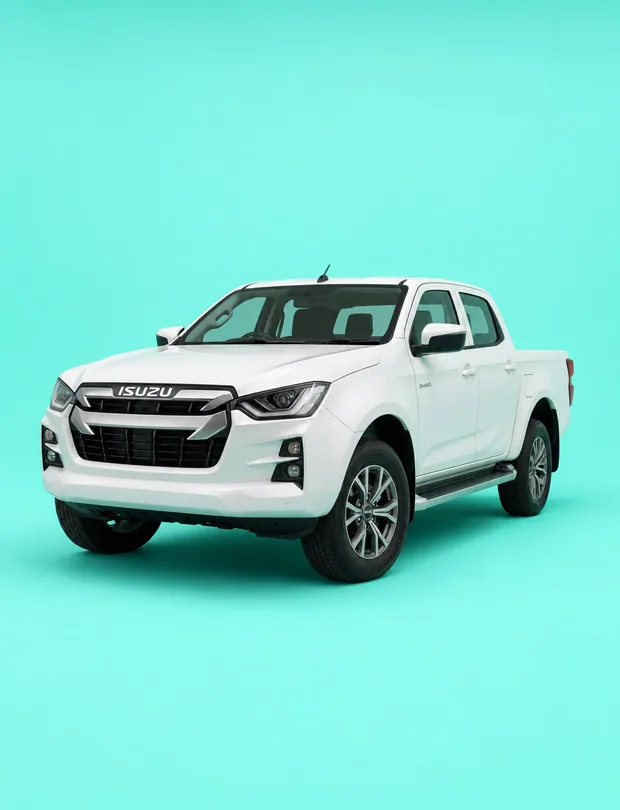
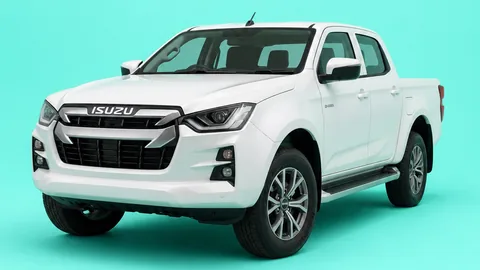
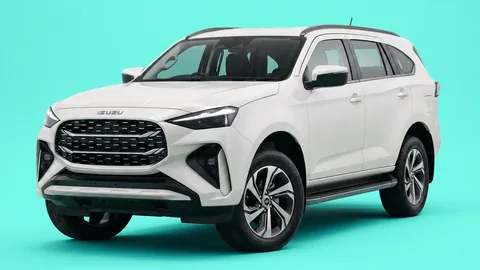
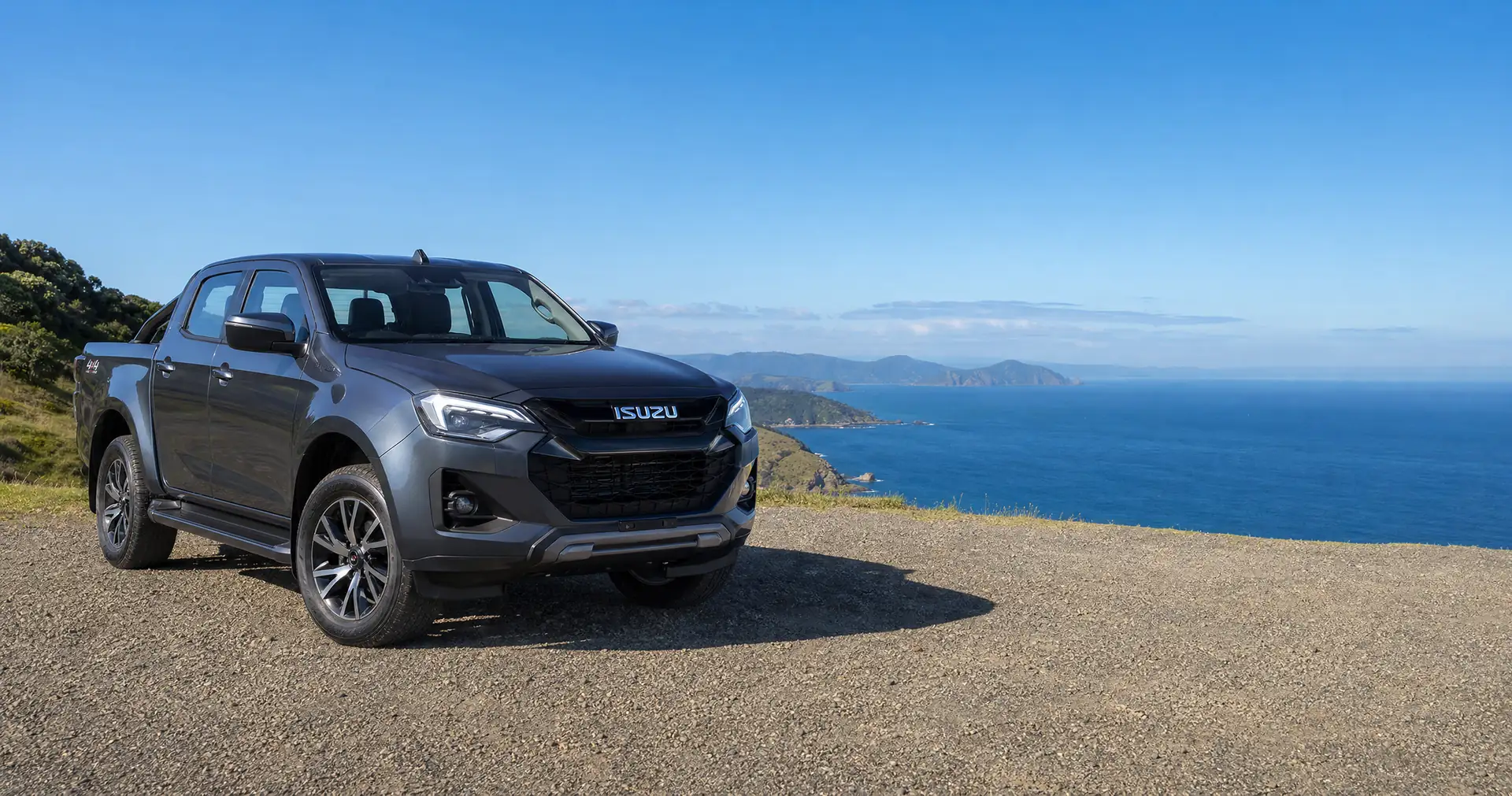
A commercial-led mainstream brand financed heavily by tradies, farmers, and small-business fleets across New Zealand. Isuzu Utes NZ (Isuzu NZ) distributes the D-Max double-cab and the MU-X seven-seat SUV, both built on the same diesel ladder-frame platform (MIA, Carjam). The D-Max cross-shops directly against Hilux, Ranger, Triton, and Navara, and it shares its mechanicals with the Mazda BT-50, which lenders treat as an effectively identical residual-value profile. The 6-year / 150,000 km factory warranty on new D-Max and MU-X (per Isuzu NZ current policy) is longer than most Japanese mainstream rivals, which reshapes the mechanical-breakdown-insurance decision. The range runs from a $16,000 used pre-facelift D-Max through to a $85,000 new X-Terrain with canopy and tow pack.

Your estimated repayment

Weekly

Disclaimer

$160/week

$320 /fortnight $693 /month
$35,000
$0
7.00% p.a.
5 years

We are not a finance company. Indicative only. Not a quote or offer of credit. Actual rates, fees, and repayments depend on your circumstances and the lender's decision.

Popular Isuzu models

The Isuzu range, by typical price.

Median used-car prices in NZ, 2026 market. Weekly figures assume 7% over 5 years with no deposit. Click a model for a dedicated calculator and FAQs.

Why this brand finances well

What lenders look for in a Isuzu.

  • D-Max residual-value modelling at NZ lenders is mature because the ute shares a platform with the Mazda BT-50, doubling the data pool lenders draw on and keeping underwriting decisions quick.
  • Chattel mortgage and commercial lease products are a core Isuzu conversation, because the D-Max is overwhelmingly a work vehicle and Isuzu NZ dealers are experienced at handling the business-finance paperwork alongside the sale.
  • The 6-year / 150,000 km factory warranty on new D-Max and MU-X (per Isuzu NZ current policy) runs through the full term of most 5-year finance structures, which supports lender residual confidence and reduces MBI add-on pressure.
  • Isuzu NZ's compact authorised dealer network covers every main centre and most secondary towns (Whangārei, New Plymouth, Invercargill), so warranty and recall work rarely pulls a tradie off the tools for long.
  • Parallel-import volume is low enough that the rate-premium and compliance conversations that dominate Toyota or Nissan finance files almost never come up, keeping the Isuzu application path clean.

Buyer notes

Where to get the best Isuzu rate.

For a new D-Max or MU-X, ask the Isuzu NZ dealer for any current finance referral rate and then benchmark it against an independent broker. Isuzu NZ does not run a captive-finance arm, so the dealer is introducing you to a panel lender on commission rather than offering factory subvention. On a used D-Max or MU-X, a broker almost always beats the selling dealer's finance desk. Separate the vehicle-price negotiation from the finance discussion.

No sign-up on our site. Our finance partner compares NZ lenders and returns a formal estimate after the lender's credit assessment.

New vs used

Financing a new Isuzu vs a used one.

The Isuzu finance decision splits between a new D-Max or MU-X under the 6-year factory warranty umbrella and used stock, where warranty runtime drops and MBI and service-history conversations become central. The two paths diverge more than they do on most mainstream brands because the warranty length genuinely changes the total-cost picture.

Path 1

New Isuzu

Broker first, dealer referral second

  • Isuzu NZ does not run a captive-finance arm in New Zealand, so new-vehicle finance is genuinely open-market rather than subvented.
  • The 6-year / 150,000 km factory warranty runs past the end of most 5-year finance terms, which removes most of the case for dealer-bundled mechanical breakdown insurance.
  • Trim choice (LS-M, LS, LS-U, X-Terrain) mostly affects loan size rather than rate; lenders treat all variants under the same product.
  • Pre-approve the business-finance structure (chattel mortgage, finance lease, or operating lease) before committing to a trim, because the right structure is worth several thousand dollars in tax outcome.

Verdict

Price the standard secured-ute or business-finance loan with an independent broker, then ask the Isuzu NZ dealer for their panel-lender referral rate. Without captive subvention, the broker almost always wins.

Path 2

Used Isuzu

Broker, shorter term, honest MBI conversation

  • Used Isuzu finance is never subvented; any dealer-desk rate is a marked-up open-market rate and a broker will usually undercut by 1 to 3 percentage points.
  • D-Max and MU-X residuals track the Mazda BT-50 and Hilux band closely, so a standard 4 to 5 year term rarely lands a buyer in negative equity.
  • Factory warranty on 2020 and earlier stock has expired or is close to it; the MBI conversation genuinely matters on these examples.
  • A pre-purchase inspection is worthwhile on ex-fleet double-cabs because high tow and load cycles leave wear signatures that do not always appear in the service history.

Verdict

Start with an independent broker quote. On a used D-Max or MU-X out of factory warranty, price a standalone MBI policy separately rather than letting the dealer bundle one into the loan.

Rule of thumb

On a new D-Max or MU-X the 6-year warranty covers the full loan term, so a 5-year loan is comfortable. On a used Isuzu out of factory warranty, shorten the term toward 3 to 4 years and price MBI as a standalone policy rather than a finance add-on.

Total cost of ownership

What a Isuzu really costs beyond the finance line.

Isuzu running costs are driven by the diesel ladder-frame platform shared across D-Max and MU-X. Servicing is predictable, RUC is unavoidable on every example, and insurance and tyres track the mainstream double-cab band closely. Fuel economy on the 3.0L turbo-diesel sits around the segment average under typical NZ use.

  • Servicing and consumables

    Averaged across a year. D-Max and MU-X share the same 3.0L turbo-diesel, so service intervals and DPF maintenance are similar on both. Ex-fleet double-cabs with heavy tow cycles push toward the top of the range.

    $130 to $210 per month
  • Insurance (full cover)

    D-Max double-cab sits $1,800 to $2,500 because utes are over-represented in theft claims and cost more to repair after a prang. MU-X runs $1,500 to $2,100 on passenger-SUV pricing.

    $1,500 to $2,500 per year
  • Road User Charges (diesel)

    Applies to every D-Max and MU-X, because the NZ range is diesel-only. At 25,000 km a year that is $1,900 before fuel, insurance, or servicing, and is the single largest variable in the annual cost comparison versus a petrol SUV.

    $76 per 1,000 km
  • Tyres

    D-Max and MU-X on 17 to 18-inch highway or all-terrain sets run $1,100 to $2,300. X-Terrain 18-inch all-terrains at the top; LS-M fleet-tyre replacements at the bottom. Typical replacement every 40,000 to 60,000 km.

    $1,100 to $2,300 per set
  • Fuel

    Based on 15,000 km a year at current NZ diesel pump prices. MU-X family use sits at the low end; a D-Max 4x4 towing regularly pushes toward the top of the range.

    $2,300 to $3,800 per year

Worth knowing

Diesel D-Max vs petrol RAV4 at the same finance weekly

Once RUC, higher insurance, and higher tyre cost are added, a diesel D-Max costs roughly $3,000 to $4,000 a year more to own than an equivalent-priced petrol RAV4, even when the finance weekly is matched. If the D-Max is a GST-claiming work vehicle the gap shrinks meaningfully. For personal-only use the RAV4 is materially cheaper.

Resale and equity

How Isuzu resale shapes your finance decision.

65 to 75%

value retained, 3-year-old D-Max

60 to 70%

value retained, 3-year-old MU-X

50 to 55%

mainstream-brand market average

Isuzu resale sits above the mainstream-brand average because the D-Max and MU-X both target durable workhorse buyers and the parc turns over slowly. Lender residual-value models benefit from the Mazda BT-50 data pool (same platform, different badge), so the underlying confidence in a three-year residual is unusually high for a brand of this volume. The MU-X tracks slightly below the D-Max because seven-seat diesel SUV demand is narrower than double-cab ute demand, but both comfortably clear the mainstream average.

For finance this means a 4 to 5 year term rarely lands an Isuzu buyer in negative equity. Trade-up equity at year three is usually real rather than theoretical, which matters if the business cycle or family needs suggest changing vehicles before the loan ends.

Match the Isuzu loan term to the replacement cycle rather than the maximum the lender will approve. Most tradie D-Max buyers trade every 4 to 6 years, so a 4 to 5 year finance term lines up cleanly with that cycle. An MU-X held for the long family haul is also comfortable at 5 years given residual strength.

Things to avoid

Isuzu finance traps we flag honestly.

An opinionated list. The commercial side of this site has no incentive to tell you these things, so we do.

Shopping D-Max and BT-50 as if they are different vehicles for finance purposes

The D-Max and Mazda BT-50 share the platform, so lenders apply effectively identical residual-value modelling and rate pricing. Buyers who spend weeks negotiating between the two on finance terms are usually negotiating trim and dealer relationship, not a real finance difference.

Mechanical breakdown insurance bundled on a new D-Max under factory warranty

The 6-year / 150,000 km Isuzu NZ factory warranty already covers the length of most 5-year finance terms. Rolling $2,500 to $4,000 of MBI into the loan on top of that duplicates cover and adds unnecessary interest. Decline the bundled MBI on new stock unless a specific gap exists.

Financing a work D-Max personally when the business could claim the GST

A tradie financing a $55,000 D-Max in their personal name loses the GST claim (around $7,174) and the interest deductibility against business income. Across a 4-year term that is a meaningful tax outcome. Confirm with your accountant whether chattel mortgage or lease fits before signing a personal loan.

Rolling accessories into the D-Max loan at the signing table

Canopies, tow bars, bull bars, and tray liners are commonly bundled into finance at the Isuzu NZ dealer. Adding $5,000 of accessories to a $50,000 D-Max loan can push total interest up by roughly $900 across a 5-year term. Price accessories against cash or a separate short loan.

Assuming fleet-finance pricing on a single personal D-Max

Some buyers quote fleet-style indicative rates they have heard from a trade friend, then discover the pricing applies to volume deals above 5 vehicles. A single personal D-Max sits on the standard retail secured-ute product. Price your loan on that basis, not on an unrelated fleet benchmark.

Stretching a used D-Max to a 7-year term to make the weekly fit

Stretching a $38,000 used D-Max loan to 7 years drops the weekly by around $50, but total interest grows from roughly $7,500 to well over $12,000 on typical used-ute rates. Resale strength helps, but it does not offset the extra interest. Keep Isuzu terms to 4 or 5 years.

Drivetrain economics

Hybrid vs petrol vs EV on a Isuzu.

Isuzu's NZ range is diesel-only. Every current D-Max and MU-X runs the 3.0L turbo-diesel four-cylinder; there is no petrol, hybrid, or fully electric variant in the local lineup. The drivetrain conversation is therefore not a comparison between options within the brand, but a comparison of the diesel economics against the petrol and hybrid alternatives you would otherwise buy.

Diesel (D-Max and MU-X 3.0L)

Rational above roughly 20,000 km a year or when towing is non-negotiable

  • The entire current NZ Isuzu range runs the 3.0L turbo-diesel; no petrol, hybrid, or EV is offered locally.
  • Road User Charges at $76 per 1,000 km apply and need to be factored into the weekly cost on top of finance.
  • 3,500 kg braked towing capacity on 4x4 D-Max variants is the main reason lifestyle buyers pick the diesel over a petrol SUV rival.
  • Residuals track the Mazda BT-50 and Hilux band closely, which reinforces the diesel decision at resale time.

Break-even heuristic

Because Isuzu is a diesel-only brand in New Zealand, the economic question is really whether a diesel ute or diesel SUV is the right vehicle category for you, not whether to pick a different Isuzu variant. If annual distance is under 10,000 km and towing is not a regular requirement, a petrol or hybrid SUV from a different brand is usually the cheaper total-cost outcome across a 5-year loan. Above roughly 20,000 km a year, or any regular tow or load work, the D-Max or MU-X diesel economics hold up.

Commercial and business use

Financing a Isuzu through your business.

Isuzu's NZ volume is disproportionately commercial. The D-Max sits on trade and small-business fleets in numbers out of proportion to the brand's overall share, and the MU-X is increasingly a family-plus-tow vehicle in lifestyle-block and small-business households. The three structures below treat the vehicle differently on the balance sheet, the GST return, and the tax position, and the right choice can be worth several thousand dollars across the term.

Chattel mortgage

You own the D-Max from day one

  • D-Max or MU-X sits on the business balance sheet as an asset from settlement.
  • GST on the full purchase price is claimable in the next GST return (around $7,174 on a $55,000 D-Max).
  • Finance interest deductible against business income; depreciation taken at IRD rates.
  • Lender registers security via PPSR; terms typically run 3 to 5 years on Isuzu stock.
  • Vehicle owned outright at the end of the term with no balloon to refinance.

Best for

Sole-trader sparkies, plumbers, builders, and farm operators with 1 or 2 utes on the tools, replacing every 4 to 6 years.

Operating lease

You rent the vehicle; the lessor wears residual risk

  • D-Max or MU-X stays off the business balance sheet (the lease company owns it).
  • Fixed monthly charge, often bundled with servicing, tyres, and registration.
  • No GST claim on purchase because the business never owns the vehicle.
  • Monthly payments are fully expensed to the P&L; no depreciation schedule to maintain.
  • Hand the vehicle back at term end with no resale-value exposure to the business.

Best for

Fleet operators running 5 or more utes who value predictable opex and want residual-value risk off their book.

Finance lease

Structured middle ground

  • Vehicle is on the business balance sheet but held under a formal lease agreement.
  • Lease payments deductible against business income; GST claimable on each monthly payment.
  • Residual (balloon) negotiated at signing, typically matching expected market value at term end.
  • At term end the business can pay the residual to own, refinance, or hand back depending on the lease terms.
  • Useful where cash-flow predictability matters more than outright ownership at day one.

Best for

Mid-sized trades and contracting businesses that want structured cash-flow predictability without the full operating-lease wrap.

Get accounting advice

For most sole-trader D-Max buyers, a chattel mortgage is the practical default. GST back in the next cycle, interest deductible across the term, and ownership at the end lines up with the typical 4 to 6 year replacement cycle. Fleet operators running five or more Isuzus generally move to operating leases as administrative simplicity outweighs ownership. Get accounting advice before signing; structure choice can be worth several thousand dollars in tax outcome across the life of the loan.

Case study

Worked example: financing a 2023 D-Max LS-U for a sparkie

The buyer

Electrical sole-trader in Tauranga, age 41, clean credit, roughly $115,000 annual profit, replacing a 2017 D-Max with 210,000 km.

The scenario

Purchasing a 2023 D-Max LS-U 4x4 double-cab for $54,000. Trade-in on the old D-Max: $16,000. Chattel mortgage structure so the vehicle sits on the business balance sheet and the GST component ($7,043) is reclaimable in the next return. Factory warranty runs through to 2029 or 150,000 km (per Isuzu NZ current policy), covering the full 4-year loan term.

The outcome

Monthly business cash-flow impact is roughly $853 before fuel, RUC, or servicing is added.

The $7,043 GST component is reclaimed in the next GST return after settlement, which effectively returns the deposit and covers the first few months of repayments.

Finance interest is deductible against the electrical business income across the 4-year term, and the D-Max depreciates at 30% diminishing value against the balance sheet under standard IRD rates.

The Isuzu NZ 6-year / 150,000 km factory warranty runs through the full loan term, which removes the case for bundling MBI into the finance and keeps the weekly cost honest.

At year 4 the D-Max is expected to be worth approximately $30,000 to $34,000 based on typical NZ D-Max residuals tracking the Mazda BT-50 band. The loan is paid off, the asset is owned outright, and the sparkie has a clean position to trade into the next ute when the cycle demands it.

Illustrative example. Not a promise of approval or rate. Your circumstances and the lender's own credit decision will determine your actual outcome.

Affordability check

What can I afford on my income?

A rough sanity check. We assume repayments should sit under 10% of your take-home pay, with a 5-year term at 7%.

Not an affordability assessment. Real lender decisions consider all your debts, expenses, and history.

$70,000
$20k $250k

Indicative safe loan

$30,000

At ~$135/week

Stretch maximum

$45,000

Only with no other debts

Apply this to the calculator

Common questions

Isuzu finance FAQ.

Is it cheaper to finance an Isuzu D-Max through the dealer or an independent broker?

An independent broker usually wins, because Isuzu NZ does not run a captive-finance arm in New Zealand. Dealer finance on a new or used D-Max is a panel-lender referral on commission, not a subvented factory offer, so the rate is open-market. A broker typically lands 1 to 3 percentage points lower on a like-for-like application. Get a broker quote first and use it to benchmark any dealer referral.

Does the D-Max finance differently from the Mazda BT-50 given the shared platform?

Not in any material way. Both utes sit in the same mainstream-ute lender product with effectively identical residual-value modelling, so rate, term, and loan-to-value outcomes are almost indistinguishable on a like-for-like application. The choice between D-Max and BT-50 is a dealer-relationship, trim-preference, and warranty-policy question, not a finance question.

Can I claim GST and finance interest if I buy a D-Max for my trades business?

Yes, in most cases. Under a chattel mortgage you claim the GST component in the next GST return (around $7,174 on a $55,000 D-Max) and deduct the finance interest against business income across the term. Depreciation runs at IRD rates against the balance sheet. A finance lease works similarly with GST claimable on each monthly payment. Confirm the fit with your accountant before signing.

How does the Isuzu 6-year warranty affect whether I should add mechanical breakdown insurance?

Materially. The Isuzu NZ factory warranty on new D-Max and MU-X runs 6 years or 150,000 km, whichever comes first (per Isuzu NZ current policy), which covers the length of most 5-year finance terms. Bundling MBI into the loan on new stock usually duplicates cover and adds unnecessary interest. Decline the dealer-bundled MBI on new Isuzus unless a specific gap in the factory terms exists.

How much deposit is typical when financing an Isuzu D-Max or MU-X in New Zealand?

For a used D-Max or MU-X, 10 to 20% is the common range (around $4,000 to $8,000 on a $40,000 D-Max). For a new D-Max under business finance, a 20% deposit is often used to anchor the chattel mortgage cleanly. A larger deposit usually drops the offered rate by 0.5 to 1.5 percentage points and protects against first-year depreciation, though it is not mandatory for approval.

Does Isuzu New Zealand offer factory or captive finance on the D-Max?

No. Isuzu Utes NZ does not operate a captive-finance arm in New Zealand. Isuzu NZ dealers introduce buyers to panel lenders for finance, but the rates are genuinely open-market rather than subvented, so there is no factory-subsidy equivalent to what Toyota Financial Services or Ford Credit offer on their own volume brands. That is precisely why an independent broker comparison matters.

How does Isuzu resale compare with Hilux and Ranger on finance outcomes?

D-Max residuals sit in the same band as Hilux and Ranger, typically retaining 65 to 75% of original value at three years on the NZ used market. Lenders treat all three in the same mainstream-ute product at essentially the same rate, so the finance outcome is near-identical on a matched term. Dealer network depth and trim preference usually matter more than finance differences when choosing between them.

Can I finance an older used D-Max, or is it too old for NZ lenders?

Most NZ secured-car-loan and commercial-vehicle products cap vehicle age at 12 to 15 years at loan-end date. A 10-year-old D-Max clears a 3-year term at most lenders but often not a 5-year one. D-Max parts availability and mechanical reputation are strong, so lenders usually consider the application at a rate 1 to 2 percentage points above a 3-year-old equivalent, with a tighter loan-to-value ratio.

Are parallel-imported Isuzus common, and how are they financed?

Parallel-import volume on Isuzus is low because the D-Max and MU-X are almost entirely NZ-new through Isuzu Utes NZ. Where a parallel-import D-Max does appear (usually ex-Thailand), most NZ lenders will fund it if compliance is cleared, but a 0.5 to 1.5 percentage point rate premium is common and the Isuzu NZ factory warranty will not transfer. On balance, sticking with NZ-new Isuzu stock is usually the cleaner finance outcome.

What happens if I trade my D-Max in halfway through the finance term?

If the trade-in value exceeds your outstanding loan balance (positive equity, common on D-Max given residual strength), the dealer pays out the old loan and any surplus applies to the new purchase. If it is below the balance (negative equity, rarer on D-Max than on most brands), the shortfall rolls into the new loan. Front-loaded accessories and 7-year terms are the usual cause of mid-term negative equity on a D-Max.

Should I choose fleet finance or personal-name finance on a single D-Max?

If the D-Max is primarily a business vehicle and you are GST-registered, a business-finance structure (chattel mortgage, finance lease, or operating lease) almost always beats a personal secured-car loan. The GST claim, interest deductibility, and depreciation outcomes alone typically outweigh any rate gap. Fleet-specific pricing usually applies above 5 vehicles, so a single D-Max sits on retail business-finance products rather than fleet-tier pricing.

What is the typical total cost of ownership for a financed D-Max over 5 years?

For a $45,000 used D-Max on a 5-year loan at roughly 8%, finance costs total about $54,700 (principal and interest). Add insurance ($10,000 to $12,500), RUC at 20,000 km a year ($7,600), diesel fuel ($16,000 to $19,000), and servicing plus tyres ($12,000 to $14,000) for a rough all-in of $100,000 to $107,000 over 5 years, or around $390 a week. Business use recovers a meaningful slice via GST and deductions.

About this article
Published
23 April 2026
Last reviewed
23 April 2026

Methodology

All repayment figures on this page are calculated live from the inputs entered into the calculator using the standard amortised-loan formula. Indicative rates are drawn from observing publicly-advertised NZ secured-car-loan and commercial-vehicle pricing across mainstream lenders in the twelve months before the last review date. D-Max and MU-X used-price bands are observed from recent TradeMe and AutoTrader listings for each era. Running-cost figures (fuel, servicing, insurance, tyres, RUC) are cross-checked against Consumer NZ, AA New Zealand, NZTA, and EECA public guidance. The page is updated annually, or sooner if Isuzu NZ makes a material pricing or warranty-policy change.

Sources

Apply for Isuzu finance.

Our finance partner compares NZ lenders and returns a formal estimate after the lender's credit assessment. Calculator inputs travel through to the application so nothing gets re-typed.

All brands

Disclaimer

A car loan is a commitment that runs for years, and repayments come out of the same pay cheque as everything else. Before committing, it is worth modelling the weekly and monthly cost against the household budget, which is what this site is built to help with. Borrowing at a level that stays comfortable on a bad week, not a good one, is widely regarded as the safer frame.

Carfinance.org.nz earns a commission from a partner brand when a visitor applies through this site and their application is approved. That commission is paid by the partner, not the applicant, and it does not influence the rate the lender offers. We refer every visitor to the same partner because they compare multiple New Zealand lenders on the applicant's behalf, so the recommendation is not driven by a sponsored deal. Every figure shown on this site is a modelled estimate based on the inputs entered; the actual rate, fees, and repayments are set by the lender after assessing the applicant's circumstances and own credit decision. Carfinance.org.nz is a calculator and information tool. We are not a lender, not a broker, and not a registered financial adviser. Any decision about whether a specific loan suits a specific situation is best made after talking with the lender, and for amounts that materially affect the household, with a registered financial adviser.