It depends on whether the Jeep is new or used and whether a subvention is live. On current-stock new Wrangler or Grand Cherokee during a Jeep NZ promotion, the dealer partner can be competitive on rate. On used Jeeps, or new Jeeps outside a promotion, an independent broker almost always wins by 1 to 3 percentage points. A broker quote first gives the dealer offer something to be measured against.
Not always, but it's more common on Jeeps than on the Japanese mainstream. Expect a pre-purchase inspection requirement on Grand Cherokee and Wrangler examples past 120,000 km, or on any Jeep with unclear service history. Budget $300 to $450 for a specialist 4WD inspection; most finance brokers will flag the requirement at application.
For a used Wrangler, Grand Cherokee, or Gladiator, 15 to 20% is a comfortable range because Jeep depreciation runs faster than mainstream Japanese brands. On a $50,000 used Grand Cherokee that's $7,500 to $10,000. Jeep NZ subvention deals on new stock often require 20 to 30%. A larger deposit meaningfully reduces negative-equity risk in years two and three.
Usually worth genuine evaluation rather than a reflex decision, because Jeep reliability perception is softer than the mainstream. Most buyers compare a standalone MBI policy against the dealer-bundled version; the bundled one often costs more once interest is added across the loan term. On a Jeep past 80,000 km with no remaining factory cover, a standalone MBI is often a rational spend.
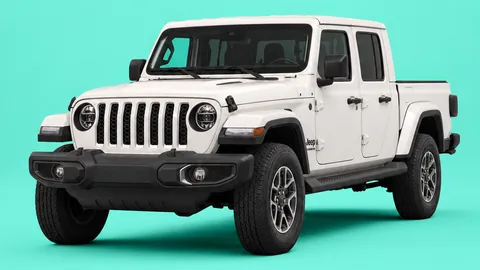
Yes, in most cases. If the Gladiator is primarily used for business, a chattel mortgage lets you claim the full GST component on purchase in the next return (around $9,783 on a $75,000 Gladiator) and deduct the finance interest across the term. Depreciation runs at IRD rates against the balance sheet. Confirm 80%+ business use with your accountant before signing.
Yes. Wrangler residuals track close to the mainstream brand average in NZ, while Grand Cherokee depreciation runs faster, particularly on higher-spec trims. For finance this means Wrangler is more comfortable on a standard 5-year term, while Grand Cherokee is safer on 3 to 4 years with a 15% or larger deposit to stay out of negative-equity territory.
Usually yes, but lenders become more cautious. Most NZ secured-car-loan products cap vehicle age at 12 to 15 years at loan-end date, so a 10-year-old Grand Cherokee can clear a 3-year term but often not a 5-year one. Older Jeeps also tend to attract a 1 to 2 percentage point rate premium and a tighter loan-to-value ratio, plus a likely pre-purchase inspection requirement.
Some NZ lenders include qualifying plug-in hybrids in an "efficient vehicle" loan tier at 0.25 to 0.75 percentage points below standard. Availability varies and changes, and dedicated EV products (which offer a larger discount) typically exclude PHEVs. A broker will flag whether a green-rate tier applies at application; do not assume it without checking.
Rates are similar on a like-for-like loan because all three are handled by the same NZ lender product set. The practical difference is residual strength: the Prado tracks near the top of the NZ 4WD resale table, the Wrangler is comfortably mainstream-average, and the Grand Cherokee sits below both. Land Rover is more variable by model. For finance, Prado supports the longest comfortable term, then Wrangler, then Grand Cherokee.
Yes, most dealers will offer to, but think carefully about the total interest cost. Adding $9,000 of off-road accessories to a $65,000 Wrangler loan on a 5-year term at 8.5% adds roughly $2,100 in interest. A shorter second loan for accessories, cash for them, or delaying the install until the main loan is smaller usually lands cheaper overall.
If your trade-in is worth more than the balance still owing, the dealer pays off the old loan and any surplus applies to the next purchase. On Wrangler this is the more common position; on Grand Cherokee, faster depreciation means negative equity is more likely to appear in years two and three, with the shortfall rolling into the new loan. Longer terms, higher original finance amounts, and rolled-in accessories all increase negative-equity risk.
For a $55,000 used Wrangler on a 5-year loan at around 8.5%, finance totals roughly $67,800 principal plus interest. Add insurance ($10,000 to $14,000), fuel ($18,000 to $24,000 on a V6 petrol), and servicing plus tyres ($13,000 to $18,000) for a rough all-in of $110,000 to $125,000 over 5 years, or around $450 a week. Running costs sit well above a mainstream SUV and should be budgeted conservatively.