
2010-2015 ex-Japan import
$18,000Japanese-market RX270 and RX350. Typical 100,000 to 170,000 km. Odometer verification against the Carjam history tends to be treated as essential before financing.
Weekly
$82.25
Monthly
$356.42
Lexus's volume mid-size SUV and the most-imported Lexus nameplate in New Zealand.
Last reviewed: 24 April 2026
Your estimated repayment
Weekly
$238/week
We are not a finance company. Indicative only. Not a quote or offer of credit. Actual rates, fees, and repayments depend on your circumstances and the lender's decision.
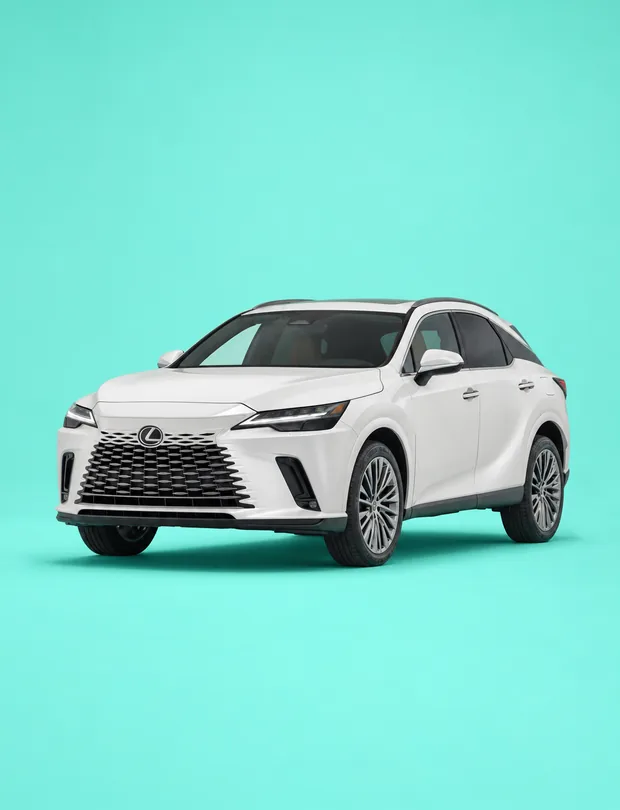 Lexus RX finance calculator Not a lender. Not a broker.
 The RX is the default Lexus in New Zealand and carries more of the brand's used-market volume than any other model. NZ parc runs as a mix of NZ-new RX350h and RX450h stock alongside a large Japanese-import pool covering RX270, RX350, and earlier RX450h variants, which is the widest import spread of any Lexus nameplate. Current NZ-new stock leans on the hybrid RX350h and RX450h+ plug-in hybrid, with a small RX500h performance tier at the top. The RX is cross-shopped against BMW X5, Audi Q7, Volvo XC90, and upper RAV4 hybrid trims by buyers wanting premium mid-size SUV feel with Toyota-group drivetrain reliability.
Calculate repaymentsIndicative only. Not a quote or offer of credit.
Year by year
Typical NZ market prices and the weekly cost of financing each. All figures assume 7% over 5 years with no deposit. Indicative only; open the full calculator to pre-set your own rate and term.
2010-2015 ex-Japan import
$18,000Japanese-market RX270 and RX350. Typical 100,000 to 170,000 km. Odometer verification against the Carjam history tends to be treated as essential before financing.
Weekly
$82.25
Monthly
$356.42
2016-2019 used (NZ-new and late import)
$35,000Fourth-generation AL20 RX. RX350 petrol V6 and RX450h hybrid both common. Facelift from 2019 adds Apple CarPlay and updated Lexus Safety System+.
Weekly
$159.93
Monthly
$693.04
2020-2022 used
$58,000Fourth-generation AL20 facelift. RX450h hybrid the dominant variant on Lexus NZ dealer forecourts, commonly returned from three-year corporate and lease cycles.
Weekly
$265.03
Monthly
$1,148.47
2023+ new/nearly-new
$98,000Fifth-generation AL30. RX350h, RX450h+ plug-in hybrid, and RX500h performance hybrid cover the current NZ-new range; Lexus Encore bundles loan-car, valet, and concierge entitlements across the first three years of ownership.
Weekly
$447.81
Monthly
$1,940.52
Who this suits
Four real scenarios
Representative NZ buyers and the numbers behind their deals. Weekly and rate figures are indicative and shown for comparison. Your own rate is confirmed by the lender after application.
Auckland Remuera hybrid upgrade from an ES
2024 AL30 RX 350h Limited, NZ-new, 8,000 km demo
$118,000 · $28,000 deposit, 4 years at 7.85% (indicative)
A Remuera professional couple in their early fifties stepping out of a 2020 Lexus ES 300h sedan at the Lexus of Auckland dealer on Great South Road, moving into the higher-riding AL30 RX 350h for the easier ingress, the bigger boot, and the hybrid drivetrain familiar from the outgoing ES. A 24% cash deposit from the ES trade plus a portion of a term-deposit maturity brought the financed balance under $90,000 and moved the indicative rate into the tighter band for the applicant profile. A four-year consumer term was chosen to stay inside the Lexus NZ factory warranty horizon on the new RX. On indicative NZ used-market trends, comparable NZ-new AL30 RX 350h Limited stock is expected to trade in the high-$80k range at 2030 Auckland dealer values.
$525 per week
Wellington Khandallah ex-lease RX 450h
2021 AL20 RX 450h F Sport, NZ-new ex-lease, 56,000 km
$72,000 · $12,000 deposit, 5 years at 8.25% (indicative)
A Khandallah dual-income household in their mid-forties picking up a just-returned three-year lease RX 450h F Sport at the Lexus of Wellington dealer on Taranaki Street, chosen over a current-generation AL30 because the ex-lease price bought more trim per dollar and the AL20 infotainment (pre-touchscreen era) was acceptable on a car the household expected to keep five years. The 3.5-litre V6 hybrid was preferred over a petrol-only equivalent for the motorway fuel economy on regular trips to Palmerston North and Masterton. A five-year broker-arranged consumer loan sat a little under the dealer-yard indicative on the day, and the Lexus NZ hybrid traction-battery extended warranty (8 years or 160,000 km from new) was confirmed transferable before settlement.
$293 per week
Hawke's Bay retiree with Lexus Encore
2024 AL30 RX 500h F Sport Performance, NZ-new, 4,000 km
$142,000 · $52,000 deposit, 3 years at 7.75% (indicative)
A semi-retired Havelock North household in their mid-sixties putting a meaningful portion of a managed-fund drawdown against a new RX 500h F Sport Performance at the Lexus of Hawke's Bay service agent, with full NZ-new entitlement to the Lexus Encore ownership programme (loan-car access at any Lexus NZ dealer, valet-at-service, and a concierge drive-away entitlement bundled with the first three years of ownership). A 37% cash deposit kept the financed balance at $90,000, and a three-year term on fixed superannuation and drawdown income held total interest close to $11,200 on these indicative numbers. Hawke's Bay insurance sits at the lower end of the national premium-SUV spread, which was material to the all-in weekly budget and was priced into the decision.
$597 per week
Queenstown family tow household on the PHEV RX 450h+
2024 AL30 RX 450h+ Limited PHEV, NZ-new, 12,000 km
$144,900 · $22,000 deposit, 5 years at 7.95% (indicative)
A Frankton Queenstown family running the RX 450h+ plug-in hybrid as the primary family SUV across a winter ski-access commute to Coronet Peak and Cardrona plus regular summer tows of a single-horse float to regional events through Cromwell and Wanaka. The plug-in variant was preferred over the self-charging RX 350h for the up to 85 km electric-only range on daily school runs and the local-PV solar-panel charging set-up at home, with the 2,000 kg braked-tow capacity matching the household requirement. A five-year broker-arranged consumer loan was chosen over a balloon structure because the household plans to keep the RX past the five-year horizon, and the petrol-PHEV RUC rate of $38 per 1,000 km charged on all distance travelled was factored into the running-cost budget alongside comprehensive insurance at an agreed value.
$577 per week
The real number
Five years of real outlay on a representative NZ-new 2024 AL30 RX 350h Limited, financed at 7% over 5 years with no deposit, driven 15,000 km a year from an Auckland base. The weekly finance repayment is the headline, but premium petrol (Lexus NZ dealer guidance points to 95 minimum on the 2.5 A25A hybrid), Auckland insurance on an agreed value above $100,000, Lexus NZ dealer scheduled servicing, and Lexus Encore inclusions bundled with the first three years of ownership all shape the true cost per week. The RX is commonly chosen for premium-SUV feel with a hybrid running-cost curve closer to a mainstream hybrid SUV than to a BMW X5 or Audi Q7 petrol equivalent; running-cost separation is where that thesis actually lands or fails.
Purchase price
$118,000
NZ-new 2024 AL30 RX 350h Limited at current Lexus NZ list. Negotiated drive-away pricing on in-stock cars typically sits a touch lower when Lexus NZ runs end-of-quarter stock clearance on current Limited specification.
Finance interest
$22,230
Indicative 7% over 5 years, no deposit, amortising. Actual rate is set by the lender after credit assessment. Lexus Financial Services (the Lexus-branded Toyota Financial Services NZ captive) occasionally prices subvented offers below this benchmark on new stock around quarter end.
Premium petrol (95/98)
$15,040
15,000 km/year at 6.8 L/100 km real-world on the A25A hybrid, averaged $2.95/L for 95 premium across the 5 years. Lexus NZ dealer guidance points to 95 minimum for warranty intent, and Auckland urban duty typically skews the RX 350h economy a little better than highway-heavy profiles because of hybrid regenerative-braking benefit at city speeds.
Comprehensive insurance
$9,800
Auckland band for an RX 350h Limited with off-street storage and an agreed value at purchase price: around $2,050 at year 1, trending down as agreed value drops. Lexus RX premiums typically sit a touch below equivalent BMW X5 and Mercedes GLE bands in practice, reflecting the RX theft profile and claim-frequency pattern on NZ insurer data.
Scheduled servicing
$3,200
Lexus NZ dealer scheduled servicing at 15,000 km intervals across five intervals, averaging $420 to $540 per visit. Lexus Encore bundles loan-car access, valet-at-service, and a concierge drive-away entitlement across the first three years of NZ-new ownership, which materially changes the service-day experience without appearing on this line.
Tyres
$2,800
One full set replacement around year 4 at roughly $2,200 on the 235/50 R21 Limited fitment, plus rotations and a spare top-up. Larger 21-inch wheels on the Limited and F Sport trims typically wear inside shoulders a touch faster than the 19-inch wheels on the base RX 350h.
Rego and WOF
$930
Annual registration for all five years, plus WOFs yearly from year three. No RUC on the self-charging RX 350h and RX 500h hybrid variants; the plug-in RX 450h+ variant attracts the lighter PHEV RUC rate on all distance travelled, which sits outside this specific RX 350h Limited scenario.
Total five-year cash outlay
$172,000
Assumes: 2024 AL30 RX 350h Limited at $118,000 new, 15,000 km/year across 75,000 km total, real-world hybrid consumption 6.8 L/100 km on 95/98 premium at $2.95/L, Auckland insurance band, Lexus NZ dealer scheduled servicing at 15,000 km intervals, Lexus Encore inclusions across the first three years. Indicative only.
What it's worth later
RX residuals on NZ-new stock are generally reckoned among the strongest-retaining premium SUVs in New Zealand, on indicative NZ used-market trends observed across TradeMe and AutoTrader listing patterns for AL20 and AL30 Limited and F Sport stock. The drivers most frequently mentioned are hybrid drivetrain reliability (the RX 450h uses the 2GR-FXE V6 hybrid, the RX 500h uses the T24A-FTS turbo hybrid, and both have long reliability histories across Toyota-group platforms), the Lexus NZ dealer service experience supporting second-owner confidence, and a thinner new-stock supply than equivalent German-premium SUVs which holds used-market demand firmer than the segment average. The first material step down still typically appears at year three, where the ex-lease and corporate-return pool releases into the used channel concurrently and pulls achievable retail back a few percent.
Based on a 2024 AL30 RX 350h Limited purchased new at $118,000. Indicative NZ used-market 2026 pricing.
Year 1
85%
$100,300
First-year drop has historically tracked among the shallowest curves in the premium mid-to-large SUV bracket on NZ data. Limited and F Sport optioned cars typically hold stronger than the base RX 350h trim from what we see, reflecting second-owner demand for the option packs on the used market.
Year 3
70%
$82,600
Ex-lease and ex-corporate AL30 stock typically lands on the NZ used market in volume around this age, which historically pulls achievable retail back a few percent against earlier years. The ex-lease dip on the RX curve is common as shallower than the equivalent BMW X5 or Mercedes GLE dip at the same age, on indicative NZ used-market trends.
Year 5
58%
$68,440
Common exit point for five-year consumer-loan buyers. Factory warranty lapses around here for NZ-new stock and the Lexus NZ hybrid traction-battery extended warranty (8 years or 160,000 km from new) becomes a meaningful paperwork item on the used market. A transferable L/Certified Lexus pre-owned programme history most reviewers give it the single strongest documentation signal on the used RX at this age.
Year 7
46%
$54,280
Used-market supply expands as early AL30 stock ages into private-sale territory and Japanese-import AL20 RX 450h examples start to land on the NZ market from the 2016 to 2018 registration bracket. Loan approvals past this point typically depend on kilometres, Lexus NZ dealer service-book continuity, and evidence of the hybrid traction-battery state-of-health check being documented on the most recent service.
Why this matters for finance
On indicative NZ used-market trends, a zero-deposit five-year loan on a new RX historically sees the amortisation curve catch the value-loss curve somewhere between month 14 and 18, which is noticeably earlier than the equivalent BMW X5 or Mercedes GLE at the same structure and is one widely cited reason households planning to keep the RX past the five-year horizon often favour a straight amortising loan over a balloon structure. The Lexus Financial Services captive (the Lexus-branded Toyota Financial Services NZ operation) does run balloon-structure promotions on new stock around quarter end, which work cleanly with this curve on three or four-year terms, but the usual pattern on RX buyers intending to hold long-term is the amortising consumer loan because RX residuals typically track close enough to the amortisation curve that the balloon saves less per week than on a steeper-depreciating German equivalent.
Financing notes
At $60,000 across a five-year term at 7.6% (indicative), the weekly lands around $278, or $1,210 a month. Shortening to three years pushes the weekly up to roughly $425 but cuts total interest by more than half. On ex-Japan imports priced in the $18,000 to $30,000 band, a three or four-year term with a larger deposit is commonly chosen so the balance stays ahead of the steeper import resale curve, because import residuals are typically thinner than NZ-new equivalents on the same age and kilometres.
Before finance settles
The used RX market in New Zealand is fed by three distinct streams: the second-generation XU30 (2003 to 2008/09) and third-generation AL10 NZ-new stock (2009 to 2015, increasingly rare), AL20 NZ-new and ex-lease stock (2015 to 2022), and the current AL30 NZ-new stock (2023 onward). On top of that sits a substantial Japanese-market used-import pool, which is the widest import spread of any Lexus nameplate in New Zealand and pulls through every generation from RX270 and RX350 petrol V6 stock to RX450h hybrid and RX450hL seven-seat variants. A careful inspection at a Lexus NZ dealer or an experienced Toyota-group specialist before finance settles is generally reckoned money well spent, so the lender is pricing the actual vehicle and not a concealed mechanical, paperwork, or provenance issue. Most lenders will expect comprehensive insurance and a clear title; the used-car loan page covers the general process.
The AL10 RX 450h uses a hybrid traction battery that a Lexus NZ dealer scan tool reads for state of health in about twenty minutes, typically costing under $150. A battery showing material degradation before 150,000 km is uncommon typically on AL10 examples, and the Lexus NZ hybrid traction-battery extended warranty (8 years or 160,000 km from new) has commonly lapsed on any AL10 by current age; replacement outside warranty at a Lexus NZ dealer is typically a five-figure job. Paperwork of a recent state-of-health check is commonly regarded as a plus on any AL10 RX 450h at inspection.
The AL20 RX shipped the Lexus Remote Touch interface controlling the fixed 12.3-inch non-touchscreen display, which received several software updates through 2015 to 2022 addressing Apple CarPlay rollout (from the 2019 facelift), Bluetooth stability, and navigation map refreshes. A software-version check via the Lexus NZ dealer diagnostic typically surfaces whether the car has received the latest campaign, and uncommon display behaviour on older firmware is commonly resolved by a dealer flash. AL20 cars predating the 2019 facelift Apple CarPlay rollout are typical to soften a touch faster on the used market at the same kilometres than facelift cars with CarPlay baked in.
The current AL30 RX ships the Lexus Safety System+ suite with front camera, radar, and driver-monitor components that require recalibration any time the windscreen is replaced or the camera is disturbed. Receipts showing the calibration is commonly requested on any AL30 with an aftermarket windscreen or a repaired front-end panel, because an uncalibrated system can silently disable lane-keep, pre-collision braking, and adaptive cruise. Full Lexus Safety System+ function is typically a comprehensive-insurance expectation while the RX is on finance.
A Carjam report separates NZ-new stock from Japanese imports and flags the odometer history on imports. Imports (the RX has substantial import supply, wider than any other Lexus nameplate) typically show a price saving of 15 to 30% against equivalent NZ-new kilometres, but lenders usually apply a slightly higher indicative rate on imports because residual data is thinner and Lexus Encore does not apply to imported stock. The Japanese auction sheet, where available, commonly settles any doubt about condition grade and real odometer, and tends to be credited with the single most useful fraud check on any imported AL10 or AL20 RX 450h.
A stamped Lexus NZ dealer service book with scheduled service entries at 15,000 km intervals typically adds several thousand dollars to the achievable resale on a four to seven-year-old RX, based on NZ used-market listing patterns. A full Lexus NZ franchised-dealer history is commonly regarded as the single strongest documentation signal on an otherwise unremarkable AL20 RX 450h, and on the segment the presence of Lexus Encore paperwork (loan-car, valet, and concierge entitlements across the first three years) is often a meaningful difference on the achievable private-sale price of a four-year-old example.
The AL20 facelift (2019+) and all AL30 RX examples carry Lexus Safety System+ with front-camera and radar components mounted behind the windscreen grille. Any replaced windscreen, bumper, or grille on an inspected RX commonly triggers a Lexus NZ dealer calibration check, because an uncalibrated system can silently drop adaptive cruise, pre-collision braking, and lane-trace function. Receipts confirming post-repair calibration are commonly requested at inspection on any RX with a disclosed panel or glass repair in the vehicle history.
F Sport trims ship with 21-inch wheels and an Adaptive Variable Suspension (AVS) adaptive-damper set-up on AL20 and AL30 F Sport examples. Inspection commonly checks kerb-strike damage on the 21-inch alloys, AVS damper-leak indications, and front-tyre inside-shoulder wear, all of which are commonly seen on F Sport cars driven harder or on rougher provincial roads than the base RX 350 or RX 350h sees. An F Sport with documented suspension work is typically priced fairly; undocumented AVS fault codes on a diagnostic pull are commonly raised in the negotiation before finance is drawn down.
Off-dealer
A meaningful share of used RX transactions in New Zealand sit outside the franchised-dealer channel, especially on AL10 examples, older NZ-new AL20 sales traded between households, and the substantial Japanese-import AL10 and AL20 RX 450h pool moved through smaller independent lots and private classifieds. Financing a private-sale RX is entirely normal through a broker. The process is simply a couple of extra steps because there's no dealer sitting between the borrower and the lender, and on a premium SUV with meaningful import supply the documentation check matters more than on a mainstream equivalent.
An indicative broker pre-approval before negotiating with the seller is a common first step on any private-sale RX. Pre-approval in hand typically signals to the seller that you are funded, which often strengthens the negotiating position on a privately listed premium SUV where private asking prices tend to start optimistic on RX stock specifically.
A Carjam history report on the VIN is where the process typically starts. Any secured interest listed on the PPSR must be cleared by the seller before or at settlement; an uncleared interest means the lender who financed the last owner still has claim over the vehicle. Japanese-market AL10 and AL20 RX 450h imports also commonly show prior odometer readings against the current reading on Carjam, which is the single most useful fraud check on the segment given the substantial import supply.
A pre-purchase inspection at a Lexus NZ franchised dealer, rather than a generic AA or VTNZ check, is typically worthwhile on a used RX because the RX-specific items (hybrid traction-battery state of health, Remote Touch firmware, Safety System+ calibration, AVS adaptive dampers on F Sport) are surfaced more reliably by a Lexus-trained technician. The dealer inspection typically costs $280 to $450 and commonly uncovers items a generic mechanical check would miss.
The broker typically needs the purchase details (VIN, agreed price, odometer, seller bank details) to arrange a direct payment to the seller at settlement, rather than to you. Direct-to-seller disbursement is the widely preferred pattern on private sales and protects both sides from mid-transaction disputes.
Vehicle transfer through NZTA online happens on the same day as settlement, and the lender typically files its own security interest on the PPSR at that point. The buyer drives away with clear title and a single registered security interest in the lender's name.
Usually a loan condition
Comprehensive insurance is almost always a loan condition while the RX is on finance, because the vehicle is the lender's security, and on a premium SUV with an agreed value typically above $60,000 the policy premium materially affects the real weekly cost of ownership. Lexus RX premiums are usual to sit a touch below equivalent BMW X5 and Mercedes-Benz GLE bands in practice, reflecting the RX theft profile and claim-frequency pattern on NZ insurer data rather than any difference in agreed value at the same price point. The bands below are indicative NZ market numbers at 2026 for an RX with a clean driver record; F Sport and Limited variants on 21-inch wheels may see a modest trim loading, and actual quotes are widely verified before being used as a budgeting figure.
Auckland
$1,900 to $2,700
RX 350h Limited or RX 500h F Sport Performance, off-street parking
Auckland shows the higher end of RX theft claim frequency on NZ insurer data, though patterns are widely reported as lower than equivalent German-premium SUVs at the same price point. AMI, State, Tower, and the premium-brand insurers (Vero, NZI) typically price a premium for kerbside parking in inner-suburb postcodes; garaged or off-street storage typically drops premiums materially.
Wellington
$1,550 to $2,200
RX 450h F Sport or RX 350h, street or off-street parking
Lower theft rates than Auckland, but weather-driven damage and flooding claims through the Wellington hills are priced in. Multi-vehicle and multi-policy discounts typically bring the final figure toward the lower end of the band on an RX running alongside a second household car on the same policy.
Canterbury and Otago
$1,250 to $1,800
RX 350h or RX 450h+ PHEV, rural or off-street
Lower theft risk and typically better parking outcomes across Canterbury and Otago. Rural-use ticks and paid-up claim-free driver discounts often drop the final figure further on an RX used as the primary family vehicle on lifestyle-block or outer-suburban duty. Hawke's Bay and Bay of Plenty bands typically sit in the same range as Canterbury rather than the Auckland band.
Get actual quotes before settling. Insurance cost varies with credit profile, kilometres, and excess choices more than these bands can show.
Compare Lexus car insuranceThe direct alternatives
The Lexus RX, BMW X5, Mercedes-Benz GLE, Audi Q7, and Volvo XC90 sit within a defined premium mid-to-large SUV bracket at 2026 NZ pricing, with the RX playing the hybrid-first role in the segment and the three German entries and the Volvo covering a broader petrol, diesel, PHEV, and electric drivetrain spread. All five finance on broadly similar indicative rates at the same applicant profile. The meaningful differences show up in resale curve depth, drivetrain mix, dealer-network density, captive-finance programme design, and known issues rather than in the weekly repayment. Spec-for-spec, any of these is a defensible NZ premium-SUV finance decision.
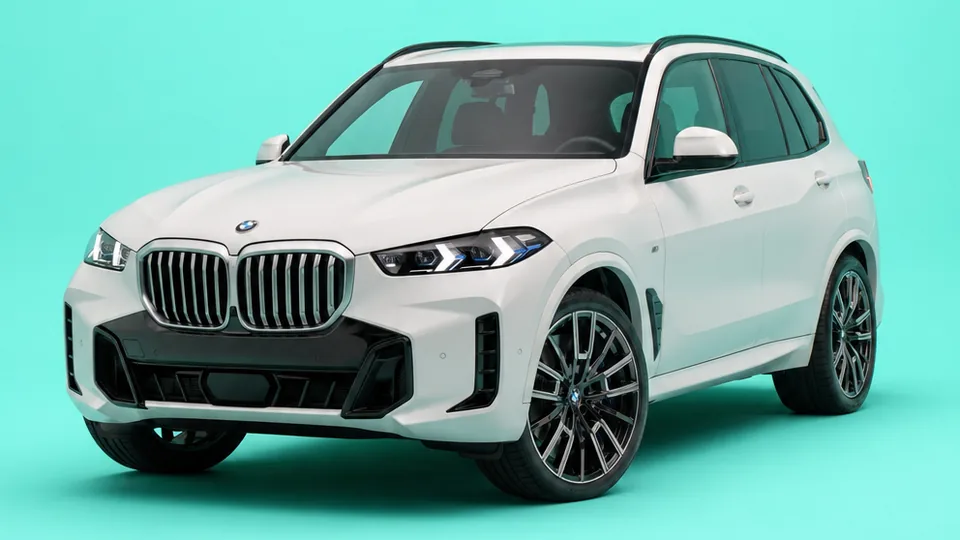
Competitor
$125k-$200k new, $45k-$140k used
X5 reads as the more engaging drive with the sharper steering and the broader petrol, diesel, PHEV, and M Performance ladder; RX is generally considered the quieter long-distance cabin and the historically stronger three-year trade-in on NZ data. Buyers who prioritise drive character and drivetrain breadth often favour X5; buyers who prioritise residual depth and hybrid running-cost pattern typically favour RX.
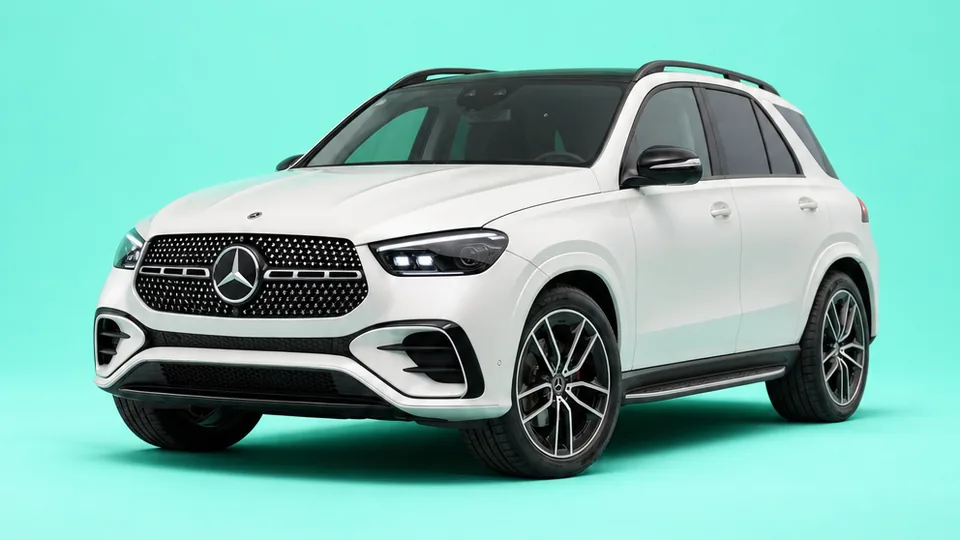
Competitor
$135k-$210k new, $50k-$150k used
GLE generally holds the more settled long-distance tourer on the standard air-suspension option with the broadest drivetrain spread in this comparison; RX generally holds the stronger three-year trade-in and the historically shallower depreciation curve on hybrid drivetrains. Buyers who prioritise ride comfort and drivetrain breadth often favour GLE; buyers who prioritise residual strength and hybrid ownership cost typically favour RX.
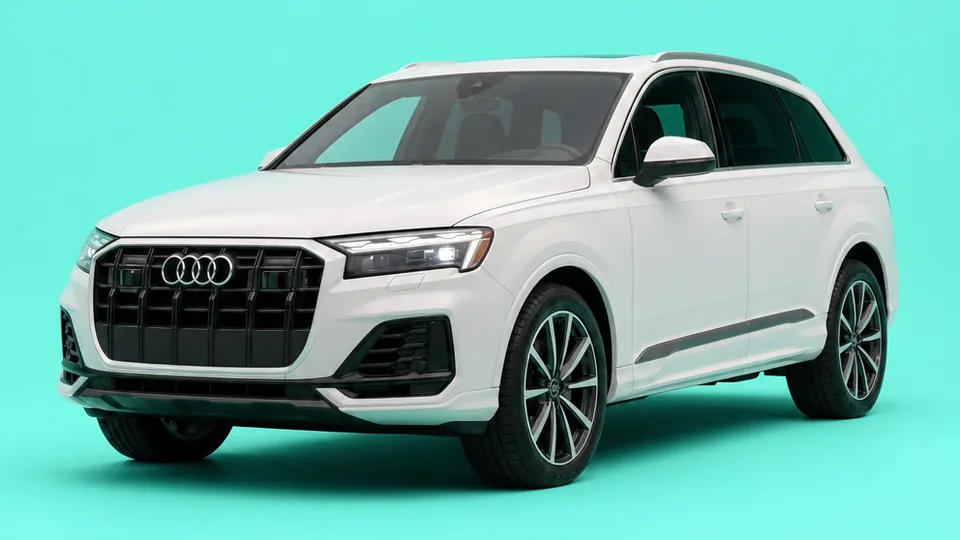
Competitor
$135k-$205k new, $42k-$135k used
Q7 tends to be reckoned the most overtly engineered cabin in this comparison with the broadest seven-seat credentials and the strongest quattro heritage; RX usually holds the stronger three-year trade-in and the historically shallower depreciation curve on hybrid drivetrains at equivalent spec. Buyers who prioritise cabin execution and permanent quattro often favour Q7; buyers who prioritise residual strength and hybrid drivetrain typically favour RX.
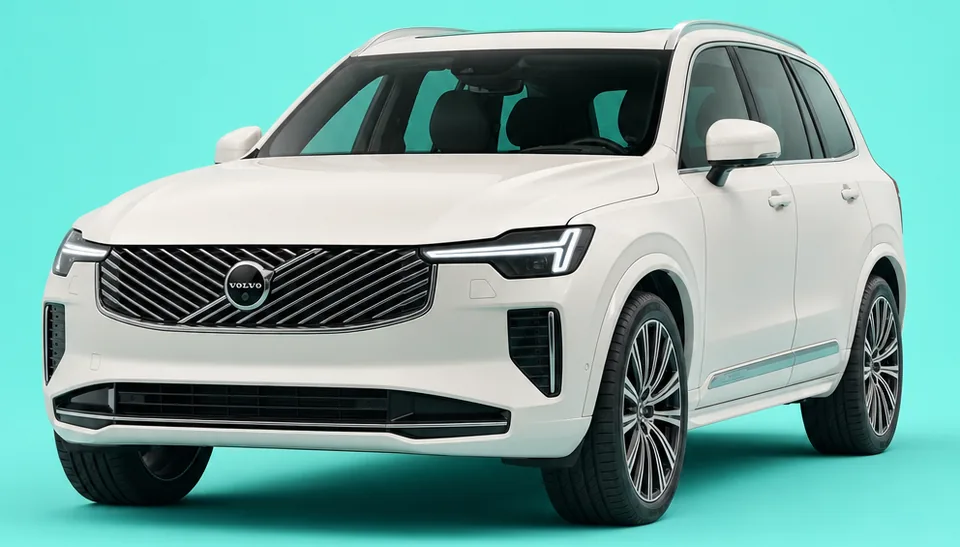
Competitor
$120k-$180k new, $38k-$118k used
XC90 most comparisons give it the stronger cabin-safety package and the genuine seven-seat proposition with a Scandinavian design language distinct from the RX; RX generally holds the stronger three-year trade-in and the historically shallower depreciation curve on hybrid drivetrains at equivalent spec. Buyers who prioritise cabin safety and seven-seat flexibility often favour XC90; buyers who prioritise residual strength and five-seat premium-SUV feel typically favour RX.
Worked example
Buyer profile
Wellington dual-income professional couple in their mid-forties, both PAYE employees at capital-region professional-services firms, clean credit file. Trading up from a 2019 Audi Q5 45 TFSI quattro bought new, which had reached the natural replacement point at four years old and 72,000 km, with the household wanting to step out of the Q5 running-cost pattern into a hybrid drivetrain at the same premium-SUV feel.
Scenario
Bought a 2023 AL30 RX 350h at $95,000 from the Lexus of Wellington dealer on Taranaki Street, 18,000 km on the clock as a just-returned executive-loan car with balance of Lexus NZ factory warranty and transferable Lexus Encore entitlements running through year three of the original delivery date. Traded the 2019 Q5 at an agreed $40,000 at the Lexus dealer after the dealer confirmed the Q5 matched their used-stock profile. Financed the remaining $55,000 over 5 years at 7.95% indicative via a consumer secured car loan through an independent broker, with Lexus Financial Services consulted for a balloon-structure comparison that the household chose not to take because the plan was to keep the RX past the five-year horizon.
The outcome
In this scenario, cash-flow impact at settlement was meaningful but contained, because the weekly finance cost of about $257 sat roughly $40 below the comparable weekly finance cost the household had been running on the outgoing 2019 Q5 at the same point in its original loan term. The switch from petrol 2.0 TFSI quattro at real-world 9.4 L/100 km on 95 premium to the RX 350h at real-world 6.8 L/100 km on the same fuel typically saves roughly $1,150 a year at 15,000 km a year and $2.95/L, which on these numbers covers a material share of the annual finance interest for this borrower's structure across the middle of the term.
On the balance sheet, this is a personal-name consumer loan with no GST or business-use deductibility in play, so the tax treatment is simpler than a chattel-mortgage purchase. A household considering the same RX under partial business use would generally be looking at a chattel mortgage structure and different GST and deductibility outcomes, with fringe-benefit tax exposure where the vehicle is also available for private use, all of which sit outside this scenario and remain subject to the accountant's confirmation on the specific business position.
Through year one, the loan balance sits modestly above the RX's likely trade-in value on indicative NZ used-market trends, which is the common pattern on any zero-to-low-deposit financed premium SUV in year one. By around month 12 to 15 on these assumptions, the amortisation curve typically catches the value-loss curve on an AL30 RX 350h with a clean Lexus NZ service book, and equity stays positive through the back half of the term. The early crossover on the RX curve is materially shallower than a comparable German-premium SUV in the same window, on indicative NZ used-market trends, and is one often named reason households planning to hold past five years often favour an amortising consumer loan on the RX rather than a balloon structure. For this borrower's structure, an early sale inside year one would require topping up from savings; an early sale from month 13 onward typically does not.
At year five on these assumptions, the loan settles and the RX is unencumbered at around seven years old and circa 95,000 km. On indicative NZ used-market trends, a comparable 2023 AL30 RX 350h at year five of ownership (year seven of vehicle age) is expected to trade in the mid-$50k range through 2028 Wellington dealer channels, which for this household supports a natural five-year replacement cycle into the next AL30 facelift or the then-current RX generation with a similar trade-in position. The discipline that makes this pattern work is keeping the five-year loan to term rather than refinancing into a longer term mid-way, because on an RX 350h the residual value typically tracks close enough to the amortisation curve that refinancing rarely improves the position once early-repayment fees are accounted for.
Illustrative example. Not a promise of approval or rate. Your circumstances and the lender's own credit decision will determine your actual outcome.
Model-specific questions
At a 7.9% indicative rate over five years with no deposit, a used 2020 AL20 RX 450h around $58,000 runs at roughly $271 a week and a NZ-new 2024 AL30 RX 350h Limited at $118,000 runs at about $552 a week. Older ex-Japan RX 450h imports near $28,000 work out to around $131 a week on the same settings. Actual rates are set by the lender after assessment, so these figures are illustrative only.
For a NZ-new RX with a clean credit record and a cash deposit, indicative rates from mainstream lenders typically sit in the 7 to 9% range. NZ-new and late used AL20 RX 450h examples typically land in the 8 to 10% range, and ex-Japan AL10 and AL20 imports commonly sit 0.5 to 1.5 points above that again because residual data is thinner on imported stock. An independent broker comparison across multiple NZ lenders helps identify a well-placed approval. Indicative only; subject to the lender's credit assessment.
Lexus Encore is the Lexus NZ ownership programme bundled with NZ-new RX purchases, covering loan-car access at any Lexus NZ dealer, valet-at-service, and a concierge drive-away entitlement across the first three years of original ownership. Encore entitlements are typically transferable to a second owner where the RX is sold inside the three-year window, and a documented transfer generally support the achievable resale on an ex-lease or near-new AL30. The programme does not apply to ex-Japan imported RX stock, which is a widely cited reason imports price a few thousand below NZ-new equivalents at the same kilometres.
Yes on verified examples with clean compliance paperwork and a confirmed odometer history through Carjam, the Japanese auction sheet (where available), and an AA or Lexus NZ dealer inspection. The RX 450h is particularly well-supported because its hybrid drivetrain shares A25A and 2GR-FXS components with Toyota-group hybrid vehicles and hybrid service is well understood across the NZ dealer network. The main trade-offs are no Lexus NZ factory warranty, a 0.5 to 1.5 percentage point indicative rate premium, no Lexus Encore entitlements, and slightly softer residuals than NZ-new equivalents on indicative NZ used-market trends.
RX residuals are commonly rated among the strongest in the premium mid-to-large SUV bracket on indicative NZ used-market trends, which lenders commonly factor into the loan-to-value calculation at application. The practical effect observed on RX applications is that the financed balance runs ahead of the depreciation curve for a shorter window than on a comparable German-premium SUV, which materially reduces the window of negative equity in year one. Lenders commonly cite strong residuals as one factor in an approval decision on RX specifically, though the actual rate and approval depend on the applicant's credit file and circumstances.
If the annual distance is above 10,000 km, the RX 450h (AL20) or RX 350h (AL30) hybrid almost always wins on total cost across a five-year loan because fuel savings outweigh the modest purchase premium, particularly on premium-only 95/98 fuel. Under 8,000 km, a used RX 350 V6 petrol can be rational on lower buy-in, typically at an older age or higher kilometres. On current NZ-new stock the RX 350h is the volume variant and residual data is deepest on the hybrid, which matters when resale is the point of the thesis.
Lexus NZ covers the hybrid traction battery on NZ-new RX 450h, RX 350h, and RX 500h vehicles under an extended hybrid battery warranty typically running 8 years or 160,000 km from new, whichever comes first. Outside that window, a traction-battery replacement at a Lexus NZ dealer is typically a five-figure job, which is the reason a documented state-of-health scan (a Lexus dealer scan tool reads state of health in about twenty minutes) is generally taken as worthwhile on any RX hybrid approaching the end of the coverage window. Ex-Japan imports do not carry the Lexus NZ extended battery warranty and are commonly priced with this in mind.
Lexus Financial Services is the Lexus-branded captive operating through Toyota Financial Services NZ, and runs subvented new-stock promotions on current AL30 RX 350h, RX 450h+, and RX 500h stock around quarter end and end of financial year. These captive promotions can price materially below broker offers during the window, particularly on balloon structures. Outside those windows, an independent broker typically matches or beats Lexus Financial Services on used RX stock, ex-lease AL20 purchases, and private-sale transactions. A common pattern observed is to source a broker indicative rate first as a benchmark for the captive to better on the day.
The RX 500h (performance hybrid, non-plug-in) and the RX 450h+ plug-in hybrid both finance on broadly similar indicative rates to the RX 350h at the same applicant profile; lenders do not typically price drivetrain directly into the interest rate. The absolute weekly repayment is higher on the 500h and 450h+ simply because the purchase price is higher, and the RX 450h+ PHEV carries the lighter PHEV RUC rate on all distance travelled (the self-charging RX 350h and RX 500h do not pay RUC). Agreed-value comprehensive insurance bands on the RX 500h F Sport Performance typically sit a touch above the RX 350h Limited at the same location, which is material to the all-in weekly budget.
On a NZ-new AL30 RX in the $118,000 to $142,000 band, a deposit in the 15 to 25% range is commonly observed as the pattern that moves the lender's indicative rate noticeably and reduces total interest by several thousand dollars across a five-year term. On a used AL20 RX 450h under $60,000, zero-deposit loans are routine for borrowers with a clean file, though a 10 to 20% deposit still typically helps the rate and limits the year-one negative-equity window. On ex-Japan imports, a larger deposit in the 20 to 30% range has a reputation as insurance against the steeper import resale curve.
Five years is the usual default for personal use on a NZ-new AL30 RX 350h, RX 450h+, or RX 500h. A three or four-year Lexus Financial Services balloon structure is commonly chosen by buyers on regular replacement cycles who want a lower weekly during the term, with the balloon settled at term end by paying out, trading up, or handing back subject to kilometre and condition limits. On used AL20 RX 450h examples and ex-Japan imports, four-year terms with a larger deposit are commonly observed as the arithmetically defensible choice, because they keep the balance ahead of the steeper used and import depreciation curves.
L/Certified is the Lexus NZ certified pre-owned programme, applied to eligible used RX stock sold through Lexus NZ dealers. The programme typically adds a Lexus NZ multi-point inspection, a warranty top-up, and access to residual Lexus Encore entitlements where the RX sits inside the original three-year window. An L/Certified RX typically carry a modest premium over an equivalent non-certified private-sale example at the same kilometres, and lenders sometimes reflect the stronger documentation signal in the indicative rate offered at application. The programme does not apply to ex-Japan imported RX stock.
Negative equity is uncommon on an RX typically, because the residual curve tends to be treated as among the shallowest in the premium mid-to-large SUV bracket on indicative NZ used-market trends, but it can occur in the first six to twelve months on a zero-deposit NZ-new AL30 loan and for longer on an ex-Japan import financed with no deposit. If it does, selling mid-term means the shortfall is made up in cash. Practical defences commonly used are a 15 to 25% deposit on NZ-new stock, a four-year rather than six-year term, and a Lexus NZ dealer service history that supports the private-sale price at exit.
You might also want
Amount
$50,000 car loan
Close to a typical RX price.
See pageLexus model
Lexus NX finance
Lexus's compact SUV and the executive-lease default in the NZ premium-SUV segment.
See pageLoan type
Used car finance
Most RX finance in NZ is on used vehicles.
See pageBrand
All Lexus models
Finance across the Lexus range.
See pageOur finance partner compares multiple NZ lenders. Calculator inputs travel through to the application, and the partner returns a formal estimate after the lender's credit assessment.
Disclaimer
A car loan runs for years, and the repayment comes out of the same pay that covers everything else. This site exists to show you that weekly number before you sign anything. The payment that catches people out is the one that's fine on a good week and tight on a bad one.
Carfinance.org.nz receives a commission from Simplify when a visitor applies through this site and their application is approved. We refer every visitor to the same partner because they compare multiple New Zealand lenders on the applicant's behalf, so the referral is not driven by a sponsored deal. Simplify sets its own terms and fees and discloses them directly; anything you agree to happens on their side, not ours. Every figure shown on this site is a modelled estimate based on the inputs entered; the actual rate, fees, and repayments are set by the lender after assessing the applicant's circumstances and its own credit decision. Carfinance.org.nz is a calculator and information tool. We are not a lender, not a broker, and not a registered financial adviser. Any decision about whether a specific loan suits a specific situation is best made after talking with the lender, and for amounts that materially affect the household, with a registered financial adviser.
Connecting you with a trusted NZ finance partner
One moment while we hand you over securely. Nothing was collected on our side.