Skip to content
Carfinance.org.nz
Mahindra logo Specialist brand

Mahindra car finance calculator

Published 23 April 2026 · Last reviewed 23 April 2026 · Disclaimer

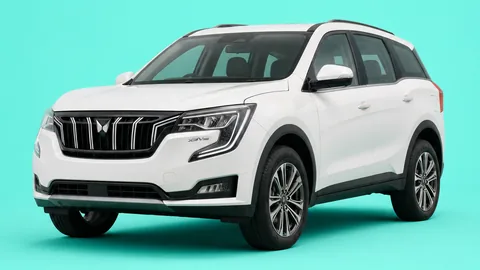
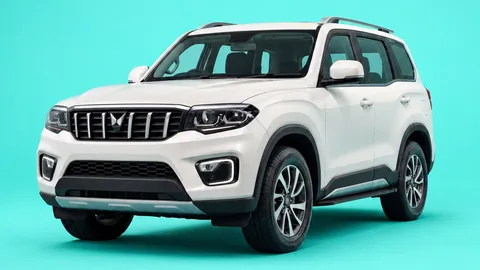
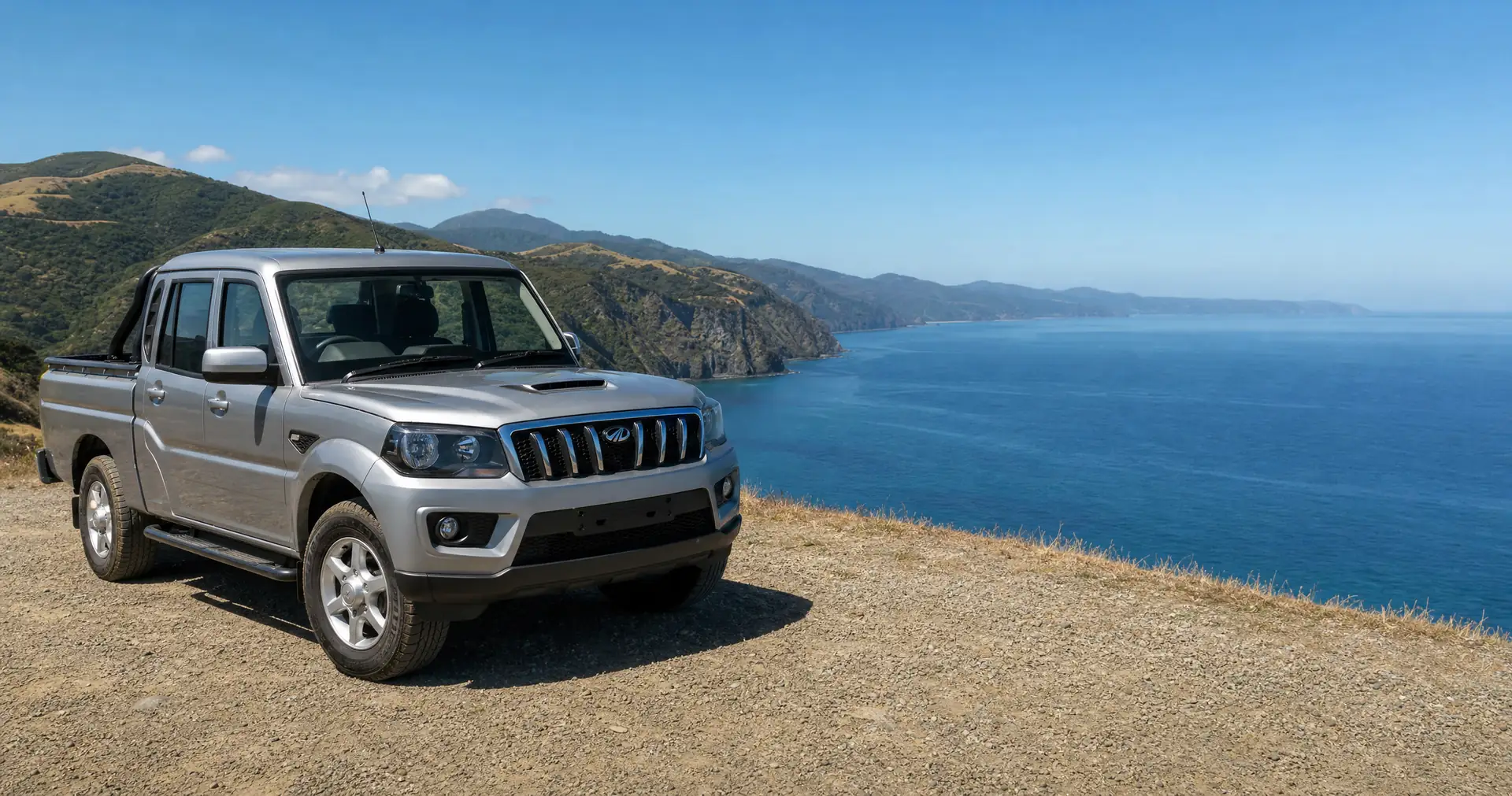
A low-volume but long-established name on the New Zealand fleet register (Carjam), Mahindra has held a steady commercial and rural foothold for more than two decades. The Pik-Up double-cab is the volume workhorse, sold mostly to farmers, orchardists, and contractors who want a ladder-frame diesel ute without Hilux or Ranger money. Specialist commercial lenders (UDC, MTF, Heartland) have underwritten Pik-Ups long enough to price them with confidence. Used Pik-Ups land in the $14,000 to $28,000 band; a new Scorpio-N or XUV700 sits closer to $45,000.

Your estimated repayment

Weekly

Disclaimer

$110/week

$219 /fortnight $475 /month
$24,000
$0
7.00% p.a.
5 years

We are not a finance company. Indicative only. Not a quote or offer of credit. Actual rates, fees, and repayments depend on your circumstances and the lender's decision.

Popular Mahindra models

The Mahindra range, by typical price.

Median used-car prices in NZ, 2026 market. Weekly figures assume 7% over 5 years with no deposit. Click a model for a dedicated calculator and FAQs.

Why this brand finances well

What lenders look for in a Mahindra.

  • Commercial underwriting familiarity. UDC, MTF, and Heartland have written Pik-Up loans for over two decades and have a clear view of residuals, repair economics, and typical rural buyer profiles.
  • Pik-Up sticker price typically sits $10,000 to $20,000 below an equivalent Hilux or Ranger double-cab, so the amount financed is smaller and the weekly repayment lands lower for a similar work-ute capability.
  • Factory warranty of 7 years / 150,000 km on new vehicles covers the typical 5-year loan term end-to-end, which materially reduces the mechanical-risk exposure a lender prices into the rate.
  • No dealer finance desk to mark up the rate. Every Mahindra loan is independently sourced, so the buyer is not choosing between a subvented manufacturer offer and a broker rate; the broker route is the default.
  • Rural and commercial buyer profile aligns well with chattel-mortgage structures, GST claims, and interest-deductibility, which lenders price as a lower-risk loan category than a discretionary consumer purchase.

Buyer notes

Where to get the best Mahindra rate.

Most Mahindra buyers in New Zealand are rural or commercial, and the common finance route is an independent broker writing to a specialist commercial lender like UDC, MTF, or Heartland. There is no Mahindra-branded finance product to cross-shop. Accountant input on a chattel mortgage before signing is widely regarded as essential, especially on a Pik-Up, because the GST and depreciation treatment materially changes the real cost of the vehicle.

No sign-up on our site. Our finance partner compares NZ lenders and returns a formal estimate after the lender's credit assessment.

New vs used

Financing a new Mahindra vs a used one.

Mahindra's finance conversation differs by vehicle age because the factory warranty coverage and residual confidence shift sharply at the 5 to 6 year mark.

Path 1

New Mahindra

Broker quote, factory warranty advantage

  • No manufacturer subvention exists on Mahindra in NZ, so there is no dealer finance rate to beat.
  • The 7-year / 150,000 km factory warranty on new vehicles covers a full 5-year loan, which lenders can price as reduced mechanical risk.
  • GST on a new Pik-Up bought through a registered business is claimable in the next return, which effectively offsets a meaningful chunk of the deposit.
  • Expect the Pik-Up to land $10,000 to $20,000 below an equivalent new Hilux SR5 or Ranger XLT, which keeps the financed amount and weekly repayment down.

Verdict

Ask a broker that writes commercial lenders (UDC, MTF, Heartland). Leverage the 7-year factory warranty in the rate conversation.

Path 2

Used Mahindra

Thinner lender pool, age ceilings bite earlier

  • Several mainstream consumer lenders cap vehicle age tightly on Mahindra because used-market data is thinner than on Hilux or Ranger.
  • A 2018 Pik-Up at $18,000 is often financed cleanly at 3 or 4 years, but a 2012 model at $9,000 will narrow the lender pool considerably.
  • Factory warranty has usually expired on used stock, so mechanical breakdown insurance (MBI) becomes a more reasonable conversation than on a new vehicle.
  • Residuals on older Pik-Ups track a flatter curve than the equivalent Hilux, meaning smaller drops year-to-year but also softer trade-in value at the dealer.

Verdict

Keep the term short (3 to 4 years) and put more deposit down. Lender pool narrows on Pik-Ups older than about 8 years.

Rule of thumb

On a new Pik-Up or XUV700, lean on the factory warranty in the broker conversation. On a used Mahindra older than 6 years, keep the term short, put more deposit down, and expect a 1 to 2 percentage point premium versus a like-age Hilux.

Total cost of ownership

What a Mahindra really costs beyond the finance line.

Mahindra running costs are materially cheaper than a Hilux on the repair and insurance side, but fuel and Road User Charges on the diesel Pik-Up are broadly comparable. Parts are rural-dealer-ordered rather than over-the-counter, so factor lead times into your planning.

  • Servicing and consumables

    Pik-Up mHawk diesel on a 10,000 km service interval. Rural dealers handle most work; parts lead times of 3 to 7 days are common outside main centres.

    $900 to $1,600 per year
  • Insurance (full cover)

    Pik-Up sits below an equivalent Hilux because the replacement cost is lower, but theft risk on double-cab utes keeps the premium above a comparable SUV.

    $1,400 to $2,200 per year
  • Road User Charges (diesel)

    Applies to Pik-Up and Scorpio-N. A rural contractor doing 30,000 km a year is paying $2,280 in RUC before fuel, tyres, or servicing.

    $76 per 1,000 km
  • Tyres

    Pik-Up all-terrain sets at the high end. Farm and orchard use wears tyres faster than sealed-road commuting; budget replacement every 35,000 to 45,000 km.

    $1,200 to $1,900 per set
  • Fuel (diesel Pik-Up)

    Based on 20,000 to 30,000 km a year at current NZ pump prices. mHawk 2.2L returns a real-world 9 to 11 L/100 km in mixed work use.

    $3,200 to $4,800 per year

Worth knowing

Pik-Up vs Hilux at the same weekly repayment

A $28,000 used Pik-Up on a 5-year loan lands at roughly the same weekly cost as a $40,000 Hilux deposit-heavy equivalent. The finance weekly is close, but the Hilux carries a higher insurance premium and stronger resale. Over 5 years, total outlay usually favours the Pik-Up by $6,000 to $10,000, with the trade-off being softer equity at sale.

Resale and equity

How Mahindra resale shapes your finance decision.

50 to 60%

value retained, 3-year-old Pik-Up

45 to 55%

value retained, 3-year-old XUV700

50 to 55%

mainstream-brand market average

Mahindra resale broadly tracks the mainstream mid-market average rather than outperforming it the way a Hilux does. The Pik-Up holds its money reasonably well in the rural trade-in channel because dealers in Waikato, Manawatū, Hawke's Bay, and Southland know the buyer base and can move stock locally. The XUV700 is newer to New Zealand and used-market data is still thin, so lenders tend to price its residuals conservatively. Scorpio-N sits in a similar spot. The practical consequence is that negative equity risk on a 5-year loan is real but manageable if you keep the term sensible and the deposit non-trivial.

Match the loan term to the vehicle's expected working life in your hands. Three to five years is the sweet spot on a Pik-Up; a 7-year term on a Mahindra used ute is rarely the right call because the residual curve flattens fast in the back half of the loan.

Things to avoid

Mahindra finance traps we flag honestly.

An opinionated list. The commercial side of this site has no incentive to tell you these things, so we do.

Stretching a used Pik-Up loan past 5 years

A 7-year term on a $22,000 used Pik-Up drops the weekly repayment but pushes you into negative equity by year three. The residual curve flattens early on older Pik-Ups, so the loan balance outpaces the trade-in value for most of the back half.

Treating the XUV700 like a NZ-new Corolla on resale

The XUV700 is still new to New Zealand and used-market data is thin. Lenders price it conservatively, and a 5-year loan at full sticker can leave you $4,000 to $7,000 underwater at trade-in. Keep the deposit higher, around 20%, to offset this.

Bundling MBI into a new-Pik-Up loan

The new-vehicle factory warranty is 7 years / 150,000 km. Rolling $2,500 of mechanical breakdown insurance into the loan on top duplicates coverage you already have and adds roughly $500 in interest over a 5-year term. Decline at signing and revisit when the factory cover expires.

Assuming every lender writes Mahindra on the same terms

Mahindra is not a universal-approval brand. Some consumer lenders apply age caps or premium rates because used-market data is thinner than on Hilux or Ranger. A specialist commercial broker writing UDC, MTF, or Heartland will usually land a better outcome than the first bank quote.

Financing a Pik-Up personally when the use is commercial

A tradie or orchardist who finances a Pik-Up through a personal loan forfeits the GST claim and the interest deductibility. On a $35,000 Pik-Up that is roughly $4,565 of GST plus a few thousand in deductible interest over the term. Structure it correctly from day one with your accountant.

Drivetrain economics

Hybrid vs petrol vs EV on a Mahindra.

Mahindra's NZ range is split cleanly between diesel (Pik-Up, Scorpio-N) and petrol (XUV700). There is no hybrid or EV in the lineup. The economic choice depends on annual distance, work use, and whether the GST and RUC maths favour one over the other.

Diesel (Pik-Up, Scorpio-N)

Break-even over 15,000 km a year with RUC factored in

  • mHawk 2.2L returns a real-world 9 to 11 L/100 km in mixed work use.
  • Road User Charges add $76 per 1,000 km; at 25,000 km a year that is $1,900.
  • Torque and towing suit rural, farm, and contractor work that petrol cannot match.
  • Resale on used diesel Pik-Ups outperforms the XUV700 because the rural buyer base is deeper.

Petrol (XUV700)

Cheaper overall under 12,000 km a year, no RUC

  • 2.0L turbo petrol returns a real-world 9 to 10 L/100 km in mixed driving.
  • No Road User Charges, which saves an urban family $900 to $1,500 a year versus diesel.
  • Seven seats make it a family-SUV alternative rather than a work vehicle.
  • Used-market resale is softer than the Pik-Up because buyer recognition is still building.

Break-even heuristic

The practical heuristic: if you are doing farm, orchard, or contractor work above 15,000 km a year and towing regularly, the diesel Pik-Up wins on total cost despite the RUC. For a family driving under 12,000 km a year on sealed roads, the petrol XUV700 is usually cheaper end-to-end once RUC is out of the calculation.

Commercial and business use

Financing a Mahindra through your business.

The Pik-Up is overwhelmingly a commercial vehicle in New Zealand, and the right finance structure can be worth several thousand dollars in tax outcome across the term. Three structures apply, and the choice depends on your balance-sheet preferences and replacement cycle.

Chattel mortgage

You own the Pik-Up from day one

  • Vehicle sits on your business balance sheet as an asset from settlement.
  • GST on the purchase price is claimable in the next GST return (around $4,500 on a $35,000 Pik-Up).
  • Finance interest and depreciation are both deductible against business income.
  • Lender registers security via PPSR; term typically 3 to 5 years.
  • Own the vehicle outright at the end of the term, ready to trade or keep.

Best for

Sole-trader tradies, orchardists, and farmers replacing a Pik-Up every 4 to 6 years.

Operating lease

You rent it; no residual risk

  • Vehicle stays off your balance sheet (the lease operator owns it).
  • Fixed monthly charge, often bundled with servicing.
  • No GST claim on purchase because you are not the owner.
  • Monthly payments are fully expensed to P&L; no depreciation to track.
  • Hand the Pik-Up back at term end with no residual-value risk.

Best for

Rural contracting businesses running 3+ vehicles that prefer predictable opex and no resale exposure.

Finance lease

A structured middle ground

  • Pik-Up is on the balance sheet but held under a formal lease.
  • Regular lease payments are deductible against business income.
  • A residual balloon is negotiated at signing, usually 25 to 35%.
  • GST is claimable on each monthly payment rather than on purchase.
  • Useful when cash-flow predictability matters more than outright ownership.

Best for

Mid-sized rural operators who want predictable lease costs without operating-lease pricing.

Get accounting advice

For most sole-trader Pik-Up buyers, a chattel mortgage is the practical default. The GST claim alone is material, and the interest deduction compounds the benefit. Get accounting advice before signing. The right structure on a $40,000 commercial Pik-Up is worth several thousand dollars in tax outcome over the term, and the wrong one is hard to unwind.

Case study

Worked example: financing a new Mahindra Pik-Up for orchard work

The buyer

Kiwifruit orchard operator in the Bay of Plenty, age 42, GST-registered sole trader, clean credit, replacing an ageing Hilux. Annual business turnover around $260,000.

The scenario

Purchasing a new Mahindra Pik-Up S11 double-cab 4WD for $42,000 including GST. Trade-in on the old Hilux returns $11,000. Chattel mortgage structure via a commercial broker writing to UDC, a 5-year term chosen to match the expected orchard replacement cycle.

The outcome

Weekly cash-flow impact on the orchard is approximately $132, versus the $180 weekly the old Hilux loan was costing five years ago on similar terms.

The $5,478 of GST on the purchase is reclaimed in the next GST return, which effectively recovers the deposit and then some. Finance interest of roughly $6,400 across the 5-year term is deductible against orchard income, and the Pik-Up depreciates at 30% diminishing value on the balance sheet.

Factory warranty of 7 years / 150,000 km covers the full loan term, which removes the usual mid-term mechanical-risk exposure on a work ute. Mechanical breakdown insurance was declined at signing because the factory cover overlaps entirely with the loan period.

At year 5 the Pik-Up is expected to be worth around $18,000 to $22,000 on the rural trade-in channel. The loan is fully repaid, the asset is owned outright, and the orchard has the option to trade for a new Pik-Up or keep the existing vehicle running for another 2 to 3 years under the tail of the factory warranty.

Illustrative example. Not a promise of approval or rate. Your circumstances and the lender's own credit decision will determine your actual outcome.

Affordability check

What can I afford on my income?

A rough sanity check. We assume repayments should sit under 10% of your take-home pay, with a 5-year term at 7%.

Not an affordability assessment. Real lender decisions consider all your debts, expenses, and history.

$70,000
$20k $250k

Indicative safe loan

$30,000

At ~$135/week

Stretch maximum

$45,000

Only with no other debts

Apply this to the calculator

Common questions

Mahindra finance FAQ.

Can I finance a Mahindra through the dealer, or do I have to go to a broker?

In New Zealand Mahindra does not run a captive finance arm, so there is no dealer-branded finance product equivalent to Toyota Financial Services. The dealer can refer you to a lender they work with, but every Mahindra loan is ultimately written by an independent lender. A commercial broker sourcing UDC, MTF, or Heartland is usually the most direct route, especially on a Pik-Up.

Is the Mahindra Pik-Up harder to finance than a Hilux or Ranger?

Not usually, if you go to a lender that knows the vehicle. Specialist commercial lenders have written Pik-Up loans for over two decades and price them confidently. Some mainstream consumer lenders are more conservative on Mahindra because used-market data is thinner, so if your first bank quote comes back high, try a commercial broker before assuming the rate is fixed.

How much deposit is typical on a Mahindra Pik-Up?

Ten to twenty percent is the usual range on a Pik-Up, so roughly $3,000 to $6,000 on a $30,000 used vehicle. A deposit is not strictly required for approval but it typically drops your offered rate by 0.5 to 1.5 percentage points and keeps the loan out of negative equity during the first couple of years when depreciation is steepest.

Does the 7-year factory warranty affect my finance rate?

Indirectly, yes. The 7-year / 150,000 km warranty on new Mahindras (per Mahindra NZ current policy) reduces the mechanical-risk exposure a lender builds into the rate, because a 5-year loan is fully covered by factory warranty. Mention it in the broker conversation. It also means you can safely decline mechanical breakdown insurance at signing, which the dealer will often try to bundle.

Can I finance a Mahindra Pik-Up older than 10 years?

Sometimes, but the lender pool narrows quickly. Most NZ secured-car-loan products cap the vehicle age at 12 to 15 years at loan-end date, so a 10-year-old Pik-Up is fine for a 3-year term but unlikely to clear a 5-year term. A commercial lender that knows the Pik-Up specifically will usually be more flexible than a generalist consumer lender, but expect a rate premium of 1 to 2 percentage points on older stock.

Should I finance a Pik-Up personally or through my business?

Where the Pik-Up is primarily for business use (tradie, farmer, orchardist, contractor), financing through the business via a chattel mortgage is commonly the right call. GST on the purchase is typically claimable in the next GST return, finance interest is generally deductible against business income, and the asset depreciates on the business books, subject to the accountant's confirmation. A personal loan on a commercial-use Pik-Up forfeits all three benefits. Accountant input before signing is widely regarded as essential.

Can I claim GST on a Mahindra Pik-Up if I am GST-registered?

Yes, if you buy the Pik-Up through your GST-registered business and use it primarily for business purposes. On a $35,000 Pik-Up that is around $4,565 of claimable GST in the next return. A chattel mortgage keeps the vehicle on your balance sheet; an operating lease does not let you claim the GST on purchase because you are not the owner. Confirm the structure with your accountant first.

How does the Mahindra XUV700 compare to a Pik-Up for family finance?

The XUV700 is a seven-seat petrol SUV, so it sits in a different use case to the Pik-Up. Finance rates on both are broadly similar from the same lender, but the XUV700 has no Road User Charges (petrol) and lower insurance, which works out cheaper for a family doing under 12,000 km a year. Used-market data on the XUV700 is still thin in NZ, so lenders price its residuals conservatively; keep your deposit around 20% to offset that.

What happens if I want to trade my Pik-Up in halfway through the loan?

If the trade-in value exceeds your loan balance (positive equity), the dealer settles the old loan on your behalf and any surplus goes toward your next vehicle. If the Pik-Up is worth less than the balance (negative equity), the shortfall rolls into the new loan. Pik-Up residuals track the mainstream average rather than outperforming it like a Hilux, so keep the loan term sensible and the deposit non-trivial to reduce the chance of being underwater at trade.

Are parts and servicing a problem on a financed Mahindra outside main centres?

The dealer network is rural-skewed, which is useful if you are a farmer or orchardist, but parts are typically dealer-ordered rather than stocked locally. Budget 3 to 7 days for non-urgent parts in smaller centres. Servicing costs are lower than an equivalent Hilux because parts and labour rates are cheaper, but plan work around longer lead times if you are running the Pik-Up commercially.

Is mechanical breakdown insurance (MBI) worth it on a financed Mahindra?

On a new Pik-Up or XUV700, no. The 7-year / 150,000 km factory warranty covers the full 5-year loan term, so MBI duplicates coverage and adds $2,000 to $3,000 plus interest to the loan for little real benefit. On a used Mahindra outside factory warranty, MBI is a more reasonable conversation, but price it against shopping for cover separately rather than rolling it into the loan at the dealer.

What is the typical all-in cost of owning a financed Pik-Up over 5 years?

For a $32,000 Pik-Up on a 5-year loan at 8.5%, finance costs total roughly $39,300 (principal plus interest). Add insurance (around $9,000), servicing (around $6,250), tyres (around $3,500), RUC at 20,000 km a year ($7,600), and diesel (around $20,000) for a rough all-in cost of $85,000 over 5 years, or about $325 a week. These are indicative based on NZ averages for commercial use; actual costs depend on distance, work type, and claims history.

About this article
Published
23 April 2026
Last reviewed
23 April 2026

Methodology

Repayment figures on this page are calculated live from the inputs you enter into the calculator using the standard amortised-loan formula. Indicative rates reflect publicly-advertised secured-loan rates across New Zealand commercial and consumer lenders observed in the 12 months before the last review. Model prices are drawn from recent TradeMe and AutoTrader listings for each Mahindra era. Running-cost ranges draw on Consumer NZ, AA New Zealand, and EECA public guidance, cross-checked against NZTA Road User Charges tables for the diesel figures. The page is reviewed annually, or sooner if Mahindra Automotive Australasia changes its NZ range or warranty policy materially.

Sources

Apply for Mahindra finance.

Our finance partner compares NZ lenders and returns a formal estimate after the lender's credit assessment. Calculator inputs travel through to the application so nothing gets re-typed.

All brands

Disclaimer

A car loan is a commitment that runs for years, and repayments come out of the same pay cheque as everything else. Before committing, it is worth modelling the weekly and monthly cost against the household budget, which is what this site is built to help with. Borrowing at a level that stays comfortable on a bad week, not a good one, is widely regarded as the safer frame.

Carfinance.org.nz earns a commission from a partner brand when a visitor applies through this site and their application is approved. That commission is paid by the partner, not the applicant, and it does not influence the rate the lender offers. We refer every visitor to the same partner because they compare multiple New Zealand lenders on the applicant's behalf, so the recommendation is not driven by a sponsored deal. Every figure shown on this site is a modelled estimate based on the inputs entered; the actual rate, fees, and repayments are set by the lender after assessing the applicant's circumstances and own credit decision. Carfinance.org.nz is a calculator and information tool. We are not a lender, not a broker, and not a registered financial adviser. Any decision about whether a specific loan suits a specific situation is best made after talking with the lender, and for amounts that materially affect the household, with a registered financial adviser.