Skip to content
Carfinance.org.nz
Mercedes-Benz model

Mercedes-Benz E-Class finance calculator

The executive sedan and wagon with one of the deepest lease-residual histories on the NZ premium book.

Last reviewed: 24 April 2026

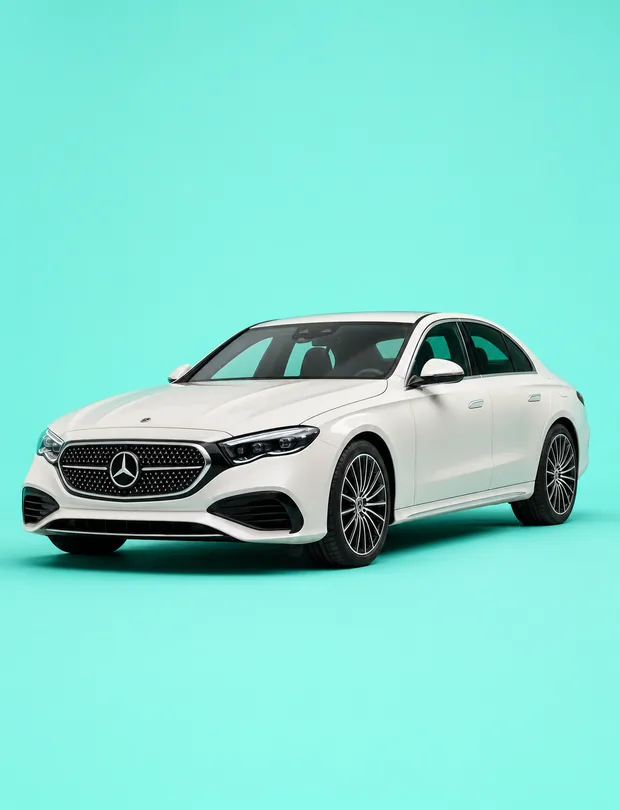
The E-Class is Mercedes-Benz's executive sedan, wagon, and All-Terrain wagon, sitting between the C-Class and S-Class as the long-established partner-and-director car on the New Zealand premium finance book. The W212 (2010 to 2016), W213 (2017 to 2023), and current W214 (2024 onward) all feed the used pool, with NZ-new ex-lease E200, E220d, and E300 examples forming the bulk of the local supply and a smaller slice of Japanese-import E250 and E350 cars extending the sub-$30,000 entry point. It cross-shops directly against the BMW 5 Series and Audi A6, and more recently against the Genesis G80 at the price-competitive end of the segment. Loan amounts commonly run from $20,000 on a high-km W212 to $180,000 and beyond on a current AMG E53 or the rarely-specified AMG E63, which places the E-Class across one of the widest loan brackets of any Mercedes-Benz nameplate.

Your estimated repayment

Weekly

Disclaimer

$219/week

$439 /fortnight $950 /month
$48,000
$0
7.00% p.a.
5 years

We are not a finance company. Indicative only. Not a quote or offer of credit. Actual rates, fees, and repayments depend on your circumstances and the lender's decision.

Year by year

E-Class prices and repayments, by era.

Typical NZ market prices and the weekly cost of financing each. All figures assume 7% over 5 years with no deposit. Indicative only; open the full calculator to pre-set your own rate and term.

2012-2016 used (W212 facelift)

$22,000

Previous-generation W212 sedan and wagon. E200, E220 CDI, and E350 most common. Typical 150,000 to 220,000 km. Airmatic suspension condition, 7G-Tronic transmission history, and DPF health on diesel variants dominate the pre-purchase picture.

Weekly

$100.53

Monthly

$435.63

2017-2020 used (W213 pre-facelift)

$48,000

W213 sedan, Estate, and All-Terrain. E200, E220d, and E300 ex-lease and ex-demo widely available with full Mercedes-Benz NZ service history. First generation of the widescreen MBUX dash.

Weekly

$219.34

Monthly

$950.46

2021-2023 used (W213 LCI)

$82,000

Facelifted W213. Including E300e PHEV and late-run AMG E53 4MATIC+. Ex-lease returns clearing into the used market at predictable residual points.

Weekly

$374.70

Monthly

$1,623.70

2024+ new/nearly-new (W214)

$155,000

Current-gen W214. E200, E300e PHEV, and AMG E53 PHEV feature alongside the E450d inline-six diesel. Hyperscreen infotainment near-universal on current dealer stock.

Weekly

$708.27

Monthly

$3,069.19

Who this suits

Who buys a Mercedes-Benz E-Class?

  • Senior executives and professional-services partners in Auckland, Wellington, and Christchurch replacing an ex-lease E-Class on a three or four-year renewal cycle, often through Mercedes-Benz Financial Services.
  • Professional families choosing the E220d or E300 All-Terrain wagon where cabin space, long-distance comfort, and discreet body style matter alongside premium-sedan driving characteristics.
  • Business owners structuring a late-model E-Class through a chattel mortgage where the vehicle has documented business use, subject to the accountant's confirmation on GST and deductibility treatment.
  • Higher-distance commuters choosing the E220d diesel for motorway fuel economy on State Highway 1 and Auckland to Tauranga runs, even with Road User Charges factored in.
  • Second-owner enthusiasts shopping W213 E53 AMG 4MATIC+ or earlier W212 E63 AMG examples where specification and drivetrain character matter more than continuing factory warranty coverage.

Financing notes

What financing a E-Class usually looks like.

At $48,000 on a W213 E-Class across a five-year term at an indicative 8%, weekly repayments land around $224, or roughly $974 a month. A late-model W213 LCI near $82,000 lifts the weekly to roughly $383, and a new W214 E300e near $155,000 runs near $723 a week on matched settings. Mercedes-Benz Financial Services runs subvented campaigns on new E-Class stock periodically, particularly around executive-lease renewal windows at quarter-end, and those are worth comparing directly against a broker quote. Agility balloon structures appear on E-Class deals and pull the weekly down materially, but the residual at term end needs to be planned for separately because it does not disappear. Deposits of 20 to 30% are widely observed on E-Class loans because the loan size pushes total interest well into the five figures at typical premium-car rates.

Model-specific questions

Mercedes-Benz E-Class finance FAQ.

What is a typical weekly repayment on a Mercedes-Benz E-Class in New Zealand?

On a $48,000 W213 E-Class at 8% indicative over five years with no deposit, the weekly sits at roughly $224. A late-model $82,000 W213 LCI on the same settings runs near $383 a week. A new W214 E300e near $155,000 lands near $723 a week. A 25% deposit on the $155,000 car drops the weekly to around $542. These figures are illustrative only; actual rates depend on the lender's credit assessment and any active Mercedes-Benz Financial Services campaign.

How does the executive-lease residual history on the E-Class affect its finance profile?

The E-Class has among the deepest lease-residual datasets of any premium sedan in New Zealand because fleet and executive-lease volumes have been sustained across W212, W213, and now W214 generations. The practical implication on finance is that lenders and Mercedes-Benz Financial Services price residual-value exposure on known curves rather than speculative figures, which typically supports competitive loan-to-value ratios on NZ-new examples, subject to credit assessment. On an ex-lease W213 returning into the used market, the combination of known service history and defined residual commonly keeps the broker-channel rate tight.

Is an E220d diesel cheaper to run on finance than a petrol E200 in NZ?

The E220d carries a modest purchase premium over the equivalent E200 on matched trim and model year. It saves on fuel but pays the diesel Road User Charge of $76 per 1,000 km; the petrol E200 pays higher fuel spend but no RUC. Break-even sits in the 12,000 to 15,000 km per year range in widely observed driving patterns, above which the diesel economics typically clear the petrol across the term. Urban-only cycles commonly favour the petrol because DPF regeneration and AdBlue maintenance on the diesel benefit from regular motorway running.

Is a W213 E300e or W214 E300e plug-in hybrid cheaper to run on finance than a petrol E200?

The PHEV E-Class carries a purchase premium of roughly $15,000 to $22,000 over the comparable E200 depending on spec and model year, and most NZ lenders place PHEVs in their green-loan tier at an indicative rate slightly below the standard premium-car rate. Fuel spend typically falls sharply where the daily commute sits inside the electric-only range (widely reported around 90 to 100 km on the W214 E300e) and home charging is in place. The PHEV Road User Charge of $38 per 1,000 km applies. Over a four to five year hold with disciplined charging, the PHEV premium is often partly recovered, though the break-even is highly sensitive to actual charging behaviour.

How does Mercedes-Benz Agility balloon finance work on an E-Class, and is it worth considering?

Agility is a balloon-style structure where the loan is partially amortised across the term (typically three or four years) and a pre-agreed residual falls due at term end. The weekly repayment is lower than a fully amortising loan because interest is charged on the full balance while principal is only partly reduced. At term end the residual can be paid in cash, refinanced, or settled by trading the E-Class. The structure commonly suits buyers who replace on a defined executive cycle; it is less forgiving where the E-Class is held long-term or where trade-in value at term end falls below the agreed residual. Confirming that the residual matches the planned ownership horizon is the usual way to evaluate the structure.

How does the E-Class compare to the BMW 5 Series, Audi A6, and Genesis G80 on finance?

Loan amounts on matched-spec W213 E300, G30 530i, and C8 A6 45 TFSI track closely in the used market, and the rate applied by most NZ lenders is similar across the three German executive sedans on the same applicant profile. The Genesis G80 sits at the price-competitive end of the segment on new-car pricing and typically carries a new-car rate through the Genesis finance channel or a standard premium rate through a broker. Buyers who prioritise brand familiarity and service-network depth commonly favour the German three; buyers who prioritise new-car equipment level per dollar commonly cross-shop the G80 alongside.

Can a Mercedes-Benz E-Class be financed through a company or trust for executive business use?

Yes, where business use can be documented. A chattel mortgage is the common structure for closely-held companies and sole traders; the GST on the purchase price is typically claimable in the next GST return where the business is GST-registered, the seller has charged GST, and the E-Class qualifies, subject to the accountant's confirmation. Finance interest is generally deductible against business income in proportion to business use. Fringe-benefit tax applies where the E-Class is also available for private use and materially affects the overall cost picture; operating-lease and finance-lease structures are alternatives commonly considered for executive vehicles and are usually confirmed with the accountant before settlement rather than after.

Is a Japanese-import E-Class a sensible finance choice, and how does the rate compare?

Japanese-import W212 and earlier W211 E-Class examples are financed by most NZ premium-car lenders once entry compliance is complete. A rate premium of 0.5 to 1.5 percentage points above an equivalent NZ-new E-Class is widely observed, and the maximum term is often capped at four years rather than five to seven. A clean odometer verification report and a Mercedes-Benz specialist pre-purchase inspection are commonly treated as non-optional because repair costs on an out-of-warranty E-Class are high enough to dominate the running-cost picture if something major surfaces post-purchase. Airmatic suspension, the 7G-Tronic transmission on earlier cars, and any specific Japanese-market trim combinations carry the most expensive out-of-warranty repair risk.

A formal estimate on a Mercedes-Benz E-Class.

Our finance partner compares multiple NZ lenders. Calculator inputs travel through to the application, and the partner returns a formal estimate after the lender's credit assessment.

All Mercedes-Benz models

Disclaimer

A car loan is a commitment that runs for years, and repayments come out of the same pay cheque as everything else. Before committing, it is worth modelling the weekly and monthly cost against the household budget, which is what this site is built to help with. Borrowing at a level that stays comfortable on a bad week, not a good one, is widely regarded as the safer frame.

Carfinance.org.nz earns a commission from a partner brand when a visitor applies through this site and their application is approved. That commission is paid by the partner, not the applicant, and it does not influence the rate the lender offers. We refer every visitor to the same partner because they compare multiple New Zealand lenders on the applicant's behalf, so the recommendation is not driven by a sponsored deal. Every figure shown on this site is a modelled estimate based on the inputs entered; the actual rate, fees, and repayments are set by the lender after assessing the applicant's circumstances and own credit decision. Carfinance.org.nz is a calculator and information tool. We are not a lender, not a broker, and not a registered financial adviser. Any decision about whether a specific loan suits a specific situation is best made after talking with the lender, and for amounts that materially affect the household, with a registered financial adviser.