Skip to content
Carfinance.org.nz
Mercedes-Benz logo Premium brand

Mercedes-Benz car finance calculator

Published 23 April 2026 · Last reviewed 23 April 2026 · Disclaimer

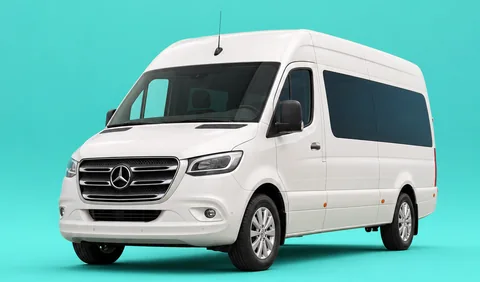
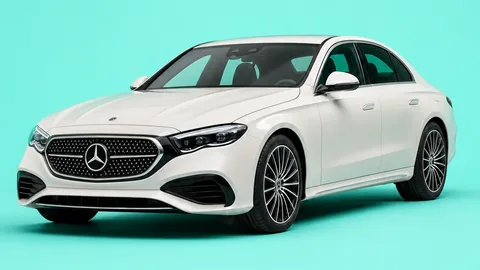
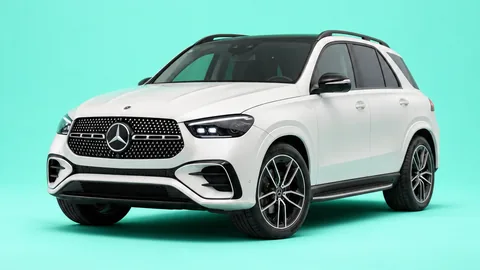
Among the three German premium brands that anchor executive-lease and small-business finance in New Zealand, alongside BMW and Audi. Mercedes-Benz sits in the upper tier of the NZ fleet register (Carjam), with C-Class, GLC, and A-Class doing the volume on personal finance, and the Vito and Sprinter vans carrying genuine commercial demand. Mercedes-Benz Financial Services NZ runs the local captive, so dealer finance on new stock is competitive rather than pure referral. The range spans a $28,000 used A-Class to a $200,000 new GLS, which puts almost every premium loan bracket in play.

Your estimated repayment

Weekly

Disclaimer

$165/week

$329 /fortnight $713 /month
$36,000
$0
7.00% p.a.
5 years

We are not a finance company. Indicative only. Not a quote or offer of credit. Actual rates, fees, and repayments depend on your circumstances and the lender's decision.

Why this brand finances well

What lenders look for in a Mercedes-Benz.

  • Mercedes-Benz Financial Services NZ operates as a captive lender with its own loan book, so genuine subvented rates appear on current-year C-Class, GLC, and Sprinter campaigns, and those pricing levels cannot easily be matched by an independent broker.
  • The Vito and Sprinter vans carry genuine commercial residual-value data built from decades of trade and courier fleet use, which supports chattel-mortgage and finance-lease structures at rates normally reserved for mainstream commercial brands.
  • The C-Class and GLC have the longest executive-lease residual histories of any Mercedes-Benz model in New Zealand, and lenders price ex-lease stock accordingly on standard three and four year used-car terms.
  • Mercedes-Benz NZ's roadside assistance and extended-warranty programmes attach to vehicles financed through the captive, which lenders treat as a residual-value positive on new-car applications.
  • The EQA, EQB, EQC, and EQE electric lineup qualifies for the EV loan tier at most mainstream NZ lenders, typically 0.5 to 1.5 percentage points below the standard premium secured-car rate.

Buyer notes

Where to get the best Mercedes-Benz rate.

On a new Mercedes-Benz, sourcing a quote from Mercedes-Benz Financial Services through the dealer to price any active subvention, then taking an independent broker quote as the benchmark, is the widely observed pattern. On a used NZ-new Mercedes-Benz the broker channel almost always beats dealer-yard finance markups. On a Vito or Sprinter for business use the conversation changes entirely. A chattel mortgage or finance lease through a commercial-vehicle specialist lender commonly wins, and accountant input before signing is widely regarded as essential.

No sign-up on our site. Our finance partner compares NZ lenders and returns a formal estimate after the lender's credit assessment.

New vs used

Financing a new Mercedes-Benz vs a used one.

Mercedes-Benz finance in New Zealand splits into three paths that look genuinely different: new through Mercedes-Benz Financial Services, NZ-new used through the broker channel, and commercial Vito or Sprinter applications through commercial-vehicle specialist lenders.

Path 1

New Mercedes-Benz

Captive finance is genuinely competitive on campaign stock

  • Mercedes-Benz Financial Services NZ runs subvented rates on specific C-Class, GLC, and Sprinter variants during new-car campaign periods.
  • Subvented deals typically require a 20 to 30% deposit and a 3-year term, with limited drive-away price negotiation alongside the sharper rate.
  • Agility balloon-style finance structures feature on some new-car deals; the weekly looks low because a large residual is deferred to term end.
  • If no campaign is active, the dealer refers to a non-captive lender at a standard market rate, at which point a broker quote becomes the fair benchmark.

Verdict

Start with Mercedes-Benz Financial Services and ask which stock has subvented pricing. Compare against an independent broker quote only if no campaign is running on the variant you want.

Path 2

Used Mercedes-Benz (NZ-new)

Broker channel wins on used, service history the underwriting variable

  • Ex-lease C-Class and GLC examples clear into the used market at predictable prices, which lenders treat as clean residual data and price competitively.
  • Dealer-yard used-car finance markups of 1 to 2 percentage points are common where the dealer is not an authorised Mercedes-Benz outlet.
  • Service history gaps push the offered rate up because out-of-warranty repair cost on Mercedes-Benz sits at the upper end of the premium running-cost band.
  • Mechanical breakdown insurance is a more serious consideration on an out-of-warranty E-Class or GLE than on a mainstream used car.

Verdict

Separate the finance from the car-price negotiation and use a broker to benchmark against any dealer-yard offer. A complete Mercedes-Benz NZ service history unlocks sharper rates.

Rule of thumb

For a new Mercedes-Benz under three years old, the common first step is a quote from Mercedes-Benz Financial Services. For a used Mercedes-Benz older than three years, the common first step is a broker quote with the service history attached to the application. For a Vito or Sprinter on commercial use, pricing through a commercial-vehicle specialist lender with accountant input is the widely observed pattern.

Total cost of ownership

What a Mercedes-Benz really costs beyond the finance line.

Mercedes-Benz ownership costs sit at the upper end of the premium bracket in New Zealand and shift noticeably between the passenger range, the commercial vans, and the EQ-series electric models. The warranty position and the service plan attached to the vehicle materially change the running-cost picture.

  • Servicing and consumables

    Scheduled servicing on a C-Class or GLC typically runs $700 to $1,400 per visit at a Mercedes-Benz NZ dealer, every 12 months or 20,000 km. Out-of-warranty repair cost on E-Class, GLE, and AMG variants sits well above mainstream-brand equivalents.

    $200 to $380 per month
  • Insurance (full cover)

    A-Class and C-Class typically run $2,000 to $2,800. GLC and GLE sit $2,500 to $3,800. AMG variants and the S-Class climb past $4,500 due to theft profile and repair cost.

    $2,000 to $5,200 per year
  • Road User Charges (diesel and EV)

    Applies to diesel C-Class, GLC, GLE, Vito and Sprinter vans, and all EQ-series electric models. At 20,000 km a year, that is $1,520 on top of fuel or electricity.

    $76 per 1,000 km
  • Tyres

    C-Class on 18-inch runs $1,700 to $2,200. GLC and GLE on 20-inch run $2,500 to $3,000. AMG variants on performance rubber can exceed $3,400 per set.

    $1,700 to $3,400 per set
  • Fuel

    Based on 15,000 km a year. Petrol C-Class mid-range. Diesel GLC cheaper on fuel but adds RUC. AMG V8 variants top the range at well above $5,000.

    $2,400 to $4,800 per year

Worth knowing

Mercedes-Benz GLC vs Toyota RAV4 Hybrid at the same finance weekly

Extending the loan term on a used GLC to match a new RAV4 Hybrid on weekly cost still leaves the GLC owner roughly $3,000 to $5,000 a year higher on combined servicing, insurance, and tyre spend. The premium-badge weekly looks comparable; the total annual cost of ownership is not. Work the all-in number before committing to a longer term purely to bring the weekly down.

Resale and equity

How Mercedes-Benz resale shapes your finance decision.

45 to 55%

value retained, 3-year-old C-Class

52 to 62%

value retained, 3-year-old GLC

50 to 55%

mainstream-brand market average

Mercedes-Benz residual values in New Zealand sit within a narrow band of the mainstream market average, which surprises buyers expecting a larger premium-brand discount. The C-Class sedan depreciates faster than a Toyota Camry over the first three years because the premium-sedan pool is thin and demand shifts with generational changes; the GLC and GLE hold up better because premium SUV demand is firmer and ex-lease stock clears predictably.

The practical implication for a financed Mercedes-Benz is that the term needs to match the likely ownership cycle. A seven-year loan on a C-Class is more likely to end underwater than the same term on a Corolla because the car depreciates faster and the outstanding balance catches up more slowly with the market price. Four to five years, with a 15 to 25% deposit, is the structure that keeps the equity picture clean on a premium-brand loan.

Match the Mercedes-Benz loan term to the car's depreciation profile, not to the weekly repayment you want to see. Four to five years on a C-Class or GLC, with a meaningful deposit, keeps the loan balance tracking the car's market value through term end.

Things to avoid

Mercedes-Benz finance traps we flag honestly.

An opinionated list. The commercial side of this site has no incentive to tell you these things, so we do.

Agility balloon finance on a new C-Class or GLC

Mercedes-Benz Agility structures defer 35 to 45% of purchase price as a residual at year 3 or 4. At term end you pay out, hand back, or refinance, and refinance rates have often drifted up. The low weekly hides a lump-sum decision that catches buyers who planned to keep the car.

Skipping pre-purchase inspection on an out-of-warranty E-Class or GLE

An ex-warranty E-Class or GLE with gaps in service history can carry air-suspension, turbo, or 9G-Tronic transmission issues that run $5,000 to $15,000 to fix. A $300 Mercedes-Benz specialist pre-purchase inspection is the cheapest insurance available on this class of used car.

Rolling dealer add-ons into a $75,000 GLC loan

Paint protection, MBI, and upholstery treatments bundled at signing can add $5,000 to $8,000 to a GLC loan principal. Across a five-year term that is roughly $1,000 to $1,800 extra in interest. Price each add-on separately because most can be bought cheaper outside the dealer or declined outright.

Underestimating AMG tyre and servicing costs on performance variants

AMG C63 and GLE 63 examples run $3,200 to $4,500 a set on performance tyres, replaced more often than standard rubber due to the drivetrain's power demands. Scheduled servicing also climbs to $1,500 to $2,500 per visit, which changes the weekly running-cost picture materially.

Mis-matching a Vito or Sprinter finance structure to the business

A sole trader running a Vito under an operating lease loses the GST claim on purchase that a chattel mortgage would unlock. A fleet of five Sprinters on chattel mortgage ties up balance-sheet depreciation that an operating lease would keep clean. The right structure is the one that fits the business tax and cash-flow profile, not the lowest weekly.

Drivetrain economics

Hybrid vs petrol vs EV on a Mercedes-Benz.

Mercedes-Benz NZ currently spans petrol, diesel, plug-in hybrid, and full battery-electric across the passenger range, plus diesel on the Vito and Sprinter commercial line. The rate is typically the same across petrol and diesel; EQ-series electrics qualify for the EV loan tier at most NZ lenders.

Petrol (C200, GLC 200, A200)

The volume drivetrain on used Mercedes-Benz finance applications

  • Broad supply across NZ-new and ex-lease pools, which gives lenders the deepest residual-value dataset on the brand.
  • No Road User Charges, though fuel spend on a C200 or GLC 200 at 15,000 km a year runs roughly $2,600 to $3,400.
  • Out-of-warranty repair cost sits above the mainstream-petrol equivalent; factor an MBI budget where the factory warranty has lapsed.
  • Servicing at a Mercedes-Benz NZ dealer typically runs $700 to $1,400 per scheduled visit depending on model and service type.

Diesel (C220d, GLC 220d, GLE 300d, Vito, Sprinter)

Cheaper on fuel, pays Road User Charges, common in ex-fleet stock

  • Road User Charges of $76 per 1,000 km apply on all diesel variants, pushing the break-even against petrol out toward 15,000 km a year.
  • Vito and Sprinter commercial variants are the single largest diesel volume on NZ Mercedes-Benz finance applications, with trade and courier fleet use driving demand.
  • DPF and AdBlue maintenance becomes a genuine running-cost factor after 150,000 km, particularly on urban-cycle cars.
  • Diesel GLC and GLE hold resale firmly because the used market understands the drivetrain and the fleet-replacement cycle.

Plug-in hybrid (C300e, GLC 300e, GLE 400e)

PHEV tier available at some lenders, saving depends on charging habit

  • Some NZ lenders extend a PHEV-specific or efficient-vehicle tier on the 300e variants, often 0.5 to 1.0 percentage points below the standard premium rate.
  • Reduced PHEV Road User Charges of $38 per 1,000 km apply since April 2024.
  • Home charging is effectively required for the advertised economy; an owner who mostly runs on petrol pays the PHEV premium without the fuel saving.
  • Maintenance sits above the petrol equivalent because both the combustion drivetrain and the battery system need scheduled attention.

Electric (EQA, EQB, EQC, EQE, EQS)

EV loan tier at most NZ lenders on NZ-new cars

  • Most mainstream NZ lenders apply their EV loan tier to NZ-new EQ-series Mercedes-Benz, typically 0.5 to 1.5 percentage points below the standard premium rate.
  • Road User Charges of $76 per 1,000 km apply on all EVs since April 2024, purchased in pre-paid blocks from NZTA.
  • High-voltage battery warranty on Mercedes-Benz EVs runs 8 years or 160,000 km (per Mercedes-Benz NZ policy), which covers the full life of a typical loan.
  • Used EQ-series residual data is thinner than on GLC petrol equivalents, so some lenders cap the maximum loan-to-value ratio on older electric stock.

Break-even heuristic

The practical rule on Mercedes-Benz drivetrains: under 12,000 km a year, petrol C200 or GLC 200 is the simpler economic choice. Above 18,000 km a year with a mostly motorway profile, the diesel GLC 220d or GLE 300d still wins despite RUC. Plug-in hybrid 300e variants recover the sticker premium only if charging is disciplined; if the car runs mostly on petrol, the premium does not pay back across a typical loan term.

Commercial and business use

Financing a Mercedes-Benz through your business.

Mercedes-Benz covers two distinct commercial finance conversations in New Zealand: executive-car use of the passenger range (C-Class, GLC, E-Class) and genuine commercial use of the Vito and Sprinter vans. Both sit through the same three finance structures, but the weighting between them shifts based on whether the vehicle is a personal-driver asset or a working fleet vehicle.

Chattel mortgage

Own the Mercedes-Benz from day one, GST back on purchase

  • Vehicle sits on the business balance sheet as an asset from settlement.
  • GST on the purchase price is claimable in the next GST return, typically $10,000 to $25,000 on a Sprinter.
  • Finance interest and depreciation are deductible against business income.
  • Lender registers security via PPSR; loan is typically 3 to 5 years on passenger models and 4 to 6 years on commercial vans.
  • Own the Mercedes-Benz outright at term end, free to sell, trade, or retain as a work asset.

Best for

Sole-trader tradies running a Vito, small businesses with 1 to 3 Sprinters, and professional-services owner-operators buying a C-Class or GLC through a company or trust.

Operating lease

Fixed monthly cost, car off balance sheet, no residual risk

  • Vehicle stays off the business balance sheet (the lease company owns it).
  • Fixed monthly charge typically bundles servicing, tyres, and sometimes insurance and roadside assistance.
  • No GST claim on purchase price because the business is not the owner.
  • Monthly lease payments expense directly to P&L with no depreciation to track.
  • Hand the Mercedes-Benz back at term end with no residual-value exposure.

Best for

Professional-services firms on a strict three-year executive-car cycle, and courier or trade fleets running 10+ Sprinters where opex predictability outweighs ownership.

Finance lease

Structured payments with balance-sheet treatment like a chattel mortgage

  • Vehicle sits on the balance sheet under a formal lease arrangement.
  • Regular lease payments deductible against business income.
  • Residual balloon at term end, typically agreed at signing.
  • GST is claimable on each monthly lease payment rather than on the purchase price.
  • Useful where cash-flow predictability matters more than outright ownership.

Best for

Mid-sized commercial operators with 4 to 10 vans who want predictable monthly cost without the full bundled-cost profile of an operating lease.

Get accounting advice

Which structure fits best depends on the business tax position, the replacement cycle, and whether the Mercedes-Benz is a working van or an executive car with partial private use. A sole trader on a Vito almost always benefits from a chattel mortgage. A three-year executive-car cycle on a GLC typically favours an operating lease. A mid-sized courier fleet on Sprinters often lands on finance lease. Get accounting advice before signing; on a Sprinter purchase the right structure can be worth $5,000 to $15,000 in tax outcome across the term.

Case study

Worked example: financing a new 2026 Mercedes-Benz Sprinter panel van

The buyer

Commercial electrician running a small contracting business in Hamilton, age 38, clean credit, $160,000 annual business profit, replacing an aging 2017 Sprinter at 280,000 km.

The scenario

Purchasing a new 2026 Sprinter 315CDI MWB panel van from a Mercedes-Benz dealer in Auckland for $92,000 plus on-road costs. Trade-in value on the old Sprinter: $14,000. Chattel mortgage structure through the business to retain the van on the balance sheet and claim the GST back on purchase.

The outcome

Monthly business cash-flow impact is roughly $1,452 before running costs.

The $12,000 of GST inside the $92,000 purchase price is reclaimed in the next GST return after settlement, which effectively covers the deposit and several months of repayments.

Finance interest is deductible against business income across the 5-year term, and the Sprinter depreciates at 30% diminishing value on the business balance sheet.

Road User Charges on the Sprinter at an estimated 45,000 km a year run roughly $3,420 annually, purchased in 1,000 km pre-paid blocks from NZTA, on top of diesel fuel spend of around $7,500 a year.

At year 5 the Sprinter is expected to sit around $38,000 to $46,000 on the NZ commercial used market based on observed Mercedes-Benz van residuals. The loan is fully repaid, the asset is owned outright, and the business has the option to retain the van as a second unit, trade into a newer Sprinter on a fresh chattel mortgage, or sell into the used market depending on the replacement cycle.

Illustrative example. Not a promise of approval or rate. Your circumstances and the lender's own credit decision will determine your actual outcome.

Affordability check

What can I afford on my income?

A rough sanity check. We assume repayments should sit under 10% of your take-home pay, with a 5-year term at 7%.

Not an affordability assessment. Real lender decisions consider all your debts, expenses, and history.

$70,000
$20k $250k

Indicative safe loan

$30,000

At ~$135/week

Stretch maximum

$45,000

Only with no other debts

Apply this to the calculator

Common questions

Mercedes-Benz finance FAQ.

Is it cheaper to finance a Mercedes-Benz through the captive or an independent broker?

On a new Mercedes-Benz with an active Financial Services campaign, the captive regularly wins because Mercedes-Benz NZ subsidises the rate on selected stock. On a used Mercedes-Benz, an independent broker almost always beats a dealer-yard finance markup, typically by 1 to 2 percentage points, because the referred lender builds commission into its rate. Price both side by side on the same car before signing.

How does Mercedes-Benz Agility finance work, and when is it a good idea?

Agility is a balloon-structured finance product offered on new Mercedes-Benz. It keeps the weekly low by deferring 35 to 45% of purchase price as a residual due at year 3 or 4, at which point you pay out, hand back, or refinance. It works cleanly when you are certain you will replace the car at term end. It works poorly when refinance rates have moved against you or you decide to keep the car.

Can I finance a Mercedes-Benz Vito or Sprinter for my business in NZ?

Yes. Most NZ commercial-vehicle secured lenders and Mercedes-Benz Financial Services fund the Vito and Sprinter through chattel mortgage, finance lease, or operating lease structures. GST on the purchase price is claimable under a chattel mortgage if the business is GST-registered and the van is used for business. Get accounting advice before signing because the right structure depends on cash flow and tax position.

How much deposit is typical on a Mercedes-Benz in New Zealand?

15 to 25% is the common range on a passenger Mercedes-Benz, higher than the 10 to 20% seen on mainstream brands. On a $75,000 GLC that is $11,250 to $18,750. On a commercial Sprinter through a chattel mortgage, deposits are often lower (5 to 15%) because the business is reclaiming GST to fund the gap. Larger deposits typically unlock sharper rates.

Can I finance a Mercedes-Benz older than 10 years?

Most NZ premium-car lenders cap the vehicle age at 12 to 15 years at loan-end date, so a 10-year-old C-Class is fine for a 3-year term but often falls outside a 5-year term. Older E-Class and S-Class cars can face tighter underwriting due to the repair-cost profile. Vito and Sprinter commercial vans often have different age caps through commercial-vehicle specialist lenders, sometimes stretching to 15 or 18 years depending on the unit.

Do Mercedes-Benz EQ electric models qualify for EV-tier rates in NZ?

Most mainstream NZ secured-car lenders apply their EV loan tier to NZ-new EQA, EQB, EQC, EQE, and EQS vehicles, typically 0.5 to 1.5 percentage points below the standard premium rate. Plug-in hybrid 300e variants sometimes qualify for a narrower PHEV or efficient-vehicle tier depending on the lender. Confirm tier eligibility when the broker quotes because the answer varies across the lender panel.

Does the Mercedes-Benz factory warranty affect my finance rate?

Indirectly, yes. Mercedes-Benz NZ offers a 5-year unlimited-km new-vehicle warranty on current NZ-new passenger cars (the Mercedes-Benz NZ site lists the terms for specific vehicles). A car still under factory warranty is a lower residual-value risk for the lender, which supports sharper pricing and reduces the need for add-on mechanical breakdown insurance. An out-of-warranty E-Class or GLE typically sees a slightly higher rate.

What happens if I trade my Mercedes-Benz in halfway through the loan?

If the trade-in value exceeds the outstanding loan, the dealer pays out the old loan and any surplus contributes to the next purchase. If the trade-in value is below the outstanding balance (negative equity), the shortfall rolls into the next loan. C-Class sedans can slide into negative equity on a 7-year loan because resale softens faster than on a GLC or GLE SUV, so matching the term to 4 or 5 years matters more on the sedan line than on the SUVs.

Should I take an EOFY offer through Mercedes-Benz Financial Services?

EOFY campaigns through Mercedes-Benz Financial Services are genuine subvented rates on specific stock, not marketing framing. Read the terms carefully: they typically require a 20 to 30% deposit, a 3-year term, and non-negotiable drive-away pricing below RRP. The sharper rate often justifies the structure, but benchmark against a broker quote on a comparable used or nearly-new Mercedes-Benz before committing.

How does Mercedes-Benz ownership compare against BMW and Audi on running cost?

The three German premium brands sit within a narrow running-cost band in New Zealand. Mercedes-Benz typically runs slightly above BMW on insurance and servicing on equivalent variants, and comparable to Audi overall. AMG variants and the S-Class line push well above the mainstream premium band on all three categories. Drivetrain choice (petrol versus diesel versus PHEV) is a bigger cost lever than badge.

Can I claim the GST on a Mercedes-Benz bought through my business?

Yes, if the Mercedes-Benz is genuinely used for business and the business is GST-registered, the GST on the purchase price is claimable under a chattel mortgage structure. Inland Revenue fringe-benefit tax rules apply where the vehicle is also available for private use, and FBT calculations materially affect the overall cost. Get accounting advice before signing because the right structure can be worth several thousand dollars across the term.

What is the typical total cost of ownership on a financed GLC over 5 years?

For a $75,000 used GLC on a 5-year loan at an indicative 8%, finance costs total about $91,300 (principal plus interest). Add insurance (around $15,000), servicing and consumables (around $13,000), tyres (around $3,500), fuel or diesel plus RUC (around $18,500 at 15,000 km a year), for a rough all-in of $141,000 over 5 years. Figures are indicative and depend on drivetrain, distance, and claims history.

About this article
Published
23 April 2026
Last reviewed
23 April 2026

Methodology

Repayment figures on this page are calculated live from the inputs entered into the calculator using the standard amortised-loan formula. Indicative rates are drawn from observing publicly-advertised NZ premium-car and commercial-vehicle secured-loan pricing across mainstream lenders and Mercedes-Benz Financial Services campaign activity in the twelve months before the last review date. Mercedes-Benz price bands are observed from recent TradeMe and AutoTrader listings alongside Mercedes-Benz NZ dealer pricing. Running-cost figures are cross-checked against Consumer NZ, AA New Zealand, EECA, and NZTA Road User Charges guidance. We update the page annually, or sooner if Mercedes-Benz NZ adjusts pricing, lineup, or warranty terms.

Sources

Apply for Mercedes-Benz finance.

Our finance partner compares NZ lenders and returns a formal estimate after the lender's credit assessment. Calculator inputs travel through to the application so nothing gets re-typed.

All brands

Disclaimer

A car loan is a commitment that runs for years, and repayments come out of the same pay cheque as everything else. Before committing, it is worth modelling the weekly and monthly cost against the household budget, which is what this site is built to help with. Borrowing at a level that stays comfortable on a bad week, not a good one, is widely regarded as the safer frame.

Carfinance.org.nz earns a commission from a partner brand when a visitor applies through this site and their application is approved. That commission is paid by the partner, not the applicant, and it does not influence the rate the lender offers. We refer every visitor to the same partner because they compare multiple New Zealand lenders on the applicant's behalf, so the recommendation is not driven by a sponsored deal. Every figure shown on this site is a modelled estimate based on the inputs entered; the actual rate, fees, and repayments are set by the lender after assessing the applicant's circumstances and own credit decision. Carfinance.org.nz is a calculator and information tool. We are not a lender, not a broker, and not a registered financial adviser. Any decision about whether a specific loan suits a specific situation is best made after talking with the lender, and for amounts that materially affect the household, with a registered financial adviser.