
2006-2013 NCV3 used
$22,000First NCV3 era with OM642 3.0L V6 or OM646 2.2L diesels. Often 300,000+ km on courier-fleet examples. BlueTEC emissions variants arrive toward the end of this era.
Weekly
$100.53
Monthly
$435.63
Widely regarded as the benchmark large van across NZ trade, courier, and conversion fleets, financed almost entirely through business structures.
Last reviewed: 24 April 2026
Your estimated repayment
Weekly
$283/week
We are not a finance company. Indicative only. Not a quote or offer of credit. Actual rates, fees, and repayments depend on your circumstances and the lender's decision.
 Mercedes-Benz Sprinter finance calculator Not a lender. Not a broker.
 The Mercedes-Benz Sprinter is commonly rated the benchmark large van on the New Zealand market, financed almost exclusively through commercial structures rather than personal consumer loans. Courier operators running urban Aramex and NZ Post routes, builders and plumbers using it as a long-wheelbase tool carrier, and campervan converters buying a bare chassis-cab for self-contained conversions all cluster on the same three models: the NCV3 (2006-2018), the current VS30 (2018 onward), and the rarer 4x4 variant sought for South Island and conversion work. Cross-shoppers commonly land on the Ford Transit, Volkswagen Crafter, LDV Deliver 9, Iveco Daily, and the smaller Mercedes-Benz Vito. Mercedes-Benz Financial Services NZ runs a genuine captive loan book, which means dealer finance on new Sprinters competes with broker offers rather than sitting above them, and chattel mortgage, finance lease, and operating lease dominate the conversation over any consumer loan product.
Calculate repaymentsIndicative only. Not a quote or offer of credit.
Year by year
Typical NZ market prices and the weekly cost of financing each. All figures assume 7% over 5 years with no deposit. Indicative only; open the full calculator to pre-set your own rate and term.
2006-2013 NCV3 used
$22,000First NCV3 era with OM642 3.0L V6 or OM646 2.2L diesels. Often 300,000+ km on courier-fleet examples. BlueTEC emissions variants arrive toward the end of this era.
Weekly
$100.53
Monthly
$435.63
2014-2018 NCV3 late
$38,000Facelift NCV3 with OM651 2.1L BlueEFFICIENCY diesel dominant. AdBlue systems widely fitted. Volume sweet spot on the used market for tradies and conversion bases.
Weekly
$173.64
Monthly
$752.45
2019-2022 VS30 used
$58,000Current VS30 generation with OM654 2.0L diesel and MBUX infotainment. AdBlue SCR system standard. 4x4 variant available from launch. Conversion demand drives prices.
Weekly
$265.03
Monthly
$1,148.47
2023+ VS30 facelift / new
$92,000Facelift VS30 with revised safety pack, electric eSprinter variant available on panel-van chassis, and continued 4x4 availability on MWB and LWB. $85k-$120k new depending on wheelbase and roof height.
Weekly
$420.39
Monthly
$1,821.71
Who this suits
Four real scenarios
Representative NZ buyers and the numbers behind their deals. Weekly and rate figures are indicative and shown for comparison. Your own rate is confirmed by the lender after application.
Auckland courier operator, fleet of three Sprinters
2023 VS30 314CDI MWB panel van, NZ-new
$78,000 per van · Finance lease, 4 years at 8.25% (indicative), 35% residual
A three-van Aramex last-mile operator running out of a depot near Penrose, GST registered as a limited company, five years trading, and cycling stock on a four-year replacement. On this structure, monthly lease payments are generally deductible as a business expense, subject to the accountant's confirmation, and the residual (balloon) sits at 35% of purchase to keep the weekly under $280 per van across the fleet. The lessor retains ownership during the term, so the Sprinters sit off balance sheet, which keeps the next round of growth finance cleaner. On indicative NZ used-market trends, a comparable 2023 314CDI MWB at four years typically trades in the low-$40k range at 2027 values, which usually covers the residual with a modest buffer before the next van comes on fleet.
$276 per week, per van, business outgoing
Christchurch builder, long-wheelbase tool carrier
2022 VS30 315CDI LWB high-roof, 68,000 km used
$68,000 · Chattel mortgage, 5 years at 8.5% (indicative)
A Christchurch residential-build and insurance-remediation sole trader, GST registered, four years trading with a clean credit file, replacing an outgoing NCV3 Sprinter at 340,000 km. On this structure, the GST component of roughly $8,870 is typically claimed in the next GST return and finance interest is generally deductible against business income where the Sprinter is used primarily for business, subject to the accountant's confirmation. The LWB high-roof format carries a full internal racking system, a mobile workshop bench, and secure drawer storage that rolled into the same contract at the dealer. On indicative NZ used-market trends, a comparable five-year-old LWB typically trades in the mid-$30k range at 2027 values, which usually supports a straight trade into the next LWB Sprinter.
$322 per week, business outgoing
Wellington campervan-conversion buyer, 4x4 Sprinter
2024 VS30 319CDI 4x4 MWB panel van, NZ-new
$115,000 base + $60,000 conversion · $25,000 deposit, 5 years at 7.9% (indicative) on the base van
A Wellington-based small conversion operator buying a bare 4x4 MWB panel van for a self-contained motorhome conversion, built over six months at a Kapiti Coast workshop and LVV certified post-conversion for private road registration. The van contract remained as a commercial chattel mortgage through the build because the business held the title and GST registration during conversion; on completion the vehicle was revalued and the loan is scheduled to migrate onto a consumer secured motorhome product once LVV certification is issued. Comprehensive insurance with agreed value was a lender condition on both sides of that migration, and accountant input before signing is close to non-negotiable on any conversion-stage finance structure.
$419 per week, on the van contract
Hawke's Bay plumber, sole trader
2020 VS30 314CDI MWB panel van, 115,000 km used
$52,000 · Chattel mortgage, 4 years at 8.75% (indicative)
A Napier-based plumber and gasfitter operating as a sole trader, GST registered, three years trading with a clean credit file, stepping up from a mid-size Vito to a full-size Sprinter to carry hot-water cylinders, solar-cylinder bundles, and long-run copper without interior damage. On this structure, the GST component of roughly $6,780 is typically claimed in the next GST return and finance interest is generally deductible against business income where the Sprinter is used primarily for business, subject to the accountant's confirmation. A four-year term keeps indicative total interest around $9,800, and on typical NZ used-market depreciation for a late-model VS30, the balance usually tracks below resale through the middle of the term.
$299 per week, business outgoing
The real number
Five years of real outlay on a representative NZ-new 2024 Sprinter 314CDI MWB panel van, financed at 7% indicative over 5 years with no deposit, driven 25,000 km a year under commercial use out of Auckland. What you pay the lender each week is nowhere near the whole cost of running it. Diesel RUC, comprehensive commercial insurance, and AdBlue-related servicing in particular add up faster than first-time Sprinter buyers commonly expect.
Purchase price
$95,000
NZ-new 2024 314CDI MWB panel van at list. Negotiated drive-away price typically lands a touch lower on fleet orders of three or more vans, and Mercedes-Benz Vans dealers commonly include a first-service plan on a two-van or three-van fleet deal.
Finance interest
$17,870
Indicative 7% over 5 years, no deposit. Actual rate is set by the lender after assessment of the applicant, and commercial chattel-mortgage rates often land differently from consumer secured car loan rates on the same applicant.
Diesel
$26,250
25,000 km/year at 10.5 L/100 km real-world on the OM654 2.0L diesel under commercial load, averaged $2.00/L across the 5 years. City-only courier duty cycles typically run a little higher on fuel than mixed urban and suburban routes.
Road User Charges
$9,500
Diesel RUC at $76 per 1,000 km as at 2026, across 125,000 km total. The RUC line is the cost item first-time Sprinter buyers most commonly underestimate when comparing the weekly against a petrol SUV equivalent, and pre-paid blocks from NZTA are the typical purchase pattern for fleets.
Scheduled servicing (incl. DPF and AdBlue)
$7,200
Mercedes-Benz Vans capped-price schedule at roughly $520 per 40,000 km interval across three intervals, plus a DPF ash clean around year 3 at roughly $950 and an AdBlue-system check at each major service. Dealer servicing tends to protect the NZ-used-market resale premium on Sprinters.
Commercial fleet insurance
$12,000
Auckland commercial-use band for a 314CDI MWB with depot storage: around $2,400 at year 1, trending down as agreed value drops through the term. Fleet-insurance programmes covering three or more Sprinters typically secure a material discount over single-vehicle cover.
Tyres
$4,200
Two near-full replacements across 125,000 km of commercial use at roughly $1,800 per set on commercial-rated rubber, plus rotations and a spare top-up. Heavy-load courier duty typically shortens tyre life on the rear axle versus private-use estimates.
Total five-year cash outlay
$172,020
Assumes: 2024 Sprinter 314CDI MWB 2.0L diesel at $95,000 new, 25,000 km/year commercial use, real-world diesel use 10.5 L/100 km at $2.00/L, Auckland commercial-insurance band, Mercedes-Benz Vans capped-price servicing at 40,000 km intervals with DPF ash clean at year 3. Indicative only.
What it's worth later
Sprinter depreciation tends to be shallow for a large van, because demand stays firm across the courier, trades, and campervan-conversion sectors in New Zealand. The conversion market in particular keeps VS30 panel-van and 4x4 values firm well past the point where a comparable passenger vehicle would have softened materially. The curve below is typical for a NZ-new 314CDI MWB and the pattern is one often named reason longer chattel-mortgage terms are arithmetically defensible on a Sprinter.
Based on a 2024 Sprinter 314CDI MWB panel van purchased new at $95,000. Indicative NZ used-market 2026 pricing.
Year 1
80%
$76,000
First-year drop on current VS30 stock has historically been softer than the NZ new-vehicle average, with ongoing factory lead times on MWB panel vans regularly raised as one supply-side reason.
Year 3
62%
$58,900
A bracket where fleet-lease returns land on the NZ used market in volume from Auckland and Christchurch courier operators, which historically pulls NZ-new resale down a few percent before converter demand absorbs it.
Year 5
48%
$45,600
Common exit point for chattel-mortgage buyers whose five-year loan finishes here. A five-year Sprinter-to-Sprinter replacement cycle on MWB panel vans typically lands the next 314CDI with a modest top-up from retained earnings.
Year 7
35%
$33,250
Typically still financeable as a used van from what we see, though lender appetite tightens past this point on higher-kilometre examples. Service-book continuity at a Mercedes-Benz Vans dealer and DPF history become more decisive than badge year.
Year 10
22%
$20,900
The older-used and conversion-base phase. Retained value at this age is driven more by kilometres, AdBlue history, DPF condition, and chassis integrity than by trim or year, with clean 4x4 variants often pricing well above the MWB panel-van average.
Why this matters for finance
On indicative NZ used-market trends, a modest-deposit five-year loan on a current-gen Sprinter historically tracks an amortisation curve that catches the value-loss curve around month 18 to 22, which typically keeps equity positive through the back half of the term on commercial use. That pattern is less commonly observed on mainstream mid-size vans at the same price point, where the steeper year-three curve is more pronounced, which is one reason five-year terms are arithmetically defensible on Sprinters specifically. The actual outcome depends on kilometres, DPF and AdBlue condition, and the prevailing used-market at resale.
Financing notes
At $62,000 across a five-year term at 8.5% indicative, the weekly repayment sits at roughly $294 or about $1,272 a month. Under a chattel mortgage, the weekly is the same, but GST on the purchase price (around $8,090 on a $62,000 GST-inclusive price) is typically claimable in the next GST return where the business is GST-registered, and finance interest is generally deductible in proportion to business use, both subject to the accountant's confirmation. Four to five-year terms dominate Sprinter finance in New Zealand; terms longer than five years are uncommon on commercial vans because lenders value shorter amortisation windows against the higher mechanical complexity of the AdBlue and DPF systems.
For business buyers
The overwhelming majority of Sprinter finance in New Zealand is written for business use, across courier fleets, trade businesses, and conversion operators. The right structure changes the tax treatment and the end-of-term position more than it changes the weekly number. This section is class information, not personalised advice, and accountant input before signing is something almost nobody skips on any commercial Sprinter purchase. More on borrower profile on the self-employed loan page.
Structure
Chattel mortgage
Best for: Sole-trader tradies, small contractors, and one-to-three-van businesses with stable trading and a clean credit file who want to own the Sprinter at end of term.
Structure
Operating lease
Best for: Courier and delivery fleets of three or more Sprinters where cash-flow predictability and bundled maintenance, tyres, and RUC matter more than lowest total cost, and where the vans are handed back at term end.
Structure
Finance lease
Best for: Businesses that want the Sprinter off balance sheet during the lease but want the option to purchase the residual at term end, including small courier operators growing into larger fleet structures.
Get accounting advice
For sole-trader tradies and one-to-three-van courier operators buying a Sprinter, a chattel mortgage is the common default and often the cheapest option over the full term, particularly where the GST input-tax claim in the first return materially reduces the loan balance. An operating lease tends to be reckoned on fleets of three or more vans where cash-flow predictability and bundled running costs matter more than lowest total cost. A finance lease sits between the two on balance-sheet and ownership treatment, and is commonly chosen by growing courier operators. None of this is personalised advice. The right answer depends on the tax structure, cash position, fleet size, and replacement cycle of the specific business, and accountant input before signing counts as essential in practice on any Sprinter commercial purchase.
Before finance settles
Demand for used Sprinters stays above supply in New Zealand across the courier, trades, and campervan-conversion segments, with VS30 MWB panel vans and 4x4 variants moving fastest. The checks below are what a pre-purchase inspection typically covers on this model specifically, before the lender drawdown happens. Many buyers work through these items before finance settles, so the lender is pricing the actual vehicle rather than a concealed issue, and the distinction between the earlier NCV3 generation and the current VS30 platform is material to the check list. Most lenders will expect comprehensive insurance and a clear title; the used-car loan page covers the general process.
First-generation NCV3 Sprinters used in NZ rural and coastal environments have a documented pattern of chassis-rail, outrigger, and rear-step corrosion, particularly on high-km ex-courier examples. A pre-purchase inspection typically covers the rails, crossmembers, and rear shock mounts, along with a fuel-system diagnostic scan on the OM651 2.1L diesel to check for injector leak-off, fuel-rail pressure variance, and suction-jet pump wear. A professionally rebuilt and rust-treated chassis is commonly regarded as acceptable; an untreated example with visible corrosion usually surfaces at the next WOF or COF.
Current-gen VS30 Sprinters use a selective catalytic reduction (SCR) system with AdBlue injection, and a faulty AdBlue injector, crystallised NOx sensor, or blocked SCR catalyst is typically a $2,000 to $4,000 repair that the lender would not have visibility on at credit assessment. A pre-purchase inspection typically covers AdBlue-tank level and sensor function, stored fault codes, and evidence of regular AdBlue top-ups in the service history. A Sprinter refusing to start after an AdBlue countdown warning is a known pattern, and verification of recent AdBlue system service is commonly regarded as non-negotiable on used VS30 stock.
Both the OM651 2.1L diesel and the current OM654 2.0L diesel use a Diesel Particulate Filter that can block on short-trip urban use, particularly on courier duty cycles with frequent stop-start. A pre-purchase inspection typically covers stored DPF pressure-differential readings, evidence of forced regenerations in the service history, and a DPF ash-mass reading where the dealer diagnostic tools support it. A failed or blocked DPF is typically a $3,500 to $5,500 repair, and courier-duty Sprinters over 200,000 km without evidence of a prior ash clean commonly carry higher repair risk.
Mercedes-Benz BlueTEC branding on NCV3 late models reflects the AdBlue SCR and exhaust-treatment system that requires ongoing software updates, sensor replacements, and calibration at the Mercedes-Benz dealer. (BlueEFFICIENCY on VS30 refers to the fuel-economy package with start-stop and aerodynamics, not an emissions system.) A pre-purchase inspection typically covers the most recent emissions-system software version, any open technical service bulletins, and evidence of recent NOx sensor or oxygen sensor replacement. A Sprinter running outdated emissions-system software is common on independently serviced examples and usually resolves at a Mercedes-Benz dealer at first service.
A full stamped Mercedes-Benz Vans service book at 40,000 km intervals tends to carry a resale premium on the Sprinter, because it's easy to verify at the next sale and because independent commercial-van workshops can't always access the dealer-level diagnostic tools the Sprinter requires for AdBlue, DPF, and emissions-system service. Gaps of more than two intervals, or a switch to a generic commercial-van workshop mid-life, are commonly factored into the negotiation on used stock.
Campervan conversions (self-contained motorhome builds), internal tool-racking and drawer-system fit-outs, and dual-cab seat-row conversions commonly require Low Volume Vehicle certification where the modification is structural or changes the seating configuration. Uncertified modifications can fail a WOF or COF and typically invalidate the comprehensive insurance the lender requires on a financed Sprinter. The LVV plate or certification number is commonly requested in writing before any committed offer, and LVV paperwork is commonly regarded as non-negotiable on a financed conversion.
Ex-fleet courier Sprinters at 200,000 to 400,000 km are common on the NZ used market, often priced materially below single-owner examples. A pre-purchase inspection on this stock typically covers DPF condition and recent ash-clean history, injector leak-off and rail-pressure variance, clutch wear on manual variants, and rear-axle wear on high-load duty cycles. Lender appetite on high-km courier examples generally land on shorter terms and tighter indicative rates than one-owner stock at comparable year.
Off-dealer
A meaningful share of used Sprinter transactions in New Zealand sit outside the dealer channel, particularly on NCV3 and early VS30 examples traded between tradies, one-van courier operators, and conversion-base buyers. Financing a private-sale Sprinter is entirely normal through a commercial-van specialist broker. The process is simply a couple of extra steps on your side because there's no dealer sitting between the borrower and the lender.
An indicative rate from a commercial-van specialist broker before approaching the seller is a common first step on a privately listed Sprinter. Pre-approval in hand typically signals to the seller that you are funded, which often shortens negotiation on a high-value van and strengthens the price position.
A Carjam or MotorWeb report on the VIN is the common first move. Any secured interest listed on the PPSR must be cleared by the seller before or at settlement; an uncleared interest means the lender who financed the last owner still holds claim over the Sprinter. Odometer history is commonly cross-checked against the dash reading, and the RUC balance on the diesel is verified, at this stage.
A pre-purchase inspection from AA, VTNZ, or a franchised Mercedes-Benz Vans dealer typically costs $250 to $450 on a Sprinter (higher than the mid-size van average given drivetrain complexity) and commonly uncovers AdBlue-system issues, DPF ash-mass build-up on high-km stock, chassis rust on NCV3 examples, and undisclosed LVV modifications. Paying slightly more for a Mercedes-Benz Vans dealer inspection on a VS30 generally runs worthwhile given the dealer-level diagnostic tool access.
The broker typically arranges a direct payment to the seller at settlement using the purchase details (VIN, agreed price, odometer, seller bank account), rather than funds flowing through you. Direct-to-seller disbursement on the same day the title transfers is the widely preferred pattern on private sales of higher-value commercial vans.
NZTA online vehicle transfer happens on the same day as settlement, and the lender files its own security interest on the PPSR at that point. The buyer drives away with clear title and a single registered security interest in the lender's name.
Usually a loan condition
Comprehensive insurance with agreed value is almost always a loan condition while the Sprinter is on finance, because the vehicle is the lender's security. Commercial-use premiums typically run 10 to 30% higher than equivalent passenger-car premiums, reflecting higher daily kilometres, theft exposure on depot and kerbside parking, and the higher repair cost profile on VS30 AdBlue and DPF systems. These bands are indicative NZ market numbers at 2026 for a 314CDI MWB panel van under commercial use with a clean driver record; actual quotes are widely verified before being used as a budgeting figure.
Auckland
$2,400 to $3,200
314CDI MWB panel van, commercial use, depot or off-street storage
Auckland shows the highest Sprinter theft rates on NZ insurer data, with a pattern of keyless-entry relay attacks and tool-theft break-ins on commercial vans parked kerbside. AMI, State, Tower, and commercial-fleet insurers typically price a premium for kerbside parking; depot or garaged storage and fleet-of-three-or-more cover are common to drop premiums materially per van.
Wellington
$1,900 to $2,600
314CDI MWB panel van, commercial use, street or depot parking
Lower theft rates than Auckland, but weather-driven damage, wind exposure on coastal routes, and the higher repair-parts pricing on the capital-region servicing network feed into the rating. Commercial-use ticks typically add a few hundred dollars a year over a private-use policy on the same van, and multi-vehicle fleet policies commonly drop the final figure toward the lower end of the band.
Canterbury / rural South Island
$1,500 to $2,200
314CDI MWB or 4x4 variant, rural or off-street
Lower theft risk and typically better parking outcomes on rural-registered stock. Farm-use ticks, ski-field access routes, and paid-up claim-free driver discounts often drop the final figure further on a Sprinter used as the farm and business vehicle across the Canterbury Plains, Mackenzie Country, or ski-field catchments.
Get actual quotes before settling. Insurance cost varies with credit profile, kilometres, and excess choices more than these bands can show.
Van insurance options are compared at compare.org.nzThe direct alternatives
The Sprinter, Ford Transit, Volkswagen Crafter, LDV Deliver 9, and Iveco Daily sit within the same NZ large-van segment, and all finance through similar commercial-loan products at broadly similar indicative rates at the same applicant profile. The current Crafter shares its platform with the VW-developed predecessor rather than the Sprinter itself. The Mercedes-Benz and VW joint platform arrangement on the earlier Crafter ended at the close of the NCV3 generation in 2016. The independent VW-developed Crafter launched in 2017, before the VS30 Sprinter arrived in 2018. The meaningful differences show up in residual value, dealer network depth, servicing cost, and conversion-market demand rather than in the weekly finance number alone.
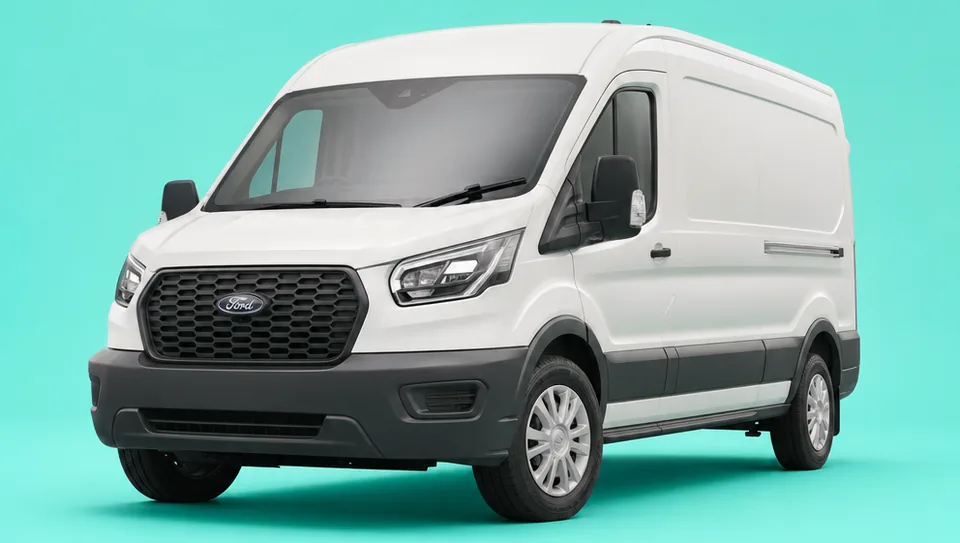
Competitor
$48k-$80k new, $22k-$55k used
Transit most reviewers call it the keener entry price at equivalent spec and the deeper NZ commercial-van dealer network, with a broader used-parts supply chain; Sprinter is generally considered the firmer year-five resale, the larger conversion-market demand, and the premium-brand presentation for customer-facing businesses. Buyers who prioritise purchase price and dealer reach often favour Transit; buyers who prioritise resale and conversion-market compatibility often favour Sprinter.
Competitor
Volkswagen Crafter
$65k-$105k new, $30k-$70k used
Crafter tends to be reckoned the closest European-manufactured competitor on build quality and cabin presentation at equivalent spec, with a thinner NZ dealer network and used-market volume; Sprinter most reviewers call it the deeper NZ dealer network, the stronger conversion-market demand, and the broader trim and wheelbase range. Buyers who prioritise European cabin and are open to a thinner used-market often consider Crafter; buyers who prioritise dealer reach and conversion-market resale often favour Sprinter.
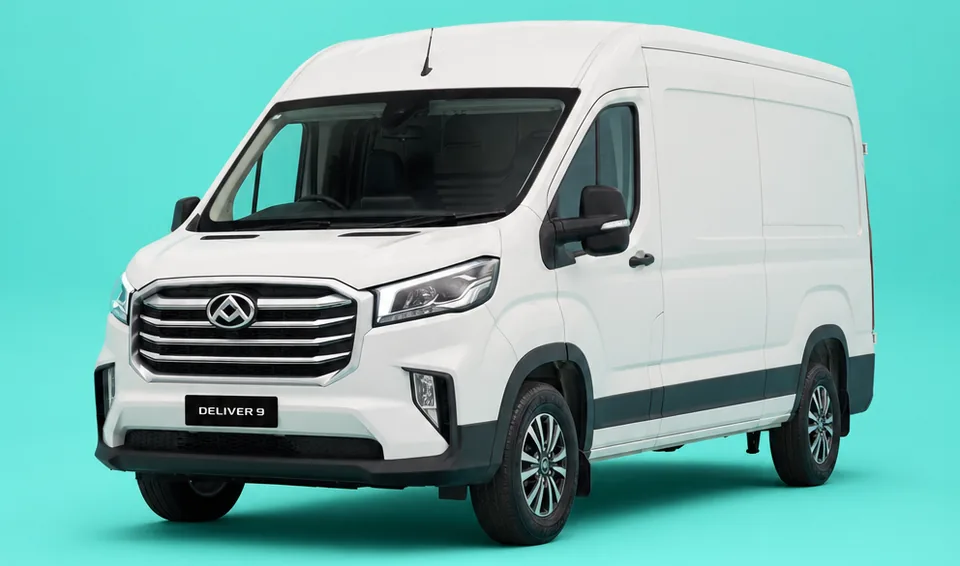
Competitor
$52k-$72k new, $28k-$50k used
Deliver 9 is generally considered the keen-price entry into the full-size commercial-van segment with a five-year factory warranty on qualifying new stock, with softer resale and a thinner NZ dealer network as the widely cited trade-off; Sprinter tends to be reckoned the premium-brand presentation, the firmer year-five resale, and the deeper service network. Buyers who prioritise purchase price and warranty often consider Deliver 9; buyers who prioritise resale and dealer depth often favour Sprinter.
Competitor
Iveco Daily
$72k-$120k new, $32k-$68k used
Daily usually holds the stronger chassis-cab and truck-licence base (including dual-rear-wheel variants) and the segment entrant with the largest payload ceilings, with a thinner NZ dealer network as the widely cited trade-off; Sprinter most comparisons give it the stronger panel-van and campervan-conversion base, and the firmer NZ used-market for passenger-size and small-fleet courier use. Buyers who prioritise payload ceiling and chassis-cab versatility often consider Daily; buyers who prioritise conversion-market resale and NZ dealer depth often favour Sprinter.
Worked example
Buyer profile
Auckland-based last-mile courier operator, trading as a limited company for six years, GST registered with a clean credit file, running a two-van fleet contracted to a national parcel network out of a depot near East Tamaki. Trading up from a 2018 NCV3 Sprinter at 320,000 km that had been accumulating DPF, injector, and clutch wear beyond economical repair.
Scenario
Bought a 2023 Sprinter 314CDI MWB panel van at $75,000 including GST from a franchised Mercedes-Benz Vans dealer in Auckland, sourced as a late-model demonstrator with 14,000 km on the clock. Traded the 2018 NCV3 at an agreed $18,000 and put down a $5,000 cash deposit from retained earnings. Financed the remaining $52,000 over 5 years at 8.5% indicative via chattel mortgage through a specialist commercial-vehicle broker.
The outcome
In this scenario, cash-flow impact at settlement was modest, because the weekly finance cost of about $246 sat well below the combined repair, downtime, and DPF-replacement cost the outgoing 2018 NCV3 had been demanding through its final trading year. The newer VS30 also extended the warranty-backed trading window across the 2024 and 2025 contract cycle, which the older vehicle had been compromising on courier-reliability days.
The GST component of roughly $9,780 was claimed in the next GST return and applied against output GST, giving a first-quarter cash benefit on this borrower's structure, subject to the accountant's confirmation. On the balance sheet, the Sprinter sits as a depreciating asset commonly written off on the IRD diminishing-value schedule for light commercial vehicles, and finance interest is generally deductible against business income each year where the vehicle is used primarily for business, subject to the accountant's confirmation of the use pattern.
Through year one, the loan balance sat modestly above the Sprinter's likely trade-in value on indicative NZ used-market trends, which is the common pattern on any modest-deposit financed commercial van in year one. By around month 16 to 20 on these assumptions, the amortisation curve typically caught the value-loss curve on the current-generation Sprinter, and equity stayed positive through the back half of the term for this borrower's structure.
On indicative NZ used-market trends, a comparable 2023 314CDI MWB at year five (2028) typically trades around the high-$30k to low-$40k range at 2028 values, subject to condition and kilometres. For this borrower, and on those indicative assumptions, the projected retained value supports a natural five-year Sprinter-to-Sprinter replacement cycle on chattel mortgage, keeping a newer 314CDI on the courier fleet at broadly flat capital cost across the business.
The discipline that makes this pattern work is keeping the chattel-mortgage contract to term and servicing the Sprinter at Mercedes-Benz Vans dealers across the five-year window. Refinancing mid-term rarely improves the position on a current-gen Sprinter, because the retained-value curve typically tracks close enough to the amortisation curve that the break fee and establishment cost on the new contract commonly wipes out the marginal rate saving.
Illustrative example. Not a promise of approval or rate. Your circumstances and the lender's own credit decision will determine your actual outcome.
Model-specific questions
On a $62,000 used VS30 MWB at 8.5% indicative over five years with no deposit, the weekly repayment sits at roughly $294. A $95,000 new 314CDI MWB on the same settings lands at around $450 a week. A $75,000 late-model used Sprinter over five years lands near $355 a week. These figures are illustrative only; actual rates are set by the lender after assessment of the applicant.
It depends on the Sprinter and the campaign window. Mercedes-Benz Financial Services NZ runs a genuine captive loan book, so subvented rates on new Sprinter stock around quarter end sometimes price below independent broker offers; outside those windows broker pricing on used and private-sale Sprinters typically wins at equivalent applicant profile. Sourcing both quotes before signing is the usual pattern.
GST is typically claimable on the purchase of a Sprinter under a chattel mortgage where the business is GST-registered and the vehicle is used primarily for taxable business activity, subject to the accountant's confirmation. On a $95,000 GST-inclusive new 314CDI, that represents around $12,390 in input tax, which is usually recovered in the next GST return and commonly applied against output GST or used to reduce the loan balance.
Operating lease is generally considered on courier fleets of three or more Sprinters where cash-flow predictability and bundled maintenance, tyres, and RUC matter more than lowest total cost. Monthly payments are generally deductible as an operating expense, subject to the accountant's confirmation. The trade-off is that the vehicle never ends up on the balance sheet, which means no GST claim on the purchase value and no ownership at term end.
A finance lease sees the lessor retain ownership during the term while the lessee takes depreciation risk through a pre-agreed residual (balloon) at term end, typically 25 to 40% of purchase value on a three-year lease. Monthly payments are generally deductible where the lease is a genuine business expense, subject to the accountant's confirmation. At term end the residual is paid to take ownership, traded in, or handed back.
Indicative rates on late NCV3 and VS30 Sprinters (2015 onward) sit broadly in line with current commercial vans in practice, because parts supply through Mercedes-Benz dealers is ongoing and residual-value data is deep. Earlier NCV3 examples (pre-2014) commonly attract a more conservative rate and a shorter term cap because AdBlue retrofit history and chassis condition vary widely on high-km courier examples.
Ex-fleet Sprinters are common on the NZ used market at 200,000 to 400,000 km and priced materially below one-owner examples. Lenders will typically finance them, though shorter terms (two to three years) and higher indicative rates are the common pattern because residual value at term end is thinner. A specialist commercial-van broker and a pre-purchase inspection covering DPF, turbo, and injector condition are commonly regarded as essential.
Sprinter Japanese imports are rare but occasionally appear on the NZ market through independent importers. Finance is available through some commercial-van specialist lenders, but the indicative rate is typically wider than an NZ-new equivalent because residual-value underwriting is thinner and service-history verification is harder. Left-hand-drive conversions are not approved for NZ road registration and are not financeable through mainstream lenders.
A bare Sprinter chassis-cab or panel van bought for conversion typically finances on a standard chattel mortgage while it remains commercial. A finished motorhome registered and used privately commonly moves onto a consumer secured car loan or a specialist motorhome lender once the conversion is LVV certified and revalued. The lender will typically reassess the asset against the NZ motorhome used market after certification.
Not directly, but service-contract options sold at the dealer (capped-price servicing, AdBlue-included plans) affect the weekly running cost the borrower budgets alongside the finance repayment. These plans are not usually rolled into the loan balance; they are invoiced separately. A lapsed AdBlue system or blocked DPF is a known resale-value risk and is widely inspected on used-Sprinter finance applications.
Zero-deposit chattel-mortgage structures are widely offered on Sprinters to GST-registered buyers because the input-tax claim effectively acts as a post-purchase deposit via the first GST return. A 10 to 20% cash deposit further reduces the loan amount and typically improves the indicative rate band. Courier and trade fleet operators commonly negotiate deposit terms as part of multi-vehicle supply agreements.
Four to five-year terms dominate Sprinter finance. Three-year terms are common on short business-replacement cycles, particularly on operating lease and finance lease structures. Seven-year terms are uncommon on commercial vans generally, because lender appetite against the higher mechanical complexity of AdBlue and DPF systems tightens materially past five years on diesel commercial vehicles.
Comprehensive insurance with an agreed-value or market-value clause is almost always a loan condition while the Sprinter is on finance, because the vehicle is the lender's security. Commercial-use premiums typically run 10 to 30% higher than equivalent passenger-car premiums, reflecting higher daily kilometres and theft risk on Auckland courier fleets. Fleet-insurance programmes covering three or more vans commonly secure a discount.
You might also want
Amount
$60,000 car loan
Close to a typical Sprinter price.
See pageMercedes-Benz model
Mercedes-Benz C-Class finance
The executive sedan that anchors Mercedes-Benz's NZ personal finance pool.
See pageLoan type
Used car finance
Most Sprinter finance in NZ is on used vehicles.
See pageLoan type
Self-employed loans
Sprinter finance is often structured through chattel mortgage.
See pageBrand
All Mercedes-Benz models
Finance across the Mercedes-Benz range.
See pageOur finance partner compares multiple NZ lenders. Calculator inputs travel through to the application, and the partner returns a formal estimate after the lender's credit assessment.
Disclaimer
A car loan runs for years, and the repayment comes out of the same pay that covers everything else. This site exists to show you that weekly number before you sign anything. The payment that catches people out is the one that's fine on a good week and tight on a bad one.
Carfinance.org.nz receives a commission from Simplify when a visitor applies through this site and their application is approved. We refer every visitor to the same partner because they compare multiple New Zealand lenders on the applicant's behalf, so the referral is not driven by a sponsored deal. Simplify sets its own terms and fees and discloses them directly; anything you agree to happens on their side, not ours. Every figure shown on this site is a modelled estimate based on the inputs entered; the actual rate, fees, and repayments are set by the lender after assessing the applicant's circumstances and its own credit decision. Carfinance.org.nz is a calculator and information tool. We are not a lender, not a broker, and not a registered financial adviser. Any decision about whether a specific loan suits a specific situation is best made after talking with the lender, and for amounts that materially affect the household, with a registered financial adviser.
Connecting you with a trusted NZ finance partner
One moment while we hand you over securely. Nothing was collected on our side.