
2020-2022 used F56 SE
$29,000Earliest NZ-new Cooper SE examples. 32.6 kWh usable battery, typically 30,000 to 70,000 km. Factory warranty typically still runs through a standard loan term.
Weekly
$132.52
Monthly
$574.23
MINI's electric three-door hatch, financed on the EV loan tier at mainstream NZ lenders.
Last reviewed: 24 April 2026
Your estimated repayment
Weekly
$174/week
We are not a finance company. Indicative only. Not a quote or offer of credit. Actual rates, fees, and repayments depend on your circumstances and the lender's decision.
 MINI Cooper SE finance calculator Not a lender. Not a broker.
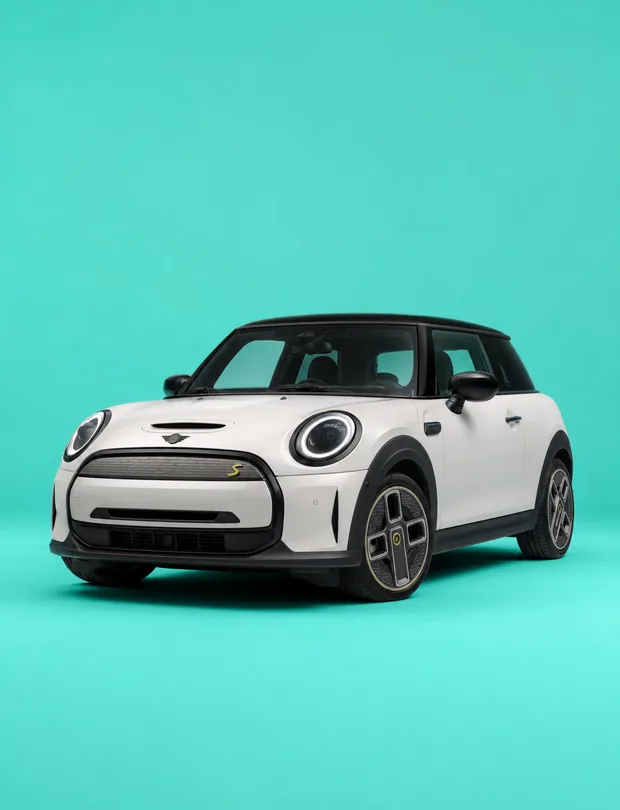
 The Cooper SE is the battery-electric variant of the MINI Cooper three-door hatch, sold in New Zealand from 2020 on the F56 platform and replaced by the F66-generation Cooper Electric from late 2024. Range is modest by EV-hatch standards (the earlier F56 SE carried a 32.6 kWh usable pack, around 200 km real-world, and the F66 Cooper E and Cooper SE step up to 36.6 and 49.2 kWh usable respectively), which keeps the Cooper SE squarely in the second-car and inner-suburb bracket. Finance applications typically run from around $28,000 on a 2020 to 2022 F56 SE ex-lease to $65,000 on a new F66 Cooper SE Resolute. Most NZ lenders apply an EV loan tier to NZ-new Cooper SE examples, and MINI Financial Services (BMW Group) runs captive offers on current stock.
Calculate repaymentsIndicative only. Not a quote or offer of credit.
Year by year
Typical NZ market prices and the weekly cost of financing each. All figures assume 7% over 5 years with no deposit. Indicative only; open the full calculator to pre-set your own rate and term.
2020-2022 used F56 SE
$29,000Earliest NZ-new Cooper SE examples. 32.6 kWh usable battery, typically 30,000 to 70,000 km. Factory warranty typically still runs through a standard loan term.
Weekly
$132.52
Monthly
$574.23
2023-2024 used F56 SE
$38,000Later F56 SE stock with updated infotainment. Ex-lease volumes clearing into the used pool from 2026. Battery warranty still runs deep into a five-year loan.
Weekly
$173.64
Monthly
$752.45
2024-2025 new/nearly-new F66 Cooper E
$50,000Current-generation Cooper E on the new platform. 36.6 kWh usable battery. Entry into the F66 electric line at MINI NZ.
Weekly
$228.48
Monthly
$990.06
2025+ new F66 Cooper SE
$62,000Larger 49.2 kWh usable battery, around 380 km WLTP. Top of the electric three-door range under current MINI NZ pricing.
Weekly
$283.31
Monthly
$1,227.67
Who this suits
Financing notes
At $38,000 across a five-year term at 7.8% indicative EV tier, the weekly lands near $176, or about $763 a month on the calculator. A new F66 Cooper SE at $62,000 on the same settings lifts the weekly to roughly $288. MINI Financial Services (the BMW Group captive) runs periodic subvented offers on current F66 stock through MINI NZ dealers and can price below broker offers inside those windows; outside them, an independent broker typically matches or beats the captive on used F56 SE and on private sales. RUC of $76 per 1,000 km has applied to all pure-electric light vehicles since April 2024 and is the usual offset on the running-cost side.
Model-specific questions
On a $30,000 used 2021 F56 Cooper SE at 8.5% indicative over five years with no deposit, the weekly sits near $140. A 2023 F56 SE at $40,000 on 8% indicative over five years runs at roughly $184. A new F66 Cooper SE at $62,000 on a 7.5% indicative EV tier over five years lands near $286. Actual rates are confirmed by the lender; these figures are illustrative only.
On NZ-new Cooper SE examples through MINI dealers, yes at most mainstream NZ lenders. The vehicle reads as a pure EV on the Carjam record, which is the standard qualification check. Parallel imports or older F56 SE examples without a clean NZ warranty history occasionally fall to the standard secured-car rate; a broker quote typically confirms tier eligibility before an application goes in.
On a NZ-new F66 Cooper E or Cooper SE with a clean credit record, indicative EV tier rates from mainstream NZ lenders typically sit in the 7 to 9% range. Used F56 SE examples commonly land in the 8 to 10% band at the EV tier. Thin credit files or older F56 stock outside warranty commonly push the rate toward the upper end. MINI Financial Services runs subvented offers around quarter end that can price below broker offers during the window.
The F56 Cooper SE's 32.6 kWh usable battery and around 200 km real-world range sits below the Dolphin (44.9 kWh) and the Born (59 to 77 kWh usable) on range, which is priced into NZ used-market residuals. Lenders widely price this into the Cooper SE's loan-to-value position on a five-year term. A shorter three or four-year term matched to the battery-warranty runway is a commonly observed defence against year-four negative equity.
A 10 to 20% deposit is the usual shape across Cooper SE finance in New Zealand. On a $38,000 used F56 SE that is $3,800 to $7,600, and on a $62,000 new F66 Cooper SE that is $6,200 to $12,400. A deposit typically nudges the indicative rate down and reduces total interest; on a used F56 SE specifically, 15 to 20% down is commonly used as a defence against year-four residual softness given the modest battery size.
RUC has applied to pure-electric light vehicles, including Cooper SE and Cooper E, since 1 April 2024 at the current light-EV rate of $76 per 1,000 km. On 10,000 km a year (typical for an inner-suburb second car) that adds roughly $760 annually. Home-charged electricity typically still runs well below petrol on a comparable Cooper S on indicative NZ running-cost trends, though the RUC line has narrowed the gap against the petrol Cooper.
It depends on timing. MINI Financial Services (BMW Group) runs subvented offers on current F66 Cooper E and Cooper SE stock around quarter end and end of financial year, which can price below broker offers inside the window. Outside those windows, an independent broker commonly matches or beats MFS on used F56 SE and on private sales. A common pattern is to source a broker indicative rate first as a benchmark, with the stronger offer kept either way.
Yes, on essentially the same terms as a dealer purchase. A Carjam report typically verifies the VIN, odometer, and any existing secured interest on the PPSR; the seller must clear any listed security at settlement. On a private-sale F56 SE, a battery state-of-health scan at a MINI dealer at $180 to $280 is commonly requested by the lender before funds are released, because the modest pack size amplifies degradation impact on resale.
Three to four years is common on used F56 SE loans because the modest battery size makes longer-term residual value harder to underwrite. Four to five years is common on the F66 Cooper SE with the larger 49.2 kWh pack and the full MINI NZ battery warranty running. Seven-year terms are rarely offered on Cooper SE because the residual curve on a sub-50 kWh EV over that horizon carries more lender exposure than mainstream models.
The loan obligation stays in place; the contract is with the lender, not with MINI. MINI NZ's battery warranty on NZ-new Cooper SE is typically 8 years or 160,000 km, which usually covers the full length of a standard loan term. A Cooper SE with meaningful capacity loss outside warranty commonly sits at a discount on the NZ used market, which can surface negative equity on a long-term loan; a shorter term and a deposit are common defences.
Parallel-import Cooper SE volume is thin in New Zealand, but a small number of F56 examples have arrived from Japan and the UK via specialist importers. Indicative rates on imports typically sit 0.5 to 1.5 points above an equivalent NZ-new car typically, because the MINI NZ factory warranty does not transfer and residual data is thinner. A battery-health scan is commonly required before finance funds.
Yes, where circumstances have improved materially (credit score up, income up, or existing debts paid down), or where a lender's EV tier becomes available after an initial standard-rate approval. A fresh battery state-of-health report is commonly required by the new lender. Small Cooper SE loans sometimes carry establishment fees on refinance that wipe out the marginal rate saving, so the arithmetic is widely worked through before an application goes in.
Comprehensive cover is almost always a loan condition because the vehicle is the lender's security. Indicative 2026 NZ annual premiums sit around $1,250 to $1,750 in Auckland for a F66 Cooper SE, $950 to $1,400 in Wellington, and $800 to $1,200 in Canterbury and Otago. Cooper SE premiums typically sit a touch above an equivalent petrol Cooper because EV-specific repair and panel parts lift the claim-cost profile on insurer data.
Our finance partner compares multiple NZ lenders. Calculator inputs travel through to the application, and the partner returns a formal estimate after the lender's credit assessment.
Disclaimer
A car loan runs for years, and the repayment comes out of the same pay that covers everything else. This site exists to show you that weekly number before you sign anything. The payment that catches people out is the one that's fine on a good week and tight on a bad one.
Carfinance.org.nz receives a commission from Simplify when a visitor applies through this site and their application is approved. We refer every visitor to the same partner because they compare multiple New Zealand lenders on the applicant's behalf, so the referral is not driven by a sponsored deal. Simplify sets its own terms and fees and discloses them directly; anything you agree to happens on their side, not ours. Every figure shown on this site is a modelled estimate based on the inputs entered; the actual rate, fees, and repayments are set by the lender after assessing the applicant's circumstances and its own credit decision. Carfinance.org.nz is a calculator and information tool. We are not a lender, not a broker, and not a registered financial adviser. Any decision about whether a specific loan suits a specific situation is best made after talking with the lender, and for amounts that materially affect the household, with a registered financial adviser.
Connecting you with a trusted NZ finance partner
One moment while we hand you over securely. Nothing was collected on our side.