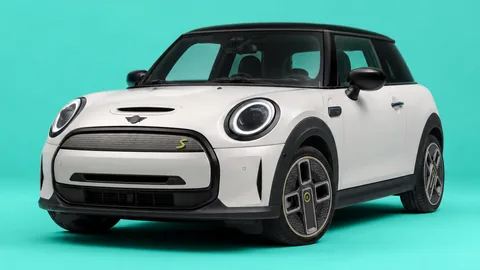
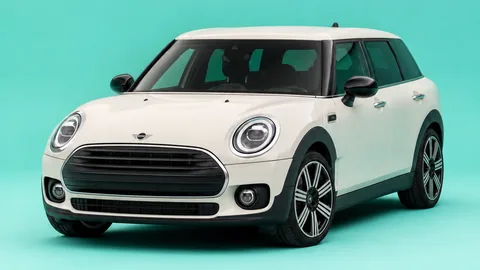
On a new MINI with an active MINI Financial Services promotion, the MINI Garage is often hard to beat because the manufacturer is subsidising the rate. On a used MINI, an independent broker almost always wins, typically by 1 to 3 percentage points, because the finance is separated from the car-price negotiation. The safe approach is to ask a broker first, then use that rate to pressure-test any dealer offer on the same day.
Only the fully electric Cooper SE qualifies for dedicated EV loan products from most NZ lenders, usually at 0.5 to 1.5 percentage points below a standard car loan. The petrol Cooper, Cooper S, Countryman, and JCW variants are financed at standard rates. If you're cross-shopping Cooper SE against a petrol Cooper, ask the broker to quote both so the EV rate differential is visible in the weekly.
Ten to twenty percent is the common range. On a $35,000 used Cooper S that's $3,500 to $7,000. A deposit isn't mandatory for approval but it typically drops the offered rate by 0.5 to 1.5 percentage points and protects you from negative equity in the first couple of years, which matters more on a three-door Cooper than on a Countryman because the three-door depreciates faster.
Yes, provided the vehicle has passed NZ entry compliance and is on NZ soil. MINIs are right-hand drive from the UK factory, so there's no LHD conversion issue. Lenders may apply a small rate premium on a UK-import over a NZ-new MINI because the service-history paper trail can be thinner, but the difference is usually modest if the car is MINI-approved used or comes with a verifiable UK service book.
Usually yes on the R56 Cooper and R60 Countryman generations, but lenders become choosier. Most NZ secured-car-loan products cap the vehicle age at 12 to 15 years at loan-end date, so a 10-year-old Cooper clears a 3-year term but may not clear a 5-year term. Expect a rate 1 to 2 percentage points higher than a 2-year-old equivalent, and budget carefully for out-of-warranty BMW-group servicing bills.
BMW Financial Services runs occasional loyalty or upgrade offers tied to a specific new-vehicle purchase, but these are not a standing general rate discount. If you already own a MINI, its trade-in equity usually has more impact on the deal than any loyalty rate lever. Many buyers ask the MINI Garage to price the trade and the finance separately, which is what shows where the value actually sits.
If the trade-in value exceeds your outstanding loan balance (positive equity), the dealer pays out the old loan and the surplus offsets the next purchase. If the trade-in sits below the balance (negative equity), the shortfall rolls into your new loan. MINI three-door Coopers are more prone to negative equity on longer terms than Countryman variants, so check the exact payout figure before agreeing to a trade, not the rough estimate the salesperson gives.
Balloon products drop the weekly but leave a lump sum (usually 30 to 40% of the purchase price) owing at term end, which you'll need to refinance, pay out, or trade against. On a $60,000 Countryman JCW with a 35% residual, that's roughly $21,000 to deal with at year four, and the refinanced rate is often worse than the original. They work if you genuinely plan to upgrade at term end, not if you expect to keep the car.
MINI running costs sit roughly $2,000 to $3,500 a year above a comparable Mazda 3 or Toyota Corolla over a 5-year ownership cycle, mainly through higher servicing, premium fuel, and run-flat tyre replacement. Financing two cars at the same weekly doesn't mean the same total cost; budget the difference before signing. The gap narrows if you service the MINI at an independent BMW-group specialist rather than the MINI Garage.
Yes, most NZ lenders allow rolling negative equity into a new MINI loan, but they will scrutinise affordability more closely. If you owe $6,000 on your current car and are buying a $40,000 Countryman, the new loan becomes $46,000 before any deposit or trade-in. Starting the MINI loan underwater pushes negative-equity risk into year three or later, which is the point where trade-up decisions typically land, so keep the rolled balance below 15% of the MINI's value.
For a $30,000 used Cooper S on a 5-year loan at around 8.5%, finance costs total about $36,900 in principal plus interest. Add insurance (around $8,500), BMW-group servicing and run-flat tyres (around $10,500), and premium fuel (around $14,500 at 12,000 km a year) for a rough all-in of $70,000 over five years, or about $270 a week. Cooper SE sits lower on energy but higher on depreciation uncertainty in the current used-EV market.
New MINIs in NZ come with a 5-year, 100,000 km factory warranty (whichever comes first) plus roadside assistance per MINI NZ's current policy; check the MINI Garage for your specific vehicle. Warranty coverage doesn't directly change your insurance premium, but it reduces the case for dealer-sold mechanical breakdown insurance during the warranty period. Revisit MBI around year five when the factory cover lapses, not at signing.