
2011-2013 import
$7,50024 kWh first-gen. Battery health typically 55% to 70%. Usable range 60 to 100 km.
Weekly
$34.27
Monthly
$148.51
New Zealand's default used EV via Japanese imports.
Last reviewed: 24 April 2026
Your estimated repayment
Weekly
$78/week
We are not a finance company. Indicative only. Not a quote or offer of credit. Actual rates, fees, and repayments depend on your circumstances and the lender's decision.
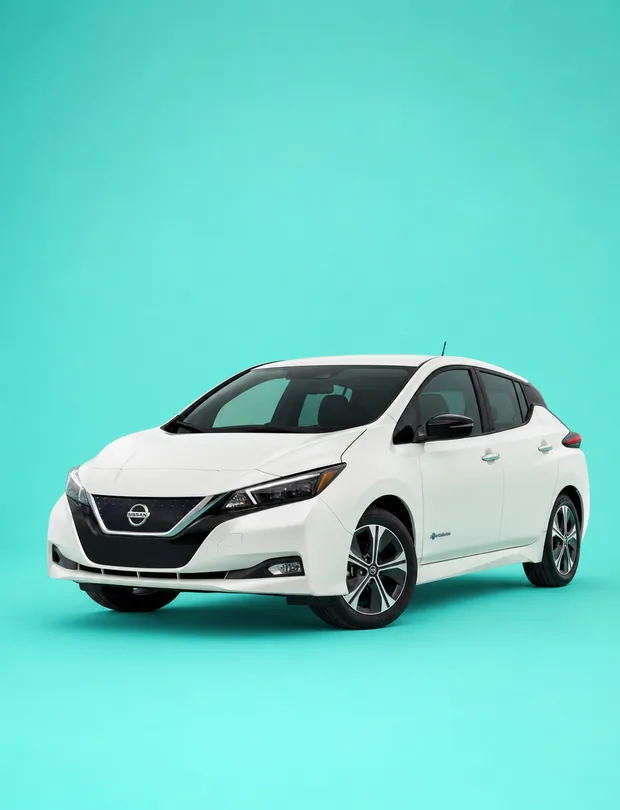 Nissan Leaf finance calculator Not a lender. Not a broker.
 The Leaf is the most-common used EV in New Zealand by a wide margin, driven by a large stream of 2011 to 2017 Japanese imports. Most Leafs on the NZ used market are first-generation 24 kWh or 30 kWh cars, with second-generation 40 kWh cars starting to filter through as imports. The car reshaped NZ's view of EV ownership: it opened electric motoring to sub-$15,000 budgets and remains the dominant data point for most used-EV buyers and lenders here.
Calculate repaymentsIndicative only. Not a quote or offer of credit.
Year by year
Typical NZ market prices and the weekly cost of financing each. All figures assume 7% over 5 years with no deposit. Indicative only; open the full calculator to pre-set your own rate and term.
2011-2013 import
$7,50024 kWh first-gen. Battery health typically 55% to 70%. Usable range 60 to 100 km.
Weekly
$34.27
Monthly
$148.51
2014-2016 import
$11,50024 kWh and 30 kWh first-gen. Battery health typically 70% to 85%. Usable range 100 to 160 km.
Weekly
$52.55
Monthly
$227.71
2017-2019 import
$16,000Second-generation 40 kWh. Battery health typically 85%-plus. Usable range 200 to 260 km.
Weekly
$73.11
Monthly
$316.82
2020+ used NZ-new
$25,000Second-gen 40 kWh and 62 kWh NZ-new cars. Factory warranty may still apply.
Weekly
$114.24
Monthly
$495.03
Who this suits
Four real scenarios
Representative NZ buyers and the numbers behind their deals. Weekly and rate figures are indicative and shown for comparison. Your own rate is confirmed by the lender after application.
Auckland first-EV household
2019 ZE1 40 kWh import, 58,000 km
$18,000 · Secured consumer loan, 4 years at 9.5% (indicative)
A single-income Mt Roskill household trying electric motoring for the first time, after years in a petrol Tiida. A verified battery-health report showing above 90% state of health was a precondition for funding. The four-year term was chosen over five because the battery-degradation curve on a used import makes later-year resale harder to underwrite from what we see.
$104 per week
Wellington commuter on a budget ZE0
2016 AZE0 30 kWh import, 72,000 km
$11,500 · Secured consumer loan, 3 years at 10.5% (indicative)
A Kelburn to CBD commuter covering around 25 km a day, where even a ten-year-old 30 kWh Leaf with a battery at 10 bars of health still has more usable range than the daily loop asks. A three-year term keeps total interest modest on a sub-$12,000 loan. Charging is from a standard home socket overnight, so a dedicated wall box was not part of the decision.
$86 per week
Christchurch school-run second car
2021 ZE1 40 kWh NZ-new, 35,000 km
$25,000 · $5,000 deposit, 5 years at 8.25% (indicative, EV tier)
A Fendalton household adding a second car dedicated to school drops and supermarket runs, keeping an older Outback for out-of-town trips. The NZ-new ZE1 attracted an EV-tier indicative rate at the lender because battery provenance is documented and factory warranty residuals still apply. A 20% deposit was funded by the sale of a paid-off Yaris.
$94 per week
Hamilton student first car on a 2014 import
2014 AZE0 24 kWh import, 88,000 km
$8,500 · Secured consumer loan, 3 years at 12.0% (indicative)
A Waikato University student buying a first car with a limited credit file. The 24 kWh first-generation Leaf at 9 bars of battery health still covers a typical Hamilton daily loop of under 40 km. A thin credit history typically lifts the indicative rate, so a three-year term was chosen to contain total interest rather than stretch the weekly figure further down.
$65 per week
The real number
Four years of real outlay on a representative used-import 2020 ZE1 40 kWh Leaf purchased at $18,000, financed at 9.5% over 4 years with no deposit, driven 12,000 km a year from a Wellington base. The weekly finance figure is the headline, but electricity replaces petrol, RUC has applied to all Leafs since 1 April 2024, and comprehensive insurance is a standard loan condition.
Purchase price
$18,000
Used-import ZE1 40 kWh at 90%-plus battery state of health at purchase. NZ-new equivalents typically sit a few thousand dollars higher on comparable kilometres.
Finance interest
$3,720
Indicative 9.5% over 4 years on the full $18,000. Actual rate is set by the lender after assessment of the applicant and the battery-health report.
Electricity
$2,200
Home charging at around 27 c/kWh, 17 kWh/100 km real-world across 48,000 km. A petrol hatch at the same distance is commonly observed to cost roughly three times more in fuel.
Road User Charges
$3,650
RUC has applied to all pure-electric Leafs since 1 April 2024 at the light EV rate of $76 per 1,000 km. 48,000 km over the term at that rate.
Comprehensive insurance
$4,400
Wellington band for a used ZE1 Leaf with off-street parking, around $1,100 a year. EV-specific repair parts push premiums a touch above an equivalent petrol hatch typically.
Servicing and tyres
$2,200
Annual check, brake fluid, cabin filter, and one set of tyres around year 3. No oil services, no timing belts, no gearbox flush on a Leaf.
Total four-year cash outlay
$34,170
Assumes: 2020 ZE1 40 kWh import at $18,000, 12,000 km/year, home charging at around 27 c/kWh, 17 kWh/100 km real-world, RUC at the EV rate of $76 per 1,000 km from April 2024, Wellington insurance band, no wall-box install cost. Indicative only.
What it's worth later
Leaf depreciation tends to be sharper than ICE equivalents in the same price bracket, because the battery degrades with time and usage in a way an engine doesn't. The single most important driver of used-Leaf value in New Zealand is battery state of health, commonly reported either as a percentage or via the 12-bar dashboard gauge. Resale tends to step down sharply when a car drops below 10 bars and again at 8 bars.
Based on a 2020 ZE1 40 kWh Leaf purchased as a used import at $18,000. Indicative NZ used-market 2026 pricing.
Year 1
85%
$15,300
Year-one drop is typically milder on a used import than on a NZ-new EV, because the import price already bakes in the first big depreciation step. Battery capacity typically loses 2 to 3% in year one of NZ use.
Year 3
65%
$11,700
RUC policy effect has now been fully priced into the NZ used-EV market, which historically correlates with a one-off reset at around the April 2024 mark. Common trade-in point for consumer-loan exits.
Year 5
50%
$9,000
Battery-health cliff typically surfaces around here. A car that has dropped below 10 bars of capacity is commonly observed to lose several thousand dollars of resale versus a same-age Leaf still showing 11 bars.
Year 7
38%
$6,840
Eight-bar resale threshold becomes the defining factor. Leafs at 8 bars or below are typically discounted heavily on the NZ market and commonly sit outside mainstream finance approval on residual grounds.
Why this matters for finance
On indicative NZ used-market trends, a three to four-year term on a used ZE1 Leaf typically keeps the amortisation curve ahead of the value-loss curve from around month 12 onward, provided battery health stays above 10 bars. A five-year term on a first-generation ZE0 Leaf more commonly ends underwater because the battery-health cliff usually arrives before the loan is paid off. This is class information; the actual outcome depends on charging habits, ambient temperature history, and the battery state of health at purchase.
Financing notes
At $12,000 across a 3-year term at 9% indicative (EV tier), the weekly repayment lands at roughly $86, or $373 a month on the calculator. A verified battery-health report is typically required before the loan can fund, and many lenders apply their EV tier to imports as well as NZ-new Leafs once that report comes back healthy.
Before finance settles
The Leaf is the most-common used EV on the NZ market, per the Carjam NZ fleet register, and the single most important used-buy factor is battery state of health. A careful inspection before finance settles is treated as a given, because the battery typically accounts for a larger share of the vehicle's residual value than any other component. The checks below are what a pre-purchase inspection typically covers on a Leaf specifically. Most lenders will expect comprehensive insurance and a clear title; the used-car loan page covers the general process.
The Leaf dashboard shows capacity in 12 bars, and each bar represents roughly 6.25% of original capacity. A LeafSpy scan via the OBD port reports state of health as a percentage and flags individual weak cells. A ZE0 with 10 of 12 bars and state of health above 75% tends to be reckoned acceptable for city use; a Leaf at 8 bars or below typically sits outside mainstream finance criteria.
The first-generation Leaf lacks active battery cooling, which historically correlated with accelerated capacity loss on cars used in warm climates or on repeated rapid-charge cycles. Auction-sheet history and LeafSpy temperature logs are commonly reviewed on imports from warmer Japanese prefectures. A ZE0 with a documented history of mainly home AC charging typically shows a healthier state of health at the same age.
All NZ Leafs use CHAdeMO for DC rapid charging. For AC charging, Japanese-import Leafs (the overwhelming majority of the NZ fleet) use Type 1 / SAE J1772 AC inlet, while NZ-new Leafs use Type 2. Since most NZ public AC chargers are Type 2 sockets, Japanese-import owners typically need a Type 1 adapter cable. CHAdeMO is still the most-common DC-rapid standard on the NZ public network, but some newer sites are CCS-only. A pre-purchase check of home-charging set-up, local public-rapid network, and the Leaf's specific port type has a reputation as practical due diligence.
Japanese auction sheets typically carry a verified odometer reading at export. Where the Carjam record, the auction sheet, and the current dash reading don't align within a small tolerance, the vehicle is commonly excluded from mainstream finance approval. The Leaf is among the higher-volume import models on the NZ market, which historically correlates with more attempted odometer rollbacks across the segment.
An imported Leaf needs entry compliance and a first NZ WOF before it's legally on the road. Lenders typically release funds against a car that's already complied and registered rather than one still going through entry inspection. The compliance plate and the Carjam first-NZ-registration date are commonly cross-checked as part of the pre-settlement paperwork.
All pure-electric Leafs have been subject to RUC since 1 April 2024 at the light EV rate. An RUC licence sticker shows how far the current purchase has been paid up to, and any unpaid RUC transfers with the vehicle on sale. A Carjam or NZTA RUC check is commonly included in the pre-settlement pack so you know the balance you are inheriting.
Japanese-import Leafs commonly ship with a Japanese-language infotainment system, Japanese CarWings telematics (now inactive outside Japan), and an FM tuner on Japanese frequencies. An English-language firmware conversion and a NZ FM expander are widely available through Leaf specialists, but most buyers budget a few hundred dollars for this if the car has not already been converted.
Off-dealer
A meaningful share of used Leaf transactions in New Zealand happen outside the dealer channel, especially on first-generation ZE0 imports that have already passed through one or two NZ owners. Financing a private-sale Leaf is entirely normal through a broker. The process is a handful of extra steps because there's no dealer sitting between the borrower and the lender, and a battery-health report typically needs to be produced as part of the package.
An indicative broker pre-approval before negotiating with the seller is a common first step. Pre-approval in hand typically signals to the seller that you are funded, which often shortens the negotiation on a privately listed Leaf.
A Carjam report on the VIN is the widely used starting point. Any secured interest listed on the PPSR must be cleared by the seller at or before settlement; an uncleared security interest means the previous lender still holds a claim over the vehicle.
A verified battery-health report from EVs Enhanced, a Nissan dealer, or an approved EV specialist typically costs $150 to $250 and is commonly required by the lender before funds are released. The report captures both the bar count and the LeafSpy state-of-health percentage at a specific odometer reading.
The broker typically needs the final purchase details (VIN, agreed price, odometer, seller bank details, battery-health report) to arrange direct settlement to the seller at the transfer, rather than funds flowing through you.
NZTA online vehicle transfer happens on the same day as settlement, and the lender files its own security interest on the PPSR at that point.
Usually a loan condition
Comprehensive insurance is almost always a loan condition while the Leaf is on finance, because the vehicle is the lender's security. EV-specific repair parts and the cost of battery-pack assessment after a collision commonly push Leaf premiums a touch above an equivalent petrol hatch. The bands below are indicative 2026 NZ annual figures for a mid-range ZE1 40 kWh and are widely verified via real quotes before being used as a budgeting figure.
Auckland
$1,250 to $1,700
ZE1 40 kWh, kerbside parking
Auckland Leaf theft frequency sits in the middle of the mainstream-hatch band on insurer data, but EV battery-pack repair cost lifts the comprehensive quote. Tower, AMI, and State typically price a premium for kerbside parking; off-street storage tends to drop the quote.
Wellington
$950 to $1,350
ZE1 40 kWh, off-street parking
Wellington Leaf premiums typically sit a little below Auckland. Wind and weather exposure is priced into comprehensive. Commute-distance declarations and home-charging set-up materially shift the quote on a daily-driver Leaf.
Canterbury and Otago
$800 to $1,150
ZE0 30 kWh or ZE1 40 kWh, rural or off-street
Rural and provincial South Island Leaf premiums commonly sit at the lower end of the NZ spread. Multi-vehicle household policies often shave another ten to fifteen per cent off the final figure.
Get actual quotes before settling. Insurance cost varies with credit profile, kilometres, and excess choices more than these bands can show.
Compare Nissan car insuranceThe direct alternatives
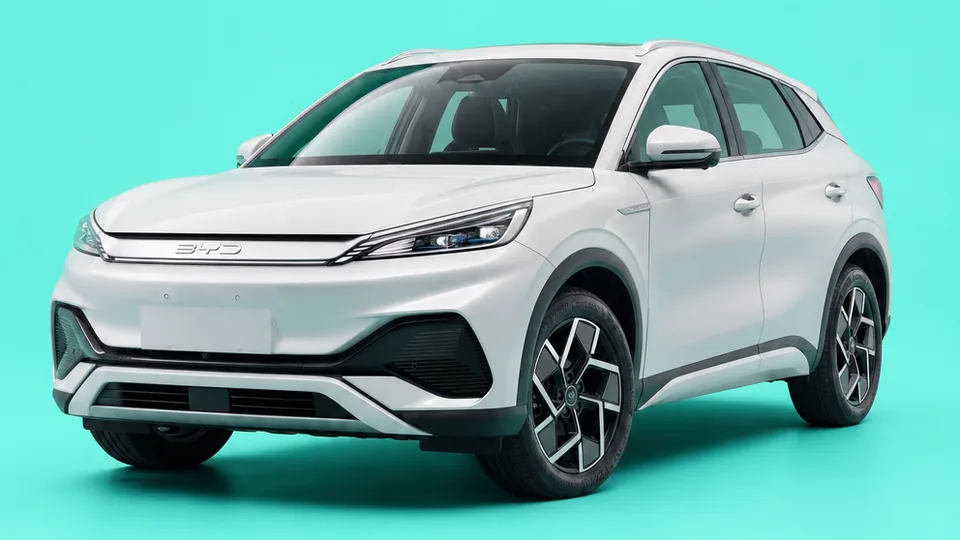
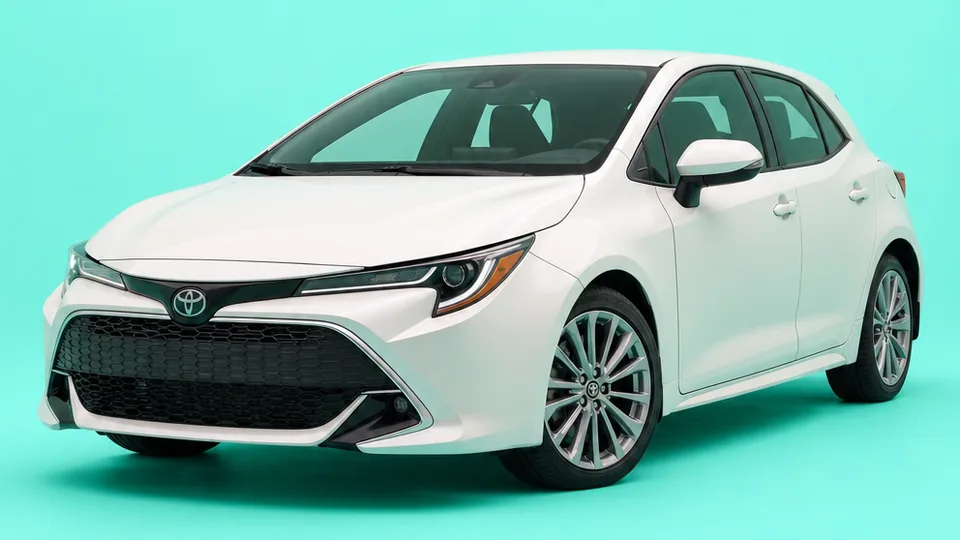
The used-EV segment in New Zealand at the Leaf's price point sits alongside newer NZ-new rivals like the BYD Atto 3 and MG ZS EV, and the Toyota Corolla Hybrid as a non-EV cross-shop for buyers prioritising running cost without the charging commitment. The meaningful differences show up in battery thermal management, warranty remaining, and resale pattern rather than in the weekly repayment. All four finance on broadly similar indicative rates at the same applicant profile.
Competitor
$45k-$55k new, $28k-$42k used
Atto 3 is commonly rated the newer-technology EV with active battery cooling and a longer factory warranty runway; Leaf has a reputation for the cheaper entry point to EV ownership on a sub-$20k budget. Households that prioritise new-car warranty and thermal management often favour Atto 3; households that prioritise lowest entry price often favour Leaf.

Competitor
$38k-$48k new, $22k-$34k used
ZS EV is generally credited with the most affordable small-SUV EV on the NZ new market; Leaf most reviewers give it the more proven used-EV data set with a larger NZ parts and specialist network. Buyers who prioritise new-car cabin space often favour ZS EV; buyers who prioritise a decade of NZ used-market track record often favour Leaf.
Competitor
$32k-$42k new, $18k-$32k used
Corolla Hybrid tends to be credited with the simpler ownership story with no charging set-up, no RUC, and a deeper NZ service network; Leaf is commonly rated the lower weekly running cost on short daily distances where electricity replaces petrol. Buyers who prioritise zero charging overhead often favour Corolla Hybrid; buyers who prioritise lowest per-kilometre energy cost often favour Leaf.
Worked example
Buyer profile
Wellington-region dual-income household, late thirties, clean credit file, commuting from Tawa to the CBD. Trading up from a 2012 Tiida that had started needing more than routine servicing, and exploring electric motoring for the first time.
Scenario
Bought a 2020 ZE1 40 kWh Leaf as a used Japanese import at $18,000 from a Wellington EV specialist, with a verified battery-health report showing 92% state of health at 58,000 km. Put a $2,000 cash deposit down and financed the remaining $16,000 over 4 years at 9.5% indicative via a consumer-loan broker who applied the lender's EV tier after the health report came back clean.
The outcome
In this scenario, the weekly outgoing of $93 landed only slightly above the fuel bill the household had been running on the old Tiida at around $65 a week. The switch from about $3,400 a year in petrol to roughly $550 a year in electricity at home rates typically frees up around $55 a week on the fuel line, which on these numbers covers a material share of the finance cost.
RUC at the light-EV rate of $76 per 1,000 km now applies to the Leaf. On this household's 12,000 km a year, RUC adds around $910 annually, which is roughly $17.50 a week and a noticeable offset against the electricity saving. Many Wellington households budget against the full electricity-plus-RUC figure when comparing a Leaf to a petrol equivalent, rather than electricity alone.
On the balance sheet of this household, the loan sits as a straight consumer liability with no tax treatment to manage, because the Leaf is used for personal commuting rather than business. Finance interest is not deductible on this structure in the ordinary case, subject to the accountant's confirmation where the commute pattern has any unusual business element.
On indicative NZ used-market trends, a comparable ZE1 40 kWh Leaf at year four (2030 values) typically trades in the $11,000 to $14,000 range subject to battery health, which for this borrower's structure sits close to the outstanding loan balance through the final year on these assumptions. The discipline that makes this pattern work is keeping the car at a documented state of health, because a Leaf that drops below 10 bars during the loan term typically surfaces a resale-value gap that a petrol equivalent would not.
The other discipline is matching the term to the battery story rather than to the lowest weekly figure. A five-year term on a first-generation ZE0 Leaf more commonly ends underwater because the battery cliff arrives before the loan is paid off; a four-year term on a second-generation ZE1 with strong initial health, as in this scenario, typically avoids that outcome on indicative NZ used-market trends.
Illustrative example. Not a promise of approval or rate. Your circumstances and the lender's own credit decision will determine your actual outcome.
Model-specific questions
On a $8,500 first-gen ZE0 24 kWh Leaf at 11% indicative over 3 years, the weekly sits near $65. A $12,000 30 kWh ZE0 at 9.5% over 3 years runs at roughly $89. An $18,000 ZE1 40 kWh at 9.5% over 4 years lands near $104. A $25,000 NZ-new ZE1 at the EV tier near 8% over 5 years is roughly $117 a week. Indicative only.
On a clean applicant with a recent NZ-new ZE1, the EV tier at mainstream NZ lenders typically sits 0.5 to 1.5 points below the equivalent standard rate in practice. On an older ZE0 import at a thin credit file, rates commonly sit in the 10.5 to 12% range. The verified battery-health report is usually what moves a Leaf from the standard tier to the EV tier.
It varies by lender. Some apply the EV tier to any compliant Leaf, import or NZ-new. Others restrict the tier to NZ-new EVs only. On a $12,000 Leaf over 3 years, the interest difference between EV tier and standard tier can be $200 to $500 across the term. A broker can confirm which lenders in their panel currently include imports inside the EV tier.
On most mainstream NZ lenders, yes. A verified report from Ecotricity, a Nissan dealer, or an approved EV specialist is now standard for Leaf finance applications because capacity loss materially affects the vehicle's value and usable range. Without the report, lenders commonly quote a conservative rate or decline the application on residual-value grounds.
Zero-deposit loans are routine on Leafs under $15,000 because the amount financed is small. A 10 to 20% deposit on a ZE1 40 kWh at $18,000 to $25,000 typically reduces total interest by $400 to $900 over a 4 to 5-year term on indicative figures. A deposit also commonly moves the applicant closer to the EV tier at lenders that price conservatively on zero-deposit used-EV structures.
All pure-electric Leafs have been subject to RUC at the light EV rate of $76 per 1,000 km since 1 April 2024. On 12,000 km a year, that adds around $910 annually, or roughly $17.50 a week. RUC has become the second-largest running-cost line after insurance on a Leaf from what we see. An RUC balance transfers with the vehicle at sale and is commonly checked before settlement.
The loan obligation stays in place; the contract is with the lender, not with Nissan. A Leaf below 8 bars is typically discounted heavily on the NZ used market and commonly sits outside mainstream finance approval at trade-in, which can surface negative equity on a five-year loan. A shorter term matched to the battery-health runway is generally considered a defensive option.
Yes. Most NZ lenders finance compliant ZE0 and ZE1 imports once entry compliance is certified, the first NZ WOF is issued, and a battery-health report is produced. Indicative rates on older ZE0 imports commonly sit 1 to 2 points above an equivalent NZ-new ZE1 because residual data is thinner. Maximum terms are often capped at 4 years rather than 5 or 7.
Yes, on broadly the same terms as a dealer purchase. A broker pre-approval is commonly sourced first. A Carjam report verifies VIN, odometer, and any secured interest on the PPSR; the seller must clear any listed security at settlement. A verified battery-health report at $150 to $250 is typically required as part of the lender pack before funds are released to the seller.
Three to four years is common on ZE0 imports, because the battery-degradation curve makes longer-term residual value harder to underwrite. Four to five years is common on ZE1 40 kWh and 62 kWh cars with stronger initial state of health. Seven-year terms are rarely offered on used Leafs because the battery cliff often arrives before the loan is paid off.
Yes, where circumstances have improved materially and battery health has held. A fresh battery-health report is typically required by the new lender. Small Leaf loans commonly carry establishment fees on refinance that wipe out the marginal rate saving, so the arithmetic is widely worked through before an application is submitted. Older ZE0 Leafs approaching 8 bars are usually harder to refinance.
Comprehensive cover is almost always a loan condition because the vehicle is the lender's security. Indicative 2026 NZ annual premiums sit around $1,250 to $1,700 in Auckland for a ZE1 40 kWh, $950 to $1,350 in Wellington, and $800 to $1,150 in Canterbury and Otago. EV-specific repair parts commonly push the quote a touch above an equivalent petrol hatch.
A 24 kWh ZE0 is typically financeable where battery state of health sits at 9 bars or above and the purchase price is modest. Lenders commonly cap the term at 3 years and apply a standard consumer rate rather than the EV tier. Older ZE0 examples below 8 bars often sit outside mainstream finance because residual-value risk is high and the usable range is short.
You might also want
Amount
$17,500 car loan
Close to a typical Leaf price.
See pageNissan model
Nissan Navara finance
A common tradie and lifestyle ute with strong NZ resale.
See pageLoan type
Used car finance
Most Leaf finance in NZ is on used vehicles.
See pageBrand
All Nissan models
Finance across the Nissan range.
See pageOur finance partner compares multiple NZ lenders. Calculator inputs travel through to the application, and the partner returns a formal estimate after the lender's credit assessment.
Disclaimer
A car loan runs for years, and the repayment comes out of the same pay that covers everything else. This site exists to show you that weekly number before you sign anything. The payment that catches people out is the one that's fine on a good week and tight on a bad one.
Carfinance.org.nz receives a commission from Simplify when a visitor applies through this site and their application is approved. We refer every visitor to the same partner because they compare multiple New Zealand lenders on the applicant's behalf, so the referral is not driven by a sponsored deal. Simplify sets its own terms and fees and discloses them directly; anything you agree to happens on their side, not ours. Every figure shown on this site is a modelled estimate based on the inputs entered; the actual rate, fees, and repayments are set by the lender after assessing the applicant's circumstances and its own credit decision. Carfinance.org.nz is a calculator and information tool. We are not a lender, not a broker, and not a registered financial adviser. Any decision about whether a specific loan suits a specific situation is best made after talking with the lender, and for amounts that materially affect the household, with a registered financial adviser.
Connecting you with a trusted NZ finance partner
One moment while we hand you over securely. Nothing was collected on our side.