Usually not. Renault NZ doesn't run a heavily subvented captive-finance arm on passenger Renault models in the NZ market, so dealer finance offers come from partner lenders with a dealer margin. A broker quote on a Clio, Megane, Captur, Koleos, or Trafic typically matches or undercuts the dealer rate, and the gap widens on used stock bought through generalist (non-Renault) yards.
Largely yes. The current Koleos uses the T32-generation Nissan X-Trail platform and a related drivetrain, so lenders cross-reference residual-value data from the higher-volume Japanese SUV when pricing a Koleos application. Koleos typically trades at a small residual discount to X-Trail because new-car volume is thinner, but insurance and running costs track closely.
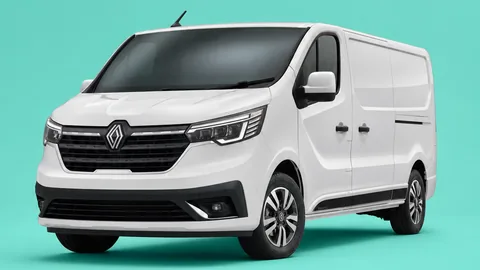
Yes, where the Trafic is primarily used for business (more than 50% of kilometres) and the business is GST-registered. Under a chattel mortgage, GST on the full purchase price (around $7,174 on a $55,000 Trafic) is typically claimable in the next GST return, and finance interest is generally deductible against business income across the term, subject to the accountant's confirmation. Accountant input on chattel mortgage, finance lease, or operating lease tends to be treated as essential.
Yes, but confirm the battery status first. Some older Zoe cars came to market under a battery-lease structure where the battery is rented monthly rather than owned. Lenders will typically not advance on a leased-battery Zoe without confirming the lease commitment separately. On owned-battery Zoe stock the EV loan tier usually applies; on import Zoe the standard secured-car rate is more common.
10 to 20% is the common range for passenger Renaults. On a $35,000 Koleos that's $3,500 to $7,000; on a $15,000 used Clio, $1,500 to $3,000. Trafic buyers typically go slightly higher at 15 to 25% because of the larger loan sizes involved. A deposit typically drops the offered rate by 0.5 to 1.5 percentage points and protects against first-year depreciation.
Usually yes on a shorter term. Most NZ secured-car-loan products cap vehicle age at 12 to 15 years at loan-end date, so a 2014 Megane or older Koleos clears a 3-year term but often fails a 5-year application. Rates sit 1 to 2 percentage points above current-generation pricing, and a pre-purchase inspection focused on timing chain and DPF work (on diesel variants) is worth the cost.
Yes, largely. The current Trafic, Nissan Primastar, and Mitsubishi Express share a platform and core mechanicals. For finance purposes this means lenders have multiple data points on the shared commercial product, which supports chattel-mortgage structures and keeps residual-value modelling straightforward. Servicing and parts networks are interchangeable in most cases.
Read the whole offer carefully. Renault NZ promotional finance typically requires a 20 to 30% deposit, a short term (2 to 3 years), and holds the drive-away price at RRP. The two scenarios land differently. a low-rate offer at RRP may still be dearer than an open-market broker rate on the same Koleos or Trafic negotiated $2,000 to $3,500 below RRP. Total cash out is where the difference shows up, not the headline rate.
If your trade-in is worth more than the balance still owing, the surplus comes off your next car. If the balance is higher (negative equity), the shortfall rolls into your new loan. On current-generation Koleos and Trafic, negative equity is rarer because residuals hold up. On older Megane and on Clio loans stretched to 6 or 7 years, negative equity is more common than on Japanese-mainstream equivalents.
Most NZ lenders will let you, though the affordability check tightens. Where $6,000 is owed on the current car and a $35,000 Koleos is being bought, the new loan becomes around $41,000 less any deposit or trade. Keeping rolled-in negative equity under 15 to 20% of the new Renault's value is widely preferred; otherwise clearing the old loan via private sale first is usually a cleaner outcome.
Generally no. Full-cover insurance on a new Trafic typically runs $1,500 to $2,400 per year, similar to the equivalent-spec Toyota Hiace or Ford Transit Custom because vans as a category attract similar theft and repair-cost loadings. Business-use signage and cargo-cover extensions are usually quoted separately on top and vary by operator profile.
For a $30,000 used Koleos on a 5-year loan at 8%, finance totals approximately $36,400 (principal plus interest). Add insurance ($7,000 to $9,500), servicing and consumables ($7,500 to $10,000), and fuel ($14,000 to $17,000 at 15,000 km a year) for a rough all-in of $65,000 to $72,000 over 5 years, or around $265 a week. Diesel variants push fuel lower but add RUC on top.