Skip to content
Carfinance.org.nz
Subaru logo Mainstream brand

Subaru car finance calculator

Published 23 April 2026 · Last reviewed 23 April 2026 · Disclaimer

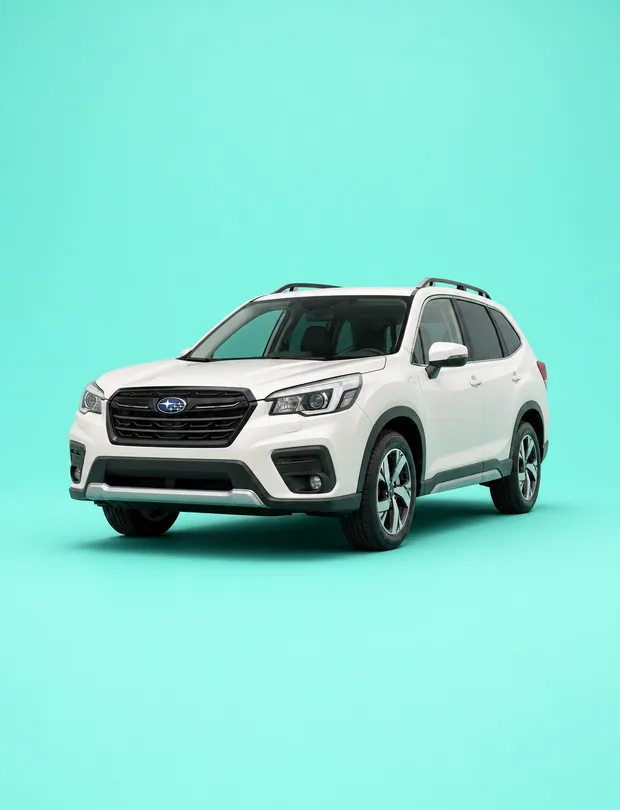
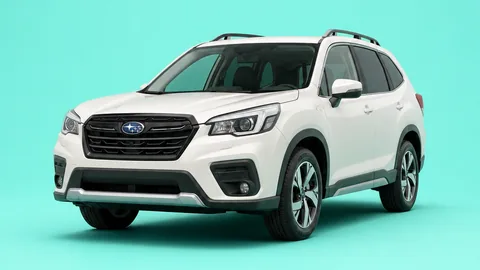
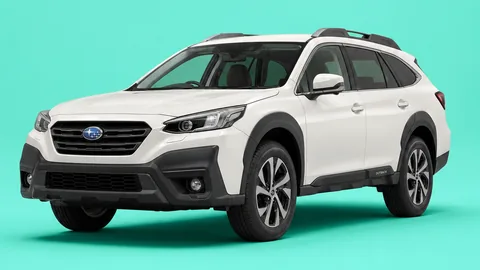
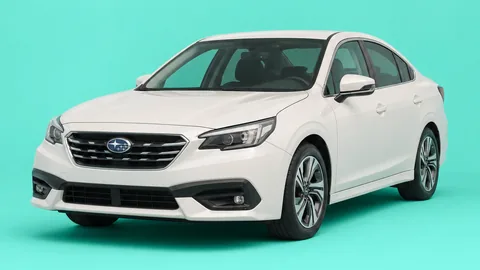
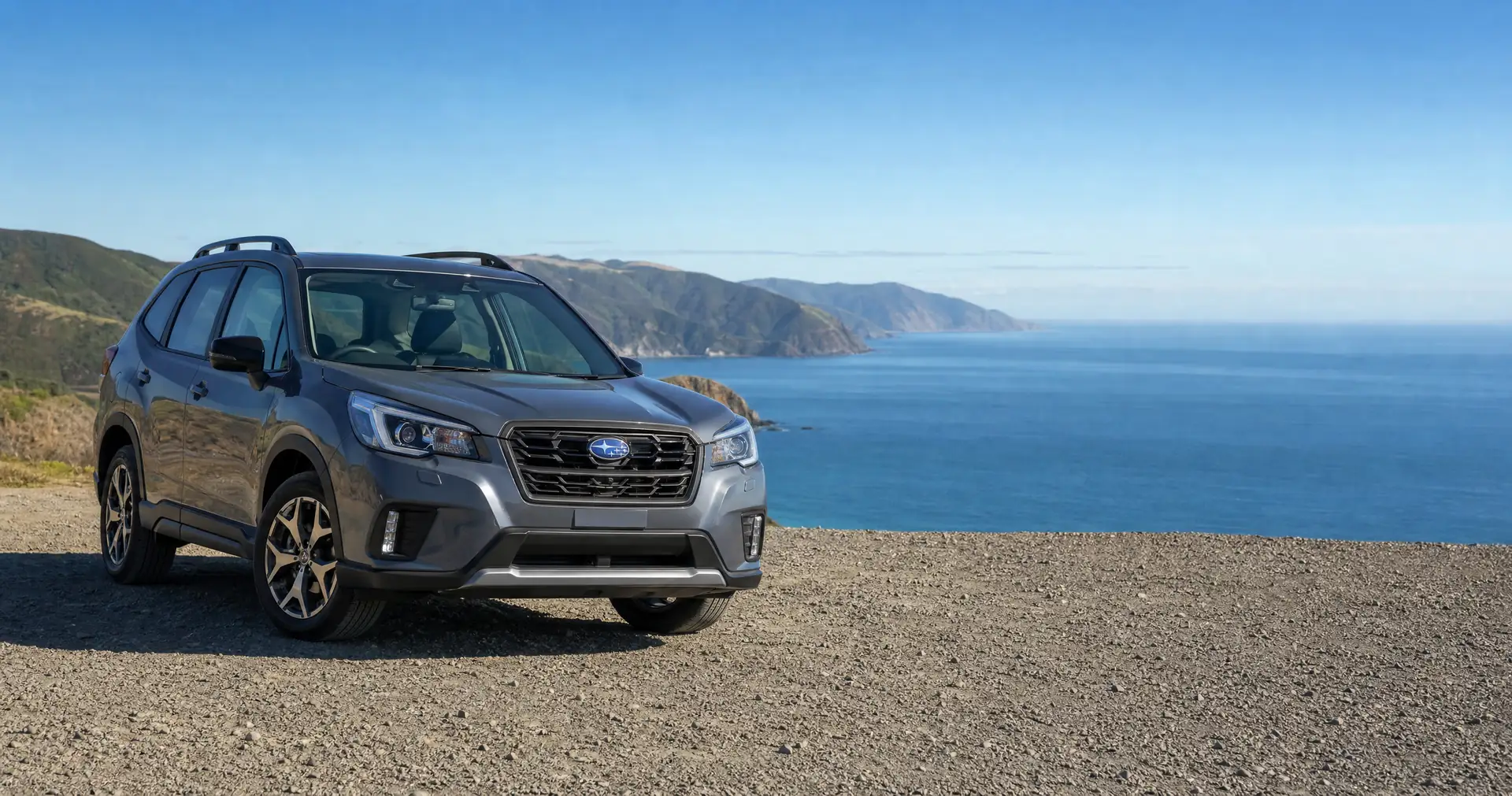
A lifestyle and AWD-focused mainstream brand with a durable NZ buyer base. Subaru sits mid-pack on the Carjam NZ fleet register, with the Outback and Forester doing most of the heavy lifting and the Legacy sedan rounding out an older used-market pool. The brand skews rural, lifestyle-block, and outdoorsy-suburban, which shapes both the finance application (AWD, diesel, and boxer-petrol drivetrains) and the ownership story. Subaru NZ runs a 5-year factory warranty on new cars, and Japanese-import Legacy and Forester volume adds an under-$15,000 entry point. Range runs from a $7,000 used Legacy import to a $70,000 new Outback Touring.

Your estimated repayment

Weekly

Disclaimer

$87/week

$174 /fortnight $376 /month
$19,000
$0
7.00% p.a.
5 years

We are not a finance company. Indicative only. Not a quote or offer of credit. Actual rates, fees, and repayments depend on your circumstances and the lender's decision.

Why this brand finances well

What lenders look for in a Subaru.

  • Outback and Forester resale tracks above the mainstream wagon and SUV average in NZ because genuine AWD demand stays steady in rural and lifestyle markets, which supports competitive broker rates on both models.
  • Subaru NZ runs a 5-year factory warranty on new cars, which covers the typical length of a standard loan term and materially reduces the case for dealer-added mechanical breakdown insurance at signing.
  • The boxer petrol drivetrain is distinctive but mechanically well-understood by NZ lenders and independent workshops, so approval is standard and service costs are predictable across the main service centres.
  • A mature Japanese-import channel on Legacy and Forester keeps the sub-$15,000 Subaru loan common, and most NZ lenders have clean processes for funding compliant Subaru imports.
  • Subaru NZ's dealer network reaches every main centre and a meaningful number of provincial towns (Timaru, Invercargill, Gisborne), so warranty and servicing rarely disrupt the week for rural and regional owners.

Buyer notes

Where to get the best Subaru rate.

On a new Outback or Forester during a Subaru NZ promotional window, the dealer offer is worth pricing first, but Subaru does not run as heavy a subvention programme as Toyota or Ford, so the dealer advantage is modest. On used Subarus, which make up most of the NZ market, an independent broker usually lands 1 to 2 percentage points below a dealer desk. Ex-Japan Forester and Legacy imports through generalist yards are where the broker gap is widest, because those yards tend to mark up finance more aggressively than a Subaru franchise.

No sign-up on our site. Our finance partner compares NZ lenders and returns a formal estimate after the lender's credit assessment.

New vs used

Financing a new Subaru vs a used one.

Subaru finance paths split more on import handling than on subvention because the captive finance arm is smaller than Toyota's or Ford's. The real decision is whether the car is NZ-new or ex-Japan, and the tactics diverge from there.

Path 1

New Subaru

Broker first, dealer benchmark on the same day

  • Subaru NZ runs periodic finance offers via partner lenders on new Outback and Forester, most often around EOFY or model runout.
  • Offers typically require a 20% deposit and a 3 or 4 year term, with the drive-away price held near RRP during the promotion.
  • The 5-year Subaru NZ factory warranty covers the full length of a standard loan term regardless of lender.
  • Factory warranty remaining on a current-generation car is usually reason enough to decline dealer-added MBI.

Verdict

Get an independent broker quote on the Outback or Forester. Subaru NZ occasionally runs promotional rates through partner lenders, but the gap versus a sharp broker rate is usually small.

Path 2

Used Subaru

Broker almost always wins, especially on imports

  • Used-Subaru finance has no subvention wrapper; every dealer rate is a marked-up open-market rate.
  • A 2 to 3 year old Forester or Outback bought through a Subaru franchise still carries factory warranty through to year five, supporting a tighter broker rate.
  • Ex-Japan Legacy and Forester imports land with generalist yards that tend to mark up finance more aggressively than a Subaru dealer.
  • Use remaining factory warranty (on NZ-new cars) as a reason to refuse dealer MBI; the cover is usually redundant.

Verdict

Start with a broker quote on the specific car. On used Foresters and Legacys through independent or generalist yards, the broker gap is typically wider than on a Subaru franchise's used stock.

Rule of thumb

Subaru is a broker-first brand in most scenarios, with the narrow exception of an active Subaru NZ promotion on a new Outback or Forester. On any used Subaru, and on every import, start with an independent broker quote and use it as the benchmark.

Total cost of ownership

What a Subaru really costs beyond the finance line.

Subaru running costs sit slightly above the mainstream average because permanent AWD adds to servicing and tyre bills, but the gap is smaller than many buyers assume. Forester and Outback running costs are close to a CR-V or X-Trail at matched age; Legacy sits at or below the mainstream sedan average.

  • Servicing and consumables

    Legacy and Forester petrol at the low end. Outback mid-range. Boxer petrol engines are distinctive but well-understood; timing-belt replacement on older EJ-series boxers is a known service-cost item. Diesel Forester (rare in NZ) sits higher again.

    $120 to $190 per month
  • Insurance (full cover)

    Legacy sits around $950 to $1,300. Forester $1,100 to $1,600. Outback $1,300 to $2,000 on higher-spec Premium and Touring trims because of replacement cost.

    $950 to $2,000 per year
  • Tyres

    Permanent AWD requires all four tyres replaced at the same time to protect the centre differential, which raises the visible cost at replacement even though per-tyre pricing is standard. Forester and Outback 17 to 18-inch sets sit in the mid-range.

    $900 to $1,800 per set
  • Fuel

    Based on 15,000 km a year at current NZ pump prices. Legacy 2.5L at the low end, Forester and Outback 2.5L mid-range, older 3.6L Outback 6-cylinder at the top.

    $2,200 to $3,400 per year

Worth knowing

Forester AWD vs a FWD mainstream SUV on running cost

A Forester's permanent AWD typically adds $300 to $500 a year to running cost over a front-wheel-drive SUV of similar age and price, mainly through higher fuel use and tyre replacement timing. Over a 5-year loan that is roughly $1,500 to $2,500. For rural and lifestyle buyers the AWD usually pays back in usability through gravel, snow, and wet grass; for strictly-suburban buyers the premium can be harder to justify on running cost alone.

Resale and equity

How Subaru resale shapes your finance decision.

55 to 65%

value retained, 3-year-old Outback

55 to 65%

value retained, 3-year-old Forester

50 to 55%

mainstream-brand market average

Subaru resale on the Outback and Forester sits above the mainstream wagon and SUV average because genuine AWD demand stays steady across rural and lifestyle-block buyers, who sustain used-market pricing even when new-car volume softens. The Outback in particular holds value firmly in Otago, Hawke's Bay, and inland Waikato where the wagon-plus-AWD combination has few direct replacements at the same price. Forester tracks similar to the Outback but with slightly broader appeal to suburban buyers. The Legacy sedan is a different story: NZ-new demand faded years ago as buyers shifted to SUVs, so Legacy resale now tracks at or slightly below the mainstream average.

For finance, the practical implication is that a 5-year loan on a current-generation Outback or Forester is usually comfortable on resale, with the balance sitting close to or below market value through the middle of the term. On a Legacy or on older imports, a 3 to 4 year term fits the resale curve better.

Match the term to the model. Current-generation Outback and Forester handle a 5-year loan comfortably thanks to AWD-demand-supported resale. Legacy and older imports sit better at 3 to 4 years with a larger deposit, because their depreciation is closer to the mainstream average and longer terms can slip into negative equity.

Things to avoid

Subaru finance traps we flag honestly.

An opinionated list. The commercial side of this site has no incentive to tell you these things, so we do.

Ignoring the replace-all-four tyre rule on a permanent AWD Subaru

Subaru's permanent AWD system requires all four tyres matched on tread depth. Some buyers finance a used Forester or Outback without budgeting for a full set at first replacement, then face a $1,400 to $1,800 bill in year one. Price a full set into the running-cost calculation before the weekly looks affordable.

7-year loans on an older Legacy sedan

Legacy sedan resale has softened over the past decade as the NZ market moved away from sedans. Stretching a $14,000 Legacy loan to 7 years drops the weekly close to $50 but grows total interest from around $2,500 (3 years) to about $5,000. The car typically needs replacing before the loan ends.

Financing an ex-Japan Forester without confirming compliance paperwork

Japanese-market odometers and compliance documents vary in quality on older Forester imports. Without a verified Carjam or AA report, some lenders decline or price conservatively. Budget a day for verification and confirm it is on file before paying a deposit; an application stall on settlement day is expensive to fix.

Rolling MBI into a new Outback already under Subaru factory warranty

A new Subaru NZ car carries a 5-year factory warranty that covers most of a standard loan term. Adding a $2,500 mechanical breakdown insurance policy to a $45,000 Outback loan duplicates that cover and costs roughly $550 in interest across a 5-year term. Decline at signing and reassess near warranty expiry.

Missing the cam-belt service budget on pre-2012 boxer engines

Older EJ-series boxer petrol engines (pre-2012 Forester, Outback, Legacy) need a cam-belt service around 160,000 km that typically runs $1,500 to $2,500 at a Subaru specialist. Buyers financing an older import near that mileage who miss this in the cost-of-ownership calculation can find their first-year budget stretched hard.

Drivetrain economics

Hybrid vs petrol vs EV on a Subaru.

Subaru's current NZ lineup runs boxer petrol (2.5L normally aspirated on Outback and Forester, 2.4L turbocharged on Outback XT, 2.0L on Impreza) plus an e-Boxer mild-hybrid variant on Forester and XV. There is no meaningful EV volume in the NZ lineup at this review (the Solterra is a low-volume niche), and the diesel Forester has been out of production for some years, so diesel Subarus are found only in the used market.

Petrol boxer (Outback, Forester, Legacy, Impreza)

Standard lender treatment, the default choice

  • Covers the vast majority of the NZ Subaru parc, both NZ-new and Japanese import.
  • Financed at the standard secured used-car rate; no drivetrain premium or discount.
  • Permanent AWD is a core Subaru feature and does not shift the lender rate meaningfully.
  • Best fit for buyers who value AWD usability over the marginal fuel-saving of a hybrid.

e-Boxer mild hybrid (Forester, XV)

Modest fuel saving; break-even roughly at 15,000 km a year

  • Available on newer Forester and XV variants, priced slightly above the petrol equivalent.
  • Financed at the standard rate; a handful of NZ lenders run a modest green-loan tier that can apply.
  • Mild-hybrid system delivers a smaller fuel saving than Toyota or Honda full hybrids, typically around $400 to $600 a year at 15,000 km.
  • Boxer architecture and AWD are retained, so the ownership experience stays close to the standard petrol.

Diesel boxer (older Forester and Outback)

Used-market only; RUC applies

  • Subaru NZ no longer sells new diesel variants, so this is used-market territory only.
  • Road User Charges of $76 per 1,000 km apply; factor in $1,100 to $1,500 a year on typical rural distances.
  • Diesel boxers are a mechanical specialty; independent workshops familiar with the platform are worth finding before buying.
  • Resale is slightly softer than petrol equivalents because buyer demand has narrowed.

Break-even heuristic

Practical heuristic: for most NZ Subaru buyers the petrol boxer is the rational default, and the AWD premium versus a FWD SUV is the real drivetrain decision rather than petrol versus hybrid. An e-Boxer Forester is worth the modest premium if annual distance is above 15,000 km; below that the standard petrol wins. A used diesel Forester or Outback only makes sense if you are covering 25,000 km-plus a year and tow regularly.

Japanese imports

Financing an imported Subaru.

Subaru has a meaningful Japanese-import presence in New Zealand, especially on Legacy, older Forester, and first and second-generation Outback. Subaru NZ's agent network has narrower reach than Toyota's or Mazda's, so the import channel carries a larger share of used-Subaru supply than on volume-leader brands. Three points matter before applying on an import.

01

Warranty does not transfer on import

The 5-year Subaru NZ factory warranty applies only to vehicles sold new through the NZ dealer network. Ex-Japan Legacy, Forester, and Outback imports arrive with no remaining factory cover, which removes one of the strongest finance arguments on NZ-new stock. Budget for mechanical repairs separately or accept the trade-off for a lower purchase price, and expect a marginally higher lender rate to reflect the missing cover.

02

Rate premium on imports versus NZ-new

Most NZ lenders apply a 0.5 to 1.5 percentage point premium on imported Subarus because residual-value confidence is slightly lower and odometer history takes longer to verify. On a $12,000 ex-Japan Forester over 4 years that adds roughly $250 to $650 in interest versus an NZ-new equivalent, which usually still leaves the import ahead on total cost but by less than the sticker gap suggests.

03

Boxer-engine specialist servicing for older imports

Pre-2012 boxer petrol engines (EJ-series) have specific service needs around cam-belts and head-gasket condition that not every generalist workshop handles well. Before settling a loan on an older Forester or Legacy import, locate a Subaru-familiar workshop or specialist in your area and factor their quoted rates into the ownership budget. The lender does not assess this, but it affects whether the running-cost picture you used to justify the loan actually holds.

Case study

Worked example: financing a 2022 Subaru Outback Premium

The buyer

Otago lifestyle-block couple in their mid-fifties, combined household income around $135,000, clean credit, replacing a 2014 Outback with 220,000 km that had served for nine years on rural commuting and towing a small trailer.

The scenario

Purchasing a 2022 Outback Premium 2.5L boxer petrol for $44,000 from a Dunedin Subaru dealer with three years of Subaru NZ factory warranty remaining. Trade-in on the old Outback: $6,000. No dealer-added mechanical breakdown insurance because factory warranty covers three of the four loan years.

The outcome

Monthly household cash-flow impact sits at roughly $815, which fits comfortably into a dual-income rural household budget without tripping the standard responsible-lending affordability thresholds.

Because three years of Subaru NZ factory warranty remained on the Outback at settlement, the dealer-offered $2,400 mechanical breakdown insurance add-on was declined, removing around $530 of unnecessary interest from the deal across the term.

Permanent AWD and clearance on the Outback handle the gravel driveway and wet-grass paddock access the buyers actually need, so the AWD premium over a FWD alternative passes the use-case test rather than being a paper luxury.

At year 4 the Outback is expected to be worth between $27,000 and $30,000 based on current-generation Subaru residuals in NZ, which sits at or slightly above the typical late-term loan balance. The loan is paid off and the vehicle is owned outright with one year of factory warranty remaining.

Illustrative example. Not a promise of approval or rate. Your circumstances and the lender's own credit decision will determine your actual outcome.

Affordability check

What can I afford on my income?

A rough sanity check. We assume repayments should sit under 10% of your take-home pay, with a 5-year term at 7%.

Not an affordability assessment. Real lender decisions consider all your debts, expenses, and history.

$70,000
$20k $250k

Indicative safe loan

$30,000

At ~$135/week

Stretch maximum

$45,000

Only with no other debts

Apply this to the calculator

Common questions

Subaru finance FAQ.

Does Subaru NZ run a captive finance arm with subvented rates?

Not in the form Toyota Financial Services or Ford Credit does. Subaru NZ runs periodic finance promotions through partner lenders, most often around EOFY or model runout on the Outback and Forester, but the programme is smaller in scale. Broker quotes typically stay competitive with dealer finance outside promotional windows, so benchmarking both is worthwhile.

Is it cheaper to finance a Subaru through the dealer or an independent broker?

On a new Outback or Forester during a Subaru NZ promotional window, the dealer can compete on rate. Outside those windows, and on almost every used Subaru, an independent broker typically lands 1 to 2 percentage points below the dealer finance desk. On ex-Japan Forester and Legacy imports through generalist yards, the broker gap is usually widest.

Can I finance a Japanese-import Subaru Forester or Legacy?

Yes. Most NZ lenders finance compliant Subaru imports provided the vehicle has cleared entry compliance. Expect a rate 0.5 to 1.5 percentage points above a NZ-new equivalent because lender residual data is thinner on imports and the Subaru NZ factory warranty does not transfer. On older boxer-petrol imports a mechanical inspection is worth the modest cost before committing.

Does Subaru's permanent AWD system affect finance or insurance?

Not directly on finance rate; lenders price the car on its residual and mechanical risk rather than the drivetrain layout. Insurance premiums are typically very slightly higher on AWD Subarus than on FWD equivalents because all four tyres must be replaced together and repair complexity is modestly higher. The practical effect is a $50 to $150 a year insurance premium uplift, not a rate uplift.

How much deposit is typical for financing a Subaru?

10 to 20% is the common range across Outback, Forester, and Legacy. On a $25,000 used Forester that is $2,500 to $5,000. A deposit is not mandatory for approval but usually drops the offered rate by 0.5 to 1.5 percentage points and reduces negative-equity risk on older Legacys where resale has softened.

Can I finance a Subaru older than 10 years?

Usually yes on a shorter term. Most NZ secured-car-loan products cap vehicle age at 12 to 15 years at loan-end date, so a 2014 Forester or Outback clears a 3-year term but typically fails a 5-year application. Older boxer-engine Subarus (pre-2012) are still financed regularly but expect rates 1 to 2 percentage points above current-generation Subaru finance.

What happens to the Subaru factory warranty if I buy used from a non-Subaru dealer?

The 5-year Subaru NZ factory warranty transfers with the car (not the owner), provided servicing has been kept up to Subaru NZ standards and the car was originally sold new through an NZ dealer. Buying a 2-year-old Outback from an independent yard still leaves around three years of factory cover if service history is complete. Ask for the service book and stamps before finalising.

Does a Subaru on permanent AWD cost more to run than a FWD SUV?

Slightly, yes. Permanent AWD typically adds $300 to $500 a year in running cost on a Forester or Outback versus a FWD equivalent, mainly through higher fuel use and the all-four-tyres replacement rule. Over a 5-year loan that is $1,500 to $2,500. For rural and lifestyle buyers the AWD usually earns that back in usability; for strictly-suburban buyers the premium is harder to justify.

What happens to my Subaru finance if I trade the car in halfway through the loan?

If the trade-in value exceeds the outstanding loan balance, the surplus goes toward the next purchase. If the balance is higher (negative equity), the shortfall rolls into the new loan. Current-generation Outback and Forester resale sits above the mainstream average, so negative equity on a 5-year term is less common than on a Legacy or older import, but 7-year terms still increase the risk on any Subaru.

Can I roll an existing car loan into a new Subaru loan?

Most NZ lenders allow it but will scrutinise affordability more closely. If you owe $6,000 on your current car and are buying a $30,000 Forester, the new loan becomes around $36,000 less any deposit or trade. Keep rolled-in negative equity under 15 to 20% of the new Subaru's value. Beyond that, clearing the old loan via private sale first is usually the cleaner option.

Is a diesel Forester or Outback worth financing on the used market?

Only if you are doing 25,000 km-plus a year and tow regularly, because Road User Charges (roughly $1,900 on 25,000 km) cancel most of the fuel-economy advantage at lower distances. Diesel boxer engines also have a narrower pool of NZ specialist workshops, so confirm you have one within reasonable distance before locking in the loan.

What is the typical total cost of ownership for a financed Subaru over 5 years?

For a $25,000 used Forester on a 5-year loan at 8%, finance totals roughly $30,400 (principal plus interest). Add insurance (~$6,500), servicing (~$7,500), tyres (~$3,200 across two sets), and fuel (~$11,500 at 15,000 km a year) for roughly $59,000 over 5 years, or around $227 a week. Outback runs $62,000 to $68,000 all-in at the same distance.

About this article
Published
23 April 2026
Last reviewed
23 April 2026

Methodology

All repayment figures on this page are calculated live from the inputs you enter into the calculator using the standard amortised-loan formula. Indicative rates reflect publicly-advertised used-car secured-loan rates across NZ mainstream lenders in the 12 months preceding the last review. Subaru model prices are observed from recent TradeMe and AutoTrader listings across Outback, Forester, and Legacy lines, with import prices cross-checked against specialist Japanese-import yards. Warranty terms reference the coverage Subaru New Zealand publishes on new vehicles sold through its authorised dealer network. Running-cost figures draw from AA New Zealand, Consumer NZ, and EECA public guidance, with AWD-specific tyre costing cross-checked against independent NZ tyre retailers. We review annually or sooner if Subaru NZ adjusts pricing, warranty, or model lineup.

Sources

Apply for Subaru finance.

Our finance partner compares NZ lenders and returns a formal estimate after the lender's credit assessment. Calculator inputs travel through to the application so nothing gets re-typed.

All brands

Disclaimer

A car loan is a commitment that runs for years, and repayments come out of the same pay cheque as everything else. Before committing, it is worth modelling the weekly and monthly cost against the household budget, which is what this site is built to help with. Borrowing at a level that stays comfortable on a bad week, not a good one, is widely regarded as the safer frame.

Carfinance.org.nz earns a commission from a partner brand when a visitor applies through this site and their application is approved. That commission is paid by the partner, not the applicant, and it does not influence the rate the lender offers. We refer every visitor to the same partner because they compare multiple New Zealand lenders on the applicant's behalf, so the recommendation is not driven by a sponsored deal. Every figure shown on this site is a modelled estimate based on the inputs entered; the actual rate, fees, and repayments are set by the lender after assessing the applicant's circumstances and own credit decision. Carfinance.org.nz is a calculator and information tool. We are not a lender, not a broker, and not a registered financial adviser. Any decision about whether a specific loan suits a specific situation is best made after talking with the lender, and for amounts that materially affect the household, with a registered financial adviser.