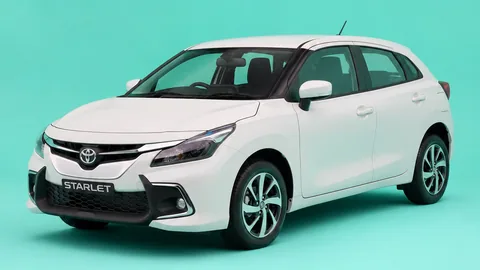
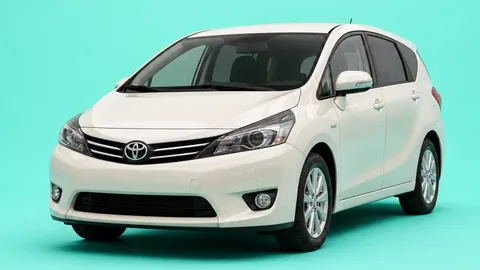
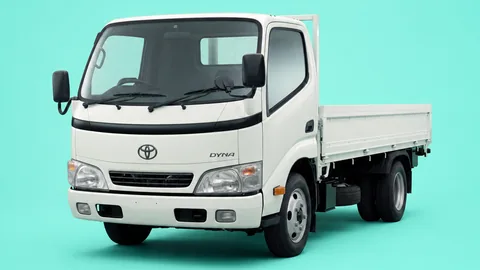
On a new vehicle with a manufacturer-backed rate from Toyota Financial Services, the dealer can be hard to beat. On a used Toyota, an independent broker commonly wins by 1 to 3 percentage points because the finance is separated from the car-price negotiation. A typical pattern is to source an indicative broker rate first and use it as the benchmark at the dealer on the same day; whichever lands lower on like-for-like rate and term wins.
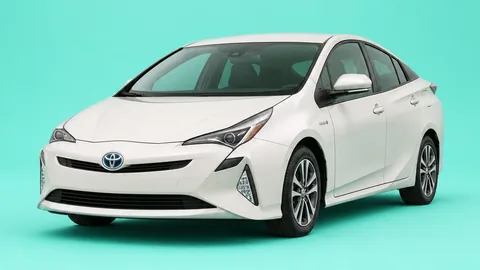
Only the fully electric bZ4X in NZ currently qualifies for dedicated EV loans from most NZ lenders. Hybrids like Corolla Hybrid, RAV4 Hybrid, and the Prius family are financed at standard rates, though they can qualify for some lenders' "efficient vehicle" discounts of 0.25 to 0.75 percentage points. A broker will flag any available green-loan pricing when you apply.
10 to 20% is the common range. On a $25,000 used Corolla that's $2,500 to $5,000. A deposit isn't mandatory for approval but it typically drops your offered rate by 0.5 to 1.5 percentage points and protects you from negative equity in the first couple of years as the car depreciates.
Yes. Most NZ lenders finance compliant Japanese imports provided the vehicle has passed entry compliance and is roadworthy. The rate may be slightly higher than a NZ-new equivalent (typically 0.5 to 1.5 percentage points) because imports depreciate faster and the odometer history is sometimes harder to verify, but the difference is usually small.
Usually yes, but lenders become choosier. Most NZ secured-car-loan products max out at a vehicle age of 12 to 15 years at loan-end date, so a 10-year-old Toyota is fine for a 3-year term but may not clear a 5-year term. The Corolla and Hilux are among the most-accepted older cars because their reliability and parts availability keep lender confidence high. Expect rates 1 to 2 percentage points higher than a 2-year-old equivalent.
On a new Toyota with an active TFS promotion, often yes. On a used Toyota, almost always no. TFS is structured to move new inventory via subvented (subsidised) rates on specific models and months. A broker's rate is a market rate that applies across every used Toyota regardless of subvention. A usual pattern is to source the TFS indicative offer on the specific model alongside a broker quote, and compare like-for-like rate and term before committing.
Not materially, in most cases. TFS occasionally runs loyalty offers or trade-in incentives that benefit existing Toyota owners, but these are tied to a specific new-vehicle purchase at the dealer, not a general rate discount. On the used market, an existing Toyota is typically useful as trade-in equity rather than as a rate lever. Where a Toyota is traded in, its value typically reduces the loan amount rather than the indicative rate.
If the trade-in value exceeds your outstanding loan balance (positive equity), the dealer pays out the old loan on your behalf and the surplus goes toward your new purchase. If the trade-in value is below your outstanding balance (negative equity), the shortfall gets rolled into the new loan, which increases what you borrow on the next car. Strong Toyota resale means negative equity is rarer on Toyotas than on many rival brands, but it still happens on 7-year terms or cars that were heavily loaded with dealer add-ons at purchase.
Read the fine print carefully. A "0% finance" offer is usually conditional on a minimum deposit (often 20-30%) and a specific short term (often 2-3 years), and the car price is typically non-negotiable below RRP during the offer. The maths runs both ways. a 0% offer on a $45,000 RRP Corolla vs. a 9% offer on the same car negotiated to $42,000 may leave you better off on the 9% deal, once you account for the $3,000 price saving. 0% is genuinely cheaper than paid-interest finance only if the dealer is willing to negotiate the car price to market-comparable levels on top.
New Toyotas in NZ come with a base factory warranty of 3 years or 100,000 km (whichever comes first), from date of registration. The 5-year term Toyota NZ advertises applies only where the vehicle is continuously serviced by a Toyota dealer under Warranty Advantage, so it's a conditional extension rather than the standard baseline, and the dealer can confirm coverage specifics for a given vehicle. Warranty coverage doesn't directly change your insurance premium, but it can reduce the need for mechanical breakdown insurance (MBI) add-ons that dealers often push at signing. While a Toyota is under factory warranty, the insurer considers mechanical failure low-risk and MBI is typically less relevant until the factory warranty expires.
Yes, this is called rolling negative equity and most NZ lenders allow it, but they'll scrutinise your affordability more closely. If you owe $8,000 on your current car and are buying a $30,000 Toyota, the new loan is $38,000 (less any trade-in or deposit). The downside is you're starting the new Toyota loan underwater, which lengthens the time before you build equity. Rolling more than 15-20% of the new car's value as negative equity; beyond that, selling the old car privately to clear the debt separately is almost always the smarter move.
For a $25,000 used Corolla on a 5-year loan at 7%, finance costs total about $29,700 (principal plus interest). Add insurance (~$5,500), servicing and consumables (~$7,500), and fuel (~$9,500 at 15,000 km/year) for a rough all-in cost of $52,000 over 5 years, or roughly $200/week. Hiluxes run $70,000-$85,000 all-in over the same period, mostly due to higher fuel, RUC, and insurance. These are indicative based on NZ averages; your actual costs depend on distance driven, driving style, and claims history.