Skip to content
Carfinance.org.nz
MG car finance calculator
MG logo Mainstream brand

MG finance calculator

Published 23 April 2026 · Last reviewed 23 April 2026 · Disclaimer

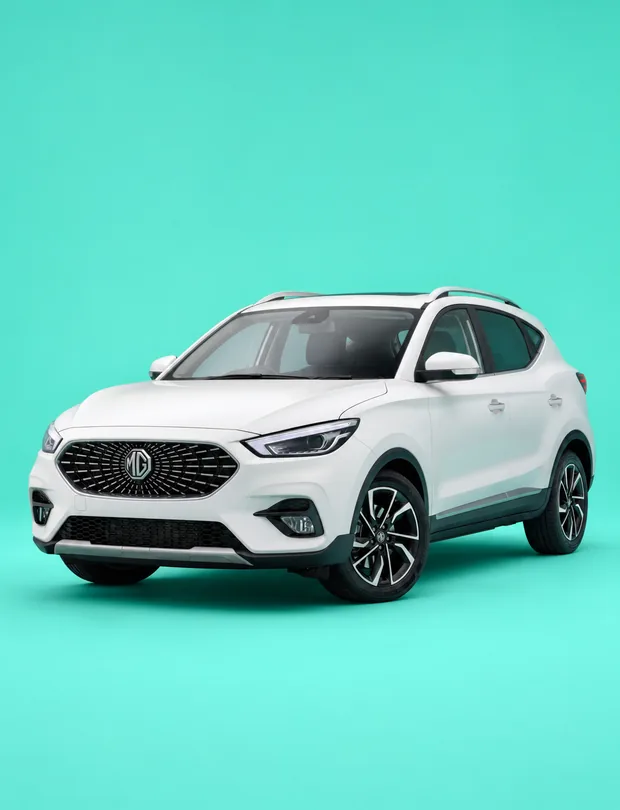
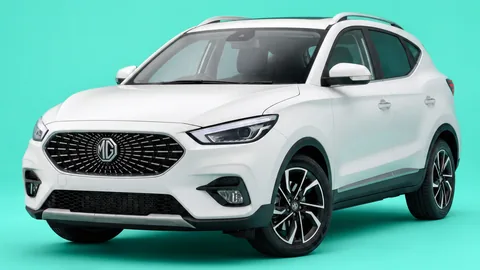
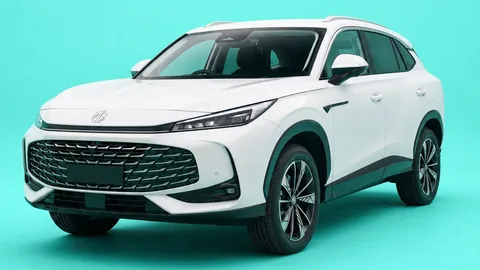
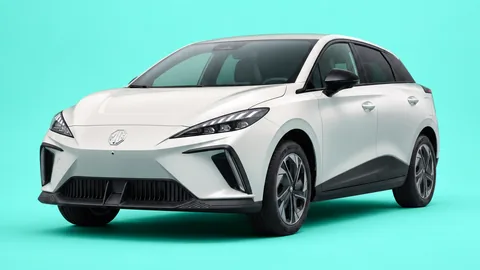
Among the faster-growing value-SUV brands on New Zealand finance books, distributed locally by SAIC Motor Australia & New Zealand. The NZ range is passenger and SUV only (MG3, MG3 Hybrid+ and hatch; ZS petrol and Hybrid+ small SUV; HS petrol, Hybrid+, and Plug-in Hybrid mid-size SUV; MG4 and MGS5 EV), with no ute or van in local form. The SAIC-owned British nameplate carries a 7-year unlimited-kilometre factory warranty on new stock (per MG NZ policy), which underwrites most of a standard loan term. NZ prices run from a $14,000 used ZS to around $55,000 on an HS Essence or MG4 flagship.

Your estimated repayment

Weekly

Disclaimer

$110/week

$219 /fortnight $475 /month
$24,000
$0
7.00% p.a.
5 years
Apply for a formal estimate

We are not a finance company. Indicative only. Not a quote or offer of credit. Actual rates, fees, and repayments depend on your circumstances and the lender's decision.

MG ZS finance MG car finance calculator Not a lender. Not a broker.

How financing a MG usually goes

  1. The weekly number at the affordable end

    The calculator above is free and asks for nothing. MG prices sharply enough that a new ZS can land near a used rival on the week, which is the comparison the sticker price tends to hide.

  2. A formal application, once you've seen the figures

    A car finance provider runs it from there and returns real terms rather than an estimate. The lending decision has never been ours.

Calculate repayments

Indicative only. Not a quote or offer of credit.

Why this brand finances well

What lenders look for in a MG.

  • The 7-year unlimited-kilometre factory warranty on new MG stock (per MG NZ policy) runs past the end of a typical 5-year loan term, which removes most of the mechanical-failure tail risk that a lender would otherwise price into the rate on a newer Chinese-brand marque.
  • MG NZ new-vehicle pricing lands noticeably under comparable Toyota, Mazda, and Kia small SUV rivals, so a ZS or HS on finance opens the segment to buyers whose weekly affordability would otherwise cap out below a RAV4 or Sportage.
  • SAIC Motor distribution gives MG a clean NZ-new supply chain and a national dealer network, which supports cleaner finance applications than a parallel-imported Chinese-market equivalent would, and keeps lender residual assumptions on solid ground.
  • The MG4 and MGS5 EV applications usually qualify for NZ lender EV loan tiers, which typically price 0.5 to 1.5 percentage points below the equivalent petrol secured-car-loan rate and materially reshape the weekly cost on a 5-year term.
  • MG residual-value data in NZ has firmed from 2023 onward as ZS and HS volumes climbed, so loan-to-value ratios on 3 to 4 year old used MGs now move through standard mainstream-brand underwriting templates rather than thinner niche-brand templates.

Buyer notes

Where to get the best MG rate.

On a new MG3, ZS, HS, HS Plug-in Hybrid, MG4, or MGS5 EV inside a SAIC-MG promotion, ask the dealer finance partner what is currently on offer before anchoring anywhere else. Outside a promotion, an independent broker typically lands 1 to 2 percentage points below the dealer finance desk on the same stock. On the EV variants specifically, push the broker for their EV loan tier rather than letting the application sit at a standard petrol used-car rate.

Apply for a MG loan

No sign-up on our site. Our finance partner compares NZ lenders and returns a formal estimate after the lender's credit assessment.

New vs used

Financing a new MG vs a used one.

MG finance in New Zealand splits by new-versus-used in a fairly standard way, but with one important wrinkle. The MG3, ZS, and HS are still early in their NZ-new residual curves because volumes only lifted meaningfully from 2022 onward, so used lender data is genuinely thinner than on an equivalent Toyota or Mazda.

Path 1

New MG

Benchmark the SAIC dealer finance partner against a broker

  • MG NZ has no captive finance arm, so dealer finance is a referral to partner lenders rather than a subvented manufacturer rate, except during promotion windows.
  • The 7-year unlimited-kilometre factory warranty stays in force regardless of who funds the loan, so the finance choice doesn't affect factory cover.
  • Subvented deals when they run typically require a 20 to 30% deposit and a shorter term, with drive-away pricing held near listed RRP.
  • MG4 and MGS5 EV applications can unlock an EV loan tier below the standard petrol rate at several NZ lenders; ask for it explicitly.

Verdict

Most buyers get the SAIC-MG dealer finance quote on current-stock MG3, ZS, HS, HS Plug-in Hybrid, MG4, or MGS5 EV, then benchmark with an independent broker. On active subvention or bundled-warranty offers the dealer often wins; outside one, the broker usually does.

Path 2

Used MG

Broker first on every used MG application

  • Used MG finance isn't subvented, so any dealer-desk rate is a marked-up open-market rate with a commercial margin on top.
  • A 2 or 3 year old MG typically has four or more years of the 7-year unlimited-kilometre factory warranty remaining, which lenders treat as a positive residual-value signal.
  • Independent broker quotes on the same used ZS or HS move through the lender book directly, without the dealer margin being added on top.
  • Non-MG independent yards selling traded-in MGs often stack a wider margin than a franchised SAIC-MG dealer would.

Verdict

Start with a broker quote because used MG finance is open-market only. Expect to save 1 to 2 percentage points against a dealer finance desk on a used ZS, HS, or MG3.

Rule of thumb

If the MG you want is current-stock new inside a SAIC-MG subvention window, ask the dealer finance partner first. Outside a promotion, or on any used MG, start with an independent broker quote and use it as your benchmark.

Total cost of ownership

What a MG really costs beyond the finance line.

MG running costs in New Zealand sit at the value end of the mainstream passenger and small-SUV range. The 7-year warranty does real work on the mechanical-risk line, the MG4 and MGS5 EV bring an electric running-cost profile with home charging and Road User Charges, and the petrol ZS and HS are cheap to feed by segment standards.

  • Servicing and consumables

    Averaged across a year. MG3 and petrol ZS sit at the low end because servicing intervals are long and parts are inexpensive through SAIC-MG dealers. MG4 and MGS5 EV sit lower again on the mechanical side (no engine oil) but tyre wear pulls the total back up.

    $70 to $150 per month
  • Insurance (full cover)

    ZS petrol and MG3 run $900 to $1,300. HS sits around $1,200 to $1,500. MG4 and MGS5 EV run $1,300 to $1,700 because of higher replacement cost and battery repair complexity on any claim.

    $900 to $1,700 per year
  • Road User Charges (EV and PHEV)

    Applies to MG4 and MGS5 EV at $76/1,000 km, and HS Plug-in Hybrid at $38/1,000 km, since April 2024. At 14,000 km a year an EV costs about $1,064 a year in RUC before electricity or servicing; a PHEV costs about $532. Petrol ZS, HS, and MG3 are not subject to RUC.

    $76 per 1,000 km (EV) or $38 per 1,000 km (PHEV)
  • Tyres

    MG3 and ZS on 16 to 17-inch runs $600 to $1,000. HS on 18-inch runs $900 to $1,200. MG4 and MGS5 EV on 17 to 18-inch EV-rated tyres run $1,000 to $1,400 and wear faster under instant torque.

    $600 to $1,400 per set
  • Fuel (petrol MG3, ZS, HS)

    Based on 12,000 to 15,000 km a year at NZ pump prices. MG3 at the low end on a 1.5L non-turbo, HS at the top on the 2.0L turbo Essence.

    $1,600 to $2,800 per year
  • Home charging (MG4, MGS5 EV, PHEV)

    Based on 12,000 to 15,000 km a year at a typical NZ off-peak home rate. Public fast-charging on Chargenet adds materially when used regularly.

    $400 to $800 per year

Worth knowing

MG ZS vs Kia Seltos at the same finance weekly

A $28,000 new MG ZS Essence and a $35,000 near-new Kia Seltos can end up at similar weekly finance repayments only if the Seltos term is stretched. Matched on like term, the MG runs roughly $30 to $45 a week cheaper on finance, with similar running costs. The Seltos carries stronger resale at year four; the MG offers the lower weekly cost and the 7-year warranty across the full term.

Resale and equity

How MG resale shapes your finance decision.

45 to 55%

value retained, 3-year-old ZS petrol

45 to 55%

value retained, 3-year-old HS

50 to 55%

mainstream-brand market average

MG residuals in NZ sit just below the mainstream-brand average at 3 years because volumes only scaled materially from 2022 onward and the used-market supply is still thin outside the main centres. The ZS petrol tracks closest to the mainstream average, helped by being the volume model and by the 7-year warranty having meaningful remaining run on most 3-year-old examples. The HS depreciates on a similar curve, though supply is patchier. MG4 and MGS5 EV (which replaced the ZS EV in late 2025) residuals are still finding a level as the brand's NZ EV volume settles and used-EV pricing stabilises broadly.

For finance this means a current-generation ZS or HS on a standard 4 or 5 year term is usually comfortable on equity, particularly with a deposit of 15% or more and the factory warranty carrying across the bulk of the loan. On the EV variants a 4-year term with a larger deposit is the safer structure while NZ used-EV residuals mature.

Align the MG loan term to the specific variant. A current-generation ZS or HS petrol handles a 5-year term comfortably on resale with a modest deposit, because factory warranty and rising NZ volume support residual value. On the MG4 and MGS5 EV, cap the term at 4 years with a larger deposit until the used-EV market in NZ settles further.

Things to avoid

MG finance traps we flag honestly.

An opinionated list. The commercial side of this site has no incentive to tell you these things, so we do.

Rolling dealer MBI into an MG already under the 7-year factory warranty

A new or near-new MG already carries 7 years of unlimited-kilometre factory cover. Bundling a $2,000 to $3,000 mechanical breakdown product into the loan at signing duplicates most of what the factory policy already covers, and on a 5-year term that adds roughly $500 to $700 of interest for protection the warranty already provides.

Stretching a used ZS or MG3 loan past the factory warranty tail

A 3-year-old ZS still carries about four years of MG NZ warranty. Financing it over a 7-year term leaves the back half of the loan running with no factory cover remaining, which reintroduces the mechanical risk the warranty was supposed to remove. Match the term to the remaining warranty where practical.

Assuming MG residuals match Toyota or Kia on a 5-year loan

MG volumes only scaled in NZ from 2022, so the residual curve is still firming. Stretching a $32,000 HS loan to 5 years with a small deposit can leave the balance above market value through year three. A 4-year term with a 15%+ deposit is the safer structure on current-generation ZS and HS examples.

Skipping the EV loan tier on an MG4 or MGS5 EV application

Several NZ lenders price EVs at 0.5 to 1.5 percentage points below their standard secured rate. Letting a dealer quote the MG4 or MGS5 EV at a generic petrol used-car rate rather than asking for the EV tier can cost $500 to $1,100 of extra interest on a $35,000 loan over 4 years. EV tiers are often not quoted by default, so eligibility is confirmed by name rather than assumed.

Paying a parallel-import premium on a Chinese-market MG

A small number of parallel-imported Chinese-market MGs trickle into the NZ used market outside the SAIC-MG dealer network. These don't carry MG NZ warranty and may lack local software update support, but are sometimes priced as though they do. Always verify NZ-new provenance through MG NZ records before committing.

Drivetrain economics

Hybrid vs petrol vs EV on a MG.

MG's NZ range runs petrol (MG3, ZS, HS), hybrid (MG3 Hybrid+, ZS Hybrid+, HS Hybrid+), plug-in hybrid (HS Plug-in Hybrid), and full-battery electric (MG4, MGS5 EV). There is no diesel in the local lineup, so the drivetrain decision comes down to petrol versus hybrid versus plug-in hybrid versus EV, driven by annual distance and charging setup.

Petrol (MG3, ZS, HS)

The volume default across MG NZ passenger and SUV

  • MG3 runs a 1.5L non-turbo; ZS uses a 1.5L turbo; HS uses a 1.5L or 2.0L turbo depending on trim.
  • No Road User Charges, so per-kilometre cost is fuel only.
  • Financed at the standard secured-car-loan rate without a drivetrain premium or discount.
  • Residuals currently sit close to the NZ mainstream-brand average on current-generation stock.

Hybrid (MG3 Hybrid+, ZS Hybrid+, HS Hybrid+)

Lower fuel and maintenance cost, no charging required

  • MG3, ZS, and HS Hybrid+ variants combine petrol engines with electric motors to reduce fuel consumption without a plug.
  • No Road User Charges apply to hybrid variants, so per-kilometre cost is fuel only.
  • Financed at the standard secured-car-loan rate without a hybrid premium.
  • Regenerative braking reduces wear on mechanical components, supporting lower servicing intervals and costs.

Plug-in Hybrid (HS Plug-in Hybrid)

EV range for daily commutes plus petrol backup for distance

  • HS Plug-in Hybrid carries a 24.7 kWh battery with around 120 km WLTP EV range, covering most daily commutes on electric power.
  • Road User Charges of $38 per 1,000 km apply to the full distance travelled, since April 2024.
  • Home charging at off-peak rates for the electric portion runs around 3 to 5 cents per kilometre; petrol runs 8 to 12 cents on top for longer trips.
  • The 7-year unlimited-kilometre factory warranty covers the high-voltage battery, motor, and petrol drivetrain.

Electric (MG4, MGS5 EV)

EV loan tier plus low running cost, subject to RUC

  • Most NZ lenders apply their EV loan tier to NZ-new MG4 and MGS5 EV, typically 0.5 to 1.5 percentage points below the equivalent petrol secured rate.
  • Road User Charges of $76 per 1,000 km apply since April 2024, narrowing but not closing the running-cost gap against petrol MG.
  • Home charging at off-peak rates runs around 3 to 5 cents per kilometre, comfortably below petrol ZS or HS per-kilometre cost.
  • The 7-year unlimited-kilometre factory warranty covers the high-voltage battery and motor alongside the rest of the vehicle.

Break-even heuristic

The simplest rule on MG drivetrains: if your typical day is under 50 km and you can charge at home on an off-peak plan, an MG4 or MGS5 EV is cheaper on running cost even with RUC added. The HS Plug-in Hybrid suits buyers whose daily commute is short but who face irregular long distances. For drivers under 12,000 km a year without charging access, a petrol or hybrid MG keeps the total cost lowest.

Case study

Worked example: financing a 2023 MG HS Essence for a young family

The buyer

Two-income young family in Hamilton, mid-thirties, clean credit, combined household income around $135,000, replacing a high-kilometre 2014 Mazda2 as the primary family car.

The scenario

Purchasing a 2023 MG HS Essence 2.0T AWD for $34,000 from an authorised MG dealer, with four years of the MG NZ 7-year factory warranty remaining. Trade-in on the old Mazda2: $5,000. Standard personal secured car loan arranged through an independent broker.

The outcome

Weekly repayment of $124 lands at roughly 4% of combined weekly after-tax income, which sits comfortably inside the household's broader mortgage-plus-car budget.

Because the HS still has four years of MG NZ factory warranty on the day of settlement, the dealer-offered mechanical breakdown insurance at $2,400 is declined, saving both the loan addition and around $550 of interest across the term.

Insurance on the HS runs about $1,400 a year on a standard full-cover policy, and servicing follows the MG NZ schedule at around $450 a year for the first three years.

At the end of year five the loan is paid off and the HS is expected to be worth roughly $15,000 to $18,000 based on current MG HS residual patterns, leaving the household with a clean asset and the option to trade or hold for cheaper ongoing ownership.

Illustrative example. Not a promise of approval or rate. Your circumstances and the lender's own credit decision will determine your actual outcome.

Affordability check

What does a car loan cost against an income?

This one works backwards. It takes an income, assumes tax and ACC take about 28% of it, and shows the loan sizes that land at 10% and 15% of what is left, over 5 years at 7%. Those are this page's assumptions, not a lender's rules.

Not an affordability assessment. A lender's decision takes in your other debts, your actual expenses, and your credit history, none of which this knows about. Plenty of loans get written either side of these numbers.

$70,000
$20k $250k

At 10% of take-home

$30,000

At ~$135/week

At 15% of take-home

$45,000

Leaves less room for everything else

Indicative only. Not a quote or offer of credit.

Apply this to the calculator

Common questions

MG finance FAQ.

Is it cheaper to finance an MG through the SAIC-MG dealer or through an independent broker?

It depends on whether the MG is new or used and whether a SAIC-MG subvention is running. On current-stock new MG3, ZS, HS, HS Plug-in Hybrid, MG4, or MGS5 EV during a promotion window, the dealer finance partner can be competitive on rate. Outside a promotion, or on any used MG, an independent broker almost always wins by 1 to 2 percentage points. Most buyers get a broker quote first and use it to benchmark the dealer offer.

How does the 7-year MG factory warranty affect my loan decision?

The MG NZ 7-year unlimited-kilometre factory warranty on new stock stays in force regardless of who funds the loan. Because it outlasts most standard 5-year loan terms, dealer-bundled mechanical breakdown insurance at signing is usually duplicative and can be declined, which keeps the loan amount lower and saves several hundred dollars of interest across the term. Warranty doesn't transfer cleanly on parallel imports.

Can I finance a parallel-imported Chinese-market MG in New Zealand?

Usually yes, but lender treatment is tighter than on NZ-new. A parallel-imported MG from the Chinese market doesn't carry MG NZ factory warranty, may lack local software update support, and sits outside the SAIC-MG service network. Expect a standard secured-car rate with a 0.5 to 1.5 percentage point premium, a shorter term cap, and a tighter loan-to-value ratio.

Are the MG4 and MGS5 EV eligible for green or EV-specific finance rates in NZ?

In most cases yes. Several NZ lenders operate dedicated EV loan tiers at 0.5 to 1.5 percentage points below standard secured-car-loan rates, and NZ-new MG4 and MGS5 EV through the SAIC-MG dealer network usually qualify. Availability varies by lender, so ask the broker specifically for their EV product when quoting and confirm eligibility before anchoring on a weekly repayment.

How much deposit is typical when financing an MG in New Zealand?

For a used MG, 10 to 20% is the common range, around $2,500 to $5,000 on a $25,000 ZS. SAIC-MG subvented deals on new stock often require 20 to 30% to unlock the promoted rate. A deposit isn't mandatory for approval but usually drops the offered rate slightly and protects against early negative equity while the brand's NZ residual curve continues to firm.

Can I finance an older MG, say more than 7 years old?

Usually yes on the ZS and HS, which have been in NZ since the late 2010s, but lender appetite tightens with age. Most NZ secured-car-loan products cap vehicle age at 12 to 15 years at loan-end, so a 7-year-old ZS clears a 4-year term but not always a 5-year one. Expect a rate 0.5 to 1.5 percentage points above a 3-year-old equivalent and a tighter loan-to-value ratio.

Does MG NZ run a captive finance arm like Toyota Financial Services?

No. MG New Zealand is distributed by SAIC Motor and refers finance applications to partner lenders rather than underwriting through a captive finance arm. That means dealer finance offers on MG are effectively partner-lender rates with a referral margin, rather than subvented manufacturer-backed rates, except during specific SAIC-MG promotion windows.

What happens to my MG finance if I trade the car in halfway through the term?

If the trade-in value exceeds your outstanding loan balance (positive equity), the dealer pays out the old loan and the surplus goes toward the next purchase. If the value is below the balance (negative equity), the shortfall rolls into your new loan. Because MG's NZ residual curve is still firming, negative equity risk is more meaningful on 6 to 7 year MG terms than on equivalent Toyota or Kia terms.

Can I roll negative equity from my old car loan into a new MG loan?

Yes, most NZ lenders allow it but will scrutinise affordability more closely. If you owe $6,000 on your current car and are buying a $28,000 ZS, the new loan becomes $34,000 before trade-in and deposit. Starting an MG loan underwater delays building equity, and because MG residuals are still firming, the underwater period can run longer than on a like-priced Toyota or Mazda.

Should I finance a new MG HS the same way as a used ZS?

The structures are the same but the numbers diverge. A new HS at $40,000 to $55,000 sits in a larger underwriting band with slightly tighter loan-to-value expectations (often 85 to 90%) and more scrutiny on affordability than a $20,000 used ZS. New HS applications often work cleanly under a 5-year term thanks to full factory warranty run; used ZS applications generally fit better at 4 years.

How does MG compare to Haval or BYD for finance purposes in NZ?

All three finance through mainstream NZ secured-car-loan product at broadly similar rates. The practical differences are distribution and range. MG is SAIC-distributed and passenger and SUV only. Haval is GWM-distributed and SUV only. BYD is Ateco-distributed and mostly EV or PHEV. Residuals sit in a similar band across the three, with the MG 7-year warranty and BYD 8-year battery warranty being the standout policy signals lenders treat as positive.

What is the typical total cost of ownership for a financed MG HS over 5 years?

For a $34,000 used HS on a 5-year loan at around 8%, finance totals roughly $41,500 principal plus interest. Add insurance ($7,000 to $9,000), servicing and tyres ($6,000 to $8,000), and fuel ($10,000 to $13,000 at 14,000 km a year) for a rough all-in of $65,000 to $71,000 over 5 years, or around $260 a week. Factory warranty across most of the term keeps unplanned mechanical cost low.

About this article
Published
23 April 2026
Last reviewed
23 April 2026

Methodology

All repayment figures on this page are calculated live from the inputs entered into the calculator using the standard amortised-loan formula. Indicative rates reflect publicly-advertised NZ secured-car-loan pricing across mainstream lenders in the 12 months before the last review. ZS, HS, MG3, MG4, MGS5 EV, and other model used-price bands are observed from recent TradeMe and AutoTrader listings for each era. Warranty terms reference MG New Zealand's current 7-year unlimited-kilometre factory coverage on new stock sold through the SAIC-distributed dealer network. Running-cost figures are cross-checked against Consumer NZ, AA New Zealand, and EECA public guidance, with EV figures benchmarked against Chargenet and published home-charging rates. We review annually or sooner if MG NZ adjusts pricing or warranty terms.

Sources

Apply for MG finance.

Our finance partner compares NZ lenders and returns a formal estimate after the lender's credit assessment. Calculator inputs travel through to the application so nothing gets re-typed.

Disclaimer

A car loan runs for years, and the repayment comes out of the same pay that covers everything else. This site exists to show you that weekly number before you sign anything. The payment that catches people out is the one that's fine on a good week and tight on a bad one.

Carfinance.org.nz receives a commission from Simplify when a visitor applies through this site and their application is approved. We refer every visitor to the same partner because they compare multiple New Zealand lenders on the applicant's behalf, so the referral is not driven by a sponsored deal. Simplify sets its own terms and fees and discloses them directly; anything you agree to happens on their side, not ours. Every figure shown on this site is a modelled estimate based on the inputs entered; the actual rate, fees, and repayments are set by the lender after assessing the applicant's circumstances and its own credit decision. Carfinance.org.nz is a calculator and information tool. We are not a lender, not a broker, and not a registered financial adviser. Any decision about whether a specific loan suits a specific situation is best made after talking with the lender, and for amounts that materially affect the household, with a registered financial adviser.