
2012-2016 used
$22,000Previous-generation 2.0L bi-turbo TDI. Typical 180,000 to 250,000 km by 2026.
Weekly
$100.53
Monthly
$435.63
VW's double-cab ute, now built on the Ford Ranger platform.
Last reviewed: 24 April 2026
Your estimated repayment
Weekly
$174/week
We are not a finance company. Indicative only. Not a quote or offer of credit. Actual rates, fees, and repayments depend on your circumstances and the lender's decision.
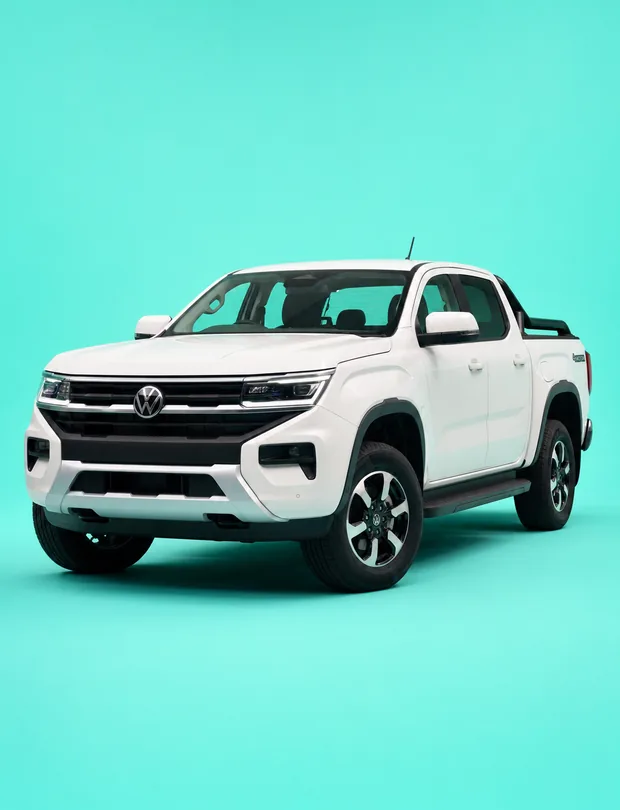 Volkswagen Amarok finance calculator Not a lender. Not a broker.
 The Amarok is Volkswagen's double-cab ute in New Zealand and carries the brand's commercial-finance volume. The current generation (2023 onward) is built on the Ford Ranger T6.2 platform, which means lenders typically apply much the same residual-value model to both utes and often treat Amarok chattel-mortgage applications as a known commercial product rather than a bespoke underwriting pass. The previous-generation V6 TDI Amarok (2017 to 2022) retains a loyal used-market following thanks to its 3.0L diesel and permanent 4Motion all-wheel drive, with lenders having clear residual data on it.
Calculate repaymentsIndicative only. Not a quote or offer of credit.
Year by year
Typical NZ market prices and the weekly cost of financing each. All figures assume 7% over 5 years with no deposit. Indicative only; open the full calculator to pre-set your own rate and term.
2012-2016 used
$22,000Previous-generation 2.0L bi-turbo TDI. Typical 180,000 to 250,000 km by 2026.
Weekly
$100.53
Monthly
$435.63
2017-2022 used
$38,000Previous-generation V6 3.0L TDI. Highline and Aventura trims the volume picks; loyal buyer base.
Weekly
$173.64
Monthly
$752.45
2023+ new
$65,000Current Ranger-platform generation. Style, PanAmericana, and Aventura trims cover the range.
Weekly
$297.02
Monthly
$1,287.08
Who this suits
Four real scenarios
Representative NZ buyers and the numbers behind their deals. Weekly and rate figures are indicative and shown for comparison. Your own rate is confirmed by the lender after application.
Marlborough viticultural contractor
2024 Style V6 TDI NZ-new, 8,000 km
$76,000 · Chattel mortgage, 5 years at 8.5% (indicative)
GST registered and running a vineyard trimming, leaf-plucking, and harvest-support crew across the Wairau and Awatere valleys, the Amarok replaces an outgoing Ranger that had been pulled back onto a second crew truck. On this structure, the GST component is typically claimed in the next GST return and finance interest is generally deductible against business income where the Amarok is used primarily for business, subject to the accountant's confirmation. The canopy, internal racking, and reversing-camera upgrade were invoiced with the vehicle so the accessory spend rolled into the same contract. On indicative NZ used-market trends, a comparable five-year-old Style V6 typically trades in the mid-$40k range at 2029 values, which is usually enough to support a straight trade into the next double cab at replacement.
$360 per week, business outgoing
Auckland scaffolding sole trader
2020 Highline V6 TDI 4Motion, 95,000 km used
$42,000 · Secured consumer loan, 4 years at 9.25% (indicative)
Held in personal name rather than a trading company, because the scaffolding business is small enough that running through sole-trader structure keeps compliance simple. The Amarok runs as the daily driver and site vehicle across West Auckland and the North Shore, towing a tandem trailer of scaffold tube most days. A four-year term keeps indicative total interest around $9,000, and on typical NZ used-market depreciation for the previous-generation V6 TDI, the balance usually tracks below resale through the middle of the term, which typically keeps a mid-term refinance or sale open if the work pattern shifts.
$242 per week
Central Otago ski-field operator
2023 PanAmericana V6 NZ-new demonstrator
$82,000 · $20,000 deposit, 4 years at 7.9% (indicative)
A ski-field maintenance operator based near Wānaka, running the PanAmericana as the senior supervisor vehicle and winter access truck across the Cardrona and Treble Cone access roads. The 24% deposit from the sale of a previous Ranger Wildtrak reduced the year-one negative-equity risk that historically shows on any modest-deposit new-ute loan. Comprehensive insurance with agreed value was a lender condition, and snow chains, a roof-mounted light bar, and the factory-spec tow package were fitted pre-delivery with LVV paperwork handled by the dealer, so the contract did not need to be varied after settlement.
$348 per week, business outgoing
Wairarapa farming family on V6 TDI
2024 Aventura V6 TDI NZ-new, towing a 2.8t horse float
$92,000 · Volkswagen Financial Services finance, $15,000 deposit, 5 years at 8.1% (indicative)
A dual-income farming household on a 180-hectare sheep and beef block between Masterton and Martinborough, using the Aventura as the family daily, the farm runabout across the paddocks, and the weekend tow for a 2.8-tonne horse float to A&P shows and Pony Club events. A standard five-year amortising term was chosen over a balloon structure because the household plans to hold the Amarok well beyond the warranty period. Comprehensive insurance on an Aventura V6 in the lower North Island rural band sits toward the middle of the national spread, which was budgeted alongside the finance cost and the diesel RUC line rather than treated as an afterthought.
$362 per week
The real number
Five years of real outlay on a representative NZ-new 2024 Amarok Style V6 TDI, financed at 7% indicative over 5 years with no deposit, driven 22,000 km a year out of a mixed commercial and family use pattern. Your weekly repayment is one line in a much longer bill. Diesel RUC and comprehensive insurance in particular add up faster than first-time V6 ute buyers commonly expect on an Amarok budget.
Purchase price
$78,000
NZ-new 2024 Style V6 3.0L TDI 4Motion at list. Negotiated drive-away price typically lands a touch lower when dealer stock is on the yard, particularly on non-Aventura trims.
Finance interest
$14,660
Indicative 7% over 5 years, no deposit. Actual rate is set by the lender after assessment of the applicant, and commercial chattel-mortgage rates often land differently from consumer secured car loan rates on the same applicant.
Diesel
$20,900
22,000 km/year at 9.5 L/100 km real-world on the 3.0L V6 TDI, averaged $2.00/L across the 5 years. Previous-generation 2.0L bi-turbo examples tend to run half a litre lower on the same distance.
Road User Charges
$8,360
Diesel RUC at $76 per 1,000 km as at 2026, across 110,000 km total. The RUC line is the cost item first-time V6 ute buyers commonly underestimate when pricing the weekly against a petrol SUV equivalent.
Scheduled servicing
$5,600
Volkswagen capped-price schedule at roughly $380 per 15,000 km interval across the term, plus a brake service cycle, a DPF ash clean, and an AdBlue-system check. Dealer servicing tends to protect the resale premium on NZ-new Amaroks.
Comprehensive insurance
$11,200
Auckland band for a Style V6 with off-street storage: around $2,300 at year 1, trending down as agreed value drops through the term.
Tyres
$3,200
One full set replacement around year 3 at roughly $2,000, plus rotations and a spare top-up. All-terrain fitment on a PanAmericana or Aventura typically adds a few hundred dollars per corner over the factory highway tyre.
Total five-year cash outlay
$141,920
Assumes: 2024 Amarok Style V6 3.0L TDI 4Motion at $78,000 new, 22,000 km/year, real-world diesel use 9.5 L/100 km at $2.00/L, Auckland insurance band, Volkswagen capped-price servicing at 15,000 km intervals. Indicative only.
What it's worth later
Amarok depreciation on the current Ranger-platform generation generally track close to the Ranger itself, because lenders apply broadly the same residual-value model to both utes. The previous-generation VW-own-design Amarok (2010 to 2022) held value firmly in its middle years but softened faster through the back half, which is reflected in the figures below. The curve is shallow enough across both generations that longer terms are defensible.
Based on a 2024 Amarok Style V6 3.0L TDI 4Motion purchased new at $78,000. Indicative NZ used-market 2026 pricing.
Year 1
80%
$62,400
First-year drop on current-gen Amaroks has historically been a shade softer than the NZ new-car average, tracking close to the Ranger T6.2 curve on indicative used-market observation through 2024 and 2025.
Year 3
62%
$48,360
A bracket where fleet and early replacement examples arrive on the used market in volume, which historically pulls NZ-new Amarok resale down a few percent. Many business-structured buyers exit here before warranty lapses on qualifying stock.
Year 5
50%
$39,000
Common exit point for chattel-mortgage buyers whose five-year loan finishes here. A five-year Amarok-to-Amarok replacement cycle typically lands the next Style or PanAmericana with a modest top-up.
Year 7
38%
$29,640
Typically still financeable as a used car from what we see. Lender appetite tightens past this point on higher-kilometre examples, and the V6 TDI service-history paperwork becomes more decisive than badge year or trim.
Year 10
27%
$21,060
The older-used phase. Retained value at this age is driven more by kilometres, chassis condition, DPF and AdBlue history, and service-book continuity than by trim or year.
Why this matters for finance
On indicative NZ used-market trends, a modest-deposit five-year loan on a current-gen Amarok historically tracks an amortisation curve that catches the value-loss curve around month 18 to 20, which typically keeps equity positive through the back half of the term. That pattern is less commonly observed on the previous-generation V6 TDI (2017 to 2022), where the steeper late-life depreciation is more pronounced, which is one reason a 10 to 20% deposit is commonly observed on older used Amaroks where you plan to exit around year three. The actual outcome depends on kilometres, condition, and the prevailing used market at resale.
Financing notes
At $40,000 across a five-year term at 8% indicative, the weekly repayment sits at roughly $187, or around $810 a month. Under a chattel mortgage the weekly is the same, but the GST component (around $5,217 on a $40,000 GST-inclusive price) is typically claimed in the next GST return where the business is GST-registered and the vehicle qualifies, and finance interest is generally deductible across the term where the Amarok is used primarily for business, subject to the accountant's confirmation. Accountant input on structure before choosing between chattel mortgage, finance lease, or operating lease tends to be treated as essential.
For business buyers
A large share of Amarok finance in New Zealand is written for business use, particularly on Style, PanAmericana, and Aventura double cabs bought by tradies, contractors, and rural operators. The right structure changes the tax treatment and the end-of-term position more than it changes the weekly number. This section is class information, not personalised advice, and accountant input before signing is close to non-negotiable on any commercial Amarok purchase. More on borrower profile on the self-employed loan page.
Structure
Chattel mortgage
Best for: Sole traders, contractors, and small companies with stable trading and a clean credit file who want to own the Amarok at end of term.
Structure
Operating lease
Best for: Businesses that want the Amarok off their balance sheet, want predictable monthly cost often with maintenance built in, and plan to hand the vehicle back at term end.
Structure
Finance lease
Best for: Businesses that want the Amarok off balance sheet during the lease but want the option to purchase the residual at term end.
Get accounting advice
For many sole-trader tradies and small-fleet operators buying an Amarok, a chattel mortgage is the common default and often the cheapest option over the full term. An operating lease tends to be reckoned when cash-flow predictability and bundled running costs matter more than lowest total cost, particularly on Aventura and PanAmericana trims where comprehensive insurance and servicing run higher. A finance lease sits between the two on balance-sheet and ownership treatment. None of this is personalised advice. The right answer depends on the tax structure, cash position, fleet size, and replacement cycle of the specific business, and accountant input before signing is something almost nobody skips on any Amarok commercial purchase.
Before finance settles
Demand for used Amaroks sits close to supply on the NZ market in most years, with V6 TDI Highline, Aventura, and current-gen Style examples moving the fastest. The checks below are what a pre-purchase inspection typically covers on this model specifically, before the lender drawdown happens. Many buyers work through these items before finance settles, so the lender is pricing the actual vehicle rather than a concealed issue, and the distinction between the previous VW-own-design generation and the current Ranger-shared platform is material to the check list. Most lenders will expect comprehensive insurance and a clear title; the used-car loan page covers the general process.
The previous-generation 3.0L V6 TDI used in 2017 to 2022 Highline and Aventura examples has a documented pattern of injector-seal leaks and turbo-actuator complaints on short-trip and low-load use. A pre-purchase inspection typically covers an injector-leak-off test, stored fault-code scan, and boost-pressure reading at the dealer. Evidence of a prior injector replacement or actuator service at a VW dealer is commonly regarded as a plus, not a red flag, because the issue is a known pattern item rather than a reliability flaw.
Pre-2023 Amaroks with the eight-speed torque-converter automatic are mechanically different from the current-gen ten-speed, and all pre-2023 automatic Amaroks use the ZF 8-speed unit. A pre-purchase inspection typically covers a low-speed take-off test, stored transmission fault codes, and verification of a recent fluid change at the manufacturer-specified interval. Paperwork showing transmission fluid service at a VW dealer tends to be a meaningful plus at resale on the eight-speed automatic variants.
The current Ranger-platform Amarok is too new for a settled long-term pattern, but the pre-purchase inspection typically covers the same items an inspector would cover on a T6.2 Ranger of the same age and trim, because the engine, transmission, chassis, and most underpinnings are shared. AdBlue-system function, turbo shaft play on higher-km examples, and evidence of the first major service at the correct interval are the common checks, along with verification that the first service was done on time.
Amaroks factory-supplied with a galvanised chassis are typical to weather salt-road, coastal, and rural use well, but a pre-purchase inspection still typically covers the rails, crossmembers, rear shock mounts, and outrigger welds on older 2H examples used in high-exposure environments. A professionally rebuilt and rust-treated chassis on an older used Amarok is commonly treated as acceptable; an untreated example with visible corrosion usually surfaces at the next WOF or COF.
A full stamped Volkswagen service book at 15,000 km intervals tends to carry a resale premium on the Amarok, because it's easy to verify at the next sale. Gaps of more than two intervals, or a switch to generic servicing mid-life, are commonly factored into the negotiation on used stock. Genuine filters, DPF-compatible oils, and AdBlue top-ups from the VW parts catalogue are the baseline many buyers and lenders expect on a financed used Amarok purchase.
Tow packages beyond the factory rating, canopy-mounted drawer systems, lift kits, and bull bars commonly require Low Volume Vehicle certification where the modification is structural. Uncertified modifications can fail a WOF or COF and typically invalidate the comprehensive insurance the lender requires on a financed Amarok. The LVV plate or certification number is commonly requested in writing before any committed offer on a modified example, particularly on Aventura and PanAmericana trims carrying more aftermarket kit.
Both the previous-generation V6 TDI (pre-2023) and the current-gen V6 TDI use AdBlue selective catalytic reduction and a Diesel Particulate Filter. A pre-purchase inspection typically covers AdBlue-level sensor function, evidence of recent forced regenerations in the service history, and a DPF pressure-differential reading. A failed AdBlue injector or blocked DPF is typically a $2,500-plus repair that the lender would not have visibility on at credit assessment, which is why the check is commonly treated as non-negotiable on V6 diesel stock.
Off-dealer
A meaningful share of used Amarok transactions in New Zealand sit outside the dealer channel, particularly on 2H-generation V6 TDI examples traded between tradies and rural buyers. Financing a private-sale Amarok is entirely normal through a broker. The process is simply a couple of extra steps on your side, because there's no dealer sitting between the borrower and the lender.
An indicative rate from an independent broker before approaching the seller is a common first step. Pre-approval in hand typically signals to the seller that you are funded, which often shortens negotiation and strengthens the price position on a privately listed Amarok.
A Carjam or MotorWeb report on the VIN is the common first move. Any secured interest listed on the PPSR must be cleared by the seller before or at settlement; an uncleared interest means the lender who financed the last owner still holds claim over the vehicle. Odometer history is commonly cross-checked against the dash reading at this stage, and the RUC balance on the diesel is verified.
A pre-purchase inspection from AA, VTNZ, or a franchised Volkswagen dealer typically costs $180 to $300 and commonly uncovers injector and turbo issues on 2H V6 TDI examples, eight-speed automatic transmission service history on pre-2023 variants, and undisclosed LVV modifications. Paying slightly more for a VW-dealer inspection on a V6 TDI generally runs worthwhile given the drivetrain complexity.
The broker typically arranges a direct payment to the seller at settlement using the purchase details (VIN, agreed price, odometer, seller bank account), rather than funds flowing through you. Direct-to-seller disbursement on the same day the title transfers is the widely preferred pattern on private sales of higher-value utes.
NZTA online vehicle transfer happens on the same day as settlement, and the lender files its own security interest on the PPSR at that point. The buyer drives away with clear title and a single registered security interest in the lender's name.
Usually a loan condition
Comprehensive insurance is almost always a loan condition while the Amarok is on finance, because the vehicle is the lender's security. Premiums vary widely by region, trim, storage, and whether the vehicle is used commercially. These bands are indicative NZ market numbers at 2026 for a double-cab V6 Amarok with a clean driver record; actual quotes are widely verified before being used as a budgeting figure.
Auckland
$2,300 to $3,000
Style V6 TDI, off-street or garage storage
Auckland shows higher Amarok theft rates on NZ insurer data, with a pattern of keyless-entry relay attacks on current-gen V6 examples. AMI, State, and Tower typically price a premium for kerbside parking; garaged or off-street storage tends to drop premiums materially on a Style or PanAmericana.
Wellington
$1,700 to $2,300
Highline V6 TDI, street parking
Lower theft rates than Auckland, but weather-driven damage and wind exposure feed into the rating on a capital-region Amarok. Commercial-use ticks typically add a few hundred dollars a year, and multi-vehicle household policies often drop the final figure toward the lower end of the band.
Canterbury / Otago
$1,400 to $2,000
Style or PanAmericana V6 TDI, rural or off-street
Lower theft risk and typically better parking outcomes on rural-registered stock. Farm-use ticks and paid-up claim-free driver discounts often drop the final figure further on an Amarok used as the farm and site vehicle across the Canterbury Plains, Central Otago, or the Mackenzie.
Get actual quotes before settling. Insurance cost varies with credit profile, kilometres, and excess choices more than these bands can show.
Compare Volkswagen car insuranceThe direct alternatives
The Amarok, Ford Ranger, Toyota Hilux, Nissan Navara, and Mitsubishi Triton sit within the same NZ ute segment, and all finance on broadly similar indicative rates at the same applicant profile. The current-generation Amarok is built on the Ford Ranger T6.2 platform and shares its engines, transmissions, and chassis with the Ranger, which means lenders apply much the same residual-value model to both. The meaningful differences show up in trim, dealer network, purchase premium, and previous-generation provenance rather than in the weekly finance number alone.
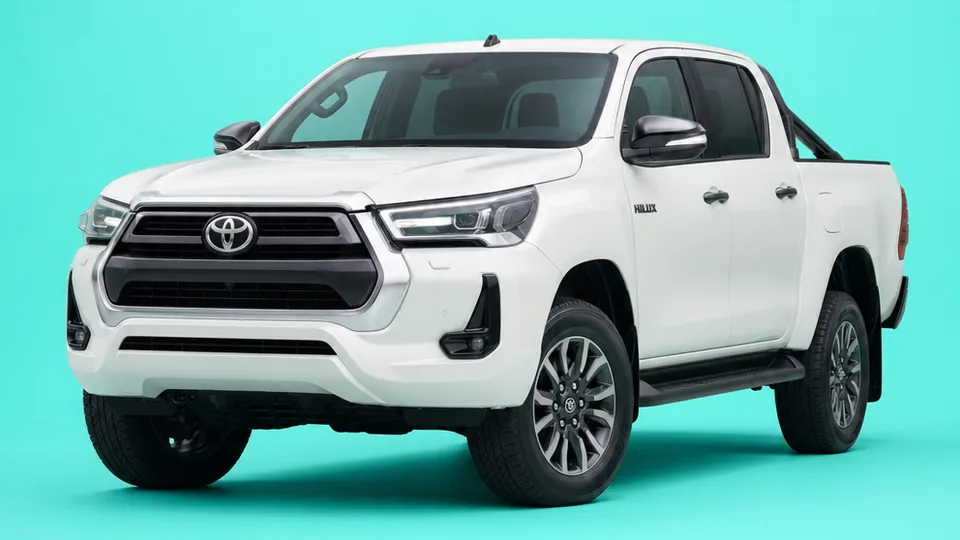
Competitor
$50k-$82k new, $28k-$58k used
Hilux most reviewers call it the firmer year-five trade-in and the deeper NZ dealer network, with a 2.8L four-cylinder diesel across the range; Amarok reads as the more European-feel cabin and the only NZ ute segment entrant with a factory V6 TDI across most trims. Buyers who prioritise resale strength and dealer reach often favour Hilux; buyers who prioritise V6 drivetrain and cabin refinement often favour Amarok.
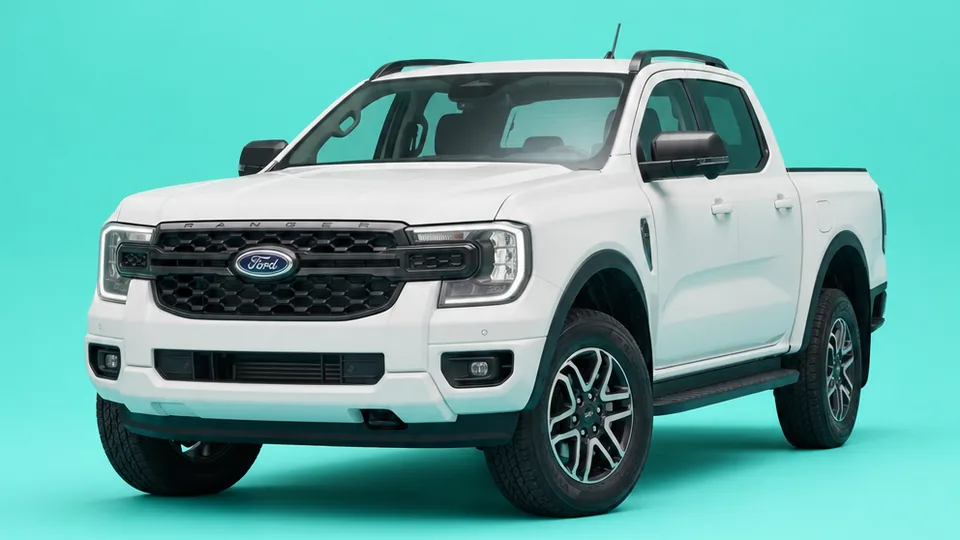
Competitor
$53k-$78k new, $28k-$58k used
The current Amarok and Ranger share the T6.2 platform, engines, transmissions, and most chassis hardware. Amarok generally holds the more premium-trimmed interior and the more distinct exterior at equivalent spec, typically at a modest purchase premium; Ranger is generally considered the broader dealer network, the more developed aftermarket accessory range, and the more familiar used-market fleet. Buyers who prioritise premium cabin and badge differentiation often favour Amarok; buyers who prioritise dealer reach and aftermarket support often favour Ranger.
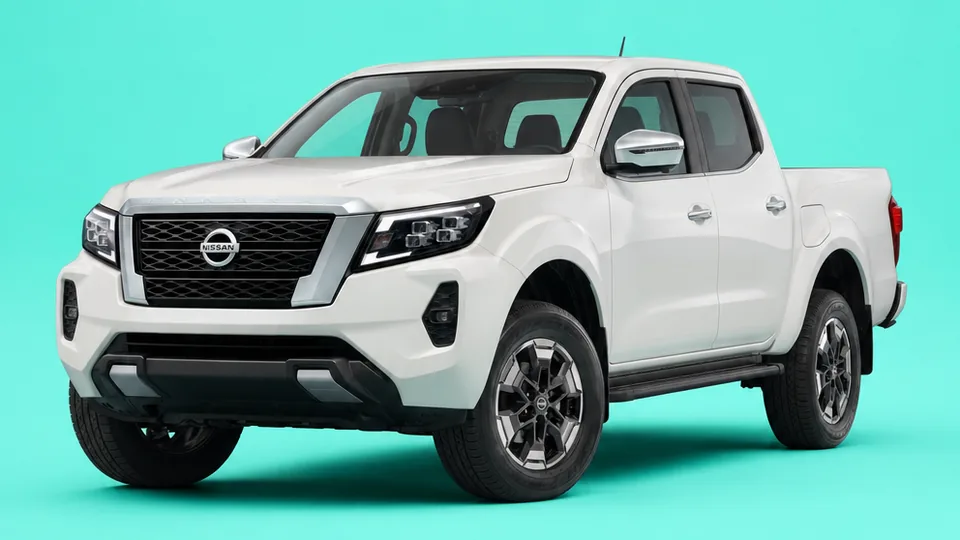
Competitor
$44k-$68k new, $22k-$48k used
Navara tends to be credited with the keener purchase price at equivalent spec, particularly on SL and ST-X trims, with a four-cylinder twin-turbo diesel across the current range; Amarok is commonly rated the larger cabin on double-cab trims, the V6 TDI drivetrain, and a more premium interior presentation on Style and above. Buyers who prioritise purchase price often favour Navara; buyers who prioritise V6 drivetrain and cabin trim often favour Amarok.
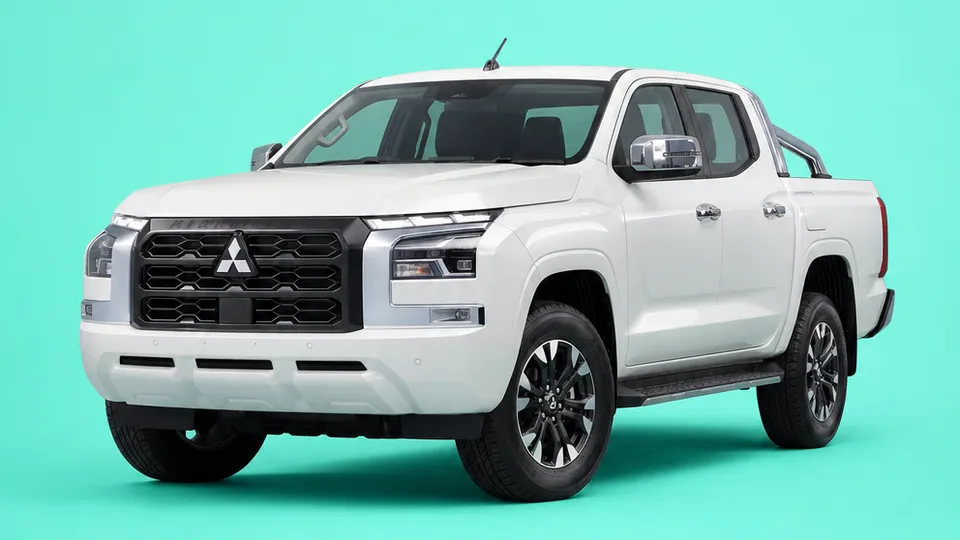
Competitor
$45k-$66k new, $22k-$48k used
Triton has the lowest entry price of this set at equivalent spec, with a longer warranty under the Diamond Advantage programme on qualifying new stock; Amarok sits at the higher-trim end of the segment with a Ranger-shared platform, V6 TDI availability, and a more premium cabin presentation. Buyers who prioritise purchase price and warranty length often favour Triton; buyers who prioritise cabin trim and V6 drivetrain often favour Amarok.
Worked example
Buyer profile
Marlborough-based viticultural contractor operating out of Renwick, GST registered, 5 years trading as a limited company with a clean credit file. Trading up from a 2018 Amarok Highline V6 with 165,000 km that had started needing meaningful injector and turbo work outside warranty.
Scenario
Bought a 2023 Amarok Style V6 TDI at $55,000 including GST from a franchised Volkswagen dealer in Blenheim. Traded the 2018 Highline at an agreed $18,000 and put down a $7,000 cash deposit from retained earnings. Financed the remaining $30,000 over 5 years at 8.5% indicative via chattel mortgage through a specialist commercial broker.
The outcome
In this scenario, cash-flow impact at settlement was modest, because the weekly finance cost of about $142 sat well below the combined repair, downtime, and injector-work cost the outgoing 2018 Highline had been demanding in its final trading year. The newer Style V6 also extended the warranty-backed trading window across the 2024 and 2025 vintages, which the older vehicle had been compromising on crew reliability days.
The GST component of roughly $7,170 was claimed in the next GST return and applied against output GST, giving a first-quarter cash benefit on this borrower's structure, subject to the accountant's confirmation. On the balance sheet, the Amarok sits as a depreciating asset commonly written off on the IRD diminishing-value schedule for light commercial vehicles, and finance interest is generally deductible against business income each year where the vehicle is used primarily for business, subject to the accountant's confirmation of the use pattern.
Through year one, the loan balance sat modestly above the Amarok's likely trade-in value on indicative NZ used-market trends, which is the common pattern on any modest-deposit financed ute in year one, even on Ranger-platform stock with firm residuals. By around month 14 to 16 on these assumptions, the amortisation curve typically caught the value-loss curve on the current-generation Amarok, and equity stayed positive through the back half of the term for this borrower's structure.
On indicative NZ used-market trends, a comparable 2023 Style V6 at year five (2028) typically trades around the low-$30k range at 2028 values, subject to condition and kilometres. For this borrower, and on those indicative assumptions, the projected retained value supports a natural five-year Amarok-to-Amarok replacement cycle on chattel mortgage, keeping a newer Style or PanAmericana on the vineyard fleet at broadly flat capital cost across the business.
The discipline that makes this pattern work is keeping the chattel-mortgage contract to term. Refinancing mid-term rarely improves the position on a current-gen Amarok, because the retained-value curve typically tracks close enough to the amortisation curve that the break fee and establishment cost on the new contract commonly wipes out the marginal rate saving.
Illustrative example. Not a promise of approval or rate. Your circumstances and the lender's own credit decision will determine your actual outcome.
Model-specific questions
At a 7% indicative rate over five years with no deposit, a used 2H V6 TDI Amarok around $38,000 runs at roughly $174 a week, a current-gen Style V6 TDI at $78,000 runs at about $356 a week, and a flagship Aventura at $92,000 runs at about $420 a week. Older bi-turbo 2.0L Amaroks near $22,000 work out to around $101 a week on the same settings. Actual rates are set by the lender after assessment, so these figures are illustrative only.
For a new Amarok with a clean credit record and a deposit, indicative rates from mainstream lenders typically sit in the 7 to 9% range. Used 2H V6 TDI Amaroks typically land in the 8 to 11% range, reflecting the asset risk and drivetrain complexity to the lender. Typically, business buyers using a chattel-mortgage structure often see rates below equivalent consumer secured car loan rates on the same applicant, because the lender is assessing a commercial contract; the actual differential depends on the lender and the applicant.
Yes on the platform, chassis, engines, transmission, and most underpinnings. The current-gen Amarok rides on the Ranger T6.2 platform and shares the 3.0L V6 TDI, 2.0L BiTurbo, and ten-speed automatic with Ranger. Volkswagen's body, interior, and suspension tuning are distinct, and the trim presentation is noticeably more European-premium. For finance purposes this means lenders typically have mature residual-value data on the Amarok from day one of the current generation, and insurance and running costs track Ranger closely.
Generally yes, where the Amarok is used primarily for business. GST-registered buyers can typically claim the GST component of the purchase in the next GST return, and finance interest is generally deductible against business income, subject to the accountant's confirmation. A chattel mortgage is the most common structure for sole traders and small companies; an operating lease or finance lease suits businesses wanting the vehicle off the balance sheet. Accountant input before signing is generally taken as essential, because the right structure depends on the tax position of the specific business.
Where the Amarok is primarily a work vehicle and the business is GST-registered, business finance (chattel mortgage, finance lease, or operating lease) almost always beats a personal loan arithmetically. A chattel mortgage on a $78,000 Amarok typically returns roughly $10,174 of GST, generally makes the interest deductible, and depreciates the asset, subject to the accountant's confirmation. Personal finance loses all three. Confirming the business-use split meets the IRD threshold with an accountant has a reputation as essential before signing.
It depends on timing. Volkswagen Financial Services runs occasional promotional finance windows on new Amarok stock, typically around quarter end; during those windows, VFS pricing can sit close to or below broker offers. Outside those windows, an independent broker typically matches or beats VFS on used stock, private sales, and 2H V6 TDI examples. A common pattern is to source a broker indicative rate first, which then gives VFS a benchmark to meet on the day; the stronger offer is kept either way.
Yes, routinely. The previous-generation V6 TDI Amarok has a loyal NZ following and lenders typically have clear residual data on it. Standard used-car secured-loan indicative rates apply, typically in the 8 to 11% range. The diesel Road User Charges line at $76 per 1,000 km is a material running cost that many buyers underestimate, and a pre-purchase mechanical inspection before settlement tends to be treated as worth the modest cost because the 3.0L V6 TDI is a complex drivetrain out of warranty.
On a used 2H Amarok under $45,000, zero-deposit loans are routine for borrowers with a clean file; a 10 to 20% deposit still typically helps the rate and reduces total interest. On a new current-gen Amarok at $72,000 to $95,000, a deposit becomes genuinely useful. In practice, 20% down on a $78,000 Style V6 commonly moves the lender's indicative rate noticeably and can save several thousand dollars in total interest over a five-year term, with the actual effect depending on the lender and the applicant.
Five years is the usual default for both personal and commercial Amarok buyers. For business-use Amaroks tied to a replacement cycle, a three or four-year chattel mortgage often fits better because it aligns the loan with the planned trade-in point. Six and seven-year terms are available and are arithmetically defensible on current-gen stock where the Ranger-platform resale holds well, but total interest grows quickly. On the calculator, a seven-year term on a $60,000 loan at 8% indicative costs around $6,700 more in interest than a five-year term on the same loan.
Yes. The common first step is an indicative rate from a broker before negotiating, so the buyer is bidding as a funded buyer. A Carjam report typically verifies the VIN, odometer, RUC balance, and any existing PPSR security interest; the seller must clear any listed security before or at settlement. The broker arranges the direct payment to the seller at settlement, and a pre-purchase mechanical inspection at $180 to $300 at a VW dealer is generally taken as worth the cost before committing, particularly on 2H V6 TDI stock.
Generally yes, where the accessories are quoted and invoiced as part of the vehicle purchase at the dealer. A standalone canopy fitted after delivery is harder to roll in because the finance contract has already settled. Lift kits, bull bars, secondary fuel tanks, and tow packages beyond the factory rating that require Low Volume Vehicle certification are typically financed alongside the Amarok only when the certification is in place at settlement; an uncertified structural modification can fail a COF and commonly invalidates the comprehensive insurance the lender requires.
Negative equity is uncommon on current-gen Amaroks typically, because Ranger-platform resale typically holds well, but it can occur in year one on a zero-deposit new-car loan. If it does, selling mid-term means the shortfall is made up in cash. Common defences are a 10 to 20% deposit and a term of five years or less on a new Amarok. On 2H V6 TDI examples, negative equity is more common past year six because late-life depreciation steepens, which is one reason mid-term sale planning on 2H stock is commonly flagged with the accountant.
Yes, though the documentation is heavier. Lenders typically request two years of IR3 tax returns or an accountant's letter confirming recent trading, plus three to six months of business bank statements. For Amaroks used more than 50% for business, a chattel mortgage is usually a cleaner structure than a consumer car loan, because it is assessed on business trading rather than household income. The self-employed loan page covers the full documentation list and process, and brokers typically know which NZ lenders handle self-employed Amarok applications cleanly.
You might also want
Amount
$40,000 car loan
Close to a typical Amarok price.
See pageVolkswagen model
Volkswagen Golf finance
The long-serving European hatch on Kiwi driveways.
See pageLoan type
Used car finance
Most Amarok finance in NZ is on used vehicles.
See pageLoan type
Self-employed loans
Amarok finance is often structured through chattel mortgage.
See pageBrand
All Volkswagen models
Finance across the Volkswagen range.
See pageOur finance partner compares multiple NZ lenders. Calculator inputs travel through to the application, and the partner returns a formal estimate after the lender's credit assessment.
Disclaimer
A car loan runs for years, and the repayment comes out of the same pay that covers everything else. This site exists to show you that weekly number before you sign anything. The payment that catches people out is the one that's fine on a good week and tight on a bad one.
Carfinance.org.nz receives a commission from Simplify when a visitor applies through this site and their application is approved. We refer every visitor to the same partner because they compare multiple New Zealand lenders on the applicant's behalf, so the referral is not driven by a sponsored deal. Simplify sets its own terms and fees and discloses them directly; anything you agree to happens on their side, not ours. Every figure shown on this site is a modelled estimate based on the inputs entered; the actual rate, fees, and repayments are set by the lender after assessing the applicant's circumstances and its own credit decision. Carfinance.org.nz is a calculator and information tool. We are not a lender, not a broker, and not a registered financial adviser. Any decision about whether a specific loan suits a specific situation is best made after talking with the lender, and for amounts that materially affect the household, with a registered financial adviser.
Connecting you with a trusted NZ finance partner
One moment while we hand you over securely. Nothing was collected on our side.