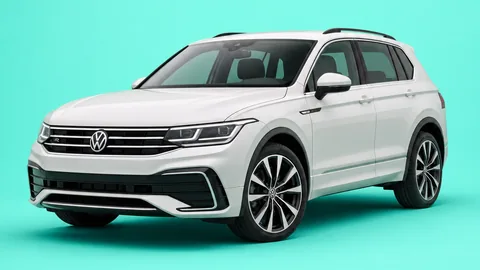
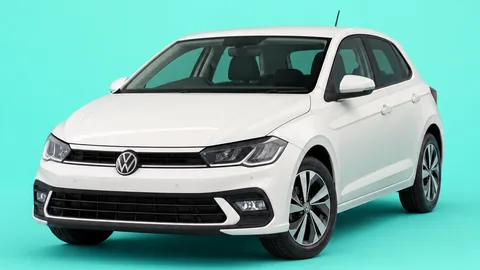
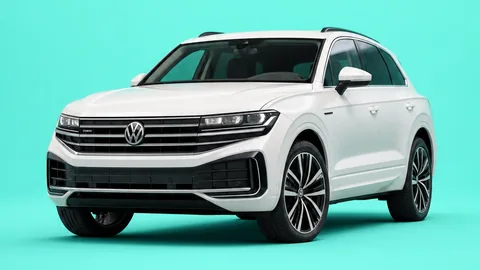
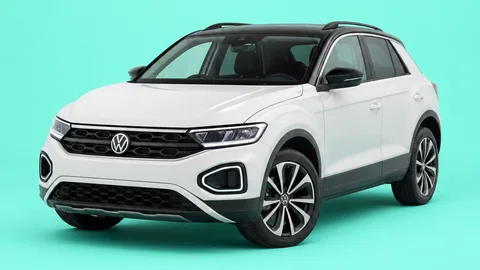
Volkswagen Financial Services (underwritten via UDC Finance / European Financial Services) operates with periodic promotional subvented finance offers. An independent broker quote typically matches or undercuts the VW dealer desk on Golf and Tiguan, and the gap widens on used imports. Many buyers compare dealer and broker options side by side, because the better of the two depends on the structure.
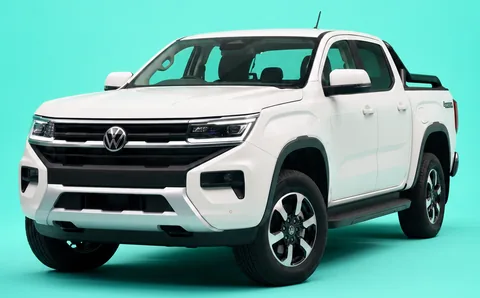
Largely yes. The current-generation Amarok is built on the Ford Ranger platform, so lenders apply similar residual-value modelling to both utes and treat Amarok applications through the same commercial-finance products as Ranger. Rates are usually within half a percentage point on matched specs. Insurance and running costs also track closely because parts and mechanicals are shared.
Yes, where the Amarok is primarily used for business (more than 50% of kilometres) and the business is GST-registered. Under a chattel mortgage, GST on the full purchase price is typically claimable in the next GST return (around $9,130 on a $70,000 Amarok), and finance interest is generally deductible against business income across the term, subject to the accountant's confirmation. Accountant input on whether chattel mortgage, finance lease, or operating lease fits best tends to be treated as essential.
Yes. Most NZ lenders finance compliant ex-Japan Volkswagens provided the vehicle has passed entry compliance. Expect a rate 0.5 to 1.5 percentage points above a NZ-new equivalent because lender residual data is thinner and the VW NZ factory warranty doesn't transfer. On older TSI or TDI imports, confirm the DSG gearbox service history is intact before settlement.
For a used Golf or Tiguan, 10 to 20% is the common range (around $2,000 to $4,500 on a $22,000 Tiguan). Amarok buyers typically go slightly higher at 15 to 25% because of the larger loan sizes involved. A deposit isn't mandatory but usually drops the offered rate by 0.5 to 1.5 percentage points and protects against first-year depreciation.
No, not structurally. Both drivetrains finance through the same lender products at similar rates. The residual-value picture is slightly softer on used TDI Golf and Tiguan because passenger diesel demand has thinned post-2020, so lenders may be marginally more conservative on loan-to-value. The running-cost picture shifts more than the finance cost: add Road User Charges of $76 per 1,000 km into the weekly calculation.
Usually yes on a shorter term. Most NZ secured-car-loan products cap vehicle age at 12 to 15 years at loan-end date, so a 2014 Golf or Tiguan clears a 3-year term but often fails a 5-year application. Rates typically sit 1 to 2 percentage points above current-generation VW finance, and factory warranty has long expired. On older TDIs a mechanical inspection is worth the cost before committing.
Read the whole offer, not just the headline rate. VW promotional finance usually requires a 20 to 30% deposit, a shorter term (2 or 3 years), and the drive-away price is held at RRP. The two scenarios land differently. a low-rate deal at RRP may still be cheaper or dearer than an open-market rate on the same Tiguan negotiated $2,000 off. Total cash out is the comparison that holds.
If your trade-in is worth more than the balance still owing, the surplus comes off your next car. If balance is higher (negative equity), the shortfall rolls into your new loan. On current-generation Amarok, negative equity is rarer because resale tracks with Ranger. On Golf and Tiguan, negative equity is more common on 5 to 7 year terms because passenger VW resale runs slightly below the mainstream average.
Most NZ lenders will let you but will scrutinise affordability more closely. Where $8,000 is owed on the current car and a $60,000 Amarok is being bought, the new loan becomes around $68,000 less any deposit or trade. Keeping rolled-in negative equity under 15 to 20% of the new VW's value is widely preferred; otherwise clearing the old loan via private sale first is usually the cleaner outcome.
Generally no. Insurance premiums on the current-generation Amarok sit in the same band as equivalent-spec Ranger and Hilux ($1,800 to $2,700 per year for full cover), because utes as a category attract similar theft and repair-cost loadings. The platform sharing with Ranger means parts and repair networks are well-covered.
For a $50,000 used Amarok on a 5-year loan at 8%, finance totals approximately $60,700 (principal plus interest). Add insurance ($10,000 to $13,000), RUC at 20,000 km a year ($7,600), fuel ($18,000 to $22,000), and servicing plus tyres ($14,000 to $17,000) for a rough all-in of $110,000 to $120,000 over 5 years, or around $440 a week. Business use recovers a meaningful slice via GST and deductions; personal use doesn't.