Skip to content
Carfinance.org.nz
Honda logo Mainstream brand

Honda car finance calculator

Published 23 April 2026 · Last reviewed 23 April 2026 · Disclaimer

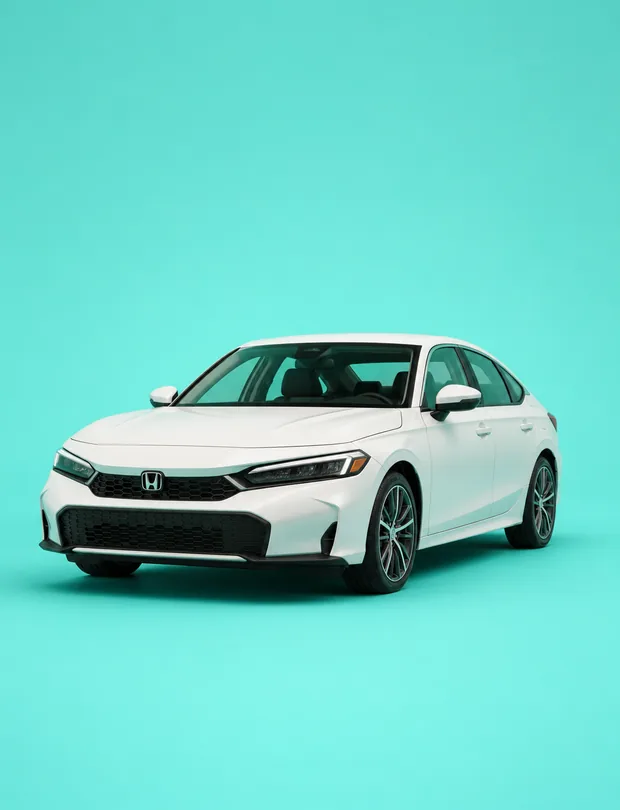
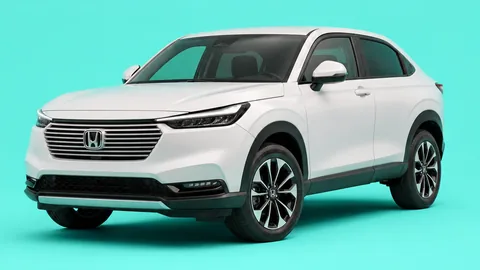
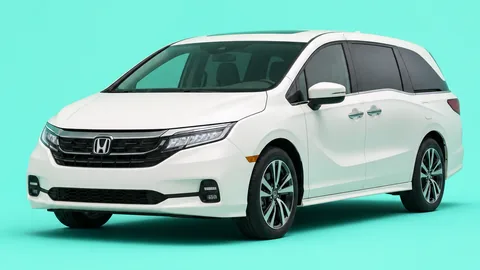
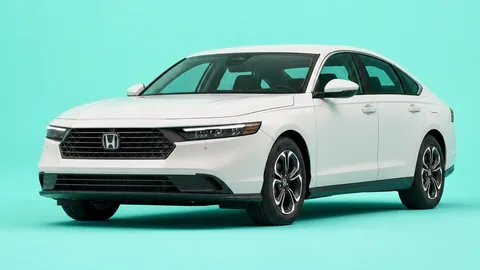
Among the consistently financed passenger brands in New Zealand, though not a captive-finance heavyweight. Honda sits in the upper-middle of the Carjam NZ fleet register, led by the Civic, CR-V, and Jazz, with the HR-V picking up first-SUV buyers. Honda NZ runs a small-dealer operating model without the heavy subvention campaigns of Toyota or Ford, so finance conversations tend to settle in broker territory rather than at the dealer desk. Used-import Fit hatches (the JDM name for Jazz) add a genuine sub-$10,000 entry point. Range runs from a $6,000 used Fit import to a $60,000 new CR-V e:HEV RS.

Your estimated repayment

Weekly

Disclaimer

$78/week

$155 /fortnight $337 /month
$17,000
$0
7.00% p.a.
5 years

We are not a finance company. Indicative only. Not a quote or offer of credit. Actual rates, fees, and repayments depend on your circumstances and the lender's decision.

Why this brand finances well

What lenders look for in a Honda.

  • Civic and CR-V reliability is reflected in lender residual-value data, with both models consistently rated high in Consumer NZ reliability reporting, which tends to keep offered rates tight on clean applications.
  • Jazz and Fit are among the cheapest mainstream cars to insure for under-25 drivers, so a first-car Honda loan usually clears affordability assessments where a larger SUV would not.
  • Honda NZ's smaller dealer network means used-Honda supply is dominated by independent yards and private sales, which keeps broker-routed finance competitive with dealer finance on most applications.
  • Used-import Fit hatches add a genuine under-$10,000 entry point to the brand, and most NZ lenders handle compliant Fit imports on standard import terms rather than requiring a bespoke underwriting pass.
  • The e:HEV hybrid system on current-generation Civic, CR-V and Jazz is a known drivetrain in the NZ market, so lenders treat hybrid Honda applications identically to petrol ones rather than pricing in drivetrain uncertainty.

Buyer notes

Where to get the best Honda rate.

Because Honda NZ does not run heavy captive subvention, the broker-first path applies to almost every Honda purchase in New Zealand. An independent broker quote on the specific Civic, CR-V, Jazz or HR-V in question is the common first step, with the Honda dealer finance desk given a chance to match it. On used-import Fit or Odyssey, the broker advantage is usually widest because independent yards tend to mark up finance more aggressively than a Honda franchise would.

No sign-up on our site. Our finance partner compares NZ lenders and returns a formal estimate after the lender's credit assessment.

New vs used

Financing a new Honda vs a used one.

Honda's finance paths in New Zealand are less divergent than for brands with captive finance arms, because there is no heavy subvention running on new stock. The real split is about import volume on the used side.

Path 1

New Honda

Broker first; Honda dealer rarely has a structural edge

  • Honda NZ runs a smaller agency-style dealer model and does not operate a high-volume captive finance arm like Toyota Financial Services.
  • Dealer finance offers are typically partner-lender rates with a small margin, so the broker gap is modest but still real.
  • The savings on a new Honda usually come from negotiating the drive-away price harder when finance is decoupled from the car-price conversation.
  • Factory warranty (5 years unlimited km on new Honda NZ cars, per Honda NZ policy) covers most of a standard loan term regardless of which lender funds the deal.

Verdict

Get an independent broker quote on the specific new Civic, CR-V, or HR-V, then let the Honda dealer desk try to match it. Occasional Honda NZ finance promotions exist but rarely compete with a sharp broker rate.

Path 2

Used Honda

Broker almost always wins, particularly on Fit imports

  • Used-Honda finance has no subvention wrapper; every dealer rate is a marked-up open-market rate.
  • A 3-year-old Civic or CR-V bought through a Honda franchise still has factory warranty remaining, which supports a competitive broker rate.
  • Japanese-import Fit and Odyssey volume is higher than Honda NZ new volume on the sub-$15,000 end, and those applications run through the broker channel more than the franchise one.
  • Remaining factory warranty on a used NZ-new Honda is usually reason enough to decline dealer-added mechanical breakdown insurance, which tightens the financed amount.

Verdict

Start with a broker quote. On used-import Fit and Odyssey through independent yards, expect the broker gap to widen further because dealer desks mark up more on import stock.

Rule of thumb

Honda is a broker-first brand in New Zealand. Without a heavy captive subvention programme on the Toyota or Ford model, the dealer desk rarely has a structural rate advantage, so an independent broker quote is the right starting benchmark on every Honda purchase new or used.

Total cost of ownership

What a Honda really costs beyond the finance line.

Hondas are among the cheaper mainstream cars to keep on the road in New Zealand, particularly the Jazz and Fit at the small end. The gap widens slightly on CR-V and Odyssey where higher insurance and tyre costs kick in, but the brand as a whole sits below the segment average on total running cost.

  • Servicing and consumables

    Jazz and Fit at the low end, with 1.3L and 1.5L engines that are cheap to service. Civic and HR-V mid-range. CR-V slightly higher on 2.4L petrol or e:HEV variants because of larger oil capacity.

    $80 to $160 per month
  • Insurance (full cover)

    Jazz and Fit sit in the $800 to $1,200 band and are genuinely cheap to insure for under-25 drivers. Civic mid-range. CR-V and Odyssey top out around $1,500 to $1,800 because of higher replacement cost.

    $800 to $1,800 per year
  • Tyres

    Jazz and Fit 15 to 16-inch highway tyres at the bottom of the range. Civic and HR-V mid-range. CR-V 18 to 19-inch sets at the top. Typical replacement every 45,000 to 60,000 km on passenger duty.

    $700 to $1,600 per set
  • Fuel

    Based on 15,000 km a year at current NZ pump prices. Jazz e:HEV at the very low end (real-world 4 to 5 L/100 km), CR-V petrol at the higher end, Odyssey in between.

    $1,600 to $2,900 per year

Worth knowing

Jazz e:HEV hybrid vs petrol Jazz at the same finance weekly

A used Jazz e:HEV typically sits $2,000 to $3,000 above an equivalent-year petrol Jazz on the NZ used market. On matched 4-year finance the weekly gap is around $10 to $14. Fuel savings of $500 to $800 a year on the hybrid usually cover most of that gap over the loan term, provided annual distance is above 10,000 km.

Resale and equity

How Honda resale shapes your finance decision.

50 to 60%

value retained, 3-year-old CR-V

55 to 65%

value retained, 3-year-old Jazz (NZ-new)

50 to 55%

mainstream-brand market average

Honda resale in NZ sits at or slightly above the mainstream average on the volume models. The Jazz holds value particularly well because it is one of the most sought-after first-car hatches in the country and supply is tight, and the CR-V tracks the Toyota RAV4 and Mazda CX-5 closely on 3-year retention. The Civic sedan is a slightly softer story because sedan demand has thinned as buyers have shifted into SUVs, so Civic residuals sit closer to the mainstream average rather than above it.

For finance, the implication is that a 4 to 5 year loan on a current-generation CR-V, Jazz, or HR-V is usually comfortable on resale. On older imports (pre-2015 Fit, first-generation HR-V) the curve is flatter because the cars are already priced for age at purchase, but term length still needs to match lender vehicle-age caps.

Keep Honda terms at 4 to 5 years on current-generation CR-V, Jazz, and HR-V, where resale supports the balance. On older imports or pre-2016 Civics, drop to a 3-year term and put a larger deposit down to stay close to market value through the loan.

Things to avoid

Honda finance traps we flag honestly.

An opinionated list. The commercial side of this site has no incentive to tell you these things, so we do.

7-year loans on a used Jazz or Fit

Stretching a $13,000 Jazz loan to 7 years drops the weekly near $48 but grows total interest from around $1,900 (3 years) to about $4,600 (7 years). On a small city car the maths almost never justifies the term, because the Jazz typically needs replacing before the loan ends.

Rolling MBI into a 2-year-old CR-V already under factory warranty

A 2024 CR-V bought in 2026 still has three years of Honda NZ factory warranty remaining. Adding a $2,200 mechanical breakdown insurance policy to a $32,000 loan duplicates existing cover and costs around $500 in interest across a 5-year term. Decline at signing and revisit near warranty expiry.

Financing an ex-Japan Fit import on a 5-year term

Imported Fit hatches are cheap up front but lender confidence on import residuals is weaker. On a $10,000 Fit at 9.5% over 5 years, the loan balance tracks ahead of resale value through most of the middle years. Keep Fit imports on a 3 to 4 year term and put at least 15% deposit down.

Paying Honda dealer MBI when you already hold good comprehensive insurance

Honda dealers sometimes bundle mechanical breakdown insurance at $2,000 to $3,500 into used-Honda finance. Much of what MBI covers overlaps with comprehensive cover or the remaining Honda factory warranty on newer cars, and the interest on rolled-in MBI adds $400 to $800 across a 5-year term.

Underestimating the Odyssey insurance premium at signing

Ex-Japan Odyssey buyers are sometimes surprised by insurance quotes that run higher than the CR-V, because the people-mover category sits in a different theft-and-repair band. Get a firm insurance quote before settling the loan size, not after, so the weekly total reflects the real cost of ownership.

Drivetrain economics

Hybrid vs petrol vs EV on a Honda.

Honda's current NZ lineup is petrol and e:HEV hybrid across Civic, CR-V, HR-V, and Jazz. There is no diesel volume and no dedicated EV in the NZ range at this review, so the drivetrain decision on a new or near-new Honda is essentially petrol versus hybrid.

Petrol

Cheaper buy-in, standard lender treatment

  • Covers older Civic, HR-V, Jazz, and CR-V cars plus base-trim current-generation stock.
  • Financed at the standard secured used-car rate; no drivetrain premium or discount.
  • Insurance and servicing sit on the cheaper side of the mainstream bracket.
  • Best choice if annual distance is under 10,000 km and the upfront saving matters more than fuel.

e:HEV hybrid (Civic, CR-V, Jazz, HR-V)

Break-even over 12,000 km a year on most models

  • e:HEV variants typically sit $2,000 to $4,000 above the petrol equivalent at comparable mileage.
  • Financed at the standard rate; a handful of NZ lenders apply a modest green-loan tier to hybrids.
  • Real-world fuel saving around $600 to $900 a year on a Jazz or Civic e:HEV at 12,000 km.
  • Brake pad life materially longer due to regenerative braking, reducing servicing costs slightly.

Break-even heuristic

Practical heuristic: under 10,000 km a year the petrol Honda is usually the cheaper total-cost option because the e:HEV premium does not amortise. Between 12,000 and 18,000 km the hybrid math works out ahead on a 5-year loan. Above 18,000 km the hybrid wins clearly, especially on Civic and CR-V where the fuel-saving gap is largest.

Japanese imports

Financing an imported Honda.

Honda has a meaningful Japanese-import presence in New Zealand, particularly on the Fit (the JDM name for Jazz), the Odyssey people-mover, older Civic hatches, and some Stepwgn vans. Honda NZ's smaller new-car footprint means the import channel carries a larger share of used-Honda volume than it does on Toyota. Three things matter before applying.

01

Fit battery check on older hybrid imports

The first and second-generation Fit Hybrid (2011 to 2017 imports) used a less robust IMA-style hybrid battery that can degrade meaningfully by year ten. On a cheap Fit Hybrid import the replacement cost can exceed the car's value, so lenders increasingly want a battery-health check on hybrid Fit imports before approval. Budget a day for inspection and confirm the check is on file before paying a deposit.

02

Rate premium on imports versus NZ-new

Ex-Japan Hondas typically attract a 0.5 to 1.5 percentage point premium over NZ-new equivalents because residual-value confidence is lower and odometer history takes longer to verify. On a $9,000 Fit import over 4 years that adds roughly $200 to $500 in interest versus an NZ-new Jazz at the same price, which usually still leaves the import ahead but not by as much as the sticker-price gap suggests.

03

Odometer and compliance paperwork on older stock

Japanese-market odometers on pre-2015 Hondas are not always directly reliable, and most NZ lenders require a verified history report (Carjam or equivalent) plus a current compliance certificate before funding. For a dealer purchase the paperwork is usually sorted, but on a private import it can add several days to settlement. Ask which report the lender accepts before committing.

Case study

Worked example: financing a 2022 Honda Civic RS

The buyer

Auckland software developer, age 30, clean credit, $92,000 annual income, stepping out of an older Corolla hatch into a nearly-new Civic.

The scenario

Purchasing a 2022 Civic RS hatch for $34,000 from an independent Auckland dealer with around three years of Honda NZ factory warranty remaining. Trade-in on the Corolla: $7,500. Broker-quoted rate benchmarked against the dealer finance desk on the same day, which the broker won by roughly 1.3 percentage points.

The outcome

Monthly cash-flow impact sits at roughly $545, which fits comfortably inside the Auckland single-income affordability bracket for the stated income.

Because three years of Honda NZ factory warranty remained on the Civic at settlement, the dealer-offered $2,100 mechanical breakdown insurance add-on was declined, removing roughly $450 of unnecessary interest from the deal across the term.

The broker rate beat the dealer desk by around 1.3 percentage points on the same day, saving approximately $650 of interest across the 4-year term versus the dealer offer.

At year 4 the Civic is expected to be worth between $20,000 and $23,000 based on typical NZ Civic residuals, which sits at or above the late-term loan balance, leaving a clean trade-in position into the next car or a debt-free hold-year with warranty recently expired.

Illustrative example. Not a promise of approval or rate. Your circumstances and the lender's own credit decision will determine your actual outcome.

Affordability check

What can I afford on my income?

A rough sanity check. We assume repayments should sit under 10% of your take-home pay, with a 5-year term at 7%.

Not an affordability assessment. Real lender decisions consider all your debts, expenses, and history.

$70,000
$20k $250k

Indicative safe loan

$30,000

At ~$135/week

Stretch maximum

$45,000

Only with no other debts

Apply this to the calculator

Common questions

Honda finance FAQ.

Does Honda NZ have a captive finance arm like Toyota Financial Services?

Not in the same form. Honda NZ does not run a high-volume captive finance arm with aggressive subvention campaigns across its range. Dealer finance is usually quoted through partner lenders at standard market rates with a small margin, which is why an independent broker quote is a useful benchmark on almost every Honda purchase.

Is it cheaper to finance a Honda through the dealer or an independent broker?

On used Hondas and on new Hondas outside an occasional promotional window, an independent broker typically lands 1 to 2 percentage points below the Honda dealer finance desk. Because Honda NZ does not run heavy subvention, the dealer rarely has a structural rate advantage, so a broker quote is the right starting benchmark on most Honda purchases.

Can I finance a Japanese-import Honda Fit or Odyssey?

Yes. Most NZ lenders fund compliant Japanese-import Hondas, including Fit and Odyssey, provided the vehicle has cleared entry compliance. Expect a rate 0.5 to 1.5 percentage points above a NZ-new Jazz or Civic because lender residual data is thinner on imports. On older Fit Hybrid imports a battery-health check is typically required before approval.

Does the Honda e:HEV hybrid qualify for a green or EV-specific finance rate?

Some NZ lenders apply a modest green-loan discount (typically 0.25 to 0.75 percentage points) to qualifying hybrids, which can include Civic e:HEV, CR-V e:HEV, Jazz e:HEV, and HR-V e:HEV. Eligibility varies by lender and is not universal. A broker will flag whether a green-rate applies to the specific model and year you are pricing.

How much deposit is typical for financing a Honda?

10 to 20% is the common range across Civic, CR-V, Jazz, and HR-V. On a $20,000 used Civic that is $2,000 to $4,000. A deposit is not mandatory but usually drops the offered rate by 0.5 to 1.5 percentage points and reduces negative-equity risk in the first year of ownership, where depreciation is steepest.

Can I finance a Honda older than 10 years?

Usually yes on a shorter term. Most NZ secured-car-loan products cap vehicle age at 12 to 15 years at loan-end date, so a 2014 Civic or CR-V is fine for a 3-year term but will often fail a 5-year application. Jazz and Fit are among the most-accepted older Hondas because parts supply and reliability keep lender confidence reasonable; expect rates 1 to 2 percentage points above current-generation Honda finance.

Does the Honda NZ factory warranty transfer to a used car buyer?

Yes, the factory warranty (5 years unlimited km on recent new Honda NZ cars, per Honda NZ policy) transfers with the car rather than staying with the original owner, provided servicing has been kept up to Honda NZ standards. Buying a 2-year-old Civic or CR-V still leaves around three years of factory cover, which removes most of the case for dealer-added mechanical breakdown insurance.

What happens to my Honda finance if I trade the car in halfway through the loan?

If the trade-in value exceeds the outstanding loan balance, the surplus applies to the next purchase. If the balance is higher (negative equity), the shortfall rolls into the new loan. Current-generation CR-V and Jazz resale sit above the mainstream average, so negative equity on a 5-year term is less common than on brands with softer residuals, but it still happens on 7-year terms or heavily-loaded deals.

Can I roll an existing car loan into a new Honda loan?

Most NZ lenders allow it but will scrutinise affordability more closely. If you owe $6,000 on your current car and are buying a $25,000 CR-V, the new loan becomes $31,000 less any deposit or trade. Keep rolled-in negative equity under 15 to 20% of the new Honda's value. Beyond that, selling the old car privately to clear the debt first is usually a cleaner outcome.

Is a hybrid CR-V materially more expensive to finance than the petrol CR-V?

Rates are usually identical across petrol and e:HEV variants, so the finance difference comes entirely from the 8 to 12% higher purchase price on the hybrid. On a $35,000 CR-V e:HEV versus $31,000 petrol CR-V at matched terms, the weekly gap is around $20. Fuel savings over 15,000 km a year typically recover most of that across a 5-year loan.

Should I add mechanical breakdown insurance to a Honda finance deal?

Usually no on a nearly-new NZ-new Honda still covered by the factory warranty, because MBI duplicates what the warranty already covers. MBI is more worth considering on a used Honda past factory warranty or on a Japanese-import Fit or Odyssey where no factory cover applies. If you do take MBI, price it as a standalone policy rather than rolled into the loan to avoid the added interest.

What is the typical total cost of ownership for a financed Honda over 5 years?

For a $22,000 used Civic on a 5-year loan at 8%, finance totals roughly $26,700 (principal plus interest). Add insurance (~$5,500), servicing (~$6,000), and fuel (~$9,500 at 15,000 km a year) for roughly $47,700 over 5 years, or around $184 a week. A CR-V runs $52,000 to $58,000 all-in at the same distance; a Jazz or Fit tracks closer to $40,000 because insurance and fuel both drop.

About this article
Published
23 April 2026
Last reviewed
23 April 2026

Methodology

All repayment figures on this page are calculated live from the inputs you enter into the calculator using the standard amortised-loan formula. Indicative rates reflect publicly-advertised used-car secured-loan rates across NZ mainstream lenders in the 12 months preceding the last review. Honda model prices are observed from recent TradeMe and AutoTrader listings across Civic, CR-V, Jazz, and HR-V lines, with Fit import prices cross-checked against specialist Japanese-import yards because pricing varies with compliance age. Warranty terms reference the factory coverage Honda New Zealand publishes on new vehicles sold through its dealer network. Running-cost figures draw from AA New Zealand, Consumer NZ, and EECA public guidance. We review annually or sooner if Honda NZ adjusts pricing or warranty policy.

Sources

Apply for Honda finance.

Our finance partner compares NZ lenders and returns a formal estimate after the lender's credit assessment. Calculator inputs travel through to the application so nothing gets re-typed.

All brands

Disclaimer

A car loan is a commitment that runs for years, and repayments come out of the same pay cheque as everything else. Before committing, it is worth modelling the weekly and monthly cost against the household budget, which is what this site is built to help with. Borrowing at a level that stays comfortable on a bad week, not a good one, is widely regarded as the safer frame.

Carfinance.org.nz earns a commission from a partner brand when a visitor applies through this site and their application is approved. That commission is paid by the partner, not the applicant, and it does not influence the rate the lender offers. We refer every visitor to the same partner because they compare multiple New Zealand lenders on the applicant's behalf, so the recommendation is not driven by a sponsored deal. Every figure shown on this site is a modelled estimate based on the inputs entered; the actual rate, fees, and repayments are set by the lender after assessing the applicant's circumstances and own credit decision. Carfinance.org.nz is a calculator and information tool. We are not a lender, not a broker, and not a registered financial adviser. Any decision about whether a specific loan suits a specific situation is best made after talking with the lender, and for amounts that materially affect the household, with a registered financial adviser.