On almost every Mazda purchase, the broker is at least as cheap as the dealer and usually cheaper. Mazda doesn't run a heavy subvention captive finance arm in NZ the way Toyota or Ford do, so dealer rates are effectively partner-lender rates with a small margin. Buyers commonly get a broker quote first and use it to benchmark the dealer offer.
Yes. Most NZ lenders finance compliant imports provided the vehicle has passed entry compliance, the odometer is verified, and a pre-purchase inspection has been done where required. Expect a rate 0.5 to 1.5 percentage points above a NZ-new equivalent because import residual-value confidence is lower and service history is sometimes harder to document.
10 to 20% is the common range. On a $25,000 CX-5 that's $2,500 to $5,000; on a $14,000 Mazda3 that is $1,400 to $2,800. A deposit isn't mandatory for approval but usually drops the offered rate by 0.5 to 1.5 percentage points and protects against early negative equity in the first year as the car depreciates.
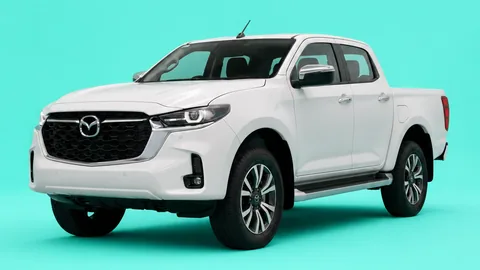
Yes, if the BT-50 is primarily used for business. Under a chattel mortgage you claim the GST component in the next GST return (around $6,500 on a $50,000 BT-50) and deduct finance interest against business income across the term. Depreciation runs at IRD rates. A finance lease works similarly with GST claimable on each monthly payment. Confirm with your accountant before signing.
Not directly through Mazda Finance at present. The MX-30 EV has sold in small volumes in NZ and qualifies for green-loan products at some independent lenders, typically at 0.25 to 1.0 percentage points below standard rates. SkyActiv petrol and diesel engines are financed at standard rates. A broker can check green-loan eligibility on MX-30 applications.
Usually yes. Most NZ secured-car-loan products cap vehicle age at 12 to 15 years at loan-end date, so a 10-year-old CX-5 clears a 3-year term but often not a 5-year one. Rates sit 1 to 2 percentage points above a 3-year-old equivalent, and loan-to-value tightens. CX-5 parts availability and mechanical reputation keep lender confidence reasonable through the first decade of age.
For a $28,000 used CX-5 on a 5-year loan at around 7.5%, finance costs total approximately $33,500 (principal and interest). Add insurance ($6,500 to $8,000), servicing and tyres ($7,500 to $9,000), and fuel ($12,000 to $15,000 at 15,000 km a year) for a rough all-in of $60,000 to $66,000 over 5 years, or around $240 a week. Actual figures depend on distance driven, claims history, and driving style.
If the market value exceeds your outstanding loan balance (positive equity, common on CX-5 and BT-50), the dealer pays out the old loan and any surplus applies to the new purchase. If it's below (negative equity, more likely on Mazda3 or import Demio), the shortfall rolls into your new loan. Front-loaded accessories, 7-year terms, and ex-Japan imports are the typical causes of mid-term negative equity on Mazda finance.
Not in any material way. Both sit in the same mainstream ute lender product set with effectively identical residual-value modelling, so rate, term, and loan-to-value outcomes are almost indistinguishable on a like-for-like application. The choice between BT-50 and D-Max is essentially a dealer-relationship and trim-preference question, not a finance question.
Mazda NZ's current new-car warranty is 5 years unlimited kilometres on passenger cars and SUVs (CX-5, Mazda3, etc.), and 5 years / 150,000 km on the BT-50 ute. The warranty doesn't directly change insurance premiums but can substantially reduce the rationale for mechanical breakdown insurance at signing, which commonly gets bundled into the loan at $2,500 to $3,500 and adds around $500 to $700 of interest across 5 years.
Yes, most NZ lenders allow it but will scrutinise affordability more closely. If you owe $6,000 on your existing car and are buying a $28,000 CX-5, the new loan becomes $34,000 before trade-in and deposit. You start the CX-5 loan underwater, which delays building equity. Selling the old car privately to clear the debt separately is often a cleaner outcome if the timing works.
The finance structure is the same but the numbers are materially bigger. CX-60 and CX-90 sit at roughly $70,000 to $93,000 new, which puts them in a higher-value underwriting band with slightly tighter loan-to-value (often 85 to 90%) and more scrutiny on affordability. Expect a marginal rate premium and larger deposit expectations than on a CX-5, though the rate delta is usually small on clean credit files.