
2010-2013 used
$8,500BL-generation Mazda3. Often NZ-new or ex-Japan Axela. Typical 180,000+ km. Simple, cheap to service.
Weekly
$38.84
Monthly
$168.31
One of New Zealand's long-running passenger-car stalwarts.
Last reviewed: 24 April 2026
Your estimated repayment
Weekly
$78/week
We are not a finance company. Indicative only. Not a quote or offer of credit. Actual rates, fees, and repayments depend on your circumstances and the lender's decision.
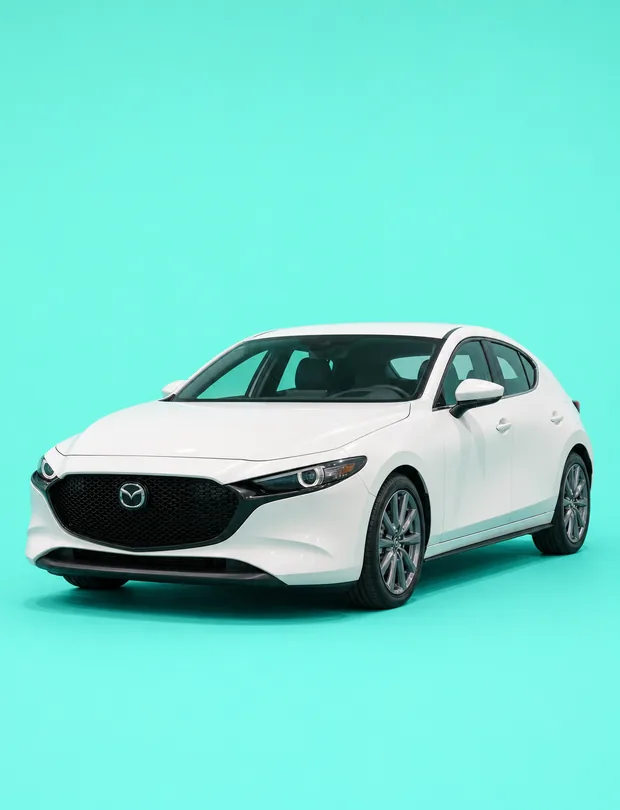 Mazda Mazda3 finance calculator Not a lender. Not a broker.
 The Mazda3 has been a fixture on the NZ passenger-car scene for over two decades and continues to sell steadily despite the broader shift to SUVs. It is a common first-car and second-car pick, the used-market supply runs deep, and lenders know the drivetrain and residual picture well enough that finance approvals on a clean credit file are commonly straightforward. Ex-Japan Axela imports (the Mazda3's Japanese-domestic name on earlier generations) are a meaningful slice of the used parc below about $15,000.
Calculate repaymentsIndicative only. Not a quote or offer of credit.
Year by year
Typical NZ market prices and the weekly cost of financing each. All figures assume 7% over 5 years with no deposit. Indicative only; open the full calculator to pre-set your own rate and term.
2010-2013 used
$8,500BL-generation Mazda3. Often NZ-new or ex-Japan Axela. Typical 180,000+ km. Simple, cheap to service.
Weekly
$38.84
Monthly
$168.31
2014-2017 used
$14,000BM generation with SkyActiv. Clean drivetrain reputation; sedan and hatch both common.
Weekly
$63.97
Monthly
$277.22
2018-2021 used
$20,000BN generation mid-cycle. Improved interior and tech; GSX popular on the used market.
Weekly
$91.39
Monthly
$396.02
2022+ new/nearly-new
$32,000Current BP generation. Well-specified interior, SkyActiv petrol standard.
Weekly
$146.22
Monthly
$633.64
Who this suits
Four real scenarios
Representative NZ buyers and the numbers behind their deals. Weekly and rate figures are indicative and shown for comparison. Your own rate is confirmed by the lender after application.
Wellington CBD commuter
2020 GSX hatch 2.0 petrol, NZ-new, 55,000 km
$23,500 · $3,500 deposit, 5 years at 9.0% (indicative)
Replacing an aging Demio as the daily drive between Johnsonville and the Terrace. The BP-generation cabin refinement was the deciding factor over a comparable Corolla, because the commute sits mostly on the motorway and road-noise suppression generally runs a Mazda3 strength. A 15% deposit keeps the amortisation curve ahead of the value-loss curve in year one, which is when most negative-equity issues surface on a five-year consumer structure.
$96 per week
Dunedin first-time graduate
2016 GSX sedan 2.0 petrol, 92,000 km
$14,000 · Secured consumer loan, 4 years at 11.5% (indicative)
First car on a graduate salary at a Dunedin healthcare employer. A thin credit file typically lifts the indicative rate above what an established borrower sees on an identical Mazda3, so a four-year term is commonly chosen over five to hold total interest in check. Otago insurance bands sit at the lower end of the national spread typically, which materially improves the all-in weekly cost once comprehensive cover is factored in.
$84 per week
Auckland second-household car
2022 SP25 hatch 2.5 petrol, NZ-new, 28,000 km
$32,000 · $6,000 deposit, 5 years at 8.5% (indicative)
Second vehicle for a North Shore household, supplementing a larger family SUV. The 2.5L SP trim was prioritised over the standard 2.0 because the school-run route includes motorway stretches where the extra torque most reviewers call it useful. A 20% deposit at this price point is one commonly observed way households keep the loan inside the resale curve through year one, when depreciation on a new passenger hatch typically runs steepest.
$126 per week
Christchurch downsizer
2019 GSX hatch 2.0 petrol, NZ-new, 72,000 km
$20,000 · $5,000 deposit, 3 years at 9.0% (indicative)
Retired couple downsizing from a CX-5 now that towing and school-run duty are behind them. A three-year term at a 25% deposit holds total interest around $2,200 on indicative numbers, which is the arithmetic reason shorter terms are commonly chosen on fixed superannuation income. Canterbury insurance bands are usual to sit at the lower end of the national spread, which typically keeps the all-in running cost predictable.
$114 per week
The real number
Five years of real outlay on a representative NZ-new 2024 Mazda3 GSX 2.0 SP hatch, financed at 7% over 5 years with no deposit, driven 15,000 km a year from a Wellington base. The weekly finance figure is the headline, but fuel, insurance, servicing, and tyres materially move the true cost per week. The loan payment is the smallest surprise here. Everything around it adds up faster.
Purchase price
$40,000
NZ-new 2024 GSX 2.0 SP hatch at list. Negotiated drive-away pricing typically lands a touch lower in most quarters.
Finance interest
$7,530
Indicative 7% over 5 years, no deposit. The actual rate is set by the lender after assessment of the applicant.
Petrol
$13,650
Real-world 6.5 L/100 km over 75,000 km, averaged $2.80/L across the five years. The SkyActiv-G 2.0 generally sit close to manufacturer claimed consumption at motorway cruising.
Comprehensive insurance
$5,500
Wellington band for a GSX hatch with off-street parking, around $1,100/year at year one and trending down as retained value drops.
Scheduled servicing
$1,500
Mazda capped-price schedule at no more than $250 per 15,000 km interval across five services, plus one brake service within the term. Real-world NZ servicing typically costs slightly below the cap on routine intervals.
Tyres
$1,170
One full set replacement around year four at roughly $900, plus rotations and a spare top-up. The 18-inch SP25/Homura rims carry a slight premium over the 16-inch GSX fitment.
Total five-year cash outlay
$69,350
Assumes: 2024 GSX 2.0 SP hatch at $40,000 new, 15,000 km/year, real-world petrol consumption 6.5 L/100 km at $2.80/L, Wellington insurance band, Mazda capped-price servicing. Indicative only.
What it's worth later
Mazda3 depreciation typically track close to the mainstream NZ passenger-hatch average, slightly firmer than the Cerato and slightly softer than the hybrid-era Corolla. The BP generation (2019 onward) has held retained value better than the BM and BN predecessors, partly because the cabin refinement and SkyActiv drivetrain maturity have narrowed the NZ-new versus Axela-import pricing gap at the used-market top end.
Based on a 2024 GSX 2.0 SP hatch purchased new at $40,000. Indicative NZ used-market 2026 pricing.
Year 1
76%
$30,400
First-year drop is typical for a NZ-new passenger hatch in this segment. The SkyActiv-X mild-hybrid variants, introduced October 2020 in the Takami grade, are common to sit close to the mainstream 2.0 and 2.5 petrol cars at this point, as the technology continues to be offered in the current NZ range.
Year 3
60%
$24,000
Typical trade-in bracket for consumer-loan buyers on three-year terms. Full Mazda-dealer service history is commonly the single piece of paperwork that underwrites the next resale at this point.
Year 5
47%
$18,800
Common exit point for five-year consumer loans. NZ-new provenance on a Carjam record generally carries a premium of several thousand dollars over a comparable Axela import at this age.
Year 7
36%
$14,400
The warranty has passed, and resale is driven more by kilometres and cabin condition than badge-year. Still widely financeable as a used car in practice, though lenders commonly cap terms shorter at this point.
Why this matters for finance
On indicative NZ used-market trends, a five-year loan on a BP-generation Mazda3 at a 10 to 20% deposit typically keeps the amortisation curve running ahead of the value-loss curve from around the end of year one, which keeps equity positive through the back half of the term. Zero-deposit structures are arithmetically tighter on the Mazda3 than on a hybrid Corolla because the first-year drop is typically a touch steeper, which is one reason a modest deposit is commonly chosen on this model specifically. The actual outcome depends on kilometres, condition, and the prevailing market at resale.
Financing notes
At $17,000 across a 5-year term at 7.5% indicative, the weekly repayment sits around $79, or $341 a month. A 3-year term holds the weekly near $125 and cuts total interest by roughly two-thirds. Mazda3 depreciation generally track the mainstream NZ passenger-hatch average, which is one regularly raised reason a 3 to 4 year term on a used Mazda3 typically keeps the loan balance running ahead of the value-loss curve through the back half of the loan.
Before finance settles
The Mazda3 has a deep used market in New Zealand, per the Carjam NZ fleet register, with meaningful representation from both NZ-new cars and Japanese-import Axelas on earlier generations. That depth is why a careful pre-purchase inspection typically pays for itself before finance settles. The checks below are what a typical inspection covers on this model specifically. Most lenders will expect comprehensive insurance and a clear title; the used-car loan page covers the general process.
The BM and BP generation 2.0 and 2.5L SkyActiv-G engines are commonly rated robust, but high-compression operation rewards clean servicing. A cold-start listen for lifter rattle and a check of the oil consistency and level typically surfaces any maintenance shortfall. A service book showing oil changes on or under the 10,000 km interval is commonly regarded as a green flag; long-extended intervals on a carbon-intensive direct-injection engine are commonly a reason to negotiate.
The BM and BN generation has a widely documented tendency to develop bubbling paint and surface rust behind the rear wheel arches, particularly on coastal and salt-road examples. A visual inspection of the inner lip and the paint seam is the standard check. A repaired and repainted arch with documentation is commonly regarded as acceptable; untreated bubbling typically becomes structural within a COF cycle.
The Mazda Connect software carried a well-known map-freeze and reboot pattern on pre-2017 BM units and an Android Auto rollout on post-2019 BP units. A check of the firmware version and the latest Mazda NZ update status typically resolves whether the feature set matches what the listing advertises. An outdated unit isn't typically a deal-breaker, but commonly factors into the negotiation.
BM-facelift and BP Mazda3 cars carry forward-facing camera and radar hardware behind the windscreen for the radar-based Smart Brake Support system. A replacement screen requires calibration by a qualified technician, and an uncalibrated car can show lane-departure and pre-collision faults at the next service. Paperwork for the recalibration is commonly requested where the Carjam record shows an insurance claim involving the windscreen.
The compliance plate and Carjam record typically show whether a Mazda3 was first registered in New Zealand or imported second-hand as an Axela (the Japanese-domestic name for all BK, BL, and BM/BN generations until the BP generation launched in 2019). An Axela isn't a problem in itself, but pricing should reflect the lower retained value typical at resale. NZ-new provenance with a Mazda-stamped service book is commonly regarded as worth a premium of a few thousand dollars at this model.
The manual transmission on most BM and BP Mazda3 examples shifts cleanly through the gate and holds gear reliably; the automatic variants on later BN and BP cars employ a robust six-speed torque-converter box. A smooth shift-through-the-H pattern and no grinding or notchiness on cold starts typically signal a transmission in good order. A previous owner history of sustained high-temperature driving or towing (on models not designed for tow-rated duty) may surface wear earlier than expected.
A full stamped service book at a Mazda dealer or a known independent with genuine parts is typically the piece of paperwork that underwrites the next resale. Gaps of more than two annual services, or a mid-life switch to generic servicing, are commonly factored into the purchase price. A fully stamped book on a 2017 Mazda3 generally adds two to four thousand dollars over a gapped equivalent at the same kilometres.
Off-dealer
A meaningful share of used Mazda3 transactions in New Zealand happen outside the dealer channel, because the model is common enough that private sales are routine. Financing a privately-sold Mazda3 is entirely normal through a broker, and the process is a handful of extra steps on your side because there's no dealer sitting between the borrower and the lender.
An indicative broker pre-approval before negotiating with the seller is a common first step. Pre-approval in hand typically signals to the seller that you are funded, which often shortens the negotiation and strengthens the price position.
Most buyers begin with a Carjam report on the VIN. Any secured interest listed on the PPSR must be cleared by the seller at or before settlement; an uncleared security interest means the previous lender still holds a claim over the vehicle.
A pre-purchase inspection from AA, VTNZ, or a Mazda dealer typically costs $150 to $220 and commonly uncovers SkyActiv oil condition, BM-era wheel-arch rust, and unreported panel work.
The broker typically needs the final purchase details (VIN, agreed price, odometer, seller bank details) to arrange direct settlement to the seller at the transfer, rather than funds flowing through you.
NZTA online vehicle transfer happens on the same day as settlement, and the lender files its own security interest on the PPSR at that point.
Usually a loan condition
Comprehensive insurance is almost always a loan condition while the Mazda3 is on finance, because the vehicle is the lender's security. Mazda3 premiums sit mid-pack in the NZ mainstream-hatch spread from what we see, comparable to the Corolla and slightly above the Cerato at equivalent spec. The bands below are indicative 2026 NZ annual figures and are widely verified via real quotes before being used as a budgeting figure.
Auckland
$1,350 to $1,850
SP25 2.5 hatch, kerbside parking
Auckland Mazda3 claim frequency sits slightly above the national average on insurer data, partly driven by inner-suburb theft and minor-collision rates. Tower, AMI, and State typically price a premium for kerbside parking; off-street or garaged storage generally drops the quote materially.
Wellington
$1,000 to $1,400
GSX 2.0 hatch, off-street parking
Theft frequency sits lower than Auckland, but wind exposure and cross-city commute claims are priced into comprehensive. Commute-distance declarations materially shift the quote, so the annual kilometre estimate is commonly given carefully.
Canterbury and Otago
$800 to $1,150
GSX or SP 2.0 hatch, rural or off-street
South Island Mazda3 premiums are usual at the lower end of the national spread, largely driven by lower theft risk and better parking outcomes. Multi-vehicle household policies often drop the final figure another ten to fifteen per cent.
Get actual quotes before settling. Insurance cost varies with credit profile, kilometres, and excess choices more than these bands can show.
Compare Mazda car insuranceThe direct alternatives
The Mazda3, Toyota Corolla, Hyundai i30, Kia Cerato, and Honda Civic sit within a few thousand dollars of each other on like-for-like specs, and finance on broadly similar indicative rates. The meaningful differences show up in cabin refinement, resale curve, and drivetrain mix rather than in the weekly repayment. Spec-for-spec, any of these is a defensible NZ small-car finance decision.
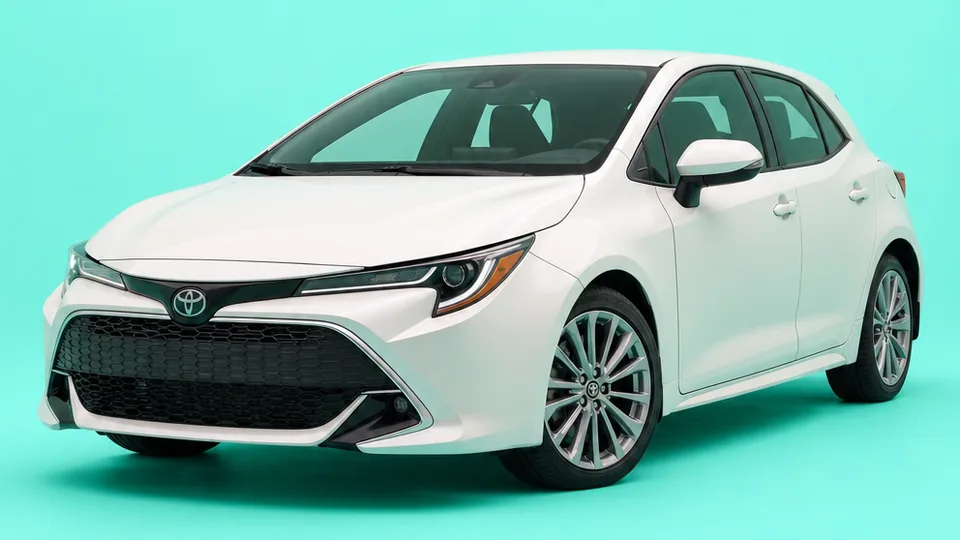
Competitor
$32k-$52k new, $14k-$38k used
Corolla is commonly rated the stronger hybrid proposition and the firmer year-five trade-in; Mazda3 has a reputation for the more premium-feeling cabin and the more engaging drive. Buyers who prioritise running cost and resale often favour Corolla; buyers who prioritise drive character and interior refinement often favour Mazda3.
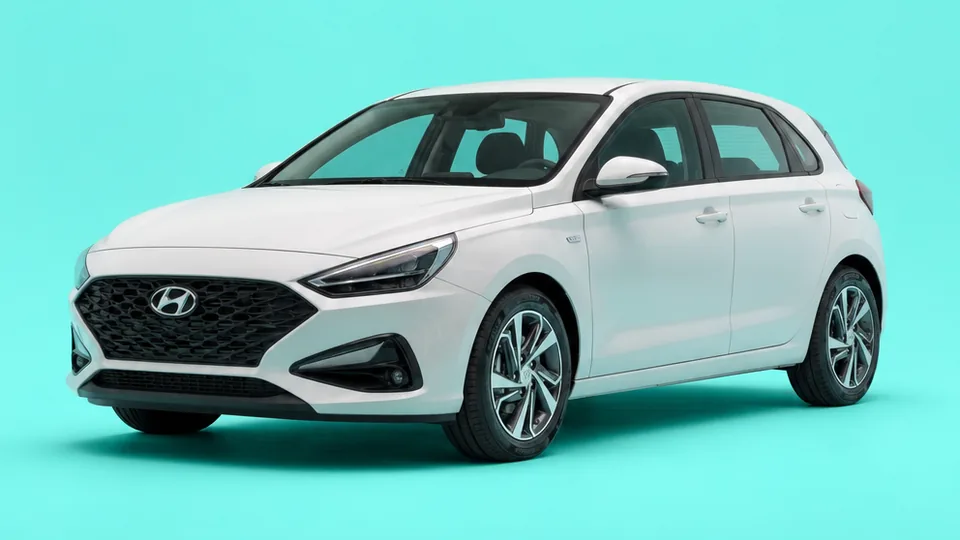
Competitor
$34k-$48k new, $14k-$32k used
i30 is generally credited with the slightly roomier cabin in this class, with a standard three-year / 100,000 km warranty. Mazda3 most reviewers give it the sharper-driving car and the firmer year-five trade-in. Buyers who prioritise interior space often favour i30; buyers who prioritise cabin feel and retained value often favour Mazda3.
Competitor
Kia Cerato
$33k-$46k new, $13k-$30k used
Cerato has a lower entry price than Mazda3 at equivalent spec, with a standard five-year / 150,000 km warranty on NZ petrol models. Mazda3 tends to be credited with the stronger resale story at year five and the more refined cabin. Buyers who prioritise purchase price often favour Cerato; buyers who prioritise retained value and cabin quality often favour Mazda3.
Competitor
Honda Civic
$44k-$58k new, $18k-$40k used
Civic is commonly rated the more engaging drive with its e:HEV hybrid drivetrain, and cabin packaging is commonly considered a strength. Mazda3 has a reputation for the sharper steering feel and the more settled interior design. Buyers who prioritise hybrid drivetrain and space often favour Civic; buyers who prioritise drive feel and cabin refinement often favour Mazda3.
Worked example
Buyer profile
Wellington-based couple in their late twenties, both PAYE employees in the public sector, clean credit files. Trading up from a shared 2015 Mazda2 that had become too small for weekend trips and was showing clutch wear that had started to cost real money to keep on the road.
Scenario
Bought a 2022 Mazda3 SP25 hatch at $30,000 from a Wellington Mazda dealer. Traded the 2015 Mazda2 at an agreed $7,000 and put $3,000 cash deposit down from joint savings. Financed the remaining $20,000 over 5 years at 9.0% indicative via a specialist consumer broker.
The outcome
In this scenario, the weekly outgoing of $96 sat slightly above the combined repair and reliability cost the old Mazda2 had started demanding in its final year. The step up from the B-segment hatch to a BP-generation C-segment Mazda3 delivered a materially quieter motorway cabin and a modern safety suite, both of which were the specific reasons the couple had decided to trade up rather than keep patching the older car.
On the balance sheet of this household, the loan sat as a straight consumer liability with no tax treatment to manage, because the Mazda3 is used for personal commuting and weekend use rather than business. Finance interest is not deductible on this structure in the ordinary case, subject to the accountant's confirmation where the use pattern has any unusual element.
On indicative NZ used-market trends, a comparable 2022 Mazda3 SP25 at year five (2027) typically trades in the high-teens range at condition-dependent prices, subject to kilometres. For this borrower, that projected retained value sits broadly in line with the outstanding loan balance through most of the term on these assumptions, which is the arithmetic foundation of a five-year consumer loan on a BP Mazda3 at a 10% deposit.
The discipline that makes this pattern work is leaving the loan in place rather than refinancing mid-term. Refinancing a small consumer loan partway through typically adds establishment and early-repayment fees that wipe out the marginal rate saving, and the Mazda3's retained-value curve is shallow enough that the original structure usually remains the cheapest option to term.
Illustrative example. Not a promise of approval or rate. Your circumstances and the lender's own credit decision will determine your actual outcome.
Model-specific questions
On a $17,000 used 2018 Mazda3 GSX at 7.5% indicative over five years with no deposit, the weekly repayment sits at roughly $79. A $23,500 2020 GSX at the same settings runs about $109 a week, and a new 2024 GSX 2.0 SP near $40,000 works out to around $178 a week. Actual rates are set by the lender; these figures are illustrative only.
On a late-model Mazda3 with a clean credit record and a modest deposit, indicative rates from mainstream NZ lenders typically sit in the 7 to 9% range. Pre-2018 Mazda3s and Axela imports land in the 9 to 12% range because the asset is older and lender residual exposure is higher. A thin credit file or recent arrears commonly pushes the rate toward the upper end of the band.
Zero-deposit loans are routine on a used Mazda3 under $20,000 because the loan amount is small and lender confidence is high. On a new Mazda3 at $35,000 to $45,000, a 10 to 20% deposit is the usual shape, which typically trims the indicative rate and reduces the year-one negative-equity risk that commonly surfaces on longer consumer terms.
Generally yes, provided the odometer is verified and the car has clean NZ entry-compliance paperwork. Axela imports are typically priced below NZ-new equivalents but depreciate faster typically, so a 3 to 4 year term with a modest deposit is commonly chosen to offset the steeper first-18-month drop on these examples specifically.
For a used Mazda3 under $18,000, 3 to 4 years is commonly the usual default. Stretching to 5 years keeps the weekly low but total interest climbs noticeably and the car's market value can dip below the loan balance in the back half. A shorter term typically avoids both effects and aligns with Mazda3 replacement cycles commonly observed on the NZ used market.
Yes. Most NZ lenders finance compliant Axela imports once entry compliance is certified and the first NZ WoF is issued. Typically, indicative rates on imports typically sit 0.5 to 1.5 percentage points above an equivalent NZ-new Mazda3, because residual data is thinner. The maximum term is often capped at four or five years rather than six or seven on these cars specifically.
Yes, on essentially the same terms as a dealer purchase. A broker commonly sources an indicative rate before negotiation. A Carjam report typically verifies the VIN, odometer, and any existing secured interest on the PPSR; the seller must clear any listed security at settlement. A pre-purchase mechanical inspection at $150 to $220 tends to be treated as worth the cost on older Mazda3 examples.
Four years is the common default on used Mazda3 under $20,000, and five years is common on a new Mazda3 at $35,000 and above. Seven-year terms are available on new cars through some lenders but grow total interest materially; on our calculator, a $30,000 loan at 7.5% indicative costs roughly $3,200 more in interest over seven years than five.
Negative equity at trade-in time isn't unheard of on a Mazda3 in year one of a zero-deposit new-car loan, because first-year depreciation on a passenger hatch is typically steep. If the trade-in is short of the balance, the shortfall is commonly paid in cash or rolled into the next loan. A 10 to 20% deposit and a term of five years or less reduces the risk materially.
Yes, and refinancing can pay off where circumstances have improved materially (credit score up, income up, or existing debts paid down). The Mazda3 is generally taken as a reasonable refinance candidate because resale typically stays firm enough for a new lender to approve against it. The original loan is commonly checked for early-repayment fees before the refinance application goes in.
Comprehensive cover is almost always a loan condition because the vehicle is the lender's security. Indicative 2026 NZ annual premiums sit around $1,350 to $1,850 in Auckland for a late-model SP hatch, $1,000 to $1,400 in Wellington, and $800 to $1,150 in Canterbury and Otago. Premiums vary with driver age, parking, and claims history.
It depends on timing. Mazda Financial Services runs occasional subvented promotions on new stock around quarter end, which can price below broker offers during the window. Outside those windows, an independent broker commonly matches or beats the captive on used stock and private sales. A broker rate is commonly sourced first as a benchmark on the dealer floor.
The SkyActiv-X commands a premium of several thousand dollars over the 2.0 GSX on the used market but typically carry a softer resale curve, which narrows the long-run cost gap. The 2.5L turbo SP25 is typically priced $6,000 to $9,000 above a comparable 2.0 on the used market, and is commonly financed over the same term where the torque is valued; outright fuel savings are modest.
You might also want
Amount
$17,500 car loan
Close to a typical Mazda3 price.
See pageMazda model
Mazda CX-5 finance
The default mid-size family SUV in the Mazda range.
See pageLoan type
Used car finance
Most Mazda3 finance in NZ is on used vehicles.
See pageBrand
All Mazda models
Finance across the Mazda range.
See pageOur finance partner compares multiple NZ lenders. Calculator inputs travel through to the application, and the partner returns a formal estimate after the lender's credit assessment.
Disclaimer
A car loan runs for years, and the repayment comes out of the same pay that covers everything else. This site exists to show you that weekly number before you sign anything. The payment that catches people out is the one that's fine on a good week and tight on a bad one.
Carfinance.org.nz receives a commission from Simplify when a visitor applies through this site and their application is approved. We refer every visitor to the same partner because they compare multiple New Zealand lenders on the applicant's behalf, so the referral is not driven by a sponsored deal. Simplify sets its own terms and fees and discloses them directly; anything you agree to happens on their side, not ours. Every figure shown on this site is a modelled estimate based on the inputs entered; the actual rate, fees, and repayments are set by the lender after assessing the applicant's circumstances and its own credit decision. Carfinance.org.nz is a calculator and information tool. We are not a lender, not a broker, and not a registered financial adviser. Any decision about whether a specific loan suits a specific situation is best made after talking with the lender, and for amounts that materially affect the household, with a registered financial adviser.
Connecting you with a trusted NZ finance partner
One moment while we hand you over securely. Nothing was collected on our side.