Yes, at most major NZ lenders that run green-loan products. Typical discounts sit between 0.25 and 1.0 percentage points below standard secured-car-loan rates on qualifying plug-in hybrids. The rate structure depends on the lender and can change, so a broker will confirm current green-loan eligibility for the specific Outlander PHEV model year you're pricing.
On a new Outlander or Triton during a Mitsubishi Motors Finance subvention window, dealer finance can genuinely compete. On a used Mitsubishi or outside a subvention window, an independent broker usually wins by 1 to 3 percentage points. Price the dealer offer first on new stock, then benchmark with a broker. On used stock, start with the broker and use that rate to judge any dealer offer.
Yes. Most NZ lenders finance compliant Japanese imports provided the vehicle has passed entry compliance and is roadworthy. Expect a rate 0.5 to 1.5 percentage points above a NZ-new equivalent because import residual-value confidence is lower and odometer history is sometimes harder to verify. The difference is usually small in absolute terms on typical loan sizes.
Mitsubishi's comprehensive new vehicle warranty is 5 years / 130,000 km. The 10-year/160,000 km Diamond Advantage warranty is a powertrain-only warranty (non-transferable, conditional on Mitsubishi dealer servicing). Combined, this coverage stabilises lender risk on mechanical-failure grounds and reduces the rationale for stacking mechanical breakdown insurance into the loan at signing, which can save $2,000 to $4,000 of interest across a 5-year term.
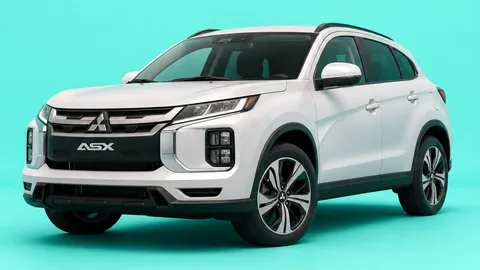
For a used Outlander, Triton, or ASX, 10 to 20% is the common range (around $3,000 to $6,000 on a $30,000 Outlander). Mitsubishi Motors Finance subvention deals on new Tritons and Outlanders often require 20 to 30% to unlock the promoted rate. A larger deposit usually drops the offered rate by 0.5 to 1.5 percentage points.
Yes. Under the 2024 RUC rules, plug-in hybrids including the Outlander PHEV pay RUC at $38 per 1,000 km on all distance travelled. For a household doing 10,000 km a year that's roughly $380 on top of electricity and petrol costs. Factoring this into the PHEV versus petrol-Outlander comparison is what usually happens; it reduces but doesn't eliminate the PHEV running-cost advantage for typical commute distances.
Yes, if the Triton is primarily used for business purposes. Under a chattel mortgage you claim the full GST component in the next GST return (around $6,500 on a $50,000 Triton) and deduct finance interest against business income across the term. Depreciation runs at IRD rates. A finance lease works similarly with GST claimable on each monthly payment. Confirm the treatment with your accountant before signing.
Usually yes, but lenders become more selective. Most NZ secured-car-loan products cap vehicle age at 12 to 15 years at loan-end date, so a 10-year-old Outlander clears a 3-year term but often not a 5-year one. Rates typically sit 1 to 2 percentage points above a 3-year-old equivalent, and loan-to-value tightens. On an older PHEV, a battery-health report is usually required before approval.
Read the entire offer, not just the rate. EOFY and plate-change promotions on new Outlander or Triton usually require a 20 to 30% deposit, a 2 or 3 year term, and the drive-away price is typically held at RRP. The maths runs both ways. a 4.9% offer at RRP may be cheaper or dearer than an 8% open-market rate on the same Outlander negotiated $3,000 off. Most buyers compare total cost.
If market value exceeds the outstanding loan balance (positive equity), the dealer pays out the old loan and the surplus comes off your next car. If it's below (negative equity), the shortfall rolls into your new loan. PHEVs are more prone to mid-term negative equity than conventional SUVs because battery-health perception drives residuals; a 4 to 5 year term reduces but doesn't eliminate the risk.
Most NZ lenders allow it but will scrutinise affordability more closely. If you owe $7,000 on your existing car and are buying a $35,000 Outlander, the new loan becomes $42,000 before trade-in and deposit. The downside is you start the Outlander loan underwater, which delays building equity. Selling the old car privately to clear the debt first is often a cleaner outcome.
For a $40,000 used Outlander PHEV on a 5-year loan at around 7% (green-loan pricing), finance costs total approximately $47,500 (principal and interest). Add insurance ($7,500 to $9,500), RUC at 12,000 km a year ($4,560), home electricity ($1,500 to $2,200), servicing and tyres ($6,000 to $8,000) for a rough all-in of $67,000 to $72,000 over 5 years, or roughly $270 a week. The petrol Outlander typically lands $4,000 to $6,000 higher all-in at the same annual distance.