Skip to content
Carfinance.org.nz
Porsche model

Porsche Cayenne finance calculator

Porsche NZ's volume SUV, cross-shopped against BMW X5, Audi Q7, and Range Rover Sport.

Last reviewed: 24 April 2026

The Cayenne is Porsche's highest-volume SUV in New Zealand and the model that carries the largest share of Porsche finance applications on NZ lender books outside the 911. NZ supply is split between NZ-new stock through Giltrap Porsche and Archibald & Shorter on current E3 and E3 facelift configurations, a substantial ex-lease and Porsche Approved Pre-Owned pool across E2 and E3 generations, and a thin but present UK-import and Japanese-import flow on older E1 and E2 stock. The Cayenne shares MLB-Evo platform underpinnings with Audi Q7 and VW Touareg, so lenders have useful cross-reference residual data despite the Porsche nameplate running at narrower NZ volume than its German stablemates. A meaningful share of Cayenne finance in NZ runs through business structures or specialist asset finance rather than mainstream consumer loans, reflecting the price point and the buyer profile.

Your estimated repayment

Weekly

Disclaimer

$434/week

$868 /fortnight $1,881 /month
$95,000
$0
7.00% p.a.
5 years

We are not a finance company. Indicative only. Not a quote or offer of credit. Actual rates, fees, and repayments depend on your circumstances and the lender's decision.

Year by year

Cayenne prices and repayments, by era.

Typical NZ market prices and the weekly cost of financing each. All figures assume 7% over 5 years with no deposit. Indicative only; open the full calculator to pre-set your own rate and term.

2003-2010 E1 first-generation used

$22,000

Early 955 and 957 Cayenne S, Turbo, and diesel variants. Air-suspension and V8 engine-seal history is the dominant inspection item. Typical 140,000 to 230,000 km. Mainstream secured-car lenders commonly decline past a 12 to 15 year loan-end cap; specialist asset finance (UDC, Finance Guys, Classic Vehicle Finance NZ) typically fills the gap.

Weekly

$100.53

Monthly

$435.63

2011-2018 E2 second-generation used

$55,000

E2 Cayenne S, GTS, Turbo, and diesel variants including the 2015 facelift. V6 timing-cover and coolant-pipe history are the dominant inspection items. Typical 80,000 to 160,000 km. Mainstream and specialist asset-finance lenders both reach this bracket with a Porsche-specialist pre-purchase inspection.

Weekly

$251.32

Monthly

$1,089.07

2019-2023 E3 pre-facelift used

$115,000

Current-generation E3 Cayenne and Cayenne Coupe, including S, GTS, Turbo, and E-Hybrid variants. 48V mild-hybrid system state of health and PDK fluid service are the dominant inspection items. Warranty still runs into a 4-year loan on earlier E3 stock through the Porsche Approved Pre-Owned programme.

Weekly

$525.49

Monthly

$2,277.14

2024+ E3 facelift new and near-new

$195,000

Facelifted E3 Cayenne, Cayenne Coupe, and Cayenne E-Hybrid lineup with upgraded HMI and driver-assist suite. Turbo GT Coupe sits at the top of the combustion range. A pure-electric Cayenne EV is expected to join from 2026 sitting alongside the facelifted combustion range.

Weekly

$891.05

Monthly

$3,861.23

Who this suits

Who buys a Porsche Cayenne?

  • Auckland Parnell, Remuera, and Herne Bay executive households upgrading from a Macan to the larger Cayenne Coupe S or GTS for rear-seat space and cabin execution at equivalent trim.
  • Queenstown and Wanaka ski-access households running the Cayenne E-Hybrid or Turbo S E-Hybrid PHEV as the primary family SUV with tow capacity and electric-only daily range on regular Coronet Peak and Cardrona commutes.
  • Professional-services partners and small-business owners running the Cayenne through a chattel mortgage against the business, where the Porsche nameplate is a visible business asset and the GST, interest, and depreciation treatment outperforms consumer secured-car finance.
  • Christchurch Merivale and Wellington Khandallah enthusiast buyers moving into the Cayenne Turbo GT or a used Cayenne GTS as a second car alongside an existing daily driver, often with agreed-value cover through a specialist motor insurer.

Four real scenarios

What Cayenne finance actually looks like.

Representative NZ buyers and the numbers behind their deals. Weekly and rate figures are indicative and shown for comparison. Your own rate is confirmed by the lender after application.

Auckland Parnell executive upgrading from a Macan

2024 E3 facelift Cayenne Coupe S, 6,000 km ex-demo

$218,000 · $58,000 deposit, 4 years at 7.85% (indicative)

A Parnell executive couple in their late forties stepping out of a 2021 Macan S at Giltrap Porsche on Great North Road, moving into the larger E3 facelift Cayenne Coupe S for the extra rear-seat space around their two teenage children and for the step up in cabin execution at equivalent trim. A 27% cash deposit from the Macan trade plus a term-deposit maturity brought the financed balance to $160,000 and moved the indicative rate into the tighter band for the applicant profile. A four-year consumer term was chosen to finish inside the Porsche NZ factory warranty horizon. On indicative NZ used-market trends, comparable 2024 E3 facelift Cayenne Coupe S stock is expected to trade in the mid-$150k to mid-$170k range through 2030 Auckland dealer channels.

$900 per week

Queenstown ski-access E-Hybrid household

2024 E3 facelift Cayenne E-Hybrid Platinum Edition PHEV, NZ-new, 10,000 km

$205,000 · $35,000 deposit, 5 years at 7.95% (indicative)

A Frankton Queenstown household running the Cayenne E-Hybrid as the primary family SUV across a winter ski-access commute to Coronet Peak and Cardrona plus regular summer tows of a single-horse float through Cromwell and Wanaka. The plug-in variant was preferred over the self-charging petrol Cayenne for the roughly 70 km electric-only range on daily school runs and the household solar-panel charging set-up, with the 3,500 kg braked-tow capacity matching the household requirement. A five-year broker-arranged consumer loan sat in line with a Porsche Financial Services quote on the day, and the lighter PHEV RUC rate on the electric share of kilometres travelled was factored into the running-cost budget alongside comprehensive insurance at an agreed value. Service continuity at the Queenstown Porsche service agent was confirmed before settlement.

$810 per week

Wellington Khandallah ex-lease E2 facelift second car

2017 E2 facelift Cayenne S 2.9 V6, NZ-new ex-lease, 88,000 km

$58,000 · $12,000 deposit, 5 years at 9.1% (indicative)

A Khandallah dual-income professional couple in their early fifties picking up an ex-lease E2 facelift Cayenne S at a Wellington independent Porsche specialist on Taranaki Street, running alongside an existing 2022 Audi A4 allroad as the primary daily driver. The E2 facelift Cayenne was chosen as a second car for weekend trips to Martinborough and the Wairarapa and for the occasional tow of a small boat, where the permanent all-wheel drive and the V6 torque read as more capable than the A4 allroad for the duty. A specialist asset-finance lender (UDC, Finance Guys, or Classic Vehicle Finance NZ are commonly used for older E2 Porsche applications) sat a touch above mainstream secured-car pricing because the vehicle age at loan-end date sits near the 12 to 15 year cap that mainstream lenders typically apply. A pre-purchase inspection at the Porsche specialist covering V6 timing-cover history and PASM air-suspension condition was completed before settlement.

$222 per week

Christchurch Merivale Turbo GT enthusiast

2023 E3 facelift Cayenne Turbo GT Coupe, NZ-new, 8,000 km

$345,000 · $120,000 deposit, 3 years at 7.75% (indicative)

A Merivale Christchurch enthusiast in their mid-fifties, running a small family investment company, buying a new E3 facelift Cayenne Turbo GT Coupe through a bespoke broker structure that priced the purchase against a specialist private-banking facility as well as Porsche Financial Services. A 35% cash deposit from a managed-fund drawdown kept the financed balance at $225,000 and supported the tighter indicative rate on the applicant profile. Agreed-value comprehensive insurance through a specialist motor insurer (Star Insure or Vero Specialist Vehicles are commonly used on Turbo GT applications) was a lender condition at the full $345,000 purchase price, and the PCCB ceramic brake package and carbon-fibre Weissach option paperwork were listed as material on the agreed-value schedule. A three-year consumer term was chosen to align with the next natural replacement cycle at term end.

$1,820 per week

The real number

Five-year cost of owning a Cayenne.

Five years of real outlay on a representative NZ-new 2024 E3 facelift Cayenne S, financed at 7% over 5 years with no deposit, driven 15,000 km a year from an Auckland base. The weekly finance repayment is the headline, but 98-octane premium fuel, Auckland premium-SUV insurance at an agreed value at the full $195,000 purchase price, Porsche NZ dealer scheduled servicing, and 21-inch N-rated staggered tyre replacement materially expand the five-year number well beyond the purchase price. Cabin execution and drivetrain character are the widely cited reasons households cross-shop the Cayenne against a BMW X5 or Range Rover Sport; running-cost separation is where the premium-premium badge actually lands.

  • Purchase price

    $195,000

    NZ-new 2024 E3 facelift Cayenne S at current Porsche NZ list through the Giltrap Porsche and Archibald & Shorter dealer network. Negotiated drive-away pricing on in-stock cars typically sits a touch lower when Porsche NZ runs end-of-quarter stock clearance on current S specification, and optioned cars commonly land $15,000 to $45,000 above list before discount.

  • Finance interest

    $36,600

    Indicative 7% over 5 years, no deposit, amortising. Actual rate is set by the lender after credit assessment. Porsche Financial Services subvented offers on new Cayenne stock through the Giltrap or Archibald dealer network occasionally price below this benchmark around quarter end on specific variants, and specialist asset-finance lenders (UDC, Finance Guys) commonly match or beat mainstream broker pricing on business-use applications.

  • Premium petrol (98 octane)

    $26,100

    15,000 km/year at 11.8 L/100 km real-world on the 2.9 V6 twin-turbo S, averaged $2.95/L for 98-octane across the 5 years. Porsche NZ dealer guidance points to 98 minimum for warranty intent on the 2.9 V6, and Auckland urban duty typically skews the average up slightly against a highway-heavy profile.

  • Comprehensive insurance

    $14,200

    Auckland band for a Cayenne S with off-street storage and an agreed value at purchase price: around $2,950 at year 1, trending down as agreed value drops. Cover is a standard loan condition while the Cayenne is on finance, and a Turbo GT variant at the same kilometres commonly sits $3,500 to $5,800 above this band before driver-history adjustments.

  • Scheduled servicing

    $6,500

    Porsche NZ dealer scheduled servicing at 15,000 km or 12-month intervals across five intervals, averaging $950 to $1,400 per visit, plus a brake-service cycle and a coolant and PDK transmission fluid change inside the five-year window on Auckland urban duty. PCCB ceramic brakes on a Turbo or Turbo GT variant commonly sit outside this scenario and carry materially higher replacement cost once the ceramic discs reach wear limits.

  • Tyres

    $5,000

    One full set replacement around year 3 at roughly $3,800 on the 285/40 R21 front and 315/35 R21 rear N-rated staggered S fitment, plus rotations and a partial refresh. N-rated tyres (Porsche-approved compound specification) typically carry a 15 to 25% price premium over non-N-rated equivalents and are commonly retained for warranty intent on the PSM traction-control calibration.

  • Rego and WOF

    $1,000

    Five annual registrations plus annual WOFs from year three. No RUC applies on the petrol V6 Cayenne S; the E-Hybrid and Turbo S E-Hybrid PHEV variants attract the lighter PHEV RUC rate on the electric share of kilometres travelled, and the upcoming pure-electric Cayenne EV expected from 2026 will attract the full $76 per 1,000 km RUC rate.

Total five-year cash outlay

$284,400

Assumes: 2024 E3 facelift Cayenne S at $195,000 new, 15,000 km/year across 75,000 km total, real-world petrol consumption 11.8 L/100 km on the 2.9 V6 twin-turbo on 98 premium at $2.95/L, Auckland insurance band, Porsche NZ dealer scheduled servicing, 21-inch N-rated staggered tyre fitment. Indicative only.

What it's worth later

Cayenne depreciation and resale.

Cayenne residuals on NZ-new E3 stock are widely regarded as strong by premium-SUV standards, on indicative NZ used-market trends observed across TradeMe and AutoTrader listing patterns for E3 S, GTS, and Coupe configurations. Residuals are firmer than on the equivalent Panamera sedan because premium-SUV demand materially outweighs equivalent-sedan demand across the NZ used market, and the Porsche nameplate carries a narrower residual range than its VW-group MLB-Evo siblings (Audi Q7, VW Touareg) at equivalent age. The first material step down typically appears at year three, where the ex-lease and ex-company-car pool releases into the used channel at once and pulls achievable retail back a few percent. Turbo and Turbo GT variants carry a steeper curve in absolute dollars (because the starting price is higher) but a similar percentage retention curve, with the PCCB ceramic brake package and Weissach option influencing a narrow slice of the post-warranty resale conversation.

Based on a 2024 E3 facelift Cayenne S purchased new at $195,000. Indicative NZ used-market 2026 pricing.

Year 1

78%

$152,100

First-year drop has historically tracked slightly softer than the equivalent Audi Q7 and Range Rover Sport in the same window on NZ data, partly because Porsche NZ new-stock supply is thinner and tends to hold drive-away pricing firmer through the first twelve months. GTS and Coupe optioned cars typically hold stronger than base Cayenne trim in our experience.

Year 3

58%

$113,100

Ex-lease and ex-corporate E3 stock typically lands on the NZ used market in volume around this age, which historically pulls achievable retail back a few percent against earlier years. Widely observed as the softest point on the Cayenne curve, and the common bracket at which executive households trade before the Porsche NZ factory warranty lapses, often into the next-generation Cayenne or the then-current Macan EV.

Year 5

46%

$89,700

Common exit point for five-year consumer-loan buyers. Factory warranty lapses around here for NZ-new stock and Porsche Approved Pre-Owned certification through a Giltrap or Archibald dealer becomes a meaningful paperwork item on the used market. Service-book continuity at a Porsche NZ dealer is widely regarded as the single strongest documentation signal at this age.

Year 7

34%

$66,300

Used-market supply expands as early E3 stock ages into private-sale territory and specialist asset finance (UDC, Finance Guys, Classic Vehicle Finance NZ) picks up a larger share of applications. Loan approvals past this point typically depend on kilometres, Porsche NZ dealer service-book continuity, and evidence of the PDK transmission service, 48V mild-hybrid state of health, and PASM adaptive-damper history being current.

Why this matters for finance

On indicative NZ used-market trends, a zero-deposit five-year loan on a new Cayenne historically sees the amortisation curve catch the value-loss curve somewhere between month 24 and 32, which is later than the equivalent Macan at the same structure and reflects the steeper first-year drop on the Cayenne against its smaller Porsche stablemate. Households planning to hold past the five-year horizon commonly favour a straight amortising consumer loan on a Cayenne S; Porsche Financial Services balloon structures work cleanly on three or four-year terms against the E3 curve where a traditional amortising loan on the same term often looks expensive on the weekly line. On a Turbo or Turbo GT variant, the steeper absolute-dollar depreciation curve typically extends the negative-equity window and shifts many buyers toward a larger deposit (30 to 40%) or a shorter three-year term over the five-year default.

Financing notes

What financing a Cayenne usually looks like.

At $150,000 across a 5-year term at an indicative 8.0% premium secured-car rate, the weekly lands around $691, or $3,005 a month. Shortening to 4 years pushes the weekly to roughly $823 but cuts total interest by roughly a third. For Cayenne buyers with genuine business use (professional-services partners, small-business owners, trust-structured buyers), a chattel mortgage through a specialist asset-finance lender typically outperforms consumer secured-car finance once GST, interest deduction, and diminishing-value depreciation are factored in, subject to the accountant's confirmation on the specific business position. Porsche Financial Services through the Giltrap Porsche and Archibald & Shorter dealer network runs occasional subvented offers on new E3 stock around quarter end, and specialist asset-finance lenders (UDC, Finance Guys, Classic Vehicle Finance NZ) commonly fill the gap on older E1 and E2 applications past the mainstream 12 to 15 year age cap.

Before finance settles

Used Cayenne buying checklist.

The used Cayenne market in New Zealand is fed by three distinct streams: the first-generation 955 and 957 E1 NZ-new stock (2003 to 2010, increasingly rare and thin on lender residual data), the E2 NZ-new and ex-lease stock (2011 to 2018, including the 2015 facelift), and the current E3 NZ-new stock (2019 onward, facelifted 2024). On top of that sits a thinner but present Japanese-market and UK-market used-import pool, wider than the 911 or Macan import channels on older E2 stock. Each generation carries a distinct pre-purchase profile, and the E1 air-suspension and V8 engine-seal history, the E2 V6 timing-cover pattern, and the E3 48V mild-hybrid state of health are the three items that most consistently separate a well-documented used Cayenne from a costly one. A careful inspection at a Porsche NZ dealer or a reputable Porsche specialist before finance settles is widely regarded as money well spent on any Cayenne, so the lender is pricing the actual vehicle and not a concealed mechanical or paperwork issue. Most lenders will expect comprehensive insurance and a clear title; the used-car loan page covers the general process.

01

E1 first-generation (pre-2010) air suspension and V8 engine-seal history

Early 955 and 957 E1 Cayenne Turbo and Cayenne S examples developed a reputation for air-suspension compressor wear, rear-strut leaks, and coolant-pipe plastic failure on the 4.5 and 4.8 V8 variants. Receipts showing a recent air-compressor replacement, rear-strut service, and retrofit aluminium coolant pipes are commonly requested on any E1 Cayenne over fifteen years old. A Porsche specialist inspection is widely regarded as essential on E1 stock, because an unaddressed worst-case engine or air-suspension failure is typically a five-figure job that sits well outside the lender's asset assessment, and mainstream secured-car lenders commonly decline E1 applications past 15 years of vehicle age at loan-end date.

02

E2 second-generation (2011-2018) V6 timing-cover and cooling-pipe history

E2 Cayenne V6 petrol and V6 diesel examples carry a documented timing-cover oil-seal pattern, with receipts showing a recent timing-cover reseal commonly requested on any E2 V6 Cayenne over seven years old or past 120,000 km. The coolant-pipe plastic failure pattern documented on E1 is also present on some early E2 applications before a retrofit. A pre-purchase inspection at a Porsche NZ dealer or a VW-Audi group specialist typically surfaces both items alongside the used-car check, and a confirmed timing-cover reseal on the service book is widely regarded as a meaningful plus on E2 facelift stock at inspection.

03

E3 current-generation (2019+) 48V mild-hybrid system state of health

The current-generation E3 Cayenne ships a 48V mild-hybrid system across most variants (excluding the plug-in E-Hybrid and Turbo S E-Hybrid, which carry a separate high-voltage traction battery). A Porsche NZ dealer scan tool reads the 48V battery state of health in about thirty minutes, typically costing under $180. Paperwork of a recent state-of-health check is commonly regarded as a plus on any E3 at inspection, because an unaddressed 48V module or battery failure outside warranty is typically a four-figure job at a Porsche NZ dealer. On E-Hybrid and Turbo S E-Hybrid examples, the high-voltage traction-battery state of health is a separate check and carries its own Porsche NZ extended battery-warranty paperwork transferable to the next owner.

04

PDK transmission service interval and fluid change history

The Cayenne ships the PDK dual-clutch transmission on S, GTS, Turbo, and Turbo GT variants, with the 8-speed Tiptronic torque-converter automatic fitted on base Cayenne and some E-Hybrid applications. PDK fluid and clutch-pack service intervals typically fall at 100,000 km on Porsche NZ service schedules. Receipts showing the PDK fluid change are commonly requested on any Cayenne over 100,000 km, because an unserviced PDK can develop clutch-pack slip under load and characteristic shift flares between gears. A Porsche NZ dealer inspection covers the PDK fluid and clutch-pack wear alongside the used-car check, and a confirmed PDK service on the service book is widely regarded as a meaningful plus on post-100,000 km stock.

05

PCCB ceramic brake wear on Turbo and Turbo GT variants

The Cayenne Turbo and Turbo GT variants commonly ship with the Porsche Ceramic Composite Brake (PCCB) option, which carries a fundamentally different wear pattern and replacement-cost profile to the standard iron-disc brake package. PCCB discs are wear-limited rather than distance-limited and carry a replacement cost typically in the $18,000 to $32,000 range per axle at a Porsche NZ dealer. A pre-purchase inspection at a Porsche specialist commonly measures PCCB disc thickness and flags remaining service life, because a PCCB set near the wear limit materially affects the used-car price negotiation and the insurance agreed-value schedule. A Turbo GT bought for track-day use is typically flagged to the insurer separately.

06

Porsche NZ franchised-dealer service continuity and Porsche Approved certification

A stamped Porsche NZ dealer service book with scheduled service entries is widely observed to add several thousand dollars to the achievable resale on a four to seven-year-old Cayenne, based on NZ used-market listing patterns. A full Porsche NZ franchised-dealer history is commonly regarded as the single strongest documentation signal on an otherwise unremarkable E3 Cayenne S, and Porsche Approved Pre-Owned certification through a Giltrap or Archibald dealer is often the difference between a $5,000 to $15,000 swing on achievable private-sale price. Porsche Approved certification adds a factory-backed warranty extension on the remaining term, which lenders treat as lower residual risk at the same kilometres.

07

PASM adaptive suspension and PDLS+ headlight calibration status

The Cayenne ships PASM (Porsche Active Suspension Management) adaptive dampers on most specifications and PDLS+ (Porsche Dynamic Light System Plus) matrix-LED headlights on higher specs. PASM damper-leak indications and PDLS+ camera-and-radar calibration after windscreen or front-panel work are commonly checked at inspection, because an uncalibrated PDLS+ system can silently drop matrix-beam pattern and reduce PSM stability-control intervention at the edges. Receipts confirming post-repair PASM or PDLS+ calibration are commonly requested at inspection on any Cayenne with a disclosed panel or glass repair in the vehicle history, and a Porsche NZ dealer diagnostic pull typically surfaces any stored fault codes.

Off-dealer

Financing a Cayenne from a private seller.

A meaningful share of used Cayenne transactions in New Zealand sit outside the franchised-dealer channel, especially on older E1 and E2 examples and on second-owner E3 sales traded between households and small independent lots. Financing a private-sale Cayenne is entirely normal through a broker or a specialist asset-finance lender. The process is simply a couple of extra steps because there is no dealer sitting between the borrower and the lender, and on a premium-premium European SUV the documentation check matters more than on a mainstream equivalent.

  1. 1

    An indicative broker or specialist asset-finance pre-approval before negotiating with the seller is a common first step on any private-sale Cayenne. Pre-approval in hand typically signals to the seller that the buyer is funded, which often strengthens the negotiating position on a privately listed premium-premium SUV where private asking prices tend to start optimistic and Porsche-specific buyer pools are narrower than mainstream equivalents.

  2. 2

    A Carjam report on the VIN is the standard next step. Any secured interest listed on the PPSR must be cleared by the seller before or at settlement; an uncleared interest means the lender who financed the last owner still has claim over the vehicle. UK-market and Japanese-market E1 and E2 imports also commonly show prior odometer readings against the current reading on Carjam, which is the single most useful fraud check on the segment.

  3. 3

    A pre-purchase inspection at a Porsche NZ franchised dealer, or at a reputable Porsche specialist (AutoEx, Continental Cars service, or an independent Porsche specialist with Porsche-trained technicians), is widely regarded as essential on a used Cayenne because the Porsche-specific items (E1 air suspension, E2 V6 timing cover, E3 48V mild-hybrid state of health, PDK fluid, PCCB wear, PASM damper health) are surfaced more reliably by a Porsche-trained technician. A generic AA or VTNZ inspection typically misses items a Porsche-specialist inspection flags, and the $400 to $750 cost of the Porsche-specialist inspection is widely regarded as money well spent before the loan draws down.

  4. 4

    The broker or specialist asset-finance lender typically needs the purchase details (VIN, agreed price, odometer, seller bank details) to arrange a direct payment to the seller at settlement, rather than to the buyer. Direct-to-seller disbursement is the widely preferred pattern on private sales and protects both sides from mid-transaction disputes.

  5. 5

    Vehicle transfer through NZTA online happens on the same day as settlement, and the lender typically files its own security interest on the PPSR at that point. The buyer drives away with clear title and a single registered security interest in the lender's name.

Usually a loan condition

Cayenne insurance, by region.

Comprehensive insurance is almost always a loan condition while the Cayenne is on finance, because the vehicle is the lender's security, and on a premium-premium SUV with an agreed value typically well above $100,000 the policy premium materially affects the real weekly cost of ownership. Cayenne Turbo and Turbo GT variants commonly carry agreed-value cover through a specialist motor insurer (Star Insure, Vero Specialist Vehicles, or a classic-vehicle underwriter) rather than a standard market-value policy, because the agreed-value schedule captures the PCCB ceramic brake package, the Weissach option where fitted, and any further Porsche Exclusive Manufaktur bespoke detailing. The bands below are indicative NZ market numbers at 2026 for a Cayenne with a clean driver record; Turbo and Turbo GT variants carry a material performance loading noted inline, and actual quotes are widely verified before being used as a budgeting figure.

Auckland

$2,750 to $3,900

Cayenne S, GTS, or Coupe S, off-street parking

Auckland shows the higher end of premium-premium SUV theft claim frequency on NZ insurer data, with a particular pattern of keyless-entry attacks on E3 examples through 2022 to 2024. AMI, State, Tower, and the premium-brand insurers (Vero, NZI, Star Insure) typically price a premium for kerbside parking in inner-suburb postcodes such as Parnell, Remuera, and Herne Bay; garaged or off-street storage is widely observed to drop premiums materially. A Turbo variant commonly sits $2,200 to $3,800 above this band, and a Turbo GT on an agreed-value policy with a specialist insurer commonly sits $3,500 to $6,000 above this band before driver-history adjustments.

Wellington

$2,100 to $2,950

Cayenne S or E-Hybrid, street or off-street parking

Lower theft rates than Auckland, but weather-driven damage and flooding claims through the Wellington hills are priced in. Multi-vehicle and multi-policy discounts typically bring the final figure toward the lower end of the band on a Cayenne running alongside a second household car on the same policy. A Turbo variant commonly sits $1,800 to $3,200 above this band, with agreed-value cover through a specialist motor insurer commonly used above the Turbo S price point.

Canterbury and Otago

$1,750 to $2,550

Cayenne S, GTS, or Turbo GT, rural or off-street

Lower theft risk and typically better parking outcomes across Canterbury and Otago. Rural-use ticks and paid-up claim-free driver discounts often drop the final figure further on a Cayenne used as the primary family vehicle on Merivale or Wanaka duty. Turbo GT loading on this band typically sits $3,000 to $5,500 above the non-Turbo figure, and agreed-value cover through Star Insure or Vero Specialist Vehicles is widely regarded as the sensible pairing on any Turbo GT application to capture the PCCB, Weissach, and bespoke option value.

Get actual quotes before settling. Insurance cost varies with credit profile, kilometres, and excess choices more than these bands can show.

Compare Porsche car insurance

The direct alternatives

Cayenne vs the competition.

The Porsche Cayenne, BMW X5, Mercedes-Benz GLE, Audi Q7, and Range Rover Sport sit within a defined premium-premium large SUV bracket at 2026 NZ pricing. All five finance on broadly similar indicative rates at the same applicant profile. The meaningful differences show up in resale curve depth, drivetrain mix (petrol, diesel, mild-hybrid, PHEV, and increasingly EV), dealer-network density, captive-finance programme design, and known issues rather than in the weekly repayment. Spec-for-spec, any of these is a defensible NZ premium-premium SUV finance decision.

Competitor

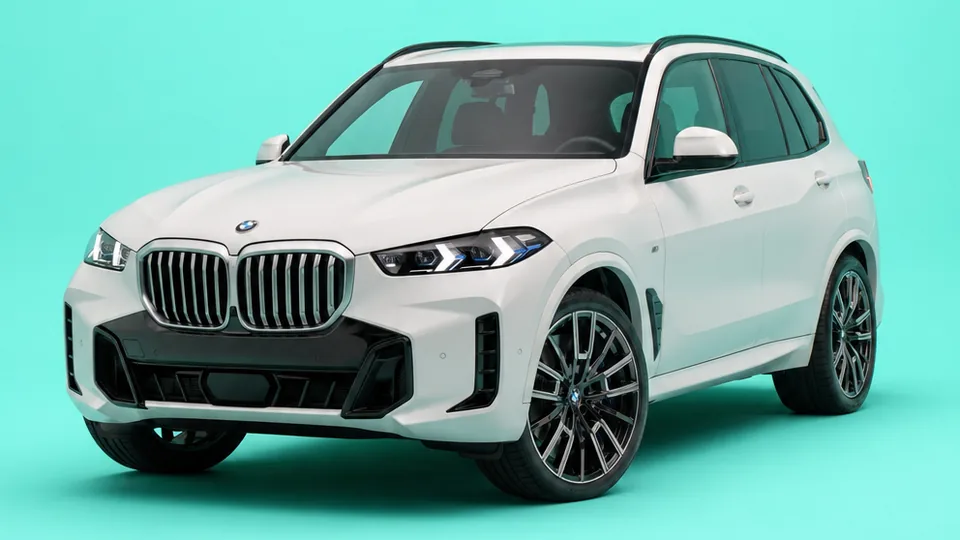
BMW X5

$135k-$220k new, $48k-$150k used

Resale
Current-gen G05 X5 retains around 55 to 62% after 3 years on NZ-new stock, historically a step softer than the Cayenne in the same window on equivalent trim. Ex-lease G05 stock releases around year three in volume, which is widely observed as the softest point on the X5 curve and parallels the E3 Cayenne ex-lease pattern.
Known issues
B58 inline-six petrol on xDrive40i is widely regarded as well-sorted; the B57 straight-six diesel on xDrive30d shares segment-wide DPF exposure. X5 xDrive50e PHEV battery-degradation pattern is still settling on NZ used-market data. Permanent xDrive differs in character from the on-demand AWD engagement on the Cayenne PTM (Porsche Traction Management) system.
Finance note
BMW Financial Services runs periodic BMW Select balloon-structure promotions on new X5 stock, broadly parallel to Porsche Financial Services balloon structures on Cayenne; outside those windows independent broker pricing typically matches or beats both captives on used stock, and specialist asset finance is commonly used across both on older examples past the mainstream 15-year age cap.

X5 is widely considered the more affordable entry point to the premium-premium large SUV bracket at equivalent trim and the broader dealer network across Auckland, Wellington, and Christchurch; Cayenne is widely considered the sharper-handling premium-premium SUV with the stronger three-year residual and the deeper Turbo and Turbo GT performance ladder. Buyers who prioritise purchase-price sensitivity and dealer-network breadth often favour X5; buyers who prioritise residual depth and drive character typically favour Cayenne.

Competitor

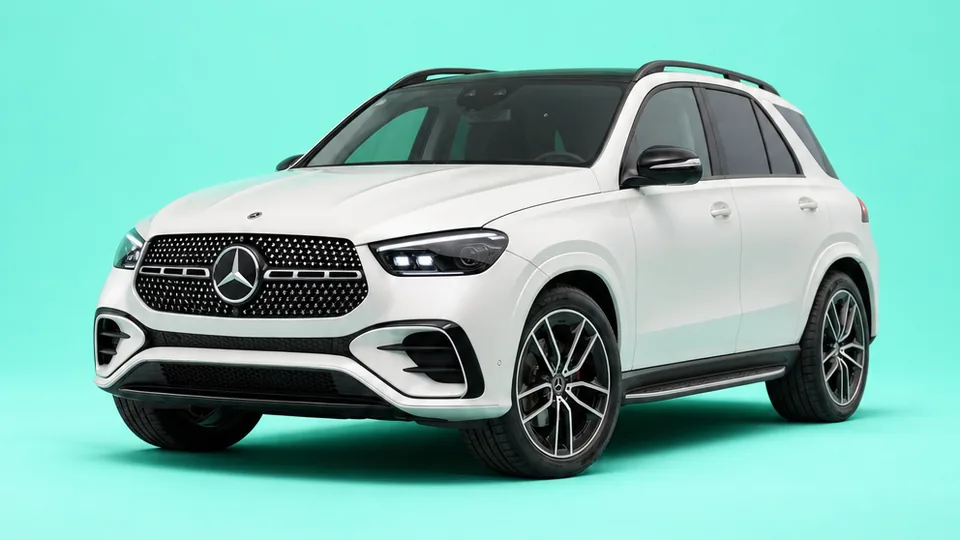
Mercedes-Benz GLE

$140k-$235k new, $52k-$160k used

Resale
Current-gen V167 GLE retains around 52 to 60% after 3 years on NZ-new stock, historically a step softer than the Cayenne in the same window. Three-year Mercedes-Benz Agility and corporate-return stock concurrently releases around year three, which typically softens advertised prices for a short window and parallels the Cayenne ex-lease pattern.
Known issues
OM654 four-cylinder diesel on GLE 300d is widely regarded as well-sorted; OM656 straight-six diesel on GLE 450d shares segment-wide DPF and AdBlue exposure. AMG GLE 63 S E Performance PHEV battery-degradation pattern is still settling on NZ used-market data. AIRMATIC air suspension on higher specs is a documented service-cost item differing from the Cayenne PASM adaptive-damper set-up.
Finance note
Mercedes-Benz Financial Services runs Agility balloon-structure promotions on new GLE stock around quarter end, broadly parallel to Porsche Financial Services balloon structures on Cayenne; outside those windows broker pricing typically matches or beats both captives on used stock, and specialist asset-finance lenders are commonly used across both on older AMG variants past mainstream age caps.

GLE is widely considered the more settled long-distance tourer on the standard AIRMATIC air-suspension option with the broadest AMG performance ladder into AMG GLE 63 territory; Cayenne is widely considered the sharper-handling premium-premium SUV with the stronger three-year residual and the deeper Turbo GT track-focused variant at the top of the range. Buyers who prioritise ride comfort and AMG heritage often favour GLE; buyers who prioritise residual depth and drive character typically favour Cayenne.

Competitor

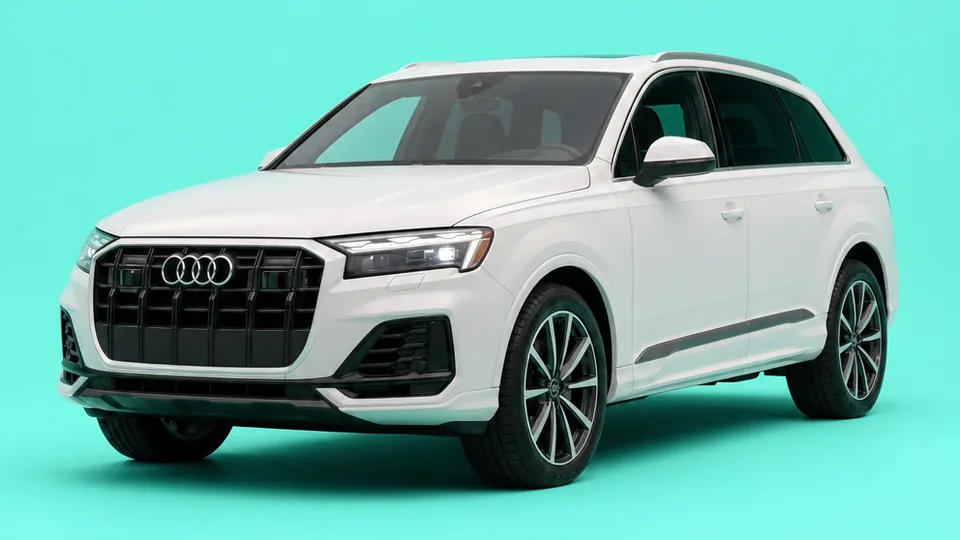
Audi Q7

$135k-$205k new, $42k-$135k used

Resale
Current-gen 4M facelift Q7 retains around 50 to 58% after 3 years on NZ-new stock, historically softer than the Cayenne in the same window. Ex-lease 4M Q7 stock releases around year three in volume, which is widely observed as the softest point on the Q7 curve and tracks a few percent below the concurrent Cayenne ex-lease softening.
Known issues
EA897 3.0 V6 TDI on the 50 TDI shares segment-wide DPF and AdBlue exposure; the 55 TFSI petrol V6 (shared in tune with the Cayenne 3.0 V6) is widely regarded as reliable. Q7 55 TFSI e PHEV battery-degradation pattern is still settling on NZ used-market data. Permanent Torsen quattro centre differential on Q7 differs in character from the Cayenne PTM with its electronically controlled hang-on rear clutch.
Finance note
Audi Financial Services runs Audi GFV (Guaranteed Future Value) balloon-structure promotions on new Q7 stock around quarter end, broadly parallel to Porsche Financial Services balloon structures on Cayenne; outside those windows broker pricing typically matches or beats both captives on used stock. The MLB-Evo platform sharing between Q7 and Cayenne means specialist asset finance commonly reaches both at similar ratings on older applications.

Q7 is widely considered the stronger seven-seat proposition with the broadest quattro heritage at equivalent trim and the sharper end-of-quarter drive-away pricing through the Audi NZ dealer network; Cayenne is widely considered the sharper-handling premium-premium SUV with the stronger three-year residual on the shared MLB-Evo platform and the Porsche nameplate premium. Buyers who prioritise seven-seat flexibility and purchase-price sensitivity often favour Q7; buyers who prioritise residual depth and drive character typically favour Cayenne.

Competitor

Range Rover Sport

$150k-$260k new, $45k-$170k used

Resale
Current L461-generation Range Rover Sport retains around 52 to 60% after 3 years on NZ-new stock, historically softer than the Cayenne in the same window and with a wider spread between best-kept and high-km examples. Previous L494 Range Rover Sport curve tracked a few percent softer on NZ data against the concurrent Cayenne, reflecting the wider condition range on the used market.
Known issues
Ingenium 3.0 MHEV inline-six petrol and diesel variants across the current L461 range are still settling on NZ reliability data. Range Rover Sport air-suspension compressor and EAS (Electronic Air Suspension) pattern is a documented service-cost item on older L494 and early L461 stock, differing from the Cayenne PASM and air-suspension set-up. Terrain Response and off-road programme count is broader on Range Rover Sport than on Cayenne.
Finance note
Jaguar Land Rover Financial Services runs periodic balloon-structure promotions on new Range Rover Sport stock, broadly parallel to Porsche Financial Services balloon structures on Cayenne; outside those windows broker pricing typically matches or beats both captives on used stock. Specialist asset-finance lenders (UDC, Finance Guys, Classic Vehicle Finance NZ) are commonly used on older L494 applications past mainstream age caps, similar to the E2 Cayenne pattern.

Range Rover Sport is widely considered the stronger off-road credentials with the broadest Terrain Response programme count and the more overtly luxurious cabin on HSE and Autobiography trims; Cayenne is widely considered the sharper-handling premium-premium SUV with the stronger three-year residual and a tighter service-cost spread across the ownership period. Buyers who prioritise off-road capability and cabin luxury often favour Range Rover Sport; buyers who prioritise residual depth and drive character typically favour Cayenne.

Worked example

2022 Cayenne S, Auckland Parnell executive upgrading from a Macan

Buyer profile

Auckland Parnell dual-income executive household in their late forties, two teenage children approaching licence age, clean credit file, both PAYE employees at Auckland CBD professional-services firms. Trading up from a 2019 Macan S (95B first-generation facelift) at 72,000 km because the children had outgrown the Macan rear bench on weekend trips to the Coromandel and Waiheke, and the household wanted to stay inside the Porsche NZ service ecosystem on the next replacement rather than cross-shop out of the Giltrap Porsche relationship.

Scenario

Bought a 2022 E3 pre-facelift Cayenne S at $135,000 from Giltrap Porsche on Great North Road, 32,000 km on the clock, still inside the balance of the three-year Porsche NZ factory warranty and carrying a Porsche Approved Pre-Owned certification with a warranty extension through year four. Traded the 2019 Macan S at an agreed $58,000 at Giltrap Porsche after the dealer confirmed the Macan matched their used-stock profile. Put a $27,000 cash deposit from a term-deposit maturity, leaving $50,000 to finance. Financed the remaining $50,000 over 4 years at 8.1% indicative via a consumer secured car loan through an independent broker, with Porsche Financial Services consulted for a balloon-structure comparison that the household chose not to take because the plan was to keep the Cayenne beyond four years.

The outcome

In this scenario, cash-flow impact at settlement was modest against the outgoing Macan baseline, because the weekly finance cost of about $282 sat roughly $60 above the comparable weekly finance cost the household had been running on the outgoing 2019 Macan S at the same point in its original loan term. The step up from the 2.9 V6 twin-turbo in the Macan S (real-world 10.4 L/100 km on 98 premium) to the 2.9 V6 twin-turbo in the Cayenne S (real-world 11.8 L/100 km on 98 premium) typically adds roughly $700 a year in fuel at 15,000 km a year and $2.95/L for 98-octane, partly offset by the larger boot and easier rear-seat ingress that moved the household out of a separate second-car conversation that had been on the table.

On the balance sheet, this is a personal-name consumer loan with no GST or business-use deductibility in play, so the tax treatment is simpler than a chattel-mortgage purchase. A household considering the same Cayenne under partial business use through one of the PAYE employees' consulting side-businesses would generally be looking at a chattel mortgage structure and different GST and deductibility outcomes, with fringe-benefit tax exposure where the vehicle is also available for private use, all of which sit outside this scenario and remain subject to the accountant's confirmation on the specific business position.

Through year one, the loan balance sits modestly above the Cayenne's likely trade-in value on indicative NZ used-market trends, which is the widely observed pattern on any low-deposit financed premium-premium SUV in year one. By around month 14 to 18 on these assumptions, the amortisation curve typically catches the value-loss curve on a four-year-old E3 Cayenne S with a clean Porsche NZ service book and Porsche Approved certification, and equity stays positive through the back half of the term. For this borrower's structure, an early sale inside year one would require topping up from savings; an early sale from month 16 onward typically does not.

At year four on these assumptions, the loan settles and the Cayenne is unencumbered at around six years old and circa 96,000 km. On indicative NZ used-market trends, a comparable 2022 E3 pre-facelift Cayenne S at year four of ownership (year six of vehicle age) is expected to trade in the mid-$80k to mid-$90k range through 2030 Auckland dealer channels, which for this Parnell household supports a natural four-year replacement cycle into the next E3 facelift Cayenne or the then-current Cayenne generation with a similar trade-in position. The discipline that makes this pattern work is keeping the four-year loan to term rather than refinancing into a longer term mid-way, because on an E3 Cayenne S the residual value typically tracks close enough to the amortisation curve that refinancing rarely improves the position once early-repayment fees are accounted for.

Illustrative example. Not a promise of approval or rate. Your circumstances and the lender's own credit decision will determine your actual outcome.

Model-specific questions

Porsche Cayenne finance FAQ.

Is Porsche Financial Services cheaper than an independent broker on a Cayenne in NZ?

Sometimes, during a specific PFS subvention window on a specific Cayenne variant and quarter. PFS runs occasional subvented offers on current E3 Cayenne, Cayenne Coupe, and Cayenne E-Hybrid stock through the Giltrap Porsche and Archibald & Shorter dealer network, which a broker cannot match because the discount is funded by Porsche rather than the lender. Outside those windows, a broker-sourced premium secured-car rate typically lands within half a percentage point of PFS. A chattel mortgage through a specialist asset-finance lender often beats both on after-tax cost if the Cayenne touches a business, subject to the accountant's confirmation.

How does Cayenne Turbo or Turbo GT insurance and finance treatment differ from a standard Cayenne S?

Cayenne Turbo and Turbo GT variants commonly carry agreed-value comprehensive cover through a specialist motor insurer (Star Insure, Vero Specialist Vehicles, or a classic-vehicle underwriter) rather than a standard market-value policy, because the agreed-value schedule captures the PCCB ceramic brake package, the Weissach option where fitted, and any Porsche Exclusive Manufaktur bespoke detailing. Lenders typically require the agreed-value policy in place before the loan draws down, because a total-loss payout below the loan balance on a $250,000-plus Turbo GT is a material credit event. Deposits of 30 to 40% are commonly seen on Turbo GT applications.

Can I finance a Cayenne E-Hybrid or Turbo S E-Hybrid PHEV in New Zealand?

Yes. The Cayenne E-Hybrid and Turbo S E-Hybrid finance on the same indicative rates as equivalent petrol Cayenne variants at most NZ lenders, and some lenders apply a small PHEV or green-vehicle tier discount below the premium secured-car rate on current-term applications. The PHEV variants attract the lighter PHEV Road User Charge rate on the electric share of kilometres travelled rather than the full EV RUC, and a home 11kW or 22kW wall-box charger install can sometimes be rolled into the loan at a Porsche Centre at delivery. Porsche NZ extended high-voltage traction-battery warranty paperwork transferable to the next owner is widely regarded as a meaningful plus at resale.

Does Cayenne Coupe body finance differently from the regular Cayenne SUV body?

The loan itself is priced on the borrower and the asset value, not the bodystyle directly, so the indicative rate is typically identical between the regular Cayenne SUV and the Cayenne Coupe at the same trim. The Coupe carries a modest price premium over the equivalent SUV body at Porsche NZ list (commonly $6,000 to $12,000 depending on variant), which pushes the weekly repayment up in absolute dollars simply because the loan is larger. Coupe residuals on NZ-new E3 stock are widely observed to hold a touch firmer than equivalent SUV bodies in our experience, partly because Coupe supply runs narrower through the Giltrap Porsche and Archibald dealer network.

How is PCCB ceramic brake maintenance budgeted into Cayenne ownership cost?

Porsche Ceramic Composite Brake (PCCB) discs on Turbo, Turbo GT, and optioned GTS variants are wear-limited rather than distance-limited, and carry a replacement cost typically in the $18,000 to $32,000 range per axle at a Porsche NZ dealer. A pre-purchase inspection at a Porsche specialist commonly measures PCCB disc thickness and flags remaining service life before the loan draws down, because a PCCB set near the wear limit materially affects the used-car price negotiation and the agreed-value insurance schedule. A Turbo GT bought for track-day use typically sits on a separate insurer notification and may carry a track-use PCCB wear pattern that shortens replacement horizon.

Can I finance an ex-lease Cayenne in New Zealand?

Yes. Ex-lease E3 Cayenne stock, typically returned at the three-year lease end point through the Giltrap Porsche and Archibald & Shorter dealer network, is widely regarded as among the most lender-friendly used Cayenne applications because the lease-return service history sits clean on the Porsche NZ record and the Porsche Approved Pre-Owned programme often applies. Mainstream secured-car lenders and Porsche Financial Services both reach this bracket comfortably, and a four or five-year consumer loan on an ex-lease E3 Cayenne commonly finishes inside the extended Porsche Approved warranty horizon. An independent broker and PFS quote priced on the same week is the widely observed pattern.

Can I finance a Japanese-import Cayenne in New Zealand?

Japanese-market Cayenne import supply is thin compared to 911, Macan, or Boxster and Cayman import channels, and most JDM Cayenne stock lands on older E1 and E2 variants rather than current E3 stock. Lender residual data on JDM-spec Cayenne is thinner than on NZ-new or UK-imported equivalents, so most lenders apply a 0.5 to 1.5 percentage point premium on the indicative rate, cap the term at 3 to 4 years, and require a Porsche-specialist pre-purchase inspection focusing on V8 coolant pipes, V6 timing cover, and PDK fluid history before funding draws down. Specialist asset finance (UDC, Finance Guys, Classic Vehicle Finance NZ) is commonly used in place of mainstream secured-car lenders on any JDM E1 or early E2 Cayenne application.

Can I finance an older E1 or E2 Cayenne that is past 12 years old?

Yes on specialist asset finance, and sometimes on mainstream secured-car lending with a shorter term. Most mainstream NZ secured-car loans cap vehicle age at 12 to 15 years at loan-end date, so a 2008 to 2010 E1 Cayenne often clears a 3-year term but fails a 5-year application at a mainstream lender. Specialist asset-finance lenders (UDC, Finance Guys, Classic Vehicle Finance NZ) commonly reach older E1 and E2 applications at a 1 to 2 percentage point premium over current-generation Cayenne pricing, and require a Porsche-specialist pre-purchase inspection covering air-suspension, V8 coolant pipes, V6 timing cover, and PDK fluid history before funding. A Porsche NZ or Porsche-specialist service book materially strengthens the application at either lender type.

Is a Porsche Approved Pre-Owned Cayenne meaningfully better to finance than a grey-dealer equivalent?

Often yes. Porsche Approved Pre-Owned certification through a Giltrap or Archibald dealer requires a multi-point inspection, a full Porsche NZ service history review, and a factory-backed warranty extension on the remaining term. Lenders treat Porsche Approved stock as lower residual risk than a grey-dealer equivalent at the same kilometres, which often translates to a sharper indicative rate and longer-term availability on a four or five-year consumer loan. The Porsche Approved price premium over a similar grey-dealer Cayenne typically runs $8,000 to $20,000 depending on variant, which is often offset by warranty coverage, service-book continuity, and the finance terms accessible against the certified asset.

How is PASM or PTV Plus option finance handled on a new Cayenne order?

PASM (Porsche Active Suspension Management) adaptive dampers, PTV Plus (Porsche Torque Vectoring Plus) rear limited-slip differential, rear-axle steering, Sport Chrono, and Porsche Exclusive Manufaktur bespoke trim are commonly specified at order on a new E3 Cayenne and bundled into the Porsche NZ invoice price. Lenders finance the full Porsche NZ invoice including optioned specification at the single indicative rate, rather than breaking out the factory-fit options as a separate finance line. A Cayenne with a meaningfully optioned spec at $15,000 to $45,000 above list is treated by the lender as a single higher-principal loan rather than as a base car plus options, and the agreed-value insurance schedule typically mirrors the full optioned invoice price.

When does specialist asset finance beat mainstream secured-car finance on a Cayenne?

Specialist asset-finance lenders (UDC, Finance Guys, Classic Vehicle Finance NZ) commonly outprice or outreach mainstream secured-car finance on two Cayenne patterns specifically. The first is an older E1 or E2 Cayenne past the mainstream 12 to 15 year age cap at loan-end date, where mainstream lenders decline and specialist asset finance reaches the application at a 1 to 2 percentage point premium. The second is a business-use Cayenne on a chattel mortgage where the specialist is assessing business trading rather than household income, which on a professional-services partner or small-business owner applicant often delivers a tighter rate than a consumer secured-car quote on the same week. Accountant input on the structure is widely regarded as essential.

How much deposit is typical when financing a Cayenne in NZ?

20 to 30% is common on Cayenne loans, materially higher than the 10 to 20% mainstream benchmark, reflecting the higher absolute loan principal and the lender's conservatism on older premium-premium SUV residuals. On a $195,000 E3 facelift Cayenne S that is $39,000 to $58,500. On a $345,000 Cayenne Turbo GT, deposits of 30 to 40% are not unusual, because the absolute lender exposure is large and the agreed-value insurance schedule shapes the application. On an ex-lease E3 Cayenne S at around $115,000, a 15 to 20% deposit commonly moves the indicative rate into the tighter band for the applicant profile.

What term should I finance a Cayenne over?

Four and five years are the widely observed defaults for personal use on a Cayenne S, GTS, or Coupe, with the five-year term more common on a zero-to-low-deposit new-stock application and the four-year term more common on a meaningful-deposit ex-lease or Porsche Approved Pre-Owned purchase. On a Turbo or Turbo GT, a three or four-year term with a 30 to 40% deposit is more commonly observed, because the steeper absolute-dollar depreciation curve extends the negative-equity window on longer terms. On older E1 and E2 Cayenne stock through specialist asset finance, a three-year term is the common ceiling because mainstream and specialist lenders both apply age-at-loan-end caps that constrain longer terms.


A formal estimate on a Porsche Cayenne.

Our finance partner compares multiple NZ lenders. Calculator inputs travel through to the application, and the partner returns a formal estimate after the lender's credit assessment.

All Porsche models

Disclaimer

A car loan is a commitment that runs for years, and repayments come out of the same pay cheque as everything else. Before committing, it is worth modelling the weekly and monthly cost against the household budget, which is what this site is built to help with. Borrowing at a level that stays comfortable on a bad week, not a good one, is widely regarded as the safer frame.

Carfinance.org.nz earns a commission from a partner brand when a visitor applies through this site and their application is approved. That commission is paid by the partner, not the applicant, and it does not influence the rate the lender offers. We refer every visitor to the same partner because they compare multiple New Zealand lenders on the applicant's behalf, so the recommendation is not driven by a sponsored deal. Every figure shown on this site is a modelled estimate based on the inputs entered; the actual rate, fees, and repayments are set by the lender after assessing the applicant's circumstances and own credit decision. Carfinance.org.nz is a calculator and information tool. We are not a lender, not a broker, and not a registered financial adviser. Any decision about whether a specific loan suits a specific situation is best made after talking with the lender, and for amounts that materially affect the household, with a registered financial adviser.