Skip to content
Carfinance.org.nz
Ram logo Specialist brand

Ram car finance calculator

Published 23 April 2026 · Last reviewed 23 April 2026 · Disclaimer

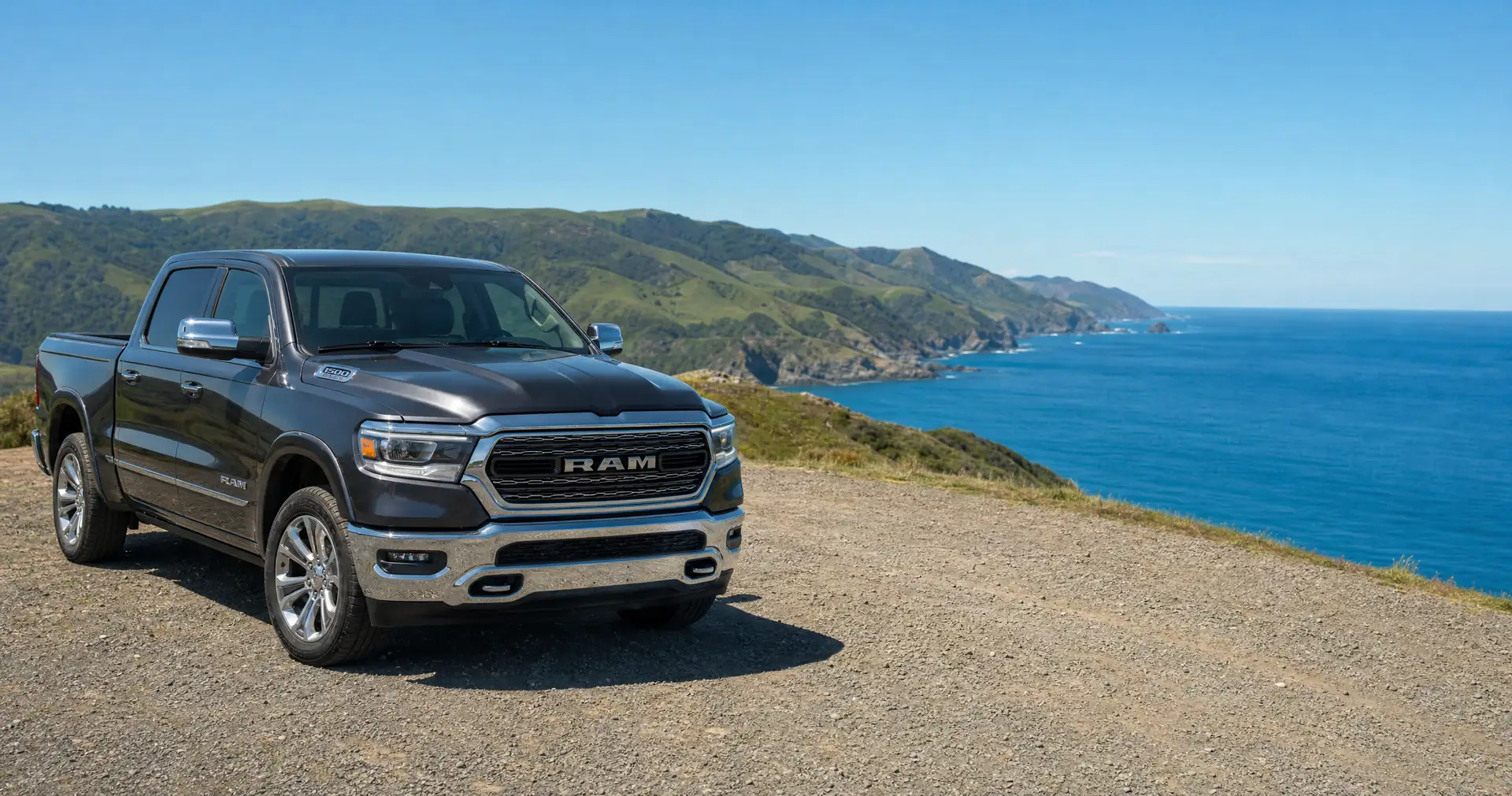
A specialist full-size American pickup brand distributed in New Zealand through the Ateco-affiliated Ram Trucks Australia and New Zealand operation, with right-hand-drive remanufacturing completed in Melbourne rather than factory-built. Volumes are small by Ranger or Hilux standards (low hundreds of units a year, per Carjam and MIA monthly data), which keeps lender appetite specialist rather than mainstream. The NZ-new range covers the Ram 1500 Laramie and Limited, the heavy-duty Ram 2500 and 3500 with Cummins diesel, and new-generation Ram 1500 REV and RHO variants landing through 2024 and 2025. Used pricing runs from around $80,000 on an earlier-generation DS 1500 to well over $230,000 on a new Limited or Cummins-powered 3500.

Your estimated repayment

Weekly

Disclaimer

$685/week

$1,371 /fortnight $2,970 /month
$150,000
$0
7.00% p.a.
5 years

We are not a finance company. Indicative only. Not a quote or offer of credit. Actual rates, fees, and repayments depend on your circumstances and the lender's decision.

Popular Ram models

The Ram range, by typical price.

Median used-car prices in NZ, 2026 market. Weekly figures assume 7% over 5 years with no deposit. Click a model for a dedicated calculator and FAQs.

Why this brand finances well

What lenders look for in a Ram.

  • The Ram 1500 carries a genuine 4,500 kg braked towing capacity on most NZ-spec variants, and the 2500 and 3500 push well past that, so lenders see a defensible commercial rationale on applications from civil-contracting, marine, and horse-float operators that a mid-size ute cannot credibly claim.
  • Chattel mortgage is the dominant NZ Ram finance structure because a clear majority of NZ-new Rams are sold to GST-registered businesses, and the GST claim on a $180,000 Ram 1500 Limited (roughly $23,480) materially improves first-year cash position.
  • The Ateco-managed Ram Trucks Australia and New Zealand operation provides a factory-equivalent warranty on NZ-new remanufactured trucks (confirm current length and mileage terms with the NZ dealer), which supports lender confidence across the full loan term on 1500 Laramie and Limited applications.
  • Specialist asset-finance lenders in NZ (UDC, MTF Finance, Heartland) understand the remanufacturing channel and price the Ram 2500 and 3500 Cummins applications where a retail-focused lender might cap loan-to-value at 70 to 80% on a $200,000 heavy-duty pickup.
  • Used NZ-new Ram 1500 supply is thickening as the earliest DS and DT generation trucks reach three to five years of age, which gives asset-finance lenders a maturing residual dataset on remanufactured stock rather than a single forward projection.

Buyer notes

Where to get the best Ram rate.

Start with an independent broker or specialist asset-finance house on any Ram application, because there is no NZ Ram captive finance arm with a subvention book running on the nameplate. For GST-registered buyers the structure conversation (chattel mortgage versus operating lease) usually moves more money than the rate delta, so get accounting advice before signing. Confirm the NZ remanufactured provenance and warranty documents on any used Ram because parallel-imported US-market LHD trucks sit in a separate finance category.

No sign-up on our site. Our finance partner compares NZ lenders and returns a formal estimate after the lender's credit assessment.

New vs used

Financing a new Ram vs a used one.

Ram finance in New Zealand splits into three real paths rather than two: new NZ-new through an Ateco-network dealer, used NZ-new remanufactured stock with documented Ram Trucks Australia warranty history, and US-spec left-hand-drive enthusiast imports. Each reads very differently on paper to an NZ lender.

Path 1

New Ram

Broker first; dealer desk rarely has a structural rate edge

  • Ram Trucks Australia and New Zealand does not run a subvented captive-finance book on the Ram nameplate in NZ; dealer finance offers come from partner lenders with a margin.
  • Chattel mortgage through the business is the most common structure on NZ-new Ram because the GST reclaim on a $180,000 to $230,000 purchase materially improves cash position.
  • Balloon or residual structures appear on some new-truck deals; confirm the residual in dollars rather than focusing on the advertised weekly.
  • Lenders underwrite against the Melbourne-remanufactured right-hand-drive build, not the original left-hand-drive US specification, so the VIN and remanufacturing paperwork sit on the file.

Verdict

Price a new Ram 1500 Laramie, Limited, or a 2500 or 3500 Cummins with an independent broker or specialist asset-finance lender before accepting the Ateco-network dealer finance offer. No captive subvention is in play, so the dealer-panel rate usually carries a commission margin a broker does not.

Path 2

Used Ram (NZ-new)

Broker with complete Ram Trucks Australia service history wins

  • Used NZ-new Ram 1500 DS and early DT examples are entering their three to five-year window, which is the first maturing used-market cohort for lender residual modelling.
  • Complete Ram Trucks Australia and New Zealand remanufacturing and warranty history is material to the offered rate because it separates the truck from parallel-import LHD stock.
  • Pre-purchase inspection by a Ram or American-truck specialist is genuinely worth the $400 to $700 outlay on any used 2500 or 3500 Cummins past 80,000 km.
  • Mechanical breakdown insurance becomes a real consideration on out-of-warranty trucks because Ram specialist parts and labour sit at the upper end of NZ heavy-ute repair cost.

Verdict

Expect a specialist asset-finance lender or broker to beat a generalist used-yard finance desk by 1 to 3 percentage points on a used NZ-new Ram with clean remanufacturing and service documentation. Without that paperwork, the gap widens further and some lenders will decline.

Path 3

US-spec LHD import

Specialist finance only; expect tight loan-to-value and short terms

  • Most NZ mainstream secured-car lenders decline left-hand-drive enthusiast imports outright, including on TrueLHD-converted trucks with a Low Volume Vehicle certification.
  • Classic Vehicle Finance NZ and a handful of asset-finance specialists will consider LHD Ram finance where provenance, compliance, and insurance are documented clearly.
  • Cummins-powered 2500 and 3500 trucks imported from Australia occasionally appear with an Australian remanufacturer certificate rather than the Ateco-supported NZ paperwork; check which paperwork the specific truck carries.
  • Insurance is typically materially higher on LHD imports and several underwriters decline cover, so secure an insurance quote before a finance application.

Verdict

Left-hand-drive US-market Ram trucks brought in privately sit outside the Ram Trucks Australia and New Zealand distributor channel and carry no local factory-equivalent warranty. Finance is possible through specialist asset-finance houses but expect LTV capped around 60 to 70%, a 3-year term ceiling, and a rate premium of 1.5 to 2.5 percentage points.

Rule of thumb

On a new Ram, go to a broker or asset-finance specialist first and negotiate the structure through the business before focusing on the rate. On a used Ram, bring the Ram Trucks Australia remanufacturing paperwork to the application; without it, the rate and LTV move against you.

Total cost of ownership

What a Ram really costs beyond the finance line.

Ram sits well above mainstream NZ ute ownership cost on almost every line. The 5.7-litre HEMI V8 petrol 1500 is the volume drivetrain and anchors the fuel conversation; the Cummins 2500 and 3500 are a different scale again on purchase, insurance, and tyres. Ranger or Hilux ownership-cost intuition does not translate directly.

  • Servicing and consumables

    Scheduled servicing on a Ram 1500 HEMI typically runs $650 to $950 per visit at an Ateco-network dealer, every 12,000 km or 12 months. Cummins 2500 and 3500 services sit higher because of the larger oil capacity and DEF system attention.

    $180 to $360 per month
  • Insurance (full cover)

    Ram 1500 Laramie $3,200 to $4,500. Limited and RHO variants $4,500 to $5,800. Cummins 2500 and 3500 run $5,000 to $6,800, partly because repair cost and parts sourcing time sit at the top of the NZ heavy-ute band.

    $3,200 to $6,800 per year
  • Road User Charges (diesel variants)

    The Ram 2500 and 3500 Cummins sit above 3.5 tonnes GVM and attract the heavier RUC rate band. At 25,000 km a year, that is around $2,400 before fuel, insurance, or servicing. Ram 1500 EcoDiesel under 3.5 t runs at the standard $76 per 1,000 km rate.

    $96 per 1,000 km (over 3.5 t)
  • Tyres

    Ram 1500 on 20 or 22-inch light-truck tyres runs $2,400 to $3,400 per set. Ram 2500 and 3500 on 18 or 20-inch heavy-duty LT rubber runs $3,400 to $4,800 per set. All-terrain compounds sit at the top of each band.

    $2,400 to $4,800 per set
  • Fuel

    Based on 20,000 km a year at NZ pump prices. HEMI 5.7 petrol 1500 real-world consumption runs around 15 to 18 litres per 100 km mixed. Cummins 6.7 diesel runs 13 to 16 litres per 100 km on lighter loads and more when towing.

    $4,800 to $9,500 per year

Worth knowing

Ram 1500 HEMI vs Ford Ranger Raptor at the same finance weekly

A used Ram 1500 Laramie on broker finance sometimes lands near the weekly repayment of a new Ranger Raptor at a similar drive-away price. Combined annual running cost on the Ram typically sits $3,500 to $6,000 higher than on the Raptor once fuel, tyres, and insurance are factored in, because the V8 HEMI drinks materially more than the 3.0-litre V6 petrol Raptor and insurance sits a full band higher. If the weekly finance cost matters most, the trucks are comparable. If total ownership cost matters most, the Raptor is cheaper to run.

Resale and equity

How Ram resale shapes your finance decision.

60 to 70%

indicative value retained, 3-year-old Ram 1500 Laramie

55 to 65%

indicative value retained, 3-year-old Ram 2500 Cummins

50 to 55%

mainstream-brand market average

Ram residuals in New Zealand hold up better than the mainstream-market average on the 1500 because the NZ full-size pickup pool is genuinely small and used demand from civil-contracting and marine buyers supports prices at the three-year mark. The Ram 2500 and 3500 Cummins run a little softer because the buyer pool is smaller still and the purchase premium is larger, so the dollar depreciation in years three to five is material even at a flattering percentage. Remanufactured provenance through Ram Trucks Australia and New Zealand is the key residual lever. A used NZ-new truck with complete paperwork sells well; a parallel-imported LHD or an Australian-spec truck without Ateco records discounts sharply at trade time.

For finance, the practical implication is that a four or five-year term on a Ram 1500 with a 20 to 25% deposit keeps the loan balance tracking the truck's market value through the term. Seven-year terms are not safe on any Ram because the running-cost and insurance curve climbs each year while the residual is still depreciating at a meaningful dollar figure, so a long term raises the odds of negative equity late in the loan rather than reducing them. On a 2500 or 3500 Cummins, keep the term tighter again (four years) and the deposit higher (25%-plus) to stay ahead of the residual curve.

Structure Ram finance around the resale curve rather than the weekly number. A four-year chattel mortgage with 20 to 25% deposit on a Ram 1500 lines up cleanly with expected residuals and the typical tow-and-tools replacement cycle. On the 2500 and 3500 Cummins, tighten the term to four years and push the deposit to 25%-plus to stay ahead of the faster dollar depreciation on a $200,000 truck.

Things to avoid

Ram finance traps we flag honestly.

An opinionated list. The commercial side of this site has no incentive to tell you these things, so we do.

Financing a Ram 1500 on a 7-year term to keep the weekly down

Stretching a $180,000 Ram 1500 Limited to a 7-year term drops the weekly into Ranger territory, but the running-cost and insurance curve keeps climbing each year while the residual is still depreciating at a real dollar figure. Negative equity at year five is a genuine risk. Keep the term to four or five years.

Buying a parallel-imported LHD US Ram expecting standard NZ finance to apply

Most NZ mainstream secured-car lenders decline left-hand-drive Ram imports outright. Specialist asset-finance houses will consider it but cap loan-to-value around 60 to 70% and ask for short terms and larger deposits. Confirm a lender is willing to write the specific truck before paying a deposit.

Skipping remanufacturing and warranty paperwork checks on a used Ram

A used Ram 1500 without complete Ram Trucks Australia and New Zealand remanufacturing and service documentation sells at a discount for good reason. Finance rates climb 1 to 2 percentage points without paperwork, and some lenders decline entirely because the VIN history and right-hand-drive certification sit on the underwriting file.

Rolling heavy aftermarket fit-out into the Ram loan

Canopies, fifth-wheel hitches, weight-distribution hitches, winches, and heavy-duty suspension kits get bundled into Ram deals often. Adding $15,000 of fit-out to a $150,000 loan can push total interest up by $2,800 to $4,200 across a 5-year term. Price the fit-out separately and fund it on a shorter second line or from cash.

Assuming a Cummins 2500 runs at Ranger Road User Charge rates

Ram 2500 and 3500 Cummins trucks sit above 3.5 tonnes GVM and attract the heavy-RUC band at roughly $96 per 1,000 km, not the $76 per 1,000 km light-RUC rate a diesel Ranger pays. On 25,000 km a year that difference is around $500 in extra RUC annually, compounding over the loan.

Financing personally when the towing use is overwhelmingly commercial

A civil contractor financing a $200,000 Ram 2500 in their personal name forgoes the GST reclaim (roughly $26,000) and the interest deductibility. On a 4-year term that is a very substantial tax outcome. Chattel mortgage or finance lease through the business almost always beats personal finance for commercial Ram buyers.

Drivetrain economics

Hybrid vs petrol vs EV on a Ram.

Ram's current NZ drivetrain mix covers the 5.7-litre HEMI V8 petrol on most 1500 variants, the 3.0-litre EcoDiesel V6 on select 1500 stock, the 6.7-litre Cummins turbo-diesel straight-six on 2500 and 3500, and the all-electric 1500 REV plus high-output RHO on newer-generation trucks. The drivetrain choice drives the running-cost conversation much more than it drives the finance rate.

HEMI V8 petrol (Ram 1500 Laramie, Limited)

The volume NZ drivetrain, financed at the standard premium secured-car rate

  • The 5.7-litre HEMI with 48V eTorque mild-hybrid assist is the dominant NZ Ram 1500 powertrain across Laramie and Limited trim.
  • No Road User Charges apply; fuel is the primary per-km variable cost, with mixed real-world consumption typically 15 to 18 litres per 100 km.
  • Servicing is simpler and cheaper than the Cummins diesel 2500 and 3500 because there is no DEF system, particulate filter, or heavy oil capacity to manage.
  • Used-market depth on HEMI 1500 stock is the best of the Ram range, which supports a marginally stronger offered rate through specialist asset-finance lenders.

Cummins 6.7 diesel (Ram 2500, 3500)

Heavy-tow workhorse, finance usually via business chattel mortgage

  • The 6.7-litre Cummins turbo-diesel straight-six is the signature NZ heavy-duty Ram drivetrain, pitched at 4,500-plus kg braked tow applications.
  • Trucks over 3.5 tonnes GVM attract the heavy RUC band at roughly $96 per 1,000 km, which adds around $1,900 to $2,400 a year at 20,000 to 25,000 km.
  • Service intervals and DEF top-ups are more demanding than the HEMI petrol, and specialist parts can carry longer lead times outside Auckland and Christchurch.
  • Lender residual treatment on used 2500 and 3500 is more conservative than on the 1500 because the used-buyer pool is smaller, so deposit expectations run higher.

1500 REV (battery-electric)

Newer-generation BEV, EV loan tier available on NZ-new applications

  • The 1500 REV is the battery-electric Ram, landing in NZ through 2024 and 2025 with substantially higher purchase pricing than the HEMI 1500.
  • Most NZ lenders apply the EV loan tier to NZ-new 1500 REV applications, typically 0.5 to 1.5 percentage points below the standard premium secured-car rate.
  • Road User Charges of $76 per 1,000 km apply since April 2024 on light BEVs; a REV at over 3.5 tonnes GVM would move into the heavy band.
  • Used-market residual data is genuinely absent in 2026, so lenders cap loan-to-value tighter and may limit the maximum term on REV stock.

Break-even heuristic

The practical rule on the NZ Ram range: if you tow over 3,500 kg regularly or run the truck commercially on long distances, a HEMI 1500 is the starting point and a Cummins 2500 or 3500 becomes rational at 4,500-plus kg load profiles. If the truck will sit at home most weekends and only tow occasionally, the running-cost premium over a Ranger or Hilux is hard to justify on lifestyle finance alone. The 1500 REV is currently an early-adopter proposition where home charging and predictable distance patterns line up.

Commercial and business use

Financing a Ram through your business.

Ram ownership in New Zealand is overwhelmingly business-driven. Civil-contracting sole-traders, marine operators, horse-float and caravan tow operators, and rural lifestyle-block owners account for the bulk of NZ-new Ram registrations, and the finance structures below treat the truck differently on the balance sheet, the GST return, and the tax position. This is the conversation where the right structure often moves more money than the rate does.

Chattel mortgage

Own the Ram from day one, with the truck on the business balance sheet

  • Vehicle sits on the business balance sheet as an asset from settlement.
  • GST on the full purchase price is claimable in the next GST return (roughly $23,480 on a $180,000 Ram 1500 Limited, or around $26,100 on a $200,000 Ram 2500).
  • Finance interest is deductible against business income and depreciation is taken at IRD rates on the balance sheet.
  • Lender registers security via PPSR; terms typically run 3 to 5 years on a Ram application.
  • Own the truck outright at the end of the term with no residual or balloon to refinance.

Best for

Sole-trader civil contractors, marine operators, and small fleet businesses (1 to 3 Rams) replacing heavy-tow vehicles on a 4 to 6 year cycle.

Operating lease

You rent the Ram; the lessor wears residual risk

  • Vehicle stays off the business balance sheet (the lease company owns it).
  • Fixed monthly charge, often bundled with scheduled servicing and sometimes tyres.
  • No GST claim on the purchase because the business never owns the truck.
  • Monthly payments expense cleanly to P&L with no depreciation schedule to maintain.
  • Hand the Ram back at term end with no residual-value exposure to the business.

Best for

Mid-sized fleet operators (4-plus heavy vehicles) who value predictable opex and want Ram residual risk off their own book.

Finance lease

Structured middle ground between chattel mortgage and operating lease

  • Vehicle is on the balance sheet but held under a formal lease agreement.
  • Lease payments are deductible against business income; GST claimable on each payment rather than on purchase.
  • A residual balloon is negotiated at signing and usually matches the lender's expected market value at term end.
  • At term end the business can pay the residual to own, refinance, or hand back depending on lease terms.
  • Useful where cash-flow predictability matters more than outright ownership of a $180,000 truck.

Best for

Mid-sized contracting businesses wanting structure and predictability without the full operating-lease service wrap.

Get accounting advice

For most sole-trader and small-business Ram buyers, a chattel mortgage is the practical default because the GST reclaim on a $180,000 to $230,000 truck materially improves the first-year cash position, and the loan matches the typical 4 to 6 year replacement cycle on a heavy-tow vehicle. Fleet operators running four-plus trucks often move to operating leases to simplify budgeting and shift residual risk off the book. Get accounting advice before signing; the right structure on a Ram can be worth tens of thousands of dollars in tax outcome across the term.

Japanese imports

Financing an imported Ram.

Ram in New Zealand is predominantly distributed as a NZ-new remanufactured right-hand-drive truck through the Ateco-affiliated network, but a meaningful minority of trucks on NZ roads arrived via other channels. The three routes below affect finance eligibility, warranty position, and lender residual assumptions differently.

01

Australian-remanufactured imports without NZ Ateco records

Some Ram trucks on the NZ market were remanufactured in Australia by the same Walkinshaw-partner facility but brought across privately rather than through the NZ distributor channel. The build quality is the same, but the warranty and service paper trail sits with Ram Trucks Australia rather than the NZ operation. Lenders accept these applications with complete paperwork but may cap the term at 4 years and the loan-to-value at 80% where NZ provenance is thin.

02

US-spec left-hand-drive enthusiast imports

Left-hand-drive Ram trucks imported from the United States sit outside the Ram Trucks Australia and New Zealand channel entirely. Most NZ mainstream lenders decline them outright; specialist asset-finance houses such as Classic Vehicle Finance NZ will consider them with Low Volume Vehicle certification and documented compliance, but expect loan-to-value capped at 60 to 70%, a 3-year term maximum, and a rate premium of 1.5 to 2.5 percentage points.

03

Cummins-powered 2500 and 3500 imports from Australia

Cummins-powered heavy-duty Rams are genuinely rare new through the NZ-new channel, and a chunk of the NZ Cummins Ram parc arrived as private imports from Australia already remanufactured to right-hand drive. Confirm the remanufacturer certificate and NZ compliance documentation with the seller before any finance application, because lenders treat a cleanly-documented Australian remanufacture very differently from an undocumented private conversion.

Case study

Worked example: financing a new Ram 1500 Laramie for a marine-services operator

The buyer

Marine-services sole-trader based in Tauranga, age 44, clean credit, roughly $185,000 annual profit, replacing a 2019 Ranger XLT that had reached 180,000 km and was no longer comfortable towing a 3.8-tonne boat-and-trailer combination across the Coromandel.

The scenario

Purchasing a new Ram 1500 Laramie 5.7 HEMI through an Ateco-network NZ dealer for $165,000 drive-away. Trade-in value on the 2019 Ranger: $24,000. Chattel mortgage structure through the business so the truck sits on the balance sheet, GST is reclaimed on purchase, and interest and depreciation are deductible against marine-services income.

The outcome

Monthly business cash-flow impact is roughly $2,561 before any fuel, Road User Charges, or servicing.

The $21,522 GST component inside the $165,000 purchase price is reclaimed in the next GST return after settlement, which effectively covers the deposit and several months of repayments in one return cycle.

Finance interest is deductible against marine-services income across the 5-year term, and the Ram depreciates at IRD diminishing-value rates against the business balance sheet. The HEMI 5.7 handles the 3.8-tonne tow profile comfortably, which was the operational problem the old Ranger could not solve at that capacity.

Annual running-cost step-up over the Ranger sits at roughly $4,500 a year (fuel, insurance, tyres, servicing) once towing kilometres are added. That is real, but it is offset partly by fewer tow-related stops and a second vehicle no longer being needed for heavier jobs.

At year 5 the Ram 1500 Laramie is expected to sit around $85,000 to $100,000 on the NZ used market based on the maturing indicative residual band for remanufactured NZ-new stock with complete Ateco paperwork. The loan is fully paid off, the asset is owned outright, and the business can trade into a new Ram, move down to a 2500 Cummins if tow profile changes, or retain the Laramie as a paid-off fleet asset.

Illustrative example. Not a promise of approval or rate. Your circumstances and the lender's own credit decision will determine your actual outcome.

Affordability check

What can I afford on my income?

A rough sanity check. We assume repayments should sit under 10% of your take-home pay, with a 5-year term at 7%.

Not an affordability assessment. Real lender decisions consider all your debts, expenses, and history.

$70,000
$20k $250k

Indicative safe loan

$30,000

At ~$135/week

Stretch maximum

$45,000

Only with no other debts

Apply this to the calculator

Common questions

Ram finance FAQ.

Who distributes Ram in New Zealand, and is there a captive Ram finance arm?

Ram in New Zealand is sold and supported through the Ateco-affiliated Ram Trucks Australia and New Zealand operation, with right-hand-drive remanufacturing completed in Melbourne rather than at the Stellantis factory in the United States. There is no NZ-based captive Ram finance arm writing subvented rates on the nameplate; dealer finance runs through partner lenders, and most NZ Ram applications clear through independent brokers or specialist asset-finance houses.

How much deposit is typical when financing a Ram 1500 or 2500 in New Zealand?

20 to 25% is the common range on an NZ-new Ram, which on a $180,000 Ram 1500 Limited is $36,000 to $45,000, and on a $210,000 Ram 2500 Cummins is $42,000 to $52,500. Specialist asset-finance lenders sometimes accept lower deposits on strong GST-registered business applications but typically price the rate tighter when a 25% or larger deposit is on the table. LHD imports and parallel imports usually require higher deposits again.

Is it cheaper to finance a Ram through the dealer or an independent broker?

Independent brokers and specialist asset-finance lenders almost always win on a Ram in New Zealand because Ram Trucks Australia and New Zealand does not run a subvented captive book in the local market. Ateco-network dealer finance offers come from panel lenders with a commission margin, so a broker or specialist-asset-finance quote usually lands 1 to 2 percentage points lower on a like-for-like chattel-mortgage application. Anchor the dealer offer against a broker quote before signing.

Can I finance a left-hand-drive US-spec Ram imported privately into NZ?

Most NZ mainstream secured-car lenders will decline left-hand-drive Ram imports outright, including TrueLHD-converted trucks with Low Volume Vehicle certification. Specialist asset-finance houses such as Classic Vehicle Finance NZ will consider the application where provenance, compliance, and insurance are documented, but expect loan-to-value capped around 60 to 70%, a 3-year term maximum, and a rate premium of 1.5 to 2.5 percentage points. Secure an insurance quote before applying because cover is not automatic.

How does the Road User Charges rate apply to a Ram 2500 Cummins diesel?

The Ram 2500 and 3500 Cummins sit above 3.5 tonnes gross vehicle mass in most NZ specifications, which moves them into the heavier Road User Charges band at approximately $96 per 1,000 km rather than the $76 per 1,000 km light-RUC rate a diesel Ranger pays. At 25,000 km a year that is around $2,400 in RUC alone, before fuel, servicing, or insurance. A 3.0-litre EcoDiesel Ram 1500 under 3.5 tonnes runs at the light-RUC rate.

Can I claim GST and finance interest if I buy a Ram for my business?

Yes, where the Ram is used primarily for business purposes. A chattel-mortgage structure lets you claim the full GST component on the purchase in the next GST return (roughly $23,480 on a $180,000 Ram 1500 Limited, or $26,100 on a $200,000 Ram 2500) and deduct finance interest against business income across the term. Depreciation runs at IRD rates against the balance sheet. A finance lease works similarly but with GST claimable on each monthly payment. Confirm with your accountant because the percentage of business use affects the claim.

How long a term should I finance a Ram for?

Four to five years is the typical sensible band for a NZ-new Ram 1500 Laramie or Limited, paired with a 20 to 25% deposit. On the Ram 2500 and 3500 Cummins, tightening the term to four years with a 25%-plus deposit is smarter because the running-cost and insurance curve climbs steeply each year while the dollar residual is still depreciating. Seven-year terms are rarely prudent on any Ram because negative equity risk grows late in the loan.

Does the Ram 1500 REV electric variant qualify for the EV loan tier?

At most mainstream NZ secured-car and asset-finance lenders, yes, on NZ-new 1500 REV applications. The EV tier typically lands 0.5 to 1.5 percentage points below the standard premium secured-car rate. Some lenders apply minimum-loan-amount or NZ-new-only rules, and used-market residual data on the REV is genuinely absent in 2026, so lenders cap loan-to-value tighter and may limit the maximum term. Confirm EV tier eligibility by name at quote time because criteria on newer BEV pickups evolve.

Can I finance a Ram that is more than 7 years old?

Most NZ secured-car and asset-finance products cap vehicle age at 12 to 15 years at loan-end date, which means a 7-year-old Ram can clear a 3-year term but may not clear a 5-year term. Rates sit 1 to 2 percentage points above a 3-year-old equivalent, and lenders expect strong Ram Trucks Australia and New Zealand service documentation to price within that band. A pre-purchase inspection by a Ram or American-truck specialist is genuinely worth the cost on any truck past 100,000 km.

What happens if I trade a Ram in halfway through the loan?

If the trade-in value exceeds the outstanding loan balance (positive equity, common on well-documented NZ-new 1500 trucks), the dealer pays out the old loan and any surplus applies to the next purchase. If the trade-in falls short (negative equity, more common on parallel imports or long-term finance structures), the shortfall rolls into the new loan. Complete Ram Trucks Australia and New Zealand remanufacturing and service documentation is the biggest single lever on trade-in value.

What warranty comes with a new NZ-delivered Ram, and how does it affect mechanical breakdown insurance?

NZ-new Ram trucks come with a factory-equivalent warranty from Ram Trucks Australia and New Zealand covering the remanufactured right-hand-drive build (confirm current length and mileage with the dealer because terms evolve). While the warranty is active, mechanical breakdown insurance is largely unnecessary. Once the warranty lapses, MBI becomes a real consideration because Ram specialist parts and labour sit at the upper end of NZ heavy-ute repair cost. Price MBI separately from any dealer-bundled product.

What is the typical total cost of ownership for a financed Ram 1500 Laramie over 5 years?

For a $160,000 NZ-new Ram 1500 Laramie on a 5-year chattel mortgage around 8.5%, finance costs total approximately $193,000 (principal plus interest). Add insurance (around $20,000), fuel at 20,000 km a year (around $40,000), servicing and tyres (around $22,000), and registration or admin (around $2,500) for an indicative business all-in of roughly $275,000 to $285,000 over 5 years before any GST reclaim or deductibility. Commercial use recovers a meaningful slice via GST on purchase and interest and depreciation deductions.

About this article
Published
23 April 2026
Last reviewed
23 April 2026

Methodology

Repayment figures on this page are calculated live from the inputs entered into the calculator using the standard amortised-loan formula. Indicative rates are drawn from observing publicly-advertised NZ secured-car and asset-finance pricing across mainstream and specialist lenders in the twelve months before the last review date. Ram price bands are observed from recent TradeMe and AutoTrader listings alongside Ateco-network NZ dealer pricing for new stock. Running-cost figures, RUC rates, and insurance bands are cross-referenced against NZTA, Consumer NZ, AA New Zealand, and direct insurer quoting. We update the page annually, or sooner if Ram Trucks Australia and New Zealand adds or removes a variant, changes warranty terms, or materially adjusts NZ pricing.

Sources

Apply for Ram finance.

Our finance partner compares NZ lenders and returns a formal estimate after the lender's credit assessment. Calculator inputs travel through to the application so nothing gets re-typed.

All brands

Disclaimer

A car loan is a commitment that runs for years, and repayments come out of the same pay cheque as everything else. Before committing, it is worth modelling the weekly and monthly cost against the household budget, which is what this site is built to help with. Borrowing at a level that stays comfortable on a bad week, not a good one, is widely regarded as the safer frame.

Carfinance.org.nz earns a commission from a partner brand when a visitor applies through this site and their application is approved. That commission is paid by the partner, not the applicant, and it does not influence the rate the lender offers. We refer every visitor to the same partner because they compare multiple New Zealand lenders on the applicant's behalf, so the recommendation is not driven by a sponsored deal. Every figure shown on this site is a modelled estimate based on the inputs entered; the actual rate, fees, and repayments are set by the lender after assessing the applicant's circumstances and own credit decision. Carfinance.org.nz is a calculator and information tool. We are not a lender, not a broker, and not a registered financial adviser. Any decision about whether a specific loan suits a specific situation is best made after talking with the lender, and for amounts that materially affect the household, with a registered financial adviser.