Skip to content
Carfinance.org.nz
Rolls-Royce logo Premium brand

Rolls-Royce car finance calculator

Published 23 April 2026 · Last reviewed 23 April 2026 · Disclaimer

The highest-value mainstream marque on the NZ ultra-premium finance bench, almost always held through trust or company structures rather than personal secured-car loans. Rolls-Royce NZ sales run through Continental Cars in Auckland (alongside Bentley) at volumes measured in single-digits per year on most model lines. The Ghost, Phantom, Cullinan SUV, and all-electric Spectre cover the current lineup, with Cullinan the variant most commonly financed through a family trust because the SUV body type fits company structures naturally. The range spans a $400,000 used Ghost through to a $1.1 million bespoke Phantom Extended or a Cullinan Black Badge approaching $900,000.

Your estimated repayment

Weekly

Disclaimer

$2,056/week

$4,113 /fortnight $8,911 /month
$450,000
$0
7.00% p.a.
5 years

We are not a finance company. Indicative only. Not a quote or offer of credit. Actual rates, fees, and repayments depend on your circumstances and the lender's decision.

Popular Rolls-Royce models

The Rolls-Royce range, by typical price.

Median used-car prices in NZ, 2026 market. Weekly figures assume 7% over 5 years with no deposit. Click a model for a dedicated calculator and FAQs.

Rolls-Royce

Cullinan

The Rolls-Royce most commonly financed through trust and company structures in NZ.

$520,000

From

$2,376/week

Dedicated Cullinan page →

Rolls-Royce

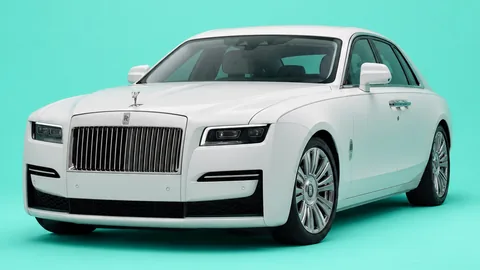
Ghost

The driver-focused Rolls-Royce that anchors the brand's NZ sedan finance pool.

$380,000

From

$1,736/week

Dedicated Ghost page →

Rolls-Royce

Phantom

The Rolls-Royce flagship, the highest-value model on the NZ lineup.

$900,000

From

$4,113/week

Rolls-Royce

Spectre

Rolls-Royce's first series-production electric grand tourer.

$650,000

From

$2,970/week

Why this brand finances well

What lenders look for in a Rolls-Royce.

  • The Cullinan SUV carries the widest structured-finance pool across the Rolls-Royce NZ lineup because the ultra-premium SUV body type sits naturally inside a family-trust chattel mortgage, where the GST claim on purchase (often $90,000 to $120,000) is a material cash-flow line alongside private-use FBT treatment.
  • Continental Cars Auckland is the authorised Rolls-Royce dealer across New Zealand and carries the service and warranty network on NZ-new stock, which keeps the specialist-lender residual picture clean on applications against Continental Cars-supplied cars.
  • Rolls-Royce Financial Services operates as a global captive but in New Zealand most applications route through private-banking lines (ANZ Private, BNZ Private, Westpac Private) or specialist asset-finance lenders who understand ultra-premium residual curves, rather than through the dealer finance desk.
  • The Spectre is Rolls-Royce's first series-production electric car and typically qualifies for an EV tier at most NZ specialist lenders, though the high loan size still attracts ultra-premium underwriting rather than a standard EV-tier mainstream rate.
  • Bespoke commission specifications through the Rolls-Royce Bespoke programme add significantly to purchase price but do not always translate proportionally into residual uplift, so specialist lenders value against a standard-specification comparable rather than the full bespoke invoice.

Buyer notes

Where to get the best Rolls-Royce rate.

Most Rolls-Royce buyers in New Zealand run the car through a trust or operating company rather than a personal name, and most pay cash or route through a private-banking asset line rather than a secured-car loan. Where secured finance is used, start with the trust structure conversation with your accountant before engaging Continental Cars' finance desk, because the chattel-mortgage versus operating-lease decision moves more money than the lender rate comparison.

No sign-up on our site. Our finance partner compares NZ lenders and returns a formal estimate after the lender's credit assessment.

New vs used

Financing a new Rolls-Royce vs a used one.

Rolls-Royce finance in New Zealand splits into two practical paths: new through Continental Cars with a private-banking or specialist-lender introduction, and NZ-new or collector-grade used through specialist asset-finance channels. UK or European imports are rare enough in the NZ Rolls-Royce pool to be handled case-by-case rather than as a volume path.

Path 1

New Rolls-Royce

Private-banking or specialist introduction sets the panel

  • Most NZ-new Rolls-Royce buyers route through a private-banking asset line (ANZ Private, BNZ Private, Westpac Private) that prices on a total-relationship basis rather than a secured-car product alone.
  • Rolls-Royce Financial Services operates globally but the NZ dealer finance route is typically a specialist asset-finance introduction rather than a captive-book subvention.
  • A Cullinan financed through a company or trust chattel mortgage pulls the GST on purchase (typically $90,000 to $120,000 on a new Cullinan) through the next return, materially changing the weekly repayment economics after tax.
  • Underwriters on new Rolls-Royce applications typically require a comprehensive asset and liability statement rather than a simple employment and income position.

Verdict

Engage Continental Cars' finance introduction alongside your private banker early on a new Ghost, Phantom, Cullinan, or Spectre. The realistic lender panel on NZ-new Rolls-Royce is private-banking first and specialist asset-finance second, at 30 to 40% deposit and 3 to 5 year terms.

Path 2

Used Rolls-Royce

Continental Cars-serviced history anchors the specialist-lender quote

  • Used Ghost, Wraith, and Cullinan with Continental Cars service history price predictably on specialist-lender residual curves, which supports cleaner loan-to-value decisions at application.
  • Earlier Phantom Series I and II examples (pre-2017) carry a collector-grade residual profile; specialist lenders treat these as single-application underwriting rather than standard products.
  • Service history gaps on out-of-warranty Ghost, Wraith, or Phantom can push the rate up and the term down because a V12 Rolls-Royce repair bill at Continental Cars or a specialist workshop can run into five figures quickly.
  • Mechanical breakdown cover and dedicated specialist-workshop budget are not optional line items on an out-of-warranty Rolls-Royce; treat them as fixed running-cost components at application.

Verdict

Prioritise NZ-new used Rolls-Royce examples with unbroken Continental Cars service history through the specialist-lender channel. Private-bank imports and one-off collector cars are case-by-case applications that specialist lenders underwrite individually.

Rule of thumb

On a new Rolls-Royce, start with your private banker and Continental Cars in parallel, because the realistic finance path is a private-banking asset line rather than a standard secured-car product. On a used Rolls-Royce older than five years, lead with a specialist asset-finance lender (UDC, Classic Vehicle Finance NZ) and bring a complete Continental Cars service history to the application.

Total cost of ownership

What a Rolls-Royce really costs beyond the finance line.

Rolls-Royce running costs in New Zealand sit at the top of the ultra-premium bracket, ahead of Bentley and Aston Martin on most cost lines. Agreed-value insurance, tyre replacement intervals, and Continental Cars scheduled-service rates all move the all-in cost picture into a band most buyers only model once they already own the car.

  • Servicing and consumables

    Scheduled servicing at Continental Cars typically runs $6,500 to $12,000 per annual visit depending on variant, with Phantom and Black Badge services at the top of the range. Ghost and Cullinan servicing sits materially below Phantom but above Bentley equivalents.

    $700 to $1,600 per month
  • Insurance (agreed value)

    Ghost typically sits $9,500 to $14,000 depending on agreed value and driver profile. Phantom climbs toward $18,000. Cullinan Black Badge and bespoke Phantoms can exceed $22,000 annually because of the ultra-premium theft and claims profile. Specialist insurers (Star, NZI, Vero, Chubb) write most policies.

    $9,500 to $22,000 per year
  • Road User Charges (EV only)

    Applies to Spectre all-electric coupe since April 2024. Purchased in pre-paid blocks from NZTA. Pure petrol V12 Ghost, Phantom, and Cullinan variants do not pay RUC. At 8,000 km a year that is roughly $608 on top of electricity spend.

    $76 per 1,000 km
  • Tyres

    Ghost and Wraith on 21-inch runs $5,500 to $7,000. Phantom on 21-inch and Cullinan on 22-inch run $6,500 to $8,500. Cullinan Black Badge on 22-inch performance rubber and Spectre on 23-inch regularly exceed $9,000 per set. Replacement interval typically shorter than mainstream SUV given weight and power.

    $5,500 to $9,500 per set
  • Fuel (98 RON) / Electricity

    Based on 8,000 km a year on 98 RON for V12 models. Ghost around $7,000 to $9,000. Phantom and Cullinan around $10,000 to $12,000 due to weight and drivetrain. Spectre electricity spend much lower but RUC applies; factor both into the running-cost picture.

    $7,000 to $12,000 per year

Worth knowing

Rolls-Royce Cullinan vs Mercedes-Maybach GLS 600 at the same finance weekly

Match a Cullinan weekly repayment to a Mercedes-Maybach GLS 600 on a stretched term and the Rolls-Royce annual running-cost premium still runs $8,000 to $15,000 higher. Agreed-value insurance at the Rolls-Royce tier, Continental Cars scheduled servicing, and 22-inch tyre replacement intervals all move the total ownership cost well above the badge comparison. Model the combined annual total before stretching term to bring the weekly down.

Resale and equity

How Rolls-Royce resale shapes your finance decision.

45 to 55%

value retained, 3-year-old Ghost

50 to 60%

value retained, 3-year-old Cullinan

50 to 55%

mainstream-brand market average

Rolls-Royce residuals in New Zealand are closer to the mainstream-brand average through the first three years than most buyers project, because ultra-premium demand is thin enough that depreciation compresses into a short window rather than spreading smoothly across the ownership cycle. The Ghost and Wraith follow a grand-tourer curve similar to a Bentley Continental GT, giving up 40 to 50% of sticker over five years. The Cullinan holds firmer because the ultra-premium SUV demand pool is broader than the coupe pool, and Cullinan Black Badge examples with bespoke commission elements carry a slightly firmer collector-grade profile. The Phantom sits in its own residual category because new-car demand is thin enough that each car is effectively underwritten on its own specification and provenance.

The practical implication for a financed Rolls-Royce is that the loan term and deposit need to absorb a sharper first-three-year depreciation than the weekly repayment figure implies. A 5-year loan on a new Ghost or Cullinan with a small deposit is the structure most likely to end in negative equity through the middle of the term, because the outstanding balance catches up with the market price slowly relative to how the car falls through year two and year three. A 30 to 40% deposit with a 3 to 4 year term, or a trust-structured Cullinan chattel mortgage held across a disciplined 5-year replacement cycle, are the two structures most commonly seen in clean Rolls-Royce applications at Continental Cars.

A Rolls-Royce is rarely an optimal secured-car finance application in a narrow rate sense. Where finance is used, the deposit (30 to 40%) and the structure (trust or company chattel mortgage on a Cullinan, private-banking asset line on a Ghost or Phantom) matter more than the rate delta across the market. The buyer who models the full post-tax, post-FBT position before settlement ends up with a much cleaner outcome than the buyer who anchors on a weekly figure.

Things to avoid

Rolls-Royce finance traps we flag honestly.

An opinionated list. The commercial side of this site has no incentive to tell you these things, so we do.

Treating a Rolls-Royce like a mainstream secured-car loan application

Taking a $400,000 Ghost or $500,000 Cullinan to a mainstream bank for a standard secured-car loan usually ends in a decline or a loan-to-value cap that makes the deal uncommercial. Start with private-banking or specialist asset-finance from the outset rather than collecting a credit enquiry before routing to the realistic lender panel.

Financing a Cullinan personally when a trust structure fits the use case

A Cullinan used partly for business purposes financed in a personal name forgoes the GST claim (typically $90,000 to $120,000 on new) and the interest deductibility outcome on a trust or company chattel mortgage. The structure choice moves materially more money than any rate delta available in the market. Accountant review before the deposit is paid is non-negotiable.

Underestimating bespoke specification cost on residual value

Bespoke Rolls-Royce commission specifications can add $80,000 to $200,000 to purchase price but typically do not carry proportionally into residual value at year three. Specialist lenders value against a standard-spec comparable rather than the full bespoke invoice, which tightens loan-to-value. Model the expected residual against a standard build when setting the loan size.

Skipping pre-purchase inspection on an out-of-warranty V12 Ghost or Phantom

An ex-warranty Ghost or Phantom with service gaps can carry V12 timing, turbo, or air-suspension issues that run $15,000 to $40,000 to repair at Continental Cars or a specialist workshop. A $800 pre-purchase inspection at a Rolls-Royce specialist pays for itself many times over against a post-settlement fault at month two.

Stretching a Rolls-Royce loan to bring the weekly below $2,000

Stretching a $450,000 Cullinan loan to 7 years to compress the weekly cost widens the loan-to-value gap through years two and three, when depreciation is sharpest. Any forced sale through the first three years typically leaves the loan underwater. Keep the term to 3 or 4 years with a 30 to 40% deposit regardless of the weekly figure it produces.

Drivetrain economics

Hybrid vs petrol vs EV on a Rolls-Royce.

Rolls-Royce's current NZ lineup spans V12 petrol across Ghost, Phantom, and Cullinan, plus the all-electric Spectre coupe. There is no diesel or plug-in hybrid Rolls-Royce in production. The brand has committed globally to a fully electric lineup by 2030, so V12 production tails will matter for late-build collector residuals through the late 2020s.

Petrol V12 (Ghost, Phantom, Cullinan)

The volume Rolls-Royce drivetrain on NZ finance applications

  • All current NZ-new Ghost, Phantom, and Cullinan variants run the 6.75L twin-turbo V12 (Ghost and Cullinan) or the naturally-aspirated 6.75L V12 tuning variant on Phantom.
  • Fuel consumption on a V12 Cullinan typically sits around 15 to 18 L/100 km in mixed NZ driving; Phantom similar. 98 RON is required.
  • No Road User Charges on V12 variants; fuel and premium-octane availability are the primary drivetrain economic considerations.
  • Specialist-workshop servicing runs $6,500 to $12,000 per scheduled visit at Continental Cars; MBI or dedicated workshop budget is required on out-of-warranty cars because V12 repair work runs into five figures quickly.

Electric (Spectre)

First series-production electric Rolls-Royce, EV tier applies at most NZ lenders

  • The Spectre is a two-door ultra-premium electric grand tourer launched globally 2023 to 2024 and sitting at the top of the Rolls-Royce EV product line.
  • Most NZ specialist lenders apply an EV loan tier to the Spectre, typically 0.5 to 1.5 percentage points below the equivalent petrol ultra-premium rate, though the high loan size can anchor the rate on relationship rather than pure product pricing.
  • Road User Charges of $76 per 1,000 km apply on all EVs since April 2024, purchased in pre-paid blocks from NZTA.
  • High-voltage battery warranty on the Spectre runs 8 years or 160,000 km per Rolls-Royce global policy; check with Continental Cars for NZ-specific terms on the specific vehicle.

Break-even heuristic

Drivetrain economics are a secondary concern on most Rolls-Royce finance applications because total annual distance is typically low (5,000 to 10,000 km a year is common) and fuel cost is a small fraction of the all-in ownership picture. The relevant decision is between V12 petrol (current Ghost, Phantom, Cullinan) and the Spectre EV, driven by charging infrastructure at home and the preferred body type rather than a cost-per-km break-even calculation.

Commercial and business use

Financing a Rolls-Royce through your business.

Rolls-Royce applications in New Zealand cluster heavily around trust and company structures, particularly on the Cullinan SUV line, because the GST claim on purchase and the deductibility treatment on finance interest are meaningful cash-flow items at ultra-premium price points. The three commercial finance structures treat the vehicle very differently on GST, deductibility, fringe-benefit tax, and end-of-term ownership.

Chattel mortgage

Trust or company owns the Rolls-Royce from day one, with the car on the balance sheet

  • Vehicle sits on the trust or company balance sheet as an asset from settlement day.
  • GST on the purchase price is claimable in the next GST return, typically $90,000 to $120,000 on a new Cullinan.
  • Finance interest and depreciation are deductible against business income.
  • Specialist asset-finance lender or private-banking line registers security via PPSR; term typically 3 to 5 years.
  • Own the Rolls-Royce outright at the end of the term, free to retain in the trust or sell.

Best for

Trust-structured ownership of a Cullinan or Ghost where the beneficiary or director drives the car partly personally and FBT treatment is modelled in from the outset by the accountant.

Operating lease

Fixed monthly cost, Rolls-Royce stays off the balance sheet, no residual risk

  • Vehicle stays off the trust or company balance sheet (the lease company owns it).
  • Fixed monthly charge typically covers the finance plus defined servicing inclusions at Continental Cars.
  • No GST claim on purchase price because the business is not the owner.
  • Monthly lease payments expense directly to P&L with no depreciation tracking.
  • Hand the Rolls-Royce back at term end with no residual-value exposure on the business or trust.

Best for

Family offices and professional-services firms running a strict 3-year Rolls-Royce replacement cycle where opex predictability and residual-off-balance-sheet treatment outweigh outright ownership.

Finance lease

Balance-sheet treatment of a chattel mortgage, payment structure of a lease

  • Vehicle sits on the balance sheet under a formal lease arrangement.
  • Regular lease payments deductible against business income over the term.
  • Residual balloon at term end, typically agreed with the specialist lender or private bank at signing.
  • GST is claimable on each monthly lease payment rather than on the purchase price.
  • Useful where cash-flow predictability matters more than outright ownership at term end.

Best for

Mid-sized trust and company structures wanting a balloon-style payment profile on a Cullinan or Ghost without the full bundled-cost profile of an operating lease.

Get accounting advice

Which structure fits depends on the trust or company tax position, the Rolls-Royce replacement cycle, and the private-use portion attracting FBT. Most Cullinan buyers in NZ land on a chattel mortgage because the GST claim and outright ownership outweigh the operating-lease convenience, while family offices running a disciplined three-year cycle sometimes prefer an operating lease for opex predictability. Get accounting advice before signing because FBT, depreciation, and the structure of any private-use portion on a Rolls-Royce can move tens of thousands across a four-year term.

Case study

Worked example: financing a new Rolls-Royce Cullinan through a family trust

The buyer

Founder and majority shareholder of an Auckland technology export business, age 54, clean credit, diversified asset base held through a family trust, replacing a 2023 Bentley Bentayga Speed at 32,000 km.

The scenario

Purchasing a new Rolls-Royce Cullinan through Continental Cars Auckland for $720,000 including bespoke commission elements. Trade-in value on the Bentayga: $310,000. Chattel mortgage structure through the family trust to claim the GST on purchase and retain the Cullinan as a trust asset with FBT modelled on the private-use portion.

The outcome

Monthly trust cash-flow impact is roughly $6,200 before running costs (fuel at 98 RON, agreed-value insurance, tyres, scheduled Continental Cars servicing).

The $93,913 of GST inside the $720,000 purchase price is reclaimed in the next GST return after settlement, which effectively covers the deposit and the first fourteen to fifteen months of repayments.

Finance interest is deductible against the trust's business income across the 4-year term, and the Cullinan depreciates at 30% diminishing value on the trust balance sheet, subject to fringe-benefit tax treatment on the private-use portion driven by the trustee.

Tyre replacement on the 22-inch wheels is budgeted at $7,500 every 30,000 km. Annual servicing at Continental Cars runs $8,500 to $11,000 depending on service type and bespoke-component attention. Combined running-cost budget sits around $50,000 to $65,000 a year excluding finance.

At year 4 the Cullinan is expected to sit around $390,000 to $450,000 on the NZ used market based on observed ultra-premium SUV residuals through Continental Cars and specialist yards, discounted for the bespoke-specification elements that do not always translate fully into resale. The loan is fully repaid, the asset is owned outright by the trust, and the trustee has the option to retain, trade, or roll into a newer Cullinan, Spectre, or Phantom on a fresh chattel mortgage.

Illustrative example. Not a promise of approval or rate. Your circumstances and the lender's own credit decision will determine your actual outcome.

Affordability check

What can I afford on my income?

A rough sanity check. We assume repayments should sit under 10% of your take-home pay, with a 5-year term at 7%.

Not an affordability assessment. Real lender decisions consider all your debts, expenses, and history.

$70,000
$20k $250k

Indicative safe loan

$30,000

At ~$135/week

Stretch maximum

$45,000

Only with no other debts

Apply this to the calculator

Common questions

Rolls-Royce finance FAQ.

Can I finance a Rolls-Royce through a mainstream NZ bank?

Usually not directly as a standard secured-car product. Mainstream NZ banks typically route Rolls-Royce applications through their private-banking arm rather than a standard secured-car desk because loan sizes, underwriting requirements, and residual assumptions all sit outside the mass-market product envelope. Specialist asset-finance lenders (UDC, Classic Vehicle Finance NZ, Finance Guys) also write Rolls-Royce loans, often as a complement to a private-banking relationship.

How much deposit is typical on a Rolls-Royce in New Zealand?

30 to 40% is the specialist-lender and private-banking default on Rolls-Royce applications, materially higher than the 15 to 25% typical on mainstream premium brands. On a $500,000 Ghost that is $150,000 to $200,000 of deposit or trade-in equity. A larger deposit keeps the loan-to-value within the lender's preferred ultra-premium range and typically improves the offered rate or the overall relationship-pricing outcome.

Does Rolls-Royce have a captive finance arm in New Zealand?

Rolls-Royce Financial Services operates as a BMW Group captive globally, but most NZ applications route through private-banking lines or specialist asset-finance rather than a dealer-led captive-book product. Continental Cars introduces buyers to a specialist lender or private banker on new-car applications. Subvented NZ-new dealer rates of the kind seen on mainstream premium brands are not a standard feature of the NZ Rolls-Royce finance path.

Can I finance a Cullinan through my family trust?

Yes, and the Cullinan is the Rolls-Royce application most commonly structured through a family-trust chattel mortgage in NZ. The structure pulls the GST on purchase (typically $90,000 to $120,000 on a new Cullinan) through the next return and makes finance interest and depreciation deductible. Fringe-benefit tax applies on the private-use portion driven by the trustee or beneficiary, so accountant review before signing is essential.

Can I finance a used Rolls-Royce Ghost or Phantom in New Zealand?

Yes through specialist lenders and private-banking asset lines. Used Ghost, Wraith, and Phantom applications price predictably where the car has a complete Continental Cars service history; lenders typically cap the term at 3 or 4 years and the loan-to-value at 50 to 65% depending on the car's age and provenance. UK-import examples (rare in the NZ Rolls-Royce pool) are treated case-by-case rather than as a volume product.

Does the Rolls-Royce Spectre qualify for EV-tier finance in NZ?

Most NZ specialist lenders apply their EV loan tier to the Spectre, typically 0.5 to 1.5 percentage points below the equivalent petrol ultra-premium rate. The loan size is usually large enough that private-banking relationship pricing also shapes the final rate, so EV-tier pricing is a component of the overall picture rather than a standalone product. Confirm tier eligibility at application because the ultra-premium EV pool in NZ is small and the treatment varies.

How does Rolls-Royce ownership compare with Bentley and Aston Martin on running cost?

Rolls-Royce sits at the top of the ultra-premium running-cost bracket in New Zealand, materially ahead of Bentley on agreed-value insurance, servicing, and tyre cost across equivalent variants (Ghost versus Continental GT, Cullinan versus Bentayga). Agreed-value insurance alone on a Phantom or Cullinan Black Badge can exceed the full annual servicing and tyre budget on a mainstream premium SUV. Ghost and Cullinan run-rates are typically 30 to 50% above Bentley equivalents.

Should I use a balloon structure on a new Ghost or Cullinan?

Balloon structures appear on some specialist-lender and private-banking Rolls-Royce applications but are less common than on mainstream premium brands. The risk is that at year 3 or 4 you pay out, hand the car back if structured that way, or refinance at a rate that has often drifted higher. Most Rolls-Royce buyers who intend to keep the car beyond the original term find a straight amortising chattel mortgage or private-banking asset line cleaner.

What happens to bespoke commission value if I trade my Rolls-Royce in halfway through the loan?

Bespoke specification elements (unique paint, interior embroidery, starlight headliners with custom constellations) add significantly to purchase price but translate imperfectly into resale. Specialist yards and Continental Cars value against a standard-spec comparable plus a partial bespoke credit rather than the full commission invoice. Plan the loan-to-value against a standard-spec residual curve rather than the bespoke-inclusive sticker, because negative equity risk is higher when bespoke commissions sit on the loan balance.

Does the Rolls-Royce factory warranty affect my finance rate?

Indirectly, yes. Rolls-Royce NZ-new cars through Continental Cars typically carry a 4-year unlimited-km warranty (confirm with Continental Cars for the specific vehicle and any extended Rolls-Royce Provenance coverage). A Rolls-Royce within factory warranty is a lower residual-risk picture for the specialist lender or private banker, which supports sharper pricing and reduces the case for separate MBI coverage within the warranty window. An out-of-warranty V12 Ghost or Phantom almost always needs a dedicated workshop budget line.

What is the typical all-in cost of ownership on a financed Cullinan over 4 years?

For a $720,000 Cullinan on a 4-year loan at an indicative 8.5% with a 35% deposit, finance costs total around $558,000 (principal plus interest on the financed portion). Add agreed-value insurance (around $70,000), Continental Cars servicing (around $40,000), tyres (around $24,000 across multiple sets), fuel at 8,000 km a year (around $44,000) for a rough all-in of roughly $736,000 over 4 years excluding the deposit. Indicative only; actual costs depend on bespoke specification, driving profile, and claims history.

Is it better to lease or buy a Rolls-Royce in NZ?

Most private Rolls-Royce buyers in NZ purchase outright (cash or private-banking asset line) or use a trust or company chattel mortgage where business use justifies the structure. Operating leases appear mainly in family-office structures with a strict three-year replacement cycle where opex predictability and off-balance-sheet treatment are the priority. The decision hinges on tax position, private-use portion, and whether outright ownership at term end is a goal. Accountant review before signing is essential.


About this article
Published
23 April 2026
Last reviewed
23 April 2026

Methodology

Repayment figures on this page are calculated live from the inputs entered into the calculator using the standard amortised-loan formula. Indicative rates are drawn from observing publicly-advertised NZ specialist asset-finance and ultra-premium secured-car pricing across UDC, MTF Finance, Finance Guys, and Classic Vehicle Finance NZ, alongside private-banking asset-line rate observations, in the twelve months before last review. Rolls-Royce price bands are observed from recent TradeMe, AutoTrader, and Continental Cars listings and global Rolls-Royce Motor Cars pricing guidance. Running-cost figures are cross-checked against NZTA Road User Charges guidance, Continental Cars scheduled-service rates, and agreed-value insurance quotes from Star, NZI, Vero, and Chubb. We update the page annually, or sooner if Continental Cars adjusts the Rolls-Royce NZ lineup or a major new variant lands.

Sources

Apply for Rolls-Royce finance.

Our finance partner compares NZ lenders and returns a formal estimate after the lender's credit assessment. Calculator inputs travel through to the application so nothing gets re-typed.

All brands

Disclaimer

A car loan is a commitment that runs for years, and repayments come out of the same pay cheque as everything else. Before committing, it is worth modelling the weekly and monthly cost against the household budget, which is what this site is built to help with. Borrowing at a level that stays comfortable on a bad week, not a good one, is widely regarded as the safer frame.

Carfinance.org.nz earns a commission from a partner brand when a visitor applies through this site and their application is approved. That commission is paid by the partner, not the applicant, and it does not influence the rate the lender offers. We refer every visitor to the same partner because they compare multiple New Zealand lenders on the applicant's behalf, so the recommendation is not driven by a sponsored deal. Every figure shown on this site is a modelled estimate based on the inputs entered; the actual rate, fees, and repayments are set by the lender after assessing the applicant's circumstances and own credit decision. Carfinance.org.nz is a calculator and information tool. We are not a lender, not a broker, and not a registered financial adviser. Any decision about whether a specific loan suits a specific situation is best made after talking with the lender, and for amounts that materially affect the household, with a registered financial adviser.