
2019-2020 used
$28,000Early current-generation Jimnys. Low-km examples still command close to new price.
Weekly
$127.95
Monthly
$554.43
A cult-following 4x4 with unusual resale strength.
Last reviewed: 24 April 2026
Your estimated repayment
Weekly
$114/week
We are not a finance company. Indicative only. Not a quote or offer of credit. Actual rates, fees, and repayments depend on your circumstances and the lender's decision.
 Suzuki Jimny finance calculator Not a lender. Not a broker.
 The current-generation Jimny has been one of New Zealand's most supply-constrained vehicles since it arrived, with multi-month to multi-year waitlists at various points. It is a genuine short-wheelbase 4x4 with a ladder-frame chassis and live axles, positioned unusually in the NZ market because it has no direct mainstream competitor at its size and price. Most Jimnys are bought by enthusiasts, rural buyers, and lifestyle 4WD users, not casual crossover shoppers.
Calculate repaymentsIndicative only. Not a quote or offer of credit.
Year by year
Typical NZ market prices and the weekly cost of financing each. All figures assume 7% over 5 years with no deposit. Indicative only; open the full calculator to pre-set your own rate and term.
2019-2020 used
$28,000Early current-generation Jimnys. Low-km examples still command close to new price.
Weekly
$127.95
Monthly
$554.43
2021-2023 used
$33,000Mid-cycle examples. Automatic and manual both common.
Weekly
$150.79
Monthly
$653.44
2024+ new
$42,000Current-generation Jimny XL (5-door) added to NZ lineup, widening the waitlist conversation.
Weekly
$191.92
Monthly
$831.65
2024+ new XL
$46,000Five-door XL. Longer wheelbase with more rear-seat and boot space.
Weekly
$210.20
Monthly
$910.86
Who this suits
Four real scenarios
Representative NZ buyers and the numbers behind their deals. Weekly and rate figures are indicative and shown for comparison. Your own rate is confirmed by the lender after application.
Wānaka lifestyle-block owner, second vehicle
2022 JB74 Sierra 3-door auto, 28,000 km used
$32,000 · Secured consumer loan, 4 years at 8.25% (indicative)
A dual-income Wānaka household using the Jimny as the second vehicle for a 10-hectare lifestyle block, handling trailer work to the feed store and snow-access to the ski fields. A $6,000 cash deposit from the sale of an older Samurai reduced the financed balance and trimmed year-one negative-equity exposure. On indicative NZ used-market trends, a comparable four-year-old JB74 Sierra typically still trades in the mid-to-high $20k range, which historically keeps this borrower ahead of the amortisation curve from around month 14.
$148 per week
Hawke's Bay vineyard second vehicle
2021 JB74 Sierra manual, 40,000 km used
$28,500 · Chattel mortgage, 4 years at 8.75% (indicative)
A GST-registered Bay View vineyard running the Jimny as an inter-row scout and orchard-maintenance second vehicle alongside the main ute. On this structure, the GST component is typically claimed in the next GST return and finance interest is generally deductible against business income where the Jimny is used primarily for business, subject to the accountant's confirmation. The narrow track and tight turning circle are regularly raised as the reasons a Jimny is chosen over a full-size 4WD on vineyard rows. A four-year term aligns the loan with the usual replacement interval.
$163 per week, business outgoing
Nelson city-car enthusiast returning to 4WD
2024 JB74 Sierra 3-door manual, NZ-new allocated order
$38,000 · Secured consumer loan, 5 years at 7.95% (indicative)
A single-income Nelson buyer in their mid-forties, stepping back into a manual 4WD after years in a hatch. The allocated-order pathway meant a nine-month wait but avoided the over-RRP pricing sometimes seen on dealer-stock examples in constrained-supply years. A five-year term is typically arithmetically defensible on a Jimny specifically, because indicative NZ used-market trends historically show shallower depreciation than on most small cars. Full comprehensive insurance with an agreed value was a lender condition.
$178 per week
Queenstown ski-access weekend car
2020 JB74 Sierra auto, 55,000 km used
$26,500 · $5,000 deposit, 4 years at 8.5% (indicative)
A dual-income Queenstown household running a larger family SUV as the daily and the Jimny as a dedicated winter-access vehicle for the Remarkables and Coronet Peak roads. The deposit came from trading an older lifestyle hatch. Snow chains and a roof-basket were added post-delivery and LVV certification was not required because neither modification was structural. Lender comprehensive-insurance cover at the agreed value carried across both vehicles on a multi-car policy.
$122 per week
The real number
Five years of real outlay on a representative NZ-new 2024 Jimny 5-Door, financed at 7% over 5 years with no deposit, driven 10,000 km a year. The 10,000 km figure reflects the common Jimny pattern of being a second car rather than a household daily. The purpose of this block is to reframe the weekly repayment as only part of the total cost, and to show how the Jimny's unusually strong resale flips the net-cost calculation at the back end.
Purchase price
$42,500
NZ-new 2024 Jimny 5-Door at indicative on-road price. Manual trim starts at $39,990+ORC; auto trim at $44,990+ORC. Dealer-stock pricing has sometimes sat above list during constrained-supply years; an allocated order is typically the at-list pathway.
Finance interest
$7,990
Indicative 7% over 5 years, no deposit. Actual rate set by the lender after assessment.
Petrol
$9,750
10,000 km/year at 7.5 L/100 km real-world on the 1.5L petrol, averaged $2.60/L across the 5 years. The ladder-frame chassis and boxy shape typically push real-world economy above the published combined figure.
Comprehensive insurance
$5,900
Canterbury band for a Jimny with off-street storage: around $1,250/year at year 1, trending down as agreed value drops. Jimny premiums sometimes sit higher than size-equivalent hatches, because theft risk and off-road-use claims are priced in across the segment.
Scheduled servicing
$1,800
Suzuki capped-price schedule at roughly $320 per 10,000 km interval across five services, plus a brake service cycle. The short service interval is a Suzuki characteristic compared with most 15,000 km schedules.
Tyres
$1,410
One full set replacement around year 4 at roughly $1,100 for 15-inch all-terrain rubber, plus rotations and a spare top-up. Vehicles used on gravel and farm tracks typically wear tyres faster than this.
Rego and WOF
$1,000
Annual registration for all five years, plus WOFs yearly from year three. No RUC on the petrol Jimny; the current NZ-market range is petrol-only.
Total five-year cash outlay
$70,350
Assumes: 2024 Jimny 5-Door at $42,500 new on-road, 10,000 km/year, real-world petrol use 7.5 L/100 km at $2.60/L averaged across the term, Canterbury insurance band with off-street storage, Suzuki capped-price servicing at 10,000 km intervals. Indicative only.
What it's worth later
Jimny depreciation has been among the shallowest observed on the NZ used market across the current generation, per TradeMe and AutoTrader listing patterns since 2019. The pattern is widely attributed to sustained waitlist demand, a cult enthusiast following, and the absence of a direct same-size mainstream 4WD competitor. That resale strength flips the finance-equity picture compared with most small cars, where longer terms routinely end underwater.
Based on a 2024 Jimny 5-Door purchased new at $42,500 on-road. Indicative NZ used-market 2026 pricing.
Year 1
92%
$39,100
First-year drop has historically been softer than almost any other small car on the NZ market, typically associated with ongoing allocated-order waitlists.
Year 3
80%
$34,000
A bracket where many Jimnys change hands privately between enthusiasts. Factory warranty typically still has time to run.
Year 5
70%
$29,750
Common exit point for five-year consumer-loan buyers. Indicative NZ used-market trends suggest resale in the high-$20k to low-$30k range on these assumptions.
Year 7
60%
$25,500
The first wave of Japanese-import JB74s typically starts to arrive on the NZ used market around this age, which historically pulls a few percent off NZ-new resale.
Year 10
50%
$21,250
The "off-road-hack" phase. Condition and kilometres drive resale more than age from this point, and lifted or accessorised examples typically diverge from stock on achievable price.
Why this matters for finance
On indicative NZ used-market trends, a zero-deposit five-year loan on a Jimny historically keeps the amortisation curve running well ahead of the value-loss curve, which typically keeps equity positive from around month 12 onwards. That pattern is uncommon on any comparably priced small car in the NZ market. It is one frequently mentioned reason five-year and even six-year terms are arithmetically defensible on a Jimny specifically, where on a Swift or similar hatch at the same price a five-year term often finishes close to balance.
Financing notes
At $32,000 across a 5-year term at 8.5% indicative, the weekly repayment sits at roughly $152 or about $657 a month. Because Jimny resale is unusually strong on indicative NZ used-market trends, a 5-year term is typically safer on balance than on most other Suzukis. A 4-year term on the same loan lifts the weekly to about $182 and saves roughly $1,500 in total interest.
For business buyers
A modest share of Jimny finance in New Zealand is written for business use, principally on vineyards, orchards, lifestyle blocks, and forestry quad-replacement scenarios where the Jimny's narrow track and genuine 4WD earn their place. This section is class information, not personalised advice, and accountant input is treated as a given before signing. More on borrower profile on the self-employed loan page.
Structure
Chattel mortgage
Best for: Sole traders and small rural businesses (vineyards, orchards, lifestyle blocks) with stable income and a clean credit file who want to own the Jimny at end of term.
Structure
Finance lease
Best for: Businesses that want the Jimny off the balance sheet during the lease but want the option to purchase the residual at term end.
Get accounting advice
For rural sole traders buying a Jimny as a second vehicle, a chattel mortgage is the common default and often the cheapest option over the full term. A finance lease most reviewers call it when keeping the asset off balance sheet matters more than eventual ownership, and the Jimny's resale strength typically supports a healthier residual than on most small vehicles. None of this is personalised advice. The right answer depends on the tax structure, cash position, and replacement cycle of the specific business, and accountant input before signing is close to non-negotiable.
Before finance settles
The used Jimny market in New Zealand is fed by both NZ-new JB74 stock and a growing flow of Japanese-import JB74 and older JB43 examples. Because demand has historically sat above supply, pricing can drift widely, and a careful inspection before finance settles is commonly regarded as money well spent, so the lender is pricing the actual vehicle and not a concealed issue. Most lenders will expect comprehensive insurance and a clear title; the used-car loan page covers the general process.
The previous-generation JB43 is often sold for hard off-road duty, and Northland and Coromandel coastal use sometimes surfaces rear-crossmember and rail corrosion by fifteen-plus years of age. A hoist inspection covering the rails, crossmembers, and differential mounting points is the widely used check. Treated and sealed surface rust is commonly considered acceptable at this age; active structural corrosion typically fails at the next WOF.
Japanese-import JB43s with prior off-road or competition use sometimes show transfer-case wear, noise under low-range engagement, or a delayed front-diff engagement on 4WD selection. A short drive that includes low-range engagement on a loose surface is a typical part of a pre-purchase inspection. A silent change between 2H, 4H, and 4L is the usual baseline; clunks, whines, or a refusal to engage commonly indicate a four-figure repair.
A Carjam report confirms the VIN and any security interest on the PPSR. Japanese-market JB74 Jimnys have been reported as theft targets in several source markets during constrained-supply years, and an independent VIN verification at a franchised Suzuki dealer or at VTNZ is common as worthwhile on any JB74 import without a clear auction sheet. A matching auction-sheet odometer and grade against the current reading is the single most useful provenance signal on an import Jimny.
A stamped Suzuki service book with capped-price servicing at 10,000 km intervals generally adds a material amount to the achievable resale on a three to five-year-old JB74, based on NZ used-market listing patterns. A broken service record on a Jimny sold as a farm or lifestyle hack is common; the price typically reflects it, and the lender may weight the asset accordingly.
Suspension lifts beyond 50 mm, winch mounts, bull bars, and roof-cage or roof-basket fitments commonly require Low Volume Vehicle (LVV) certification where applicable. An LVV plate or certificate number is typically requested on any modified Jimny, because an uncertified structural modification can fail a WOF and commonly invalidates the comprehensive insurance the lender requires on a financed vehicle. Jimnys with full LVV paperwork typically resell at a premium over uncertified-modified equivalents.
Uneven shoulder wear, cupping on the front axle, and feathering on rear tyres commonly point to heavy unsealed-road use or misalignment from off-road impact. A visual check of all four tyres plus the spare is the widely used first-pass indicator. Heavy off-road use isn't itself a deal-breaker on a Jimny (it's what many are bought for), but matching maintenance records to that use pattern is commonly requested before finance is drawn down.
Some private sales during peak waitlist years were listed above RRP on low-km NZ-new JB74 examples. A pre-approval from an independent broker typically funds to the lower of the agreed price or an independent valuation. A quick TradeMe and AutoTrader comparable sweep, alongside a valuation request to the broker, typically settles whether the asking price is market or waitlist-era.
Off-dealer
A meaningful share of used Jimny transactions in New Zealand sit outside the dealer channel, particularly on JB43 examples and on waitlist-era JB74 private resales between enthusiasts. Financing a private-sale Jimny is entirely normal. The process is simply a couple of extra steps because there's no dealer sitting between the borrower and the lender.
An indicative rate from an independent broker before approaching the seller is a common first step. Pre-approval in hand typically signals to the seller that you are funded, which often strengthens the negotiating position on a privately listed Jimny.
The VIN commonly goes through a Carjam check before anything else. Any secured interest listed on the PPSR must be cleared by the seller before or at settlement; an uncleared interest means the lender who financed the last owner still has claim over the vehicle. Imported Jimnys also commonly show prior odometer readings against the current reading, which is a useful first-pass fraud check on the segment.
A pre-purchase inspection with AA, VTNZ, or a franchised Suzuki dealer typically costs $150 to $250 and commonly uncovers items a keen amateur would miss. On a modified or lifted Jimny, paying a little more for a dealer inspection that includes a transfer-case and front-diff check generally runs worthwhile.
The broker typically needs the purchase details (VIN, agreed price, odometer, seller bank details) to arrange a direct payment to the seller at settlement, rather than to you. Direct-to-seller disbursement is the widely preferred pattern on private sales.
Vehicle transfer through NZTA online happens on the same day as settlement, and the lender typically files its own security interest on the PPSR at that point. The buyer drives away with clear title and a single registered security interest in the lender's name.
Usually a loan condition
Comprehensive insurance is almost always a loan condition while the Jimny is on finance, because the vehicle is the lender's security. Premiums vary widely by region, trim, storage, and driver age. Jimny premiums sometimes sit higher than size-equivalent hatches on NZ insurer data, because theft risk on the JB74 and off-road-use damage claims are both priced into the segment. The bands below are indicative NZ market numbers at 2026 for a JB74 Sierra with a clean driver record; actual quotes are widely verified before being used as a budgeting figure.
Auckland
$1,700 to $2,300
JB74 Sierra 3-door, off-street parking
Auckland shows the highest Jimny theft rates on NZ insurer data, with a pattern of key-relay attacks on late-model JB74s in waitlist years. AMI, State, and Tower typically price a premium for kerbside parking; garaged or off-street storage generally drops premiums materially.
Wellington
$1,300 to $1,800
JB74 Jimny 5-Door, street parking
Lower theft rates than Auckland, but weather-driven damage and hail claims are priced in. Multi-vehicle and multi-policy discounts typically bring the final figure toward the lower end of the band, and JB74s on a second-car policy often price lower than on a primary-driver profile.
Canterbury / Otago
$1,050 to $1,500
JB74 Sierra, rural or off-street
Lower theft risk and typically better parking outcomes. Rural-use ticks, lifestyle-block declarations, and paid-up claim-free driver discounts often drop the final figure further on a Jimny used as the household second vehicle.
Get actual quotes before settling. Insurance cost varies with credit profile, kilometres, and excess choices more than these bands can show.
Compare Suzuki car insuranceThe direct alternatives
The Suzuki Jimny is unusual in the NZ market because nothing directly competes on genuine ladder-frame 4WD capability at its size and price. The comparisons below are therefore imperfect: the Vitara is the nearest Suzuki sibling on size, the CX-3 and Yaris Cross share the small-SUV footprint but are unibody crossovers, and the Jeep Wrangler is the nearest spiritual 4WD peer at a very different price. All four cross-shop with the Jimny in different scenarios, and every comparison carries a genuine trade-off.
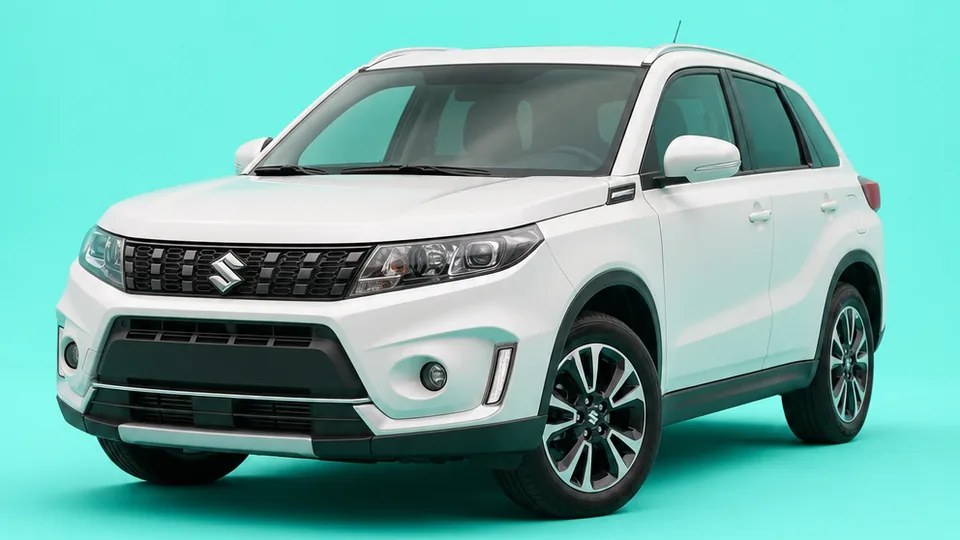
Competitor
$32k-$42k new, $15k-$32k used
Vitara is usually the more practical daily with a larger boot, softer ride, and better on-road refinement; Jimny is in practice the only genuine low-range 4WD of the pair and historically the stronger year-five resale. Households that prioritise daily comfort often favour Vitara; households that prioritise off-road capability or resale protection often favour Jimny.
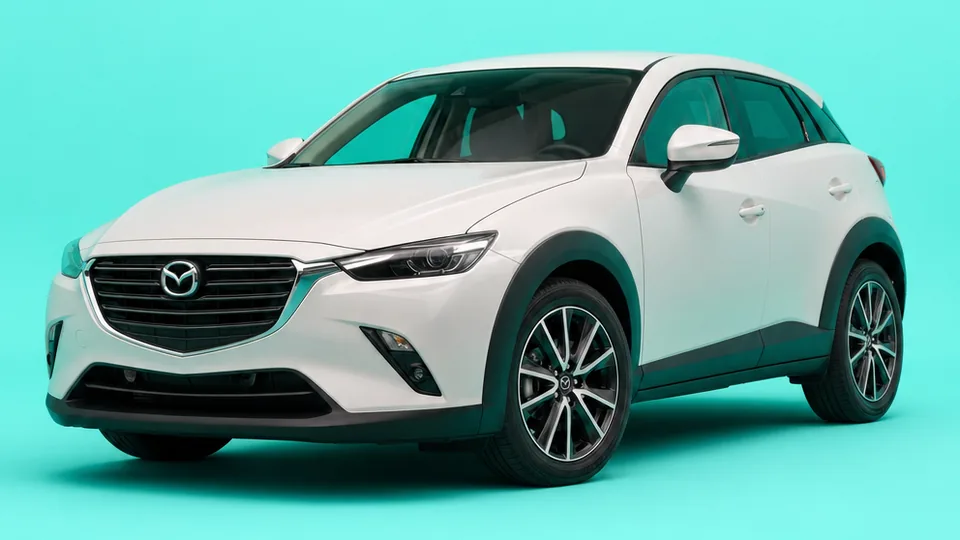
Competitor
$32k-$40k new, $14k-$30k used
CX-3 is generally considered the better urban drive with a more premium interior and stronger safety-tech inclusions; Jimny is generally the only genuine 4WD of the pair. Buyers for whom off-road capability isn't part of the brief often favour CX-3; buyers who actually use low range often favour Jimny.
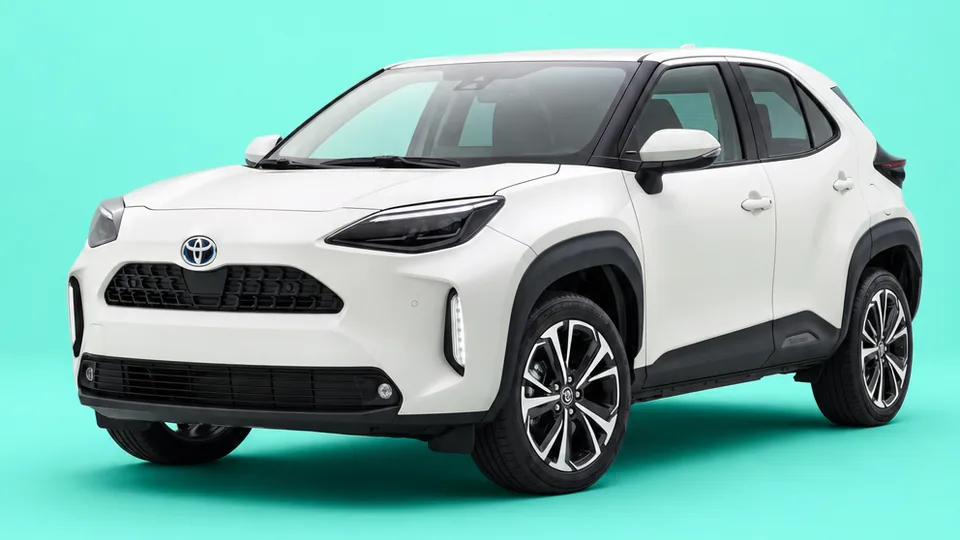
Competitor
$33k-$42k new, $22k-$36k used
Yaris Cross reads as the more fuel-efficient daily with Toyota's hybrid economy and a stronger dealer network; Jimny is in practice the only genuine off-road vehicle of the pair and historically the shallower depreciation curve. Buyers who commute long distances often favour Yaris Cross; buyers who use the vehicle on gravel or snow often favour Jimny.
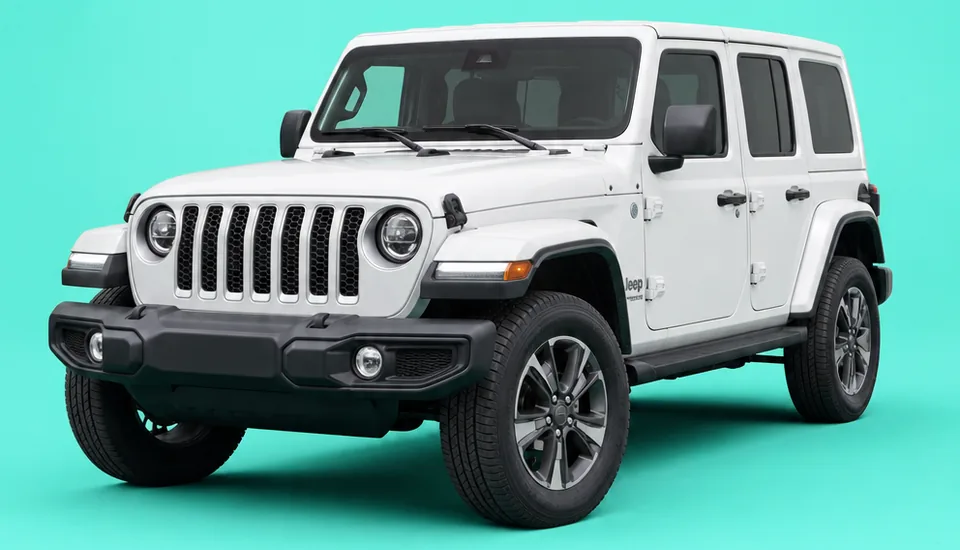
Competitor
$68k-$110k new, $30k-$75k used
Wrangler generally holds the more capable off-roader at the extreme end with removable roof and doors as genuine appeal; Jimny tends to be reckoned the far cheaper entry into genuine ladder-frame 4WD and the narrower, more trail-friendly footprint. Buyers for whom purchase price is a primary constraint often favour Jimny; buyers who want maximum off-road capability and don't mind the premium often favour Wrangler.
Worked example
Buyer profile
Wānaka dual-income household, mid-forties, a 10-hectare lifestyle block on the Cardrona side, clean credit file. The Jimny replaces an aging Samurai that has been sold privately, and sits alongside a larger family SUV used as the daily.
Scenario
Bought a 2022 Jimny JB74 Sierra 3-door auto at $32,000 from a private sale through TradeMe, with 28,000 km on the clock and a full Suzuki service book. Put a $6,000 cash deposit from the Samurai sale proceeds. Financed the remaining $26,000 over 4 years at 8.25% indicative via a secured consumer loan through an independent broker, with direct-to-seller disbursement at settlement after a Carjam and PPSR clearance.
The outcome
In this scenario, cash-flow impact at settlement was modest, because the weekly finance cost of about $148 sat roughly in line with the running cost the household was already absorbing on the aging Samurai in its final year. The Jimny's shorter service interval (10,000 km versus the Samurai's ad hoc maintenance) tightened the servicing cadence but reduced unplanned repair spend to close to zero for this borrower's structure.
On the balance sheet, this is a personal-name loan with no GST or deductibility in play, so the tax treatment is simpler than a commercial-use purchase. A household considering the same vehicle under rural business use (a vineyard or orchard, for example) would generally be looking at a chattel mortgage and different GST and deductibility outcomes, which sit outside this scenario and remain subject to the accountant's confirmation on the specific business position.
Through year one, the loan balance sits meaningfully below the vehicle's likely trade-in value on indicative NZ used-market trends, which is uncommon for a financed vehicle at this age. Jimny depreciation has historically been shallow enough that the amortisation curve typically catches the value curve inside the first six to nine months on a loan with a $6,000 deposit, and equity stays positive across the full term on these assumptions. That is a widely cited reason the Jimny finances unusually well, and why a five or even six-year term is sometimes defensible where it would not be on a same-price hatch.
At year four on these assumptions, the loan settles and the Jimny is unencumbered. On indicative NZ used-market trends, a comparable six-year-old JB74 Sierra typically still trades in the high-$20k range at 2029 values, which for this household supports either a sell-and-replace into a newer Jimny on a similar structure, or a long-hold keep-and-use pattern with negligible capital loss across the ownership. The discipline that makes this pattern work is matching the loan term to the replacement intent (4 years for replace, 5 years for long-hold) and avoiding over-RRP waitlist-era pricing at purchase.
Illustrative example. Not a promise of approval or rate. Your circumstances and the lender's own credit decision will determine your actual outcome.
Model-specific questions
At a 7% indicative rate over five years with no deposit, a used JB74 Sierra around $32,000 runs at roughly $146 a week and a new 2024 Sierra 5-door at $38,000 runs at about $174 a week. Older JB43 examples near $15,000 work out to around $69 a week on the same settings. Actual rates are set by the lender after assessment, so these figures are illustrative only.
For a new Jimny with a clean credit record and a deposit, indicative rates from mainstream lenders sit in the 7 to 9% range. Used Jimnys typically land in the 8 to 11% range, with imported JB43s sometimes pricing slightly higher because residual data is thinner. Typically, the Jimny's shallow depreciation curve is sometimes cited by lenders as a favourable asset factor; the actual differential depends on the lender and the applicant. An independent broker comparison across multiple NZ lenders helps identify a well-placed approval.
A $3,000 markup on a $42,000 dealer-stock JB74 typically costs closer to $3,700 once financed across a 5-year loan at indicative rates. Waitlist times have shortened since the 5-door JB74 XL launched, and allocated orders at list price have become more common again. The arithmetic usually favours waiting where the household can; the arithmetic sometimes favours paying-over where the wait displaces a specific need.
On indicative NZ used-market trends, Jimny residuals have historically held at 70 to 85% of original price across 3 years, which is unusually strong for a small car and is widely attributed to constrained supply and sustained enthusiast demand. A 5-year loan typically stays above balance through the term, which is the opposite of what is commonly observed on a Swift loan of the same length.
On a used JB74 under $35,000, zero-deposit loans are routine for borrowers with a clean file; a 10 to 20% deposit still typically helps the indicative rate and reduces total interest. On a new Jimny Sierra at $38,000 to $42,000, a deposit becomes genuinely useful. In practice, 20% down on a $38,000 Sierra 5-door commonly moves the lender's indicative rate noticeably and saves several hundred dollars in total interest over a five-year term, with the actual effect depending on the lender and the applicant.
Five years is the usual default on personal use. The Jimny's shallow depreciation curve typically supports six or even seven-year terms arithmetically, where most small cars would be underwater. For rural business buyers on a chattel mortgage, three or four-year terms often fit better because they align with the typical replacement interval on a vineyard or orchard second vehicle. Total interest grows quickly on longer terms: on a $30,000 loan at 8% indicative, a seven-year term costs roughly $2,800 more in interest than a five-year term.
Yes, and private sales are a common pathway on the JB74 and especially on older JB43 imports. A broker indicative rate in hand before negotiating typically strengthens the buying position. A Carjam report verifies VIN, odometer, and any secured interest on the PPSR; the seller must clear any listed security before or at settlement. The broker arranges direct payment to the seller, and a pre-purchase inspection at $150 to $250 tends to be treated as worth the cost before committing.
Yes, though lender appetite varies by age, condition, and provenance. Late-model JB74 imports with a clear auction sheet and entry-certification paperwork typically finance at broadly similar indicative rates to NZ-new stock, sometimes a shade higher. Older JB43 imports can finance but often at used-car consumer rates rather than new-car indicative rates, and some lenders cap maximum vehicle age. Provenance paperwork (auction sheet, odometer history) is commonly the deciding factor.
Sometimes directly, more often indirectly. Indicative NZ used-market trends are part of how some lenders assess asset risk, and the Jimny's shallow depreciation is regularly raised as a favourable factor on longer terms. In practice, borrower credit and income drive most of the rate; the asset-side signal more often widens the range of approvable terms (five and six-year loans are more routinely approved on a Jimny than on a same-price small hatch) rather than pricing below a comparable consumer-loan rate.
Generally yes, where the accessories are quoted and invoiced as part of the vehicle purchase at the dealer and the required Low Volume Vehicle (LVV) certification is in place at settlement. Aftermarket fitment post-delivery is harder to roll in, because the finance contract has already settled. An uncertified structural modification can fail a WOF and commonly invalidates the comprehensive insurance the lender requires, so LVV paperwork is typically requested alongside any financed Jimny modifications.
Yes, and refinancing can pay off where circumstances have improved materially (credit score up, income up, or existing debts paid down). The Jimny is generally taken as a strong refinance candidate on indicative NZ used-market trends, because resale typically stays strong enough that a new lender will often approve against it. Before refinancing, the original loan is commonly checked for early-repayment fees, with the total-interest saving worked out net of those fees.
Comprehensive cover is almost always a loan condition, because the vehicle is the lender's security. On a JB74 Sierra in 2026, indicative annual premiums run $1,700 to $2,300 in Auckland, $1,300 to $1,800 in Wellington, and $1,050 to $1,500 in Canterbury. Jimny premiums sometimes sit higher than size-equivalent hatches on NZ insurer data, because theft risk and off-road-use claims are priced in across the segment.
The loan structure is identical, but the purchase price drives the financed amount and therefore the weekly and total interest. An allocated-order Jimny at list typically finances cheaper than a dealer-stock example at a waitlist-era premium, often by $3,000 to $5,000 on the total cost of a 5-year term. Lenders typically fund to the lower of the agreed price or an independent valuation, so waitlist-era premiums above market comparables sometimes need to be covered partly in cash.
You might also want
Amount
$25,000 car loan
Close to a typical Jimny price.
See pageSuzuki model
Suzuki Swift finance
A New Zealand first-car staple across more than two decades.
See pageLoan type
Used car finance
Most Jimny finance in NZ is on used vehicles.
See pageLoan type
Self-employed loans
Jimny finance is often structured through chattel mortgage.
See pageBrand
All Suzuki models
Finance across the Suzuki range.
See pageOur finance partner compares multiple NZ lenders. Calculator inputs travel through to the application, and the partner returns a formal estimate after the lender's credit assessment.
Disclaimer
A car loan runs for years, and the repayment comes out of the same pay that covers everything else. This site exists to show you that weekly number before you sign anything. The payment that catches people out is the one that's fine on a good week and tight on a bad one.
Carfinance.org.nz receives a commission from Simplify when a visitor applies through this site and their application is approved. We refer every visitor to the same partner because they compare multiple New Zealand lenders on the applicant's behalf, so the referral is not driven by a sponsored deal. Simplify sets its own terms and fees and discloses them directly; anything you agree to happens on their side, not ours. Every figure shown on this site is a modelled estimate based on the inputs entered; the actual rate, fees, and repayments are set by the lender after assessing the applicant's circumstances and its own credit decision. Carfinance.org.nz is a calculator and information tool. We are not a lender, not a broker, and not a registered financial adviser. Any decision about whether a specific loan suits a specific situation is best made after talking with the lender, and for amounts that materially affect the household, with a registered financial adviser.
Connecting you with a trusted NZ finance partner
One moment while we hand you over securely. Nothing was collected on our side.