Skip to content
Carfinance.org.nz
Volvo logo Premium brand

Volvo car finance calculator

Published 23 April 2026 · Last reviewed 23 April 2026 · Disclaimer

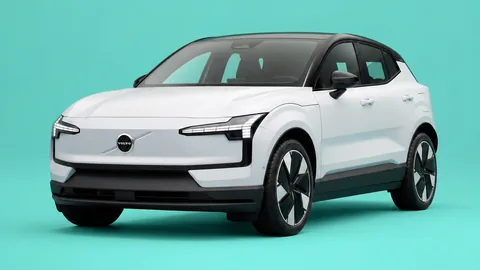
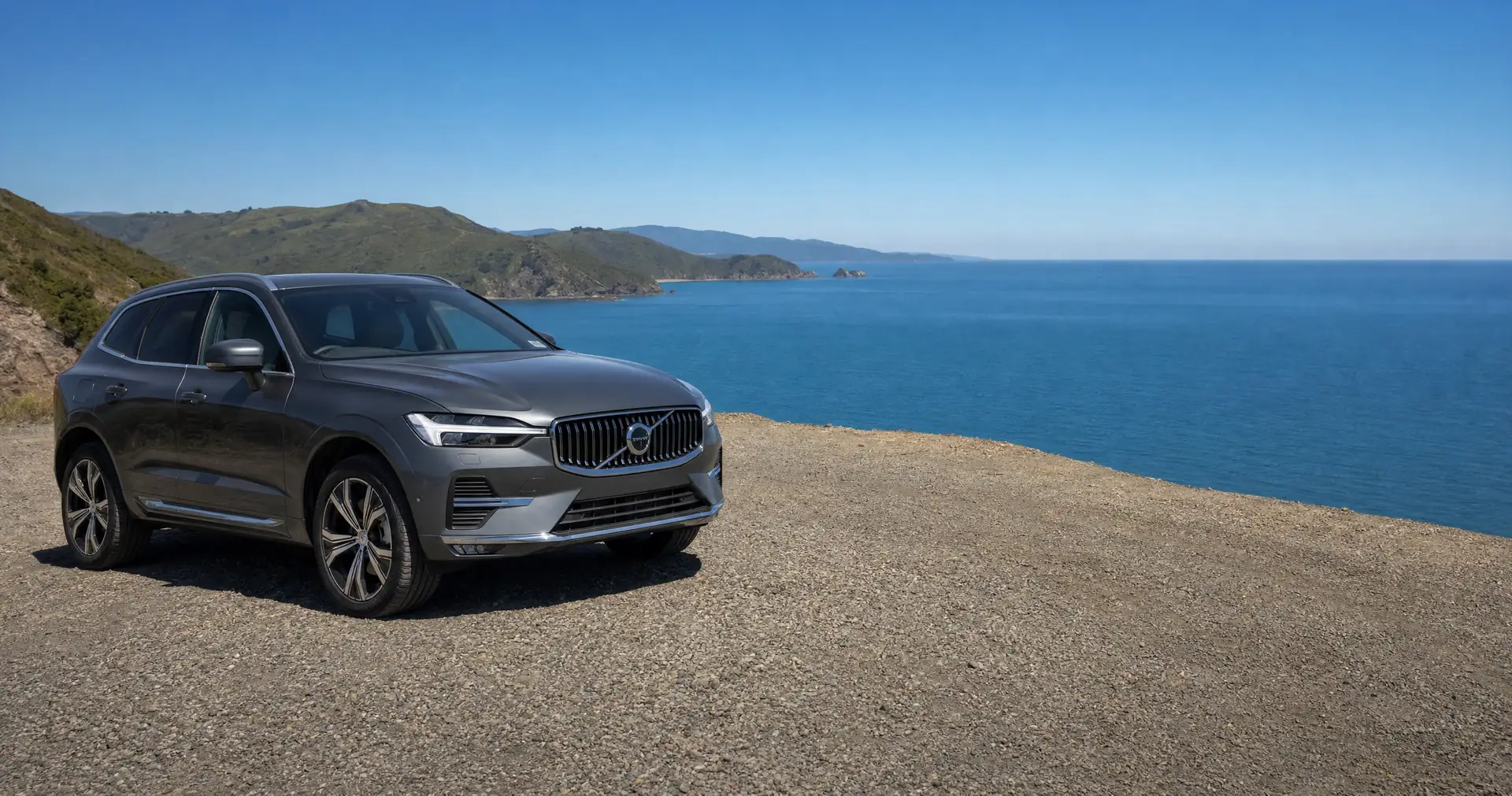
A European premium brand financed mostly by safety-conscious family and professional buyers in New Zealand's main centres, with a more pronounced EV pivot than most German rivals. The NZ parc leans heavily on the XC60 mid-size SUV and the XC40 compact SUV, with XC90 on seven-seat duty and the Recharge EV line (XC40 Recharge, C40, EX30, EX90) growing through 2024 to 2026 (Carjam, MIA). Volvo Car Financial Services exists in the NZ market through partner-lender arrangements. Loan sizes typically run from about $18,000 on an older V40 or XC60 through to around $160,000 on a new EX90 flagship.

Your estimated repayment

Weekly

Disclaimer

$160/week

$320 /fortnight $693 /month
$35,000
$0
7.00% p.a.
5 years

We are not a finance company. Indicative only. Not a quote or offer of credit. Actual rates, fees, and repayments depend on your circumstances and the lender's decision.

Why this brand finances well

What lenders look for in a Volvo.

  • Volvo's Recharge EV lineup (XC40 Recharge, C40, EX30, EX90) qualifies for most NZ lenders' EV loan tier on NZ-new applications, typically sitting 0.5 to 1.5 percentage points below the equivalent petrol secured-car rate and materially changing the weekly cost on a $70,000 to $100,000 loan.
  • XC60 and XC90 carry enough NZ residual-value history across the 2018 to 2024 generations that underwriting desks have clean data to price five-year terms against, which keeps the loan-to-value conversation straightforward on the mainstream family-SUV bracket.
  • Volvo NZ factory warranty (currently 5 years unlimited km on the vehicle plus 8 years on the high-voltage battery for Recharge models; confirm with the dealer for your specific vehicle) covers most of a standard loan term, which supports lender confidence and removes the case for mechanical breakdown add-ons at signing.
  • Corporate fleet use on XC60 B5 and diesel variants gives lenders familiarity with Volvo from a commercial-lease angle as well as retail, which widens the set of finance structures available to owner-operators considering an XC60 as a business-use vehicle.
  • Strong safety testing results (Euro NCAP, ANCAP) reduce typical insurance premiums on Volvo relative to several German-premium rivals at matched value, which improves the monthly run-cost picture without changing the finance itself.

Buyer notes

Where to get the best Volvo rate.

On a new NZ-new XC60, XC40, XC90, or any Recharge variant, start with an independent broker to price the standard or EV loan tier, then let the Volvo NZ dealer finance desk try to match. On used NZ-new Volvos through dealer forecourts, a broker typically wins by 1 to 2 percentage points. On ex-Japan or ex-UK Volvo imports (a thin stream in NZ), confirm warranty status and service records before the broker submits, because parts and software-support treatment differs from NZ-new cars.

No sign-up on our site. Our finance partner compares NZ lenders and returns a formal estimate after the lender's credit assessment.

New vs used

Financing a new Volvo vs a used one.

The Volvo finance conversation in New Zealand splits by age and by drivetrain more than by channel, because Volvo Cars NZ does not run heavy captive subvention across the lineup. The cleanest structural difference is whether the Recharge EV loan tier applies, which reshapes the weekly cost on XC40 Recharge, C40, EX30, or EX90.

Path 1

New Volvo (through Volvo Cars NZ dealer)

Broker first on ICE; EV tier matters on Recharge

  • Volvo Cars NZ arranges finance through partner lenders rather than running a fully subvented captive arm, so dealer rates are typically open-market with a margin.
  • Most NZ lenders apply their EV loan tier to new or recent NZ-new Recharge variants, which sits 0.5 to 1.5 percentage points below the standard secured-car rate.
  • Volvo NZ factory warranty (5 years vehicle, 8 years high-voltage battery on Recharge per current policy) covers most of a standard loan term.
  • Drive-away pricing has modest headline discounting room on XC60 and XC90 stock, though Recharge pricing is generally tighter.

Verdict

Get a broker quote on the specific XC60, XC40, XC90, or Recharge model before accepting any Volvo NZ dealer finance offer. On Recharge variants, confirm EV loan tier eligibility with the broker and the dealer both, because missing the tier adds meaningful interest across a five-year term.

Path 2

Used Volvo (NZ-new or import)

Broker almost always wins; confirm EV tier on used Recharge

  • Used-Volvo finance has no subvention wrapper; every dealer rate is a marked-up partner-lender rate.
  • NZ-new used Volvos under 3 years old typically retain remaining factory warranty, which supports a tighter broker rate.
  • The NZ used-market pool of ex-UK or ex-Japan Volvo imports is thin relative to BMW or Audi, so most used Volvo finance is NZ-new.
  • Lender residual-value assumptions on 2019 to 2023 XC60 B5 and XC90 B5 sit in line with equivalent-age X3 and Q5 applications.

Verdict

Start with a broker quote on the specific used XC60, XC40, or XC90. On used Recharge variants, confirm whether the lender still applies the EV tier at the vehicle's age, because some lenders apply age caps to their EV pricing.

Rule of thumb

Volvo is a broker-first brand in most scenarios because there is no heavy NZ captive subvention to beat. On Recharge variants, the EV loan tier is the single most valuable lever; confirm eligibility by name before signing.

Total cost of ownership

What a Volvo really costs beyond the finance line.

Volvo running costs sit between Japanese-premium and German-premium on most line items. The Recharge EV line reshapes the picture materially, moving servicing and energy costs well below equivalent petrol rivals at the expense of a higher sticker price and RUC exposure.

  • Servicing and consumables

    XC40 and XC60 B4 or B5 mild-hybrid at the lower end. XC90 B5 and B6 mid-range. Recharge XC40, C40, EX30 at the lower end of the band because EV servicing is light. XC60 T8 plug-in hybrid sits higher due to combined petrol-and-electric maintenance.

    $150 to $280 per month
  • Insurance (full cover)

    XC40 and XC60 $1,300 to $1,900. XC90 $1,700 to $2,400. EX90 flagship $2,200 to $2,800. Volvo's strong safety ratings trim premiums 5 to 10% below some equivalent-value German rivals at matched sum insured.

    $1,300 to $2,800 per year
  • Home charging (Recharge models)

    Based on 12,000 to 15,000 km a year on a typical NZ off-peak plan. EX30 and XC40 Recharge at the lower end (smaller battery, efficient). EX90 at the top of the band because of its larger pack and heavier vehicle.

    $500 to $1,200 per year
  • Road User Charges

    Applies to all Volvo Recharge EVs (XC40 Recharge, C40, EX30, EX90) since April 2024, and to XC60 T8 and XC90 T8 plug-in hybrids at the reduced PHEV rate. Older diesel XC60 D4 and XC90 D5 also pay $76 per 1,000 km.

    $76 per 1,000 km (EV) or $38 per 1,000 km (PHEV)
  • Tyres

    XC40 on 17 to 18-inch $1,200 to $1,600. XC60 on 19 to 20-inch $1,500 to $2,100. XC90 and EX90 on 20 to 22-inch $2,000 to $2,600. EV torque cycles shorten replacement intervals on Recharge models slightly.

    $1,200 to $2,600 per set
  • Fuel (ICE and PHEV models)

    Based on 13,000 to 15,000 km a year. XC40 B3 and B4 mild-hybrid at the low end. XC60 B5 and B6 mid-range. XC90 B5 at the top of the band. Plug-in hybrid XC60 T8 and XC90 T8 drop sharply with disciplined nightly charging.

    $1,800 to $3,400 per year

Worth knowing

XC60 B5 vs BMW X3 xDrive30i at the same finance weekly

A $65,000 used XC60 B5 and a $65,000 used X3 xDrive30i sit at the same weekly repayment, but the XC60 typically runs around $400 to $800 a year cheaper on insurance thanks to Volvo's strong safety rating, with servicing within a few hundred dollars either way. Fuel spend is close. Pick the car you prefer on ride and interior feel; the finance math lands within a narrow band.

Resale and equity

How Volvo resale shapes your finance decision.

48 to 58%

value retained, 3-year-old XC60

45 to 55%

value retained, 3-year-old XC40 Recharge

45 to 52%

premium-brand market average (German)

Volvo residuals in New Zealand sit broadly in line with German-premium equivalents on the ICE side of the lineup, with XC60 tracking close to X3 and Q5, and XC90 close to X5 and Q7 across three to five year windows. The Recharge EV line (XC40 Recharge, C40, EX30, EX90) has thinner residual history because the line is newer to NZ and the used-EV market in the premium segment is still forming, so lender residual assumptions tend to sit slightly conservative. The eight-year high-voltage battery warranty (per Volvo NZ current policy) underpins resale support on Recharge variants because a used buyer in year four is still looking at four remaining years of battery coverage.

For finance the practical implication varies by drivetrain. A five-year loan on an NZ-new XC60 B5 or XC90 B5 is comfortable because the residual curve runs ahead of the amortisation curve through most of the term. On Recharge variants, four to five years is sensible while battery warranty umbrella remains in place; six or seven year terms on an EX30 or XC40 Recharge push the back-half balance into territory where resale value is still finding its level.

Match the Volvo loan term to the drivetrain and to the battery warranty umbrella on Recharge variants. On XC60, XC40, or XC90 ICE and mild-hybrid stock a five-year loan works comfortably. On Recharge models keep the term at four or five years so the eight-year battery warranty still covers the second owner at trade-in, which supports stronger resale and a smoother trade-up.

Things to avoid

Volvo finance traps we flag honestly.

An opinionated list. The commercial side of this site has no incentive to tell you these things, so we do.

Missing the EV loan tier on a Recharge application

Some Volvo dealer desks default to a partner-lender standard secured rate on a Recharge application rather than flagging EV tier eligibility. Missing the 0.5 to 1.5 percentage point discount costs $500 to $1,500 of interest across a five-year term on an $80,000 EX90 loan. Ask the broker to confirm EV tier eligibility by name before signing.

Seven-year terms on an XC60 T8 plug-in hybrid

XC60 T8 carries a high-voltage battery and a petrol drivetrain that both age across the term. A seven-year loan on a $95,000 T8 pushes the balance above resale through the back half of the loan, particularly if the battery ages outside the 8-year warranty umbrella. A four or five year term with a larger deposit is the cleaner structure.

Rolling the EX90 or XC40 Recharge home-charger install into the car loan

A home wall-box install for a Recharge EV runs $2,000 to $4,500 depending on switchboard work. Rolling that into a seven-year Volvo loan can add $500 to $1,200 in interest across the term. A standalone personal loan or cash purchase is usually cheaper, and some electricity retailers offer zero-interest charger finance worth comparing.

Treating a used ex-UK Volvo import as if it carries NZ warranty

A small stream of ex-UK Volvo imports appears on the NZ used market at attractive prices. These cars do not carry Volvo Cars NZ factory warranty and often lack a local service record. Finance rates sit 0.5 to 1.5 percentage points above NZ-new equivalents and lender loan-to-value is tighter. Keep the term to three or four years on any import Volvo.

Balloon residual offers on a new XC90 or EX90

Some Volvo dealer finance products on XC90 and EX90 offer 30 to 40% residuals to keep the weekly low on a $120,000+ loan. At year four you still owe $36,000 to $48,000, and refinancing that residual at open-market rates often costs more than amortising the full amount from the start.

Drivetrain economics

Hybrid vs petrol vs EV on a Volvo.

Volvo's current NZ range covers mild-hybrid petrol and diesel (XC40, XC60, XC90 under the B3 to B6 badging), plug-in hybrid (XC60 T8 and XC90 T8 Recharge), and full battery-electric (XC40 Recharge, C40 Recharge, EX30, EX90). The drivetrain choice drives the running-cost difference more than the finance rate difference, except where the EV or PHEV loan tier is in play.

Mild-hybrid petrol (B3, B4, B5, B6)

The mainstream ICE option across XC40, XC60, and XC90

  • Mild-hybrid 48-volt system on current Volvo petrol variants, which is not a full hybrid but trims fuel consumption modestly.
  • Financed at the standard secured used-car rate with no drivetrain premium or discount.
  • No Road User Charges on the petrol side; fuel is the only per-kilometre variable cost.
  • Strong parts supply through Volvo Cars NZ and predictable servicing cost across the current XC60 and XC90 lines.

Diesel (older XC60 D4, XC90 D5, XC60 B5 diesel)

Mostly used-market now; RUC applies

  • Volvo NZ has scaled back diesel volume on new cars since 2022, so current diesel supply is primarily used-market.
  • Road User Charges of $76 per 1,000 km apply. At 20,000 km a year that is $1,520 before fuel.
  • DPF and injector maintenance on older D4 and D5 stock adds to servicing bills compared with mild-hybrid petrol.
  • XC60 B5 diesel remains a corporate-fleet choice in New Zealand because of highway economy and tow capacity.

Plug-in hybrid (XC60 T8, XC90 T8 Recharge)

PHEV tier at some lenders; strongest economics at 30 to 60 km daily

  • Reduced PHEV Road User Charges of $38 per 1,000 km apply since April 2024, half the full EV rate.
  • Most daily driving runs on battery if charged nightly; longer trips fall back on the petrol engine without range anxiety.
  • Some NZ lenders apply a PHEV-specific or general efficient-vehicle tier; confirm eligibility by name when quoting.
  • Servicing cost sits above full-EV variants because the petrol drivetrain still needs oil changes and cam-belt attention over the long term.

Electric (XC40 Recharge, C40, EX30, EX90)

EV loan tier plus low running costs, subject to RUC

  • Most NZ lenders apply their EV loan tier to NZ-new Recharge variants, typically 0.5 to 1.5 percentage points below the equivalent petrol secured-car rate.
  • Road User Charges of $76 per 1,000 km apply since April 2024, which narrows the total-cost gap against efficient ICE at low annual km.
  • Home charging on off-peak rates runs around 4 to 6 cents per km on the EX30 and XC40 Recharge, slightly higher on the heavier EX90.
  • The 8-year high-voltage battery warranty (Volvo NZ policy) runs through the typical loan term, which removes battery-replacement risk from the weekly-cost calculation.

Break-even heuristic

The practical rule on Volvo drivetrains: for suburban and commuter use under 12,000 km a year, a mild-hybrid petrol XC60 or XC40 is the cheapest total-cost option. Above 15,000 km a year with home charging, a full-EV Recharge variant on the EV loan tier typically undercuts the equivalent petrol on a five-year total cost. The T8 plug-in hybrid sidesteps the range-planning conversation if your week mixes short commutes with regular longer trips.

Commercial and business use

Financing a Volvo through your business.

Volvo appears in New Zealand business finance most often as a corporate fleet vehicle on XC60 B5 (diesel or petrol) or as an executive-lease vehicle on XC60, XC90, or EX90. Volvo's safety narrative reads well on fleet policy, which is a secondary reason XC60 holds a steady NZ corporate-fleet share. The three structures below treat a business-owned Volvo differently on balance sheet, GST handling, and tax position.

Chattel mortgage

You own it from day one

  • Vehicle sits on the business balance sheet as an asset.
  • GST on the purchase price is claimable in the next GST return if the business is GST-registered and the vehicle has a genuine business-use portion.
  • Finance interest and depreciation are both deductible against business income proportional to business use.
  • Typical term 3 to 5 years; lender registers security via PPSR.
  • Own the vehicle outright at the end of the term, with any private-use proportion adjusted via the logbook or FBT method.

Best for

Owner-operators and small professional-services firms (2 to 6 vehicles) buying an XC60 or XC90 for mixed business-and-personal use.

Operating lease

You rent it; no residual risk

  • Vehicle stays off the business balance sheet (operator owns it).
  • Fixed monthly charge typically includes scheduled servicing and sometimes tyres.
  • No GST claim on purchase because the business is not the owner.
  • Monthly payments are fully expensed to P&L; no depreciation to track.
  • Hand the vehicle back at term end with no residual-value risk on XC60, XC90, or EX90.

Best for

Corporate fleet operators running 5+ vehicles who value predictable opex and no exposure to premium-SUV resale swings.

Finance lease

Hybrid of the two structures

  • Vehicle is on the balance sheet but under a formal lease structure.
  • Regular lease payments are deductible against business income.
  • Residual balloon at term end, typically 30 to 40% on XC60 or XC90, negotiated at signing.
  • GST claimable on each monthly lease payment rather than on the purchase price.
  • Useful where predictable monthly commitment matters more than outright ownership at term end.

Best for

Mid-sized firms wanting structured monthly commitment on a Volvo without full operating-lease cost.

Get accounting advice

Which structure fits a Volvo business purchase depends on the private-use proportion, GST position, and replacement cycle. For owner-operator XC60 buyers, a chattel mortgage is the common default. For 5+ vehicle fleets, an operating lease keeps resale risk off the balance sheet, which is particularly useful on Recharge EV stock where the used-EV premium market is still forming. Get accounting advice before signing; the tax outcome can vary by several thousand dollars across the term between structures.

Japanese imports

Financing an imported Volvo.

Japanese-import and UK-import Volvos exist in the NZ used market but in meaningfully thinner volume than BMW, Audi, or Lexus imports. Most used Volvo volume in New Zealand is NZ-new through Volvo Cars NZ. When an import does come up, finance treatment diverges from NZ-new in ways worth understanding before the broker submits.

01

Warranty and service-record transfer

Ex-Japan and ex-UK Volvo imports do not carry Volvo Cars NZ factory warranty because that warranty attaches to cars sold new through the local dealer network. For finance purposes this matters because lenders treat warranty-covered vehicles as a lower residual risk. Expect a 0.5 to 1.5 percentage point premium on an import Volvo application compared with an equivalent-age NZ-new car, and a tighter loan-to-value ceiling at most lenders.

02

Software and diagnostics support

NZ-new Volvos receive over-the-air software updates and local diagnostics support through Volvo Cars NZ. Imports may run UK-market or Japanese-market firmware that does not accept NZ-region updates cleanly, which can affect infotainment, navigation, and occasionally driver-assist calibration. Budget for a specialist diagnostic workshop visit before settlement if you are buying an import, and confirm the lender is comfortable funding it.

03

Parts-supply lead time on older variants

Volvo Cars NZ dealers prioritise NZ-new vehicles for parts allocation. Imports can still be serviced at the Volvo network but can face longer lead times on specific components, particularly body panels or early-generation Recharge high-voltage modules. On a finance view this elongates any insurance claim or mechanical issue, which is one reason lenders price import Volvo applications more conservatively than NZ-new.

Case study

Worked example: financing a 2024 Volvo XC40 Recharge

The buyer

Wellington architect in a two-adult household, age 39, clean credit, $135,000 salary plus $40,000 partner income, replacing a 2017 Volvo V60 petrol that had reached 155,000 km as the main family car.

The scenario

Purchasing a 2024 Volvo XC40 Recharge Twin NZ-new through Volvo Cars Wellington for $82,000. Trade-in value on the 2017 V60: $14,000. Home already has a 7 kW wall-box installed under a previous EV-curious plan, so no additional charger cost rolled in. Off-peak electricity plan through Contact Energy.

The outcome

Monthly household cash-flow impact is roughly $1,210 before running costs.

Fuel spend on the old V60 ran around $62 a week at 14,000 km a year; on the XC40 Recharge the equivalent electricity and RUC spend runs roughly $30 a week, a net weekly motoring saving of around $32 against the previous pattern.

Insurance sits about $300 a year above the old V60 on a like-for-like sum insured, offset by servicing spend dropping from roughly $1,400 a year on the V60 to around $600 a year on the Recharge because EV servicing is materially lighter.

The XC40 Recharge remains under Volvo NZ 5-year factory warranty through the full loan term and under 8-year high-voltage battery warranty well past the end, which removes the case for mechanical breakdown cover at signing.

At year 5 the XC40 Recharge is expected to be worth approximately $36,000 to $44,000 based on observed Volvo Recharge depreciation through 2023 to 2025, though the band is wider than on XC60 ICE because NZ used-EV residual data is still maturing.

Illustrative example. Not a promise of approval or rate. Your circumstances and the lender's own credit decision will determine your actual outcome.

Affordability check

What can I afford on my income?

A rough sanity check. We assume repayments should sit under 10% of your take-home pay, with a 5-year term at 7%.

Not an affordability assessment. Real lender decisions consider all your debts, expenses, and history.

$70,000
$20k $250k

Indicative safe loan

$30,000

At ~$135/week

Stretch maximum

$45,000

Only with no other debts

Apply this to the calculator

Common questions

Volvo finance FAQ.

Is Volvo Cars NZ dealer finance cheaper than an independent broker quote?

Usually not on open-market terms. Volvo Cars NZ does not operate a heavily subvented captive-finance arm in the NZ market, so dealer finance comes from partner lenders with a margin. A broker quote on an XC60, XC40, XC90, or Recharge model typically matches or undercuts the dealer rate, and the gap widens on used Volvo stock where no manufacturer contribution is in play.

Does the Volvo Recharge lineup qualify for EV-specific finance rates?

Yes, on NZ-new cars. Most NZ lenders apply their dedicated EV loan tier to XC40 Recharge, C40 Recharge, EX30, and EX90 on new and recent-used applications, typically 0.5 to 1.5 percentage points below the equivalent petrol secured rate. Confirm EV tier eligibility by name when the broker quotes, because a small number of lenders apply age or km caps that can exclude earlier 2022 examples.

How does Volvo compare to BMW or Audi for finance in New Zealand?

Structurally similar on the ICE side: XC60 residuals track close to X3 and Q5 across three to five year windows, and finance rates land in the same band at most NZ lenders. The Recharge EV line is where Volvo's positioning diverges, with a broader new-EV range below $90,000 than BMW or Audi currently cover and correspondingly cleaner EV loan tier access. Insurance typically runs a little lower on Volvo thanks to the safety rating.

How much deposit is typical when financing a Volvo in New Zealand?

15 to 25% is the common range on new and used NZ-new Volvos. On a $70,000 XC60 that is $10,500 to $17,500. A larger deposit typically trims 0.5 to 1 percentage point off the offered rate and provides a buffer against first-year depreciation. On import Volvos (thin NZ supply), lenders often ask for 20 to 30% because residual data is thinner.

Can I finance a Volvo older than 10 years in New Zealand?

Usually yes on a shorter term. Most NZ secured-car-loan products cap vehicle age at 12 to 15 years at loan-end date, so a 2014 XC60 or V60 is fine for a three-year term but often fails a five-year application. Rates sit 1 to 2 percentage points above current-generation pricing. A pre-purchase mechanical inspection on pre-2018 XC60 or XC90 stock is worth the cost before committing.

Does Volvo Cars NZ offer subvented rates on Recharge or XC60 models?

Occasionally through EOFY and end-of-quarter campaigns but not as a continuous programme. Most Volvo NZ dealer finance offers are partner-lender standard rates with a dealer margin, which is why benchmarking with a broker usually shows room to undercut. When a subvented offer does run, it typically requires a 20 to 30% deposit and a short term (2 to 3 years), so the headline rate alone does not capture the full cost.

What happens to my Volvo finance if I trade the car in halfway through the loan?

If trade-in value exceeds the outstanding balance, the surplus goes toward the next purchase. If balance is higher (negative equity), the shortfall rolls into the new loan. On NZ-new XC60 and XC90 under five-year terms, negative equity is uncommon because residuals hold up. On Recharge EV variants, negative equity risk is slightly higher during the first 18 months because used-EV prices are still finding their level.

Can I finance an ex-UK or ex-Japan Volvo import in New Zealand?

Yes, most NZ lenders will fund compliant imports provided the vehicle has passed entry compliance. Expect a 0.5 to 1.5 percentage point rate premium above NZ-new equivalents because lender residual data is thinner, Volvo Cars NZ warranty does not apply, and software support is less certain. Import Volvo volume in NZ is small, so this applies to a minority of applications.

Does Volvo Cars NZ warranty transfer on a used Recharge or XC60 sold privately?

Generally yes on any remaining balance of the 5-year vehicle warranty and the 8-year high-voltage battery warranty (per Volvo Cars NZ current policy; confirm with the dealer for your specific vehicle), provided the car was sold NZ-new and the Volvo service record is intact. Missing service records or service outside the authorised network can interrupt transfer and soften lender confidence, which can push the offered rate up by 0.5 to 1 percentage point.

Should I roll a home EV-charger install into my Volvo Recharge loan?

Usually no. A $3,000 wall-box install rolled into a seven-year EX90 loan adds $500 to $1,200 in interest across the term. A standalone personal loan or a cash purchase is typically cheaper, and several NZ electricity retailers offer interest-free or low-rate EV-charger finance specifically for new-EV buyers. Price the charger finance separately and compare.

Can I roll an existing car loan into a new Volvo loan?

Most NZ lenders allow it but affordability scrutiny tightens. If you owe $8,000 on your current car and are buying a $70,000 XC60, the new loan becomes around $78,000 less any deposit or trade. Keep rolled-in negative equity under 15 to 20% of the new Volvo's value; beyond that, clearing the old loan through private sale of the outgoing car first is usually cleaner.

What is the typical total cost of ownership for a financed Volvo XC60 over 5 years?

For a $60,000 used XC60 B5 on a five-year loan at 7.8%, finance totals approximately $72,500 (principal plus interest). Add insurance ($8,500 to $11,000), servicing and consumables ($9,500 to $13,000), fuel ($12,500 to $16,000 at 15,000 km a year), and tyres across one change ($1,800 to $2,500) for a rough all-in of $105,000 to $115,000 over five years. An XC40 Recharge on EV tier with home charging can land similar or lower total cost despite higher finance principal.

About this article
Published
23 April 2026
Last reviewed
23 April 2026

Methodology

All repayment figures on this page are calculated live from the inputs entered into the calculator using the standard amortised-loan formula. Indicative rates reflect publicly-advertised NZ secured-car and EV-tier pricing across mainstream lenders in the twelve months preceding the last review date. Volvo model prices are observed from recent TradeMe and AutoTrader listings covering NZ-new and the thin pool of ex-UK or ex-Japan imports separately, with new-car pricing cross-checked against Volvo Cars NZ published price lists at review date. Warranty terms reference Volvo Cars NZ current policy on vehicles sold through the authorised dealer network. Running-cost figures draw from AA New Zealand, Consumer NZ, and EECA Gen Less public guidance. We review annually or sooner if Volvo Cars NZ adjusts pricing, warranty, or lineup.

Sources

Apply for Volvo finance.

Our finance partner compares NZ lenders and returns a formal estimate after the lender's credit assessment. Calculator inputs travel through to the application so nothing gets re-typed.

All brands

Disclaimer

A car loan is a commitment that runs for years, and repayments come out of the same pay cheque as everything else. Before committing, it is worth modelling the weekly and monthly cost against the household budget, which is what this site is built to help with. Borrowing at a level that stays comfortable on a bad week, not a good one, is widely regarded as the safer frame.

Carfinance.org.nz earns a commission from a partner brand when a visitor applies through this site and their application is approved. That commission is paid by the partner, not the applicant, and it does not influence the rate the lender offers. We refer every visitor to the same partner because they compare multiple New Zealand lenders on the applicant's behalf, so the recommendation is not driven by a sponsored deal. Every figure shown on this site is a modelled estimate based on the inputs entered; the actual rate, fees, and repayments are set by the lender after assessing the applicant's circumstances and own credit decision. Carfinance.org.nz is a calculator and information tool. We are not a lender, not a broker, and not a registered financial adviser. Any decision about whether a specific loan suits a specific situation is best made after talking with the lender, and for amounts that materially affect the household, with a registered financial adviser.