
2013-2017 used (first-gen)
$22,000First-generation XC60. D4 diesel and T5/T6 petrol common. Typical 130,000 to 180,000 km by 2026.
Weekly
$100.53
Monthly
$435.63
Volvo's volume mid-size SUV and the strongest corporate-fleet presence in the NZ Volvo lineup.
Last reviewed: 24 April 2026
Your estimated repayment
Weekly
$206/week
We are not a finance company. Indicative only. Not a quote or offer of credit. Actual rates, fees, and repayments depend on your circumstances and the lender's decision.
 Volvo XC60 finance calculator Not a lender. Not a broker.
 The XC60 is Volvo's volume model in New Zealand and the nameplate that carries most of the brand's mid-size SUV volume, cross-shopping directly against BMW X3, Audi Q5, Lexus NX, and Mercedes-Benz GLC. Current NZ-new XC60 stock covers B4 mild-hybrid petrol, B5 mild-hybrid petrol and diesel, B6 performance petrol, and T8 Recharge plug-in hybrid variants. The XC60 has a steady corporate-fleet footprint in New Zealand on the B5 variants, which keeps lender residual data rich on the mainstream trims. Used-market supply is dominated by NZ-new stock through Volvo Cars NZ dealers and a smaller stream through generalist yards.
Calculate repaymentsIndicative only. Not a quote or offer of credit.
Year by year
Typical NZ market prices and the weekly cost of financing each. All figures assume 7% over 5 years with no deposit. Indicative only; open the full calculator to pre-set your own rate and term.
2013-2017 used (first-gen)
$22,000First-generation XC60. D4 diesel and T5/T6 petrol common. Typical 130,000 to 180,000 km by 2026.
Weekly
$100.53
Monthly
$435.63
2018-2021 used
$38,000Second-generation pre-facelift. Cleaner infotainment, more refined interior. D4 diesel phasing out.
Weekly
$173.64
Monthly
$752.45
2022-2023 used
$55,000Second-generation post-facelift. B4, B5, B6 mild-hybrid badging replaces older T-series.
Weekly
$251.32
Monthly
$1,089.07
2024+ new/nearly-new
$85,000Current B5, B6, and T8 Recharge plug-in hybrid. Ultra and Plus trims cover the NZ lineup.
Weekly
$388.41
Monthly
$1,683.10
Who this suits
Four real scenarios
Representative NZ buyers and the numbers behind their deals. Weekly and rate figures are indicative and shown for comparison. Your own rate is confirmed by the lender after application.
Auckland North Shore family on a B5 mild hybrid
2023 XC60 B5 AWD Inscription Expression, 32,000 km NZ-new ex-lease
$78,000 · $16,000 deposit, 5 years at 8.1% (indicative)
A Takapuna dual-income household replacing a 2019 Audi Q5 40 TFSI at the Volvo Cars North Shore dealer on Wairau Road, having taken the ex-lease XC60 off a corporate return at the end of a three-year Agility-style programme. The B5 mild-hybrid 2.0 turbo four is the volume variant in the current NZ XC60 lineup and was favoured over the comparable Q5 40 TFSI for the cabin-safety package (IntelliSafe, Pilot Assist) widely cited as a core Volvo pillar, and for the more predictable running-cost profile on short Northern Motorway commutes plus school runs to Westlake. A 20% cash deposit from the sale of the Q5 moved the indicative rate into the stronger band for the applicant profile, and the five-year consumer-loan term aligns with the expected family hold period.
$312 per week
Wellington PHEV T8 Recharge commuter
2024 XC60 T8 Recharge Ultimate PHEV, NZ-new
$115,000 · $25,000 deposit, 4 years at 7.6% (indicative)
A Thorndon professional-services partner running the T8 Recharge as the primary household vehicle across a short Wellington CBD commute on electric-only range plus monthly long-distance trips to Taupō and Hamilton that pull the petrol four-cylinder into duty. The T8 Recharge Ultimate was chosen over a comparable B6 petrol for the reduced plug-in hybrid Road User Charge rate on all distance travelled and for the captive-finance green-loan tier offered by Volvo Car Financial Services NZ on current new stock during the quarter. A four-year term was chosen through the captive rather than a five-year consumer loan through a broker because the household plans to step into the next-generation Volvo EX60 or a refreshed T8 at term end.
$516 per week
Tauranga lifestyle-block on a T5 AWD pre-facelift
2019 XC60 T5 AWD R-Design, 78,000 km NZ-new used
$44,000 · $8,000 deposit, 5 years at 8.65% (indicative)
A Te Puna lifestyle-block household running the pre-facelift T5 AWD as the primary farm-to-town vehicle across unsealed access roads and regular trips to Tauranga and Mount Maunganui. The second-generation pre-facelift T5 petrol was preferred over a comparable diesel D5 because the drivetrain tends to be treated as simpler at rural service intervals and the R-Design trim bought more capability per dollar on the used market than a later B5. The five-year consumer-loan term through an independent broker sat a touch under the Volvo dealer-yard indicative on the day, and the Sensus infotainment pre-Android Automotive era was accepted as part of the trade-off at the price point.
$172 per week
Dunedin empty-nester on an R-Design ex-lease
2022 XC60 B5 AWD R-Design, 48,000 km NZ-new ex-lease
$62,000 · $14,000 deposit, 3 years at 7.95% (indicative)
A Maori Hill Dunedin household in their early sixties downsizing from an older XC90 into the smaller XC60 footprint for easier inner-suburb parking and lower fuel use on shorter weekly duty, taking the post-facelift B5 AWD R-Design at a Dunedin Volvo dealer on the Andersons Bay Road retail strip. The R-Design trim was chosen over Inscription Expression for the slightly sharper chassis tune and the 20-inch wheels considered acceptable on lower-kilometre urban duty. A three-year consumer-loan term was chosen on fixed superannuation income rather than a longer amortising loan, and a 23% cash deposit from a maturing term deposit kept the financed balance around $48,000 and total interest modest across the term.
$321 per week
The real number
Five years of real outlay on a representative NZ-new 2024 XC60 T8 Recharge Ultimate PHEV at $115,000, financed at 7% over 5 years with no deposit, driven 15,000 km a year from an Auckland base. The loan payment is the smallest surprise here. Everything around it adds up faster. On a premium mid-size PHEV like the T8 Recharge, petrol use drops materially on a charging-disciplined duty cycle, but Volvo dealer scheduled servicing, Auckland insurance on an agreed value above $110,000, and 20 or 21-inch Ultimate tyres still materially expand the five-year number beyond the purchase price. The T8 Recharge is the most complex drivetrain in the current XC60 NZ lineup and is the scenario that most clearly separates the weekly finance line from the true weekly cost.
Purchase price
$115,000
NZ-new 2024 XC60 T8 Recharge Ultimate at current Volvo Cars NZ list. Negotiated drive-away pricing on in-stock cars typically sits a touch lower when Volvo Cars NZ runs end-of-quarter stock clearance on current Ultimate pack configurations.
Finance interest
$21,620
Indicative 7% over 5 years, no deposit, amortising. Actual rate is set by the lender after credit assessment. Volvo Car Financial Services NZ green-loan tier or subvented offers on current T8 Recharge stock occasionally price below this benchmark around quarter end.
Premium petrol (95/98)
$12,640
75,000 km across the term at a real-world combined 3.8 L/100 km on 95/98 premium, reflecting roughly 45% of kilometres on petrol duty and 55% on electric range when the household charges nightly. The B4204T57 T8 single e-boost turbo petrol four prefers premium and Volvo Cars NZ guidance points to 95 minimum for warranty intent.
Home charging (electricity)
$3,960
Around 4,400 kWh a year on a 3.7 kW residential wallbox, billed at an indicative $0.18/kWh off-peak residential rate across the 5 years. Actual cost varies by retailer, plan, and household solar contribution; a solar-equipped household on a day-only tariff typically trims this line materially.
Comprehensive insurance
$13,100
Auckland band for a T8 Recharge Ultimate with off-street storage and an agreed value at purchase price: around $2,750 at year 1, trending down as agreed value drops. Cover is a standard loan condition while the XC60 is on finance.
Scheduled servicing
$5,700
Volvo Cars NZ dealer scheduled servicing at 15,000 km or 12-month intervals across roughly five intervals, averaging $780 to $1,050 per visit at the franchised dealer, plus a T8 Recharge high-voltage battery state-of-health check at year three and a brake-service cycle inside the five-year window. PHEV service intervals are typically more complex than a pure petrol XC60 B5.
Tyres
$3,850
One full set replacement around year 3 to 4 at roughly $3,100 on the 255/40 R21 Ultimate fitment (or 235/55 R20 on lower Ultimate packs), plus rotations and a spare top-up. Low-profile 20 and 21-inch tyres typically wear inside shoulders faster than a smaller-wheel XC60 Plus fitment on equivalent distance.
Rego, WOF, and PHEV RUC
$2,850
Five yearly registrations, plus a WOF each year from year three, and the reduced plug-in hybrid Road User Charge rate ($38 per 1,000 km) applied to all distance travelled across the five years. PHEV RUC sits materially below the full-EV rate and below the petrol-on-RUC rate applicable to the D-series diesel XC60 variants.
Total five-year cash outlay
$178,720
Assumes: 2024 XC60 T8 Recharge Ultimate PHEV at $115,000 new, 15,000 km/year across 75,000 km total, roughly 55% of kilometres on electric range and 45% on the petrol four, real-world combined petrol consumption 3.8 L/100 km on 95/98 premium at $2.95/L, off-peak residential charging at around $0.18/kWh across 4,400 kWh/year, Auckland insurance band, Volvo Cars NZ dealer scheduled servicing, 20-inch Ultimate tyre fitment, PHEV RUC rate ($38 per 1,000 km) applied to all distance travelled. Indicative only.
What it's worth later
XC60 depreciation on NZ-new stock has historically been among the stronger premium mid-size SUV curves observed on the NZ used market, per TradeMe and AutoTrader listing patterns across second-generation Inscription, R-Design, Plus, and Ultimate stock. Volvo residuals are historically strong in the segment, particularly on current-generation XC60 where the nameplate has built a distinct identity around the cabin-safety package and where corporate-fleet demand has kept used supply firm. The first material step down typically appears at year three, where the ex-lease and ex-corporate-fleet pool releases into the used channel at once and pulls achievable retail back a few percent. The T8 Recharge PHEV carries a different curve to the B5 petrol, because current NZ used-market data on T8 stock is thinner and plug-in battery state of health is a material resale input that has no direct equivalent on the petrol variants.
Based on a 2024 XC60 T8 Recharge Ultimate purchased new at $115,000. Indicative NZ used-market 2026 pricing.
Year 1
80%
$92,000
First-year drop on current-generation XC60 has historically tracked close to the premium-SUV average, with the T8 Recharge specifically holding firmer than the B6 petrol at equivalent trim on the observed 2024 and 2025 NZ used-market data typically. Ultimate trim and R-Design optioned cars typically hold stronger than Plus specs at year one.
Year 3
58%
$66,700
Ex-lease and ex-corporate-fleet XC60 stock typically lands on the NZ used market in volume around this age, which historically pulls achievable retail back a few percent against earlier years. A bracket where many executive households trade in before the Volvo NZ factory warranty lapses, and the first point at which T8 Recharge battery state-of-health documentation becomes a material resale input.
Year 5
46%
$52,900
Common exit point for five-year consumer-loan buyers. Factory warranty lapses around here for NZ-new stock and extended Volvo Cars NZ coverage or a Volvo Selekt used-car warranty becomes a meaningful paperwork item on the used market. The Sensus pre-Android Automotive infotainment era is a usual resale input at this age on 2018 to early 2022 stock compared to post-update Android Automotive cars.
Year 7
34%
$39,100
Used-market supply expands as early second-generation stock ages into private-sale territory. Loan approvals past this point typically depend on kilometres, Volvo Cars NZ dealer service-book continuity, evidence of the AWD clutch-pack service history being current, and on T8 Recharge specifically a documented high-voltage battery state-of-health check inside the previous twelve months.
Why this matters for finance
On indicative NZ used-market trends, a zero-deposit five-year loan on an XC60 historically sees the amortisation curve catch the value-loss curve somewhere between month 17 and 23 on the B5 petrol variants, and a touch later (typically month 21 to 28) on the T8 Recharge PHEV variants, which typically keeps equity positive through the back half of the term with a modest early-year negative-equity window. The ex-lease effect at year 3 is the single most distinctive feature of the XC60 curve against the mainstream-SUV equivalents on this site, and is the reason household buyers planning to hold past year 3 commonly prefer a used post-facelift XC60 at around month 30 rather than a NZ-new equivalent. The XC60 residual pattern historically supports five-year terms comfortably on B5 petrol variants; on T8 Recharge the term choice interacts with the plug-in battery warranty horizon, which common buyers factor into the structure at application.
Financing notes
At $45,000 across a five-year term at 7.8% (indicative), the weekly lands around $210, or $910 a month. Shortening to three years pushes the weekly up to roughly $320 but more than halves total interest. XC60 residuals sit close to the premium-mainstream average and support a five-year term comfortably on current-generation NZ-new stock.
Before finance settles
The used XC60 market in New Zealand is fed by NZ-new stock across the first-generation P3-platform XC60 (2008 to 2017) and the current SPA-platform second-generation XC60 (2017 onward, facelifted 2022), plus a thin but present flow of Japanese-market used imports on earlier variants. Each generation carries a distinct pre-purchase profile, and the Drive-E 2.0 engine carbon pattern on early SPA-platform cars, the T8 Recharge high-voltage battery state-of-health on plug-in hybrids, and the Pilot Assist ADAS calibration after windscreen work are the three items that most consistently separate a well-documented used XC60 from a costly one. A careful inspection at a Volvo Cars NZ dealer or a reputable Volvo specialist before finance settles tends to be money well spent, so the lender is pricing the actual vehicle and not a concealed mechanical, electrical, or paperwork issue. Most lenders will expect comprehensive insurance and a clear title; the used-car loan page covers the general process.
The current-generation SPA-platform XC60 uses the Drive-E modular 2.0 four-cylinder engine family across T5, T6, B5, and B6 petrol variants, which has shown a pattern of intake-valve carbon build-up on direct-injection petrol examples past roughly 80,000 km on short-trip urban duty. A rough cold-start idle, an intermittent misfire under light throttle, or an illuminated engine-management light on higher-km examples is the typical symptom. Receipts showing a recent intake-valve walnut-blast or chemical induction clean are commonly requested on any SPA-platform T5 or T6 XC60 over seven years old, because the remedial work typically sits in the mid four figures outside warranty.
The T8 Recharge plug-in hybrid carries a high-voltage traction battery that builds a state-of-health history readable through the Volvo Cars NZ dealer diagnostic tool. Receipts showing a recent battery state-of-health report, plus evidence of home-charging pattern (a wallbox install, a regular off-peak plan) are commonly requested on any used T8 Recharge over three years old, because a battery that has lost meaningful usable capacity materially shortens the advertised electric-only range and affects the advertised PHEV RUC economics. An unresolved battery warranty claim is a material adjustment to the indicative purchase price.
Second-generation XC60 cars shipped Volvo Sensus on the 9-inch portrait display from 2018 through to the 2022 facelift, after which the platform transitioned to Google-based Android Automotive with embedded Google Maps, Assistant, and Play Store. A software-version check via the Sensus or Android Automotive service menu typically surfaces whether the car has received the latest Volvo Cars NZ campaign, and uncommon reboot behaviour on older Sensus firmware is commonly resolved by a dealer flash. Resale data on pre-Android Automotive Sensus examples generally soften a little faster than post-2022 facelift Android Automotive cars at the same age and kilometres.
Second-generation XC60 AWD variants route torque to the rear axle through a Haldex-style electronically controlled clutch pack that carries a fluid service interval typically every 60,000 km on Volvo Cars NZ service schedules. Receipts showing the AWD clutch-pack fluid change are commonly requested on any XC60 AWD over 60,000 km, because an unserviced clutch pack can develop hesitation under load, a characteristic shudder at low-speed turn-in, and reduced rear-axle drive that commonly shows up as a stored fault code. A Volvo Cars NZ dealer inspection covers the item alongside the used-car check.
A stamped Volvo Cars NZ service book with scheduled service entries generally adds several thousand dollars to the achievable resale on a four to seven-year-old XC60, based on NZ used-market listing patterns. A full franchised-dealer history is commonly regarded as the single strongest documentation signal on an otherwise unremarkable post-facelift B5 AWD, and on the segment the presence of a Volvo Selekt used-car warranty or a transferable Volvo Cars NZ service plan is often the difference between a $3,000 to $5,000 swing on achievable private-sale price.
The XC60 Pilot Assist semi-autonomous driving aid and the IntelliSafe ADAS suite rely on a forward-facing camera mounted behind the windscreen that requires a specific Volvo Cars NZ dealer recalibration after any windscreen replacement. Receipts showing the recalibration was completed at a Volvo-authorised facility are commonly requested on any XC60 over four years old with a replaced windscreen, because an uncalibrated forward camera can misjudge lane lines, adaptive cruise gap, and Collision Avoidance by Braking behaviour. An undocumented windscreen replacement is commonly flagged at a Volvo-trained inspection.
Polestar Engineered trim XC60 examples (primarily T8 Recharge Polestar Engineered) ship with gold Ohlins dual-flow-valve dampers, Brembo six-piston front brakes, and a more aggressive chassis tune, and are commonly driven harder than base Plus or Ultimate trims. An inspection commonly measures Ohlins damper condition, Brembo front-rotor thickness, pad life, and front-tyre tread-depth across both shoulders, because replacement costs on any of those Polestar Engineered specific items sit materially above the equivalent Ultimate trim part. A Polestar Engineered with a documented track-day or fast-road history is typically flagged to the insurer separately, because undisclosed performance use can complicate the comprehensive cover the lender requires.
Off-dealer
A meaningful share of used XC60 transactions in New Zealand sit outside the franchised-dealer channel, especially on older first-generation P3 examples and on second-owner SPA-platform sales traded between households and small independent lots. Financing a private-sale XC60 is entirely normal through a broker. The process is simply a couple of extra steps because there's no dealer sitting between the borrower and the lender, and on a premium European SUV with an IntelliSafe ADAS suite the documentation check matters more than on a mainstream equivalent.
An indicative broker pre-approval before negotiating with the seller is a common first step on any private-sale XC60. Pre-approval in hand typically signals to the seller that you are funded, which often strengthens the negotiating position on a privately listed premium SUV where private asking prices tend to start optimistic.
The VIN commonly goes through a Carjam check before anything else. Any secured interest listed on the PPSR must be cleared by the seller before or at settlement; an uncleared interest means the lender who financed the last owner still has claim over the vehicle. Japanese-market used imports on first-generation and early SPA-platform XC60 also commonly show prior odometer readings against the current reading on Carjam, which is the single most useful fraud check on the segment.
A pre-purchase inspection at a Volvo Cars NZ franchised dealer or a reputable Volvo specialist, rather than a generic AA or VTNZ check, generally runs worthwhile on a used XC60 because the Volvo-specific items (Drive-E carbon build-up, T8 Recharge battery state of health, Sensus firmware, AWD clutch pack, Pilot Assist calibration) are surfaced more reliably by a Volvo-trained technician. The dealer inspection typically costs $280 to $420 and commonly uncovers items a generic mechanical check would miss.
The broker typically needs the purchase details (VIN, agreed price, odometer, seller bank details) to arrange a direct payment to the seller at settlement, rather than to you. Direct-to-seller disbursement is the widely preferred pattern on private sales and protects both sides from mid-transaction disputes.
Vehicle transfer through NZTA online happens on the same day as settlement, and the lender typically files its own security interest on the PPSR at that point. The buyer drives away with clear title and a single registered security interest in the lender's name.
Usually a loan condition
Comprehensive insurance is almost always a loan condition while the XC60 is on finance, because the vehicle is the lender's security, and on a premium SUV with an agreed value typically above $50,000 the policy premium materially affects the real weekly cost of ownership. The bands below are indicative NZ market numbers at 2026 for an XC60 with a clean driver record; T8 Recharge Polestar Engineered variants carry a performance loading noted inline and actual quotes are widely verified before being used as a budgeting figure.
Auckland
$2,150 to $2,950
B5 AWD Ultimate or T8 Recharge, off-street parking
Auckland shows one of the higher premium-SUV theft claim frequencies on NZ insurer data, with a particular pattern of keyless-entry attacks on post-facelift XC60 examples through 2022 to 2024. AMI, State, Tower, and the premium-brand insurers (Vero, NZI) typically price a premium for kerbside parking in inner-suburb postcodes; garaged or off-street storage generally drops premiums materially. A T8 Recharge Polestar Engineered variant commonly sits $1,500 to $2,400 above this band before driver-history adjustments.
Wellington
$1,700 to $2,350
B5 or B6 AWD R-Design, street or off-street parking
Lower theft rates than Auckland, but weather-driven damage and flooding claims through the Wellington hills are priced in. Multi-vehicle and multi-policy discounts typically bring the final figure toward the lower end of the band on an XC60 running alongside a second household car on the same policy. A T8 Recharge variant commonly sits $1,300 to $2,100 above this band.
Canterbury and Otago
$1,400 to $1,950
B5 AWD or T8 Recharge Inscription Expression, rural or off-street
Lower theft risk and typically better parking outcomes. Rural-use ticks and paid-up claim-free driver discounts often drop the final figure further on an XC60 used as the primary family vehicle on lifestyle-block or outer-suburban duty around Canterbury and Otago. T8 Recharge Polestar Engineered loading on this band typically sits $1,100 to $1,800 above the non-Polestar figure.
Get actual quotes before settling. Insurance cost varies with credit profile, kilometres, and excess choices more than these bands can show.
Compare Volvo car insuranceThe direct alternatives
The Volvo XC60, BMW X3, Audi Q5, Mercedes-Benz GLC, and Lexus NX sit within a defined premium mid-size SUV bracket at 2026 NZ pricing. All five finance on broadly similar indicative rates at the same applicant profile. The meaningful differences show up in resale, drivetrain mix (petrol, diesel, PHEV, and increasingly EV), dealer network, captive-finance programme design, and known issues rather than in the weekly number. Spec-for-spec, any of these is a defensible NZ premium-SUV finance decision.
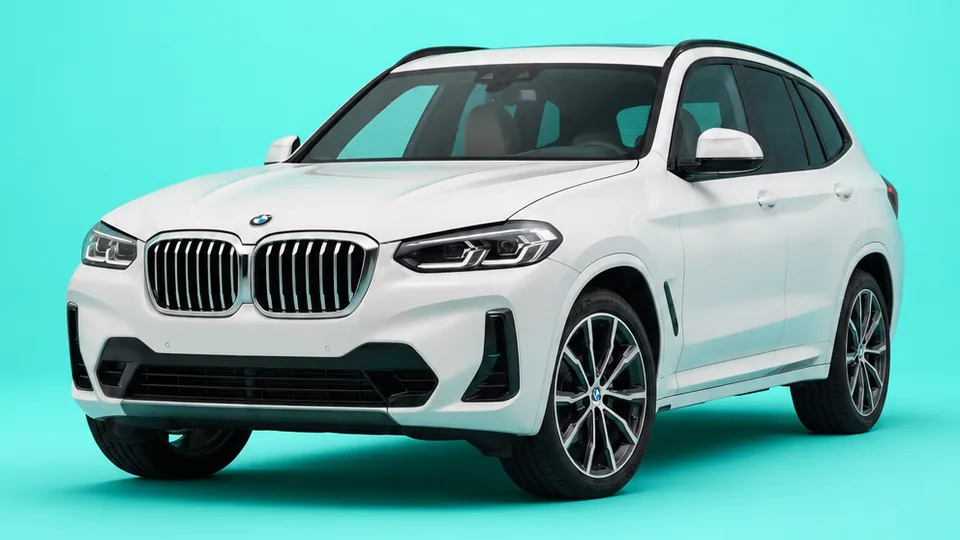
Competitor
$95k-$135k new, $38k-$90k used
X3 usually holds the sharper-handling drive and the longer six-cylinder petrol history on the M40i with a broader used-market supply at equivalent trim; XC60 most comparisons give it the stronger cabin-safety package (Volvo's widely cited IntelliSafe and Pilot Assist suite) and offers a current-generation PHEV (T8 Recharge) with meaningful electric-only range. Buyers who prioritise drive character and used-market breadth often favour X3; buyers who prioritise cabin safety and plug-in hybrid drivetrain typically favour XC60.

Competitor
$92k-$135k new, $38k-$88k used
Q5 generally holds the more engineered cabin finish with a broader drivetrain range (petrol, diesel, PHEV) on a quattro all-wheel-drive base; XC60 generally holds the stronger cabin-safety package and the more distinctive Scandinavian design language at equivalent trim, with lower purchase-price sensitivity at the B5 mainstream variant. Buyers who prioritise cabin execution and quattro heritage often favour Q5; buyers who prioritise cabin safety and a distinctive design language typically favour XC60.
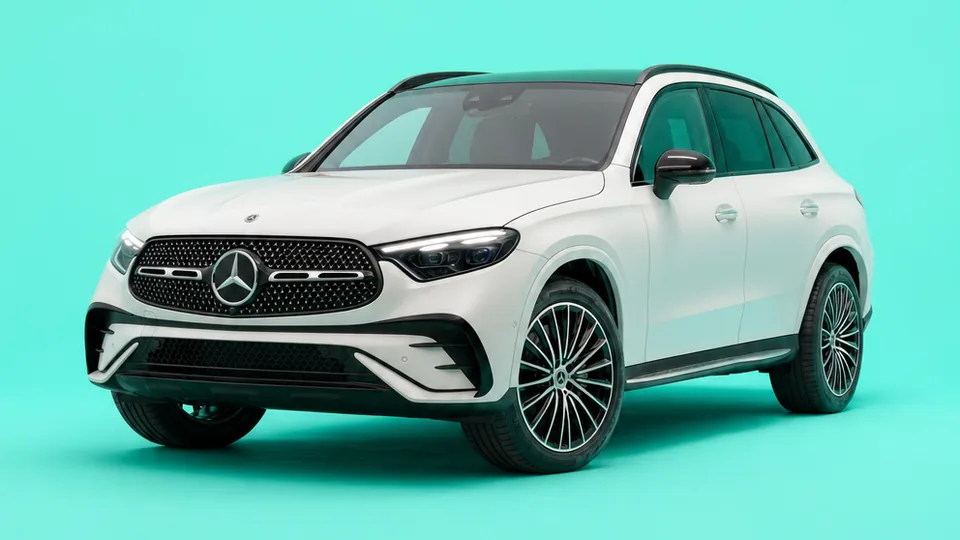
Competitor
$98k-$150k new, $45k-$95k used
GLC most owners find it the more settled long-distance tourer with the softer ride on the standard air-suspension option and a broader NZ dealer network; XC60 usually holds the stronger cabin-safety package and offers a plug-in hybrid (T8 Recharge) alongside the GLC 300e on the current lineup. Buyers who prioritise ride comfort and dealer-network density often favour GLC; buyers who prioritise cabin safety and plug-in drivetrain breadth typically favour XC60.
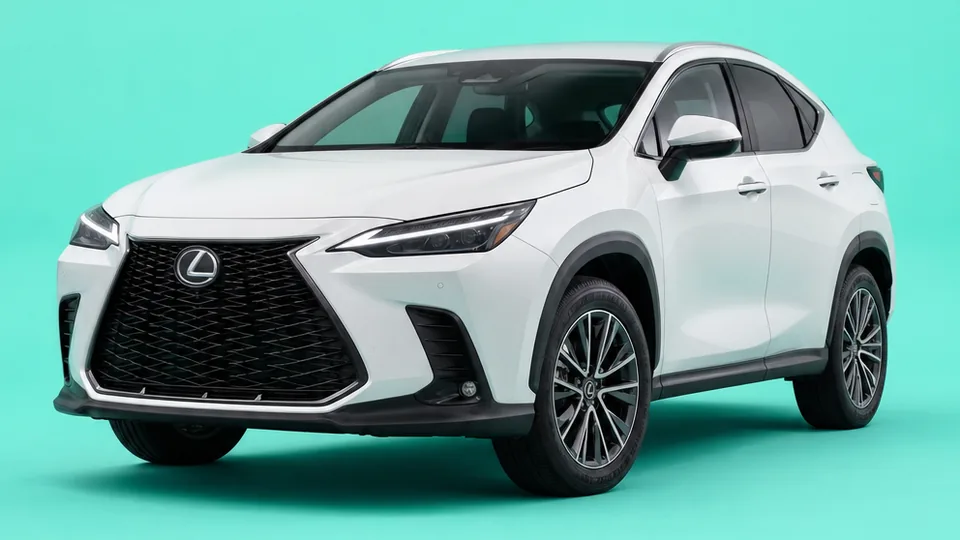
Competitor
$82k-$115k new, $26k-$82k used
NX most reviewers call it the lowest scheduled-servicing cost pattern in this comparison with strong hybrid and plug-in hybrid residuals into year five; XC60 most comparisons give it the stronger cabin-safety package and the broader European design language at equivalent trim, with a more distinctive Scandinavian identity and a deeper permanent all-wheel-drive heritage. Buyers who prioritise long-run service economics and hybrid residual strength often favour NX; buyers who prioritise cabin safety and European design identity typically favour XC60.
Worked example
Buyer profile
Auckland North Shore dual-income family in their early forties, two primary and intermediate-age children, clean credit file, both PAYE employees at Auckland CBD firms. Trading up from a 2019 Audi Q5 40 TFSI at 68,000 km because the household wanted to step into a Volvo specifically for the cabin-safety package widely cited as a Volvo brand pillar, and because the post-facelift XC60 B5 AWD had become available through a Takapuna Volvo dealer ex-lease return.
Scenario
Bought a 2022 XC60 B5 AWD Inscription Expression at $78,000 from the Volvo Cars North Shore dealer on Wairau Road, 36,000 km on the clock, still inside the five-year / 150,000 km Volvo Cars NZ factory warranty balance and carrying a transferable Volvo Selekt used-car warranty for the first twelve months of ownership. Traded the 2019 Audi Q5 40 TFSI at an agreed $32,000 and put a $10,000 cash deposit down from the household's term-deposit maturity pool. Financed the remaining $36,000 over 4 years at 8.0% indicative via a secured consumer car loan through an independent broker, with Volvo Car Financial Services NZ consulted for a comparison that the household chose not to take because the broker indicative sat a touch below on the day.
The outcome
In this scenario, cash-flow impact at settlement was modest, because the weekly finance cost of about $202 sat roughly $24 above the comparable weekly finance cost the household had been running on the outgoing 2019 Q5 at the same point in its loan. The switch from petrol Q5 40 TFSI to B5 mild-hybrid AWD typically trims real-world petrol spend modestly across 15,000 km a year of Auckland urban and motorway duty, partly offset by the step up in Volvo Cars NZ dealer scheduled-servicing cost per visit against the outgoing Audi NZ schedule on the 40 TFSI. The net running-cost difference on fuel, servicing, and insurance combined is marginal across the term on these assumptions.
On the balance sheet, this is a personal-name consumer loan with no GST or business-use deductibility in play, so the tax treatment is simpler than a chattel-mortgage purchase. A household considering the same XC60 under partial business use would generally be looking at a chattel mortgage structure and different GST and deductibility outcomes, with fringe-benefit tax exposure where the vehicle is also available for private use, all of which sit outside this scenario and remain subject to the accountant's confirmation on the specific business position.
Through year one, the loan balance sits modestly above the XC60's likely trade-in value on indicative NZ used-market trends, which is what typically happens on any low-deposit financed premium mid-size SUV in year one. By around month 13 to 15 on these assumptions, the amortisation curve typically catches the value-loss curve on a four-year-old post-facelift B5 AWD with a clean Volvo Cars NZ service book and a transferable Volvo Selekt warranty, and equity stays positive through the back half of the term. For this borrower's structure, an early sale inside year one would require topping up from savings; an early sale from month 14 onward typically does not.
At year four on these assumptions, the loan settles and the XC60 is unencumbered at around six years old and circa 96,000 km. On indicative NZ used-market trends, a comparable 2022 XC60 B5 AWD Inscription Expression at year four of ownership (year six of vehicle age) typically trades in the mid-to-high $40k range at 2030 values through Auckland dealer channels, which for this North Shore household supports a natural four-year replacement cycle into the next-generation XC60, a refreshed T8 Recharge, or the incoming Volvo EX60 EV with a similar trade-in position. The discipline that makes this pattern work is keeping the four-year loan to term rather than refinancing into a longer term mid-way, because on a post-facelift XC60 B5 AWD the residual value typically tracks close enough to the amortisation curve that refinancing rarely improves the position once early-repayment fees are accounted for.
Illustrative example. Not a promise of approval or rate. Your circumstances and the lender's own credit decision will determine your actual outcome.
Model-specific questions
On a $45,000 used XC60 B5 AWD at 7.8% indicative over 5 years with no deposit, the weekly repayment sits at roughly $210. A 2024 T8 Recharge Ultimate near $115,000 runs at about $527 a week on the same settings, and a 2019 pre-facelift T5 AWD R-Design near $44,000 runs at around $205 a week. A 20% deposit typically trims the weekly materially. Actual rates are confirmed by the lender; these figures are illustrative only.
For a NZ-new XC60 with a clean credit record and a cash deposit, indicative rates from mainstream lenders typically sit in the 7 to 9% range. Used XC60 stock typically lands in the 8 to 10.5% range, reflecting the asset risk to the lender. From what we see, business buyers using a chattel-mortgage structure often see indicative rates below equivalent consumer rates on the same applicant profile; the actual differential depends on the lender and the applicant. An independent broker comparison across multiple NZ lenders helps identify a well-placed approval.
Often yes, particularly on the B5 variants. XC60 has held steady NZ corporate-fleet share across the past decade, supported by Volvo's widely cited cabin-safety package and predictable servicing costs. For small and medium fleets, operating lease or chattel mortgage are both common structures, and the Volvo Cars NZ factory warranty covers most of a three or four-year lease term cleanly. Accountant input before signing has a reputation as essential, because the right structure depends on the business.
On a charging-disciplined duty cycle of short daily commutes under 60 km with nightly home charging, T8 Recharge running-cost economics sidestep most petrol spend and the reduced plug-in hybrid Road User Charge rate keeps per-km tax modest. On a mixed duty cycle of long-distance and short-commute, the B5 mild-hybrid petrol is simpler, cheaper to buy, and carries a longer residual-data history on NZ used-market observation. The T8 purchase premium is typically only recovered where charging discipline is consistent across the full loan term.
Yes. Volvo Car Financial Services NZ runs periodic campaigns on new XC60 stock, including secured consumer loans and balloon-structure products broadly parallel to BMW Select on X3 and Audi Financial Services Select on Q5. Campaigns are typically concentrated around quarter end and end of financial year on in-stock B5, B6, and T8 Recharge configurations. Outside those windows, independent broker pricing commonly matches or beats the captive on used XC60 purchases; a common pattern is to source a broker indicative rate first, which then gives Volvo Cars NZ a benchmark to better on the day.
Some NZ lenders include the XC60 T8 Recharge in their green or efficient-vehicle loan products at a modest discount to the standard secured-car rate, where the plug-in hybrid meets the lender's emissions or fuel-economy threshold. Availability varies by lender and the discount isn't universal. A broker confirms eligibility at application. The T8 Recharge also carries the reduced plug-in hybrid Road User Charge rate on all distance travelled, which sits separately from the finance decision but is commonly factored into the weekly running-cost budget.
Volvo safety is widely cited as a core brand pillar and the XC60 has consistently scored at the higher end of published independent crash-test programmes over the past decade, which some NZ corporate fleets factor into executive-vehicle policy on safety grounds. The lender’s finance decision itself is made on borrower credit and asset value rather than on vehicle safety rating directly, so the decision is no different in rate terms from an equivalent X3 or Q5 application. Pilot Assist and IntelliSafe are commonly flagged at inspection where windscreen work or ADAS calibration is undocumented.
Ex-lease XC60 stock returning off three-year corporate programmes typically lands in Volvo Cars NZ dealer inventory at around $55,000 to $85,000 depending on trim, kilometres, and generation (pre-facelift second-gen or post-facelift). Lenders are typically comfortable financing ex-lease XC60 stock at indicative rates close to NZ-new stock pricing because service-book continuity is strong and Volvo Selekt used-car warranty coverage is commonly transferable for the first twelve months of second ownership. A five-year term on ex-lease XC60 B5 is a typical structure.
The B5 and B6 mild-hybrid 48V systems sit on top of a 2.0 petrol or 2.0 diesel base and recover modest fuel at low speeds and stop-start duty; real-world savings on NZ urban driving are typically modest rather than transformative and don't replace the PHEV economics of the T8 Recharge. The mild-hybrid variants are priced closer to the equivalent X3 20i, Q5 40 TFSI, and GLC 300 than to an equivalent PHEV, which is the primary cost comparison on current NZ market data rather than the fuel saving per year.
Yes. The first-generation and early second-generation XC60 D4 and D5 diesel variants are subject to the standard diesel Road User Charges regime at $76 per 1,000 km at 2026 NZ rates, payable in advance through an NZTA RUC licence. The diesel XC60 variants have been progressively phased out on current NZ-new stock and are now concentrated in the 2013 to 2020 used market. The RUC budget line sits outside the loan repayment itself but is commonly factored into the weekly running-cost figure alongside fuel and insurance.
Yes, though JDM-import XC60 supply on the NZ market is thin compared with Japanese-import Toyota, Nissan, Honda, or Mazda volume. Most NZ lenders finance compliant Japanese-import XC60 examples once entry compliance is certified, typically on older first-generation D4 or T5 stock. Indicative rates on Japanese-import XC60 examples commonly sit slightly above NZ-new equivalents because residual data on import variants is thinner. Maximum term is commonly capped at four or five years rather than a longer seven-year term.
Polestar Engineered trim XC60 examples (primarily T8 Recharge Polestar Engineered) carry a modest price premium over Ultimate at equivalent kilometres and are financed on the same indicative rate basis as a standard Ultimate trim, because the lender prices the borrower and the asset value rather than the badge. Comprehensive insurance premiums are commonly loaded materially above the non-Polestar Engineered band on the same XC60, which is widely factored into the real weekly cost calculation. A Polestar Engineered with a documented fast-road or track history is commonly flagged to the insurer separately at application.
Factory Volvo Cars NZ dealer-installed accessories (roof-rack systems, tow-bar wiring, protective load-space kits) quoted and invoiced as part of the vehicle purchase at the dealer can commonly be financed alongside the XC60 on the same contract. A standalone aftermarket fit after delivery is harder to roll in, because the finance contract has already settled. Aftermarket modifications that require Low Volume Vehicle (LVV) certification (lowered suspension, engine remap on Polestar Engineered, non-standard exhaust) are typically financed alongside the vehicle only where certification is in place at settlement.
You might also want
Amount
$45,000 car loan
Close to a typical XC60 price.
See pageVolvo model
Volvo XC40 finance
Volvo's compact SUV and the most affordable route into the Volvo Recharge EV range.
See pageLoan type
Used car finance
Most XC60 finance in NZ is on used vehicles.
See pageBrand
All Volvo models
Finance across the Volvo range.
See pageOur finance partner compares multiple NZ lenders. Calculator inputs travel through to the application, and the partner returns a formal estimate after the lender's credit assessment.
Disclaimer
A car loan runs for years, and the repayment comes out of the same pay that covers everything else. This site exists to show you that weekly number before you sign anything. The payment that catches people out is the one that's fine on a good week and tight on a bad one.
Carfinance.org.nz receives a commission from Simplify when a visitor applies through this site and their application is approved. We refer every visitor to the same partner because they compare multiple New Zealand lenders on the applicant's behalf, so the referral is not driven by a sponsored deal. Simplify sets its own terms and fees and discloses them directly; anything you agree to happens on their side, not ours. Every figure shown on this site is a modelled estimate based on the inputs entered; the actual rate, fees, and repayments are set by the lender after assessing the applicant's circumstances and its own credit decision. Carfinance.org.nz is a calculator and information tool. We are not a lender, not a broker, and not a registered financial adviser. Any decision about whether a specific loan suits a specific situation is best made after talking with the lender, and for amounts that materially affect the household, with a registered financial adviser.
Connecting you with a trusted NZ finance partner
One moment while we hand you over securely. Nothing was collected on our side.