



Skip to content
Carfinance.org.nz
Chery logo Specialist brand

Chery car finance calculator

Published 23 April 2026 · Last reviewed 23 April 2026 · Disclaimer

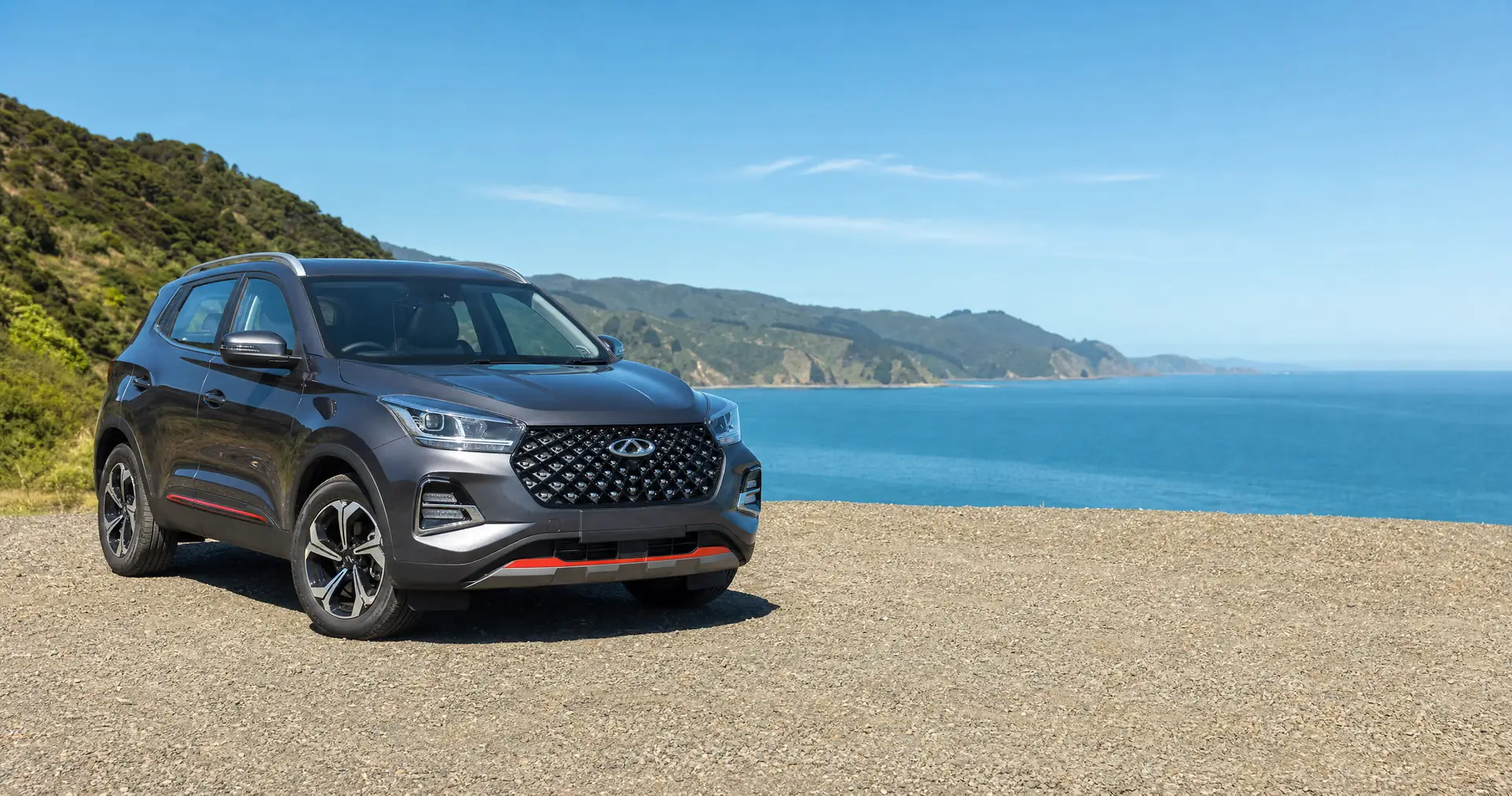
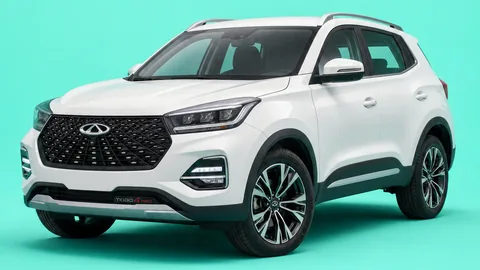
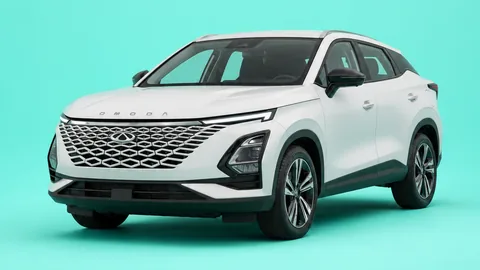
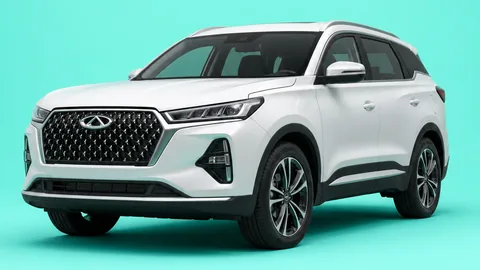
Among the faster-climbing Chinese nameplates on New Zealand finance books since the brand relaunched locally through an Ateco and Inchcape-affiliated distributor in 2023. The NZ lineup runs Tiggo 4 Pro and Tiggo 7 Pro on the petrol SUV side, Omoda 5 and Omoda E5 in the small-SUV bracket, and the Jaecoo J7 on the family-SUV end (Carjam, Chery NZ). Lenders work with the 7-year factory warranty as a residual signal while NZ resale data is still building. Loan sizes mostly run from about $22,000 on a used Tiggo 4 Pro to around $55,000 on a new Omoda E5 EV or loaded Jaecoo J7.

Your estimated repayment

Weekly

Disclaimer

$128/week

$256 /fortnight $554 /month
$28,000
$0
7.00% p.a.
5 years

We are not a finance company. Indicative only. Not a quote or offer of credit. Actual rates, fees, and repayments depend on your circumstances and the lender's decision.

Popular Chery models

The Chery range, by typical price.

Median used-car prices in NZ, 2026 market. Weekly figures assume 7% over 5 years with no deposit. Click a model for a dedicated calculator and FAQs.

Why this brand finances well

What lenders look for in a Chery.

  • Chery NZ offers a 7-year factory warranty on current NZ-new stock (check with the dealer for the specific vehicle and conditions), which typically exceeds the length of any standard loan and gives lenders a clear warranty umbrella across the term.
  • The Omoda E5 qualifies for most NZ lenders' EV loan tier on NZ-new applications, which typically sits 0.5 to 1.5 percentage points below the standard secured-car rate and meaningfully lowers the weekly cost.
  • Aggressive new-car pricing on the Tiggo 4 Pro and Omoda 5 keeps loan amounts in the affordable band (Tiggo 4 Pro from roughly $26,000 drive-away), which keeps affordability assessments simple and widens the bracket of buyers who qualify cleanly.
  • Chery's return through Inchcape-affiliated dealer infrastructure means service access in every major centre, so lenders do not face the thin-dealer-network concern that capped underwriting confidence on some earlier Chinese entrants.
  • Cross-shop overlap with BYD Atto 3, MG ZS, Haval Jolion, and GWM Haval H6 on the lender desk means Chery applications slot into a Chinese-brand secured-car category with broadly comparable pricing rather than being treated as an outlier.

Buyer notes

Where to get the best Chery rate.

Chery is a broker-first brand in every NZ finance scenario because there is no captive Chery finance arm running subvented rates locally. Get an independent broker quote on the specific Tiggo, Omoda, or Jaecoo variant before you accept any dealer finance offer, and confirm EV loan tier eligibility by name on the Omoda E5. On used Chery stock (thin so far), the broker gap usually widens further because most second-hand cars move through generalist yards.

No sign-up on our site. Our finance partner compares NZ lenders and returns a formal estimate after the lender's credit assessment.

New vs used

Financing a new Chery vs a used one.

Chery has only been back in the NZ market since 2023, so the used supply is thin and almost entirely NZ-new cars moving from first owners. The finance choice is less new-versus-used and more about which channel the car sits on and whether the Omoda E5 EV qualifies for a dedicated loan tier.

Path 1

New Chery (through Chery NZ dealer)

Broker first; dealer matches on drive-away price

  • Chery NZ does not operate a captive finance arm with subvented rates, so dealer finance offers come from partner lenders with a margin.
  • The Omoda E5 qualifies for the EV loan tier at most mainstream NZ lenders; confirm eligibility by name before committing.
  • The Chery NZ 7-year factory warranty covers the full length of a standard loan, which supports lender confidence on residual assumptions.
  • Stock and colour availability can be tight on Jaecoo J7 and Omoda E5; pre-approve the loan so the order can move without a financing delay.

Verdict

Price the loan with an independent broker on the specific Tiggo, Omoda, or Jaecoo before signing at the dealer. Focus the negotiation with the dealer on the drive-away price and any included extras, because the finance rate itself rarely has a structural Chery-specific edge.

Path 2

Used Chery

Verify factory warranty transfer, then broker

  • The 7-year Chery NZ warranty typically transfers to subsequent owners on NZ-new cars with a clean service history; a car serviced outside the Chery network may have warranty gaps.
  • Used supply is thin because the brand has only been back since 2023, so most second-hand stock is low-mileage and still under full factory warranty.
  • Some lenders apply a small age or km cap that will not bite on current used Chery stock but is worth confirming when the broker quotes.
  • Residual-value assumptions are conservative because NZ data is still forming, so keep the term to four years maximum to stay comfortably within lender loan-to-value comfort.

Verdict

Confirm the NZ-new provenance and remaining factory warranty before anchoring on a price. On generalist-yard Chery stock, expect the broker advantage to run 1.5 to 3 percentage points; on Chery franchise used stock, usually 1 to 2 percentage points.

Rule of thumb

On any Chery, start with a broker quote, confirm the 7-year warranty transfer on used stock, and hold the term to four years or less while NZ residual data matures.

Total cost of ownership

What a Chery really costs beyond the finance line.

Chery running costs in New Zealand are still forming a public record because the brand has only been back since 2023. Early indications from Chery NZ service schedules and independent workshop chatter put the running-cost profile in line with MG and Haval, slightly below Japanese-mainstream equivalents on servicing while tyres sit at the European sizing end of the spread.

  • Servicing and consumables

    Tiggo 4 Pro and Omoda 5 petrol at the lower end on a 12-month or 15,000 km service interval. Tiggo 7 Pro and Jaecoo J7 mid-range. Omoda E5 EV sits lowest because servicing is light (cabin filter, brake fluid, tyre rotation).

    $80 to $160 per month
  • Insurance (full cover)

    Tiggo 4 Pro $1,000 to $1,400. Omoda 5 and Tiggo 7 Pro $1,200 to $1,700. Jaecoo J7 $1,400 to $1,900. Omoda E5 often runs at the top of the range because repair and parts-supply data on Chinese EVs is still building in the NZ insurer market.

    $1,000 to $2,100 per year
  • Road User Charges (EV only)

    Applies to the Omoda E5 EV since April 2024. At 13,000 km a year that works out to about $988 before electricity. No RUC applies to any current Chery petrol variant.

    $76 per 1,000 km
  • Tyres

    Tiggo 4 Pro on 17-inch runs $800 to $1,100. Omoda 5 and Tiggo 7 Pro on 18-inch runs $1,100 to $1,400. Jaecoo J7 and Omoda E5 on 19-inch run $1,300 to $1,600. Typical replacement every 40,000 km on petrol, shorter on the EV.

    $800 to $1,600 per set
  • Fuel (petrol variants)

    Based on 13,000 to 15,000 km a year at NZ pump prices. Tiggo 4 Pro at the low end, Tiggo 7 Pro and Jaecoo J7 at the top of the band. Jaecoo J7 AWD slightly higher again.

    $1,800 to $3,000 per year
  • Home charging (Omoda E5 only)

    Based on 12,000 to 15,000 km a year on a typical NZ off-peak plan. A 10A garage socket handles most commuter patterns; a wall-box speeds overnight charging but is not a prerequisite.

    $450 to $800 per year

Worth knowing

Omoda 5 petrol vs Omoda E5 EV at a similar new-car price

An Omoda 5 petrol at around $34,000 drive-away and an Omoda E5 EV at around $50,000 sit at different loan amounts, but the E5 usually lands within $20 to $30 a week once the EV loan tier rate, lower fuel and servicing costs, and the RUC offset are factored in. Where home charging is available, the E5 typically makes the weekly math work. Without home charging, the petrol Omoda 5 remains the pragmatic choice.

Resale and equity

How Chery resale shapes your finance decision.

45 to 55%

indicative value retained, 3-year-old Tiggo 7 Pro

42 to 52%

indicative value retained, 3-year-old Omoda 5

50 to 55%

mainstream-brand market average

Chery residuals in New Zealand are still early-stage because NZ-new supply only began in 2023, so the bands above are indicative rather than observed over a full three-year cohort. The practical reference points come from sibling Chinese brands already a year or two deeper into the NZ market: MG ZS, Haval Jolion, and GWM Haval H6 have settled into residuals modestly below the Japanese-mainstream average, and early Chery movement looks broadly consistent with that range. The 7-year Chery NZ factory warranty helps support residuals on subsequent sale because a prospective used buyer in year three is still looking at four remaining years of factory cover.

For finance, the practical implication is to hold the term short while data matures. A four-year term on current NZ-new Chery stock keeps the loan balance tracking the residual curve comfortably, and the warranty umbrella still runs three years past loan-end. A five-year term is defensible on a Tiggo 7 Pro or Jaecoo J7 if a reasonable deposit sits in front of it, but six or seven-year terms on Chery do not yet have the residual data to justify them in 2026.

Keep Chery loan terms to four years as the default in 2026, with five years reserved for Tiggo 7 Pro and Jaecoo J7 buyers putting 20% or more down. The seven-year factory warranty helps resale at year three or four, but the NZ used-market supply is still thin, which makes longer terms a bet on data that does not yet exist.

Things to avoid

Chery finance traps we flag honestly.

An opinionated list. The commercial side of this site has no incentive to tell you these things, so we do.

Stretching a Chery loan to seven years while NZ residual data is still forming

Seven-year terms drop the weekly but push the loan balance well past any credible residual estimate on a brand only three years into its NZ relaunch. A lender who approves the term is taking a forward bet on data that does not yet exist. Four or five years is the prudent ceiling in 2026.

Assuming the 7-year warranty covers everything a lender worries about

The Chery NZ warranty supports resale but does not cover accident repair timelines, parts backorder delays, or insurance write-off patterns. Lenders price residual risk across the whole ownership picture, so the warranty is one signal, not the whole case. Confirm scope and transfer terms before assuming it offsets a long term.

Rolling Omoda E5 home-charger install into the car loan

A home wall-box install runs $2,000 to $4,500 depending on switchboard work. Rolling that into a five-year car loan at an EV-tier rate still adds several hundred dollars in interest, and several NZ electricity retailers offer interest-free or low-rate EV charger finance worth comparing before the dealer rolls the cost in.

Dealer add-ons bundled into the loan on a sharp new-car deal

Paint protection, fabric protection, extended warranty upsells, and finance-desk aftercare packs often appear at the Chery signing table. Each is a dealer margin line, not a lender requirement. Rolling $2,500 to $4,000 of add-ons into a $30,000 loan can add $500 to $900 in interest; decline them or buy the cover separately.

Treating early 2023 NZ-new Chery residuals as a settled number

Early NZ-new Tiggo 4 Pro and Omoda 5 examples from 2023 are now returning to the used market with limited comparable sales history. Any valuation or trade-in offer is working from a thin dataset that could shift either way as 2026 and 2027 supply builds. Expect conservative trade-in offers and plan accordingly.

Drivetrain economics

Hybrid vs petrol vs EV on a Chery.

Chery's current NZ drivetrain mix is predominantly petrol across Tiggo 4 Pro, Tiggo 7 Pro, Omoda 5, and Jaecoo J7, with the Omoda E5 providing the battery-electric option. A plug-in hybrid Jaecoo J7 has been signalled for future NZ release but is not the mainstream NZ specification in 2026. The drivetrain choice in finance terms is mostly petrol versus EV on the Omoda side of the range.

Petrol (Tiggo 4 Pro, Tiggo 7 Pro, Omoda 5, Jaecoo J7)

Lower buy-in, no RUC, standard secured-car rate

  • Current NZ Chery petrol stock uses 1.5-litre turbo (Tiggo 4 Pro, Omoda 5) or 1.6-litre turbo (Tiggo 7 Pro, Jaecoo J7) engines paired with dual-clutch or CVT transmissions.
  • Financed at the standard secured used-car rate with no drivetrain premium or discount.
  • No Road User Charges apply on petrol variants; fuel is the only per-km variable cost.
  • Best total-cost choice for buyers without home-charging access or for annual distances below about 10,000 km a year.

Electric (Omoda E5)

EV loan tier plus low running costs, subject to RUC

  • Most NZ lenders apply the EV loan tier to the Omoda E5 on NZ-new applications, typically 0.5 to 1.5 percentage points below the equivalent petrol secured-car rate.
  • Road User Charges of $76 per 1,000 km apply since April 2024, which narrows the total-cost advantage on low annual distances.
  • Home charging on an off-peak rate runs around 4 to 6 cents per km, materially below equivalent petrol Omoda 5 running costs.
  • The 7-year factory warranty runs through the typical loan, and battery-specific warranty coverage should be confirmed with Chery NZ at the dealer (terms evolve as the brand matures in NZ).

Break-even heuristic

The practical rule on the Chery lineup in 2026 is simple. If you drive over 10,000 km a year and can charge at home overnight, the Omoda E5 works across a five-year loan despite the higher sticker. Below that distance, or without a home-charging setup, the petrol Omoda 5 or Tiggo 4 Pro is the rational choice and the weekly math is considerably simpler.

Case study

Worked example: financing a new Chery Omoda 5 petrol

The buyer

Administration manager in Tauranga, age 36, clean credit, $78,000 annual income, replacing an ageing 2012 Nissan Tiida with 210,000 km.

The scenario

Purchasing a new Chery Omoda 5 BX petrol from a Chery NZ dealer for $34,000 drive-away. Trade-in value on the Tiida: $3,500. Standard secured-car loan through an independent broker because there is no captive Chery finance arm.

The outcome

Monthly cash-flow impact is roughly $681 across the four-year term.

The 7-year Chery NZ factory warranty covers the full length of the loan and runs three years past loan-end, which removes most of the mechanical-surprise risk from the weekly cost picture.

Running costs on the Omoda 5 petrol run materially below the old Tiida in real terms because the newer drivetrain is more fuel-efficient despite being a larger car, and the scheduled servicing is covered to a known price through the Chery NZ dealer network.

At year 4 the Omoda 5 is expected to sit around $17,000 to $20,000 on the NZ used market based on early indicative residuals for the nameplate, though the band is wider than it would be on a Japanese-mainstream brand with a decade of NZ residual history. The loan is fully paid off at that point, so the residual uncertainty affects a future trade-in rather than a refinancing decision.

Keeping the term at four years (rather than stretching to five or six) means the loan balance tracks conservatively ahead of any residual-value scenario while Chery's NZ data matures through 2027 and 2028.

Illustrative example. Not a promise of approval or rate. Your circumstances and the lender's own credit decision will determine your actual outcome.

Affordability check

What can I afford on my income?

A rough sanity check. We assume repayments should sit under 10% of your take-home pay, with a 5-year term at 7%.

Not an affordability assessment. Real lender decisions consider all your debts, expenses, and history.

$70,000
$20k $250k

Indicative safe loan

$30,000

At ~$135/week

Stretch maximum

$45,000

Only with no other debts

Apply this to the calculator

Common questions

Chery finance FAQ.

Who distributes Chery in New Zealand, and does Chery offer its own finance here?

Chery relaunched in New Zealand in 2023 through an Ateco and Inchcape-affiliated distributor structure and has built dealer coverage across the main centres and several provincial ones since. Chery does not operate a captive finance arm in New Zealand, so every Chery loan is arranged through an independent broker or bank. Some Chery dealers refer customers to a preferred lender panel on a commission basis; that is a referral relationship, not a subvented manufacturer rate.

Does the Chery Omoda E5 qualify for the EV loan tier at NZ lenders?

At most mainstream NZ secured-car lenders, yes, on NZ-new Omoda E5 applications. The EV tier typically sits 0.5 to 1.5 percentage points below the standard secured-car rate. Confirm eligibility by name when the broker quotes, because a handful of lenders apply minimum loan amounts or age or km caps that can exclude specific variants or used examples.

How does Chery New Zealand's 7-year warranty work, and does it transfer to a used buyer?

Chery NZ offers a 7-year factory warranty on current NZ-new stock (check with the dealer for the specific vehicle, mileage cap, and any battery-specific terms on the Omoda E5). The warranty typically transfers to subsequent NZ owners provided the vehicle has been serviced to Chery NZ schedule. It does not apply to parallel-imported Chinese-market Chery vehicles, and a car serviced outside the Chery network may have gaps.

How much deposit is typical when financing a Chery in New Zealand?

10 to 20% is the common range on a new NZ-new Chery, in line with mainstream secured-car finance. On a $34,000 Omoda 5 that is $3,400 to $6,800. Some lenders ask for the higher end on longer terms because Chery residual data in NZ is still forming. A larger deposit also typically unlocks a sharper rate and protects you from negative equity in the first two years.

Can I finance a parallel-imported Chinese-market Chery rather than an NZ-new one?

Most NZ lenders will fund compliant parallel-imported Chery vehicles provided they have cleared NZ entry compliance, but expect a rate 0.5 to 1.5 percentage points above an NZ-new equivalent. The Chery NZ 7-year warranty does not apply to parallel imports, software and parts support may be narrower, and lenders price that residual uncertainty in. Keep the term to three or four years maximum.

How long a term should I finance a Chery for?

Four years is the sensible default on current NZ-new Chery stock in 2026 because NZ residual-value data is still forming. Five years is defensible on Tiggo 7 Pro or Jaecoo J7 buyers putting 20% or more down as a deposit. Six or seven-year terms are rarely prudent on Chery because the used-market supply is thin and forward residuals do not yet have the evidence base that Toyota or Mazda enjoy.

How do Chery running costs compare to a Toyota RAV4 or a Mazda CX-5?

Servicing on Chery petrol stock runs broadly in line with Toyota and Mazda on 15,000 km intervals through the Chery NZ dealer network, and the 7-year warranty reduces out-of-warranty exposure across the loan. Insurance typically sits $150 to $400 a year above a Toyota equivalent because repair and parts-supply data on Chinese brands is still building in the NZ insurer market. Total running cost difference is usually modest.

Can I roll dealer add-ons and extended warranty into my Chery loan?

Lenders will fund dealer add-ons as part of the loan, but every extra dollar attracts interest across the term. On a $30,000 Chery loan, rolling $3,000 of paint protection, extended warranty, and finance-desk aftercare adds roughly $500 to $900 in interest over five years. Chery already offers a 7-year factory warranty, so an extended warranty add-on is usually unnecessary within the original warranty window.

What happens if I trade my Chery in halfway through the loan?

Where the trade-in value exceeds the outstanding loan balance (positive equity), the new dealer pays out the old loan and the surplus goes toward the next car. Where it falls short (negative equity), the shortfall gets rolled into the new loan. Because Chery NZ residual data is still forming, trade-in offers sit conservative and negative equity is more likely on Chery than on Toyota or Mazda on longer terms. Keeping the term to four years reduces that risk materially.

What is the typical total cost of ownership on a financed Chery Omoda 5 over four years?

For a $34,000 NZ-new Omoda 5 on a four-year loan around 8.5%, finance costs total roughly $32,600 (principal plus interest). Add insurance (around $5,400), servicing (around $3,200), tyres (around $1,200), and fuel (around $9,200 at 14,000 km a year) for an indicative all-in of roughly $52,000 over four years. Figures depend on km driven, driving style, and claims history.

About this article
Published
23 April 2026
Last reviewed
23 April 2026

Methodology

Repayment figures on this page are calculated live from the inputs entered into the calculator using the standard amortised-loan formula. Indicative rates are drawn from observing publicly-advertised NZ secured-car and EV loan pricing across mainstream lenders in the twelve months before the last review date. Chery price bands are observed from recent TradeMe and AutoTrader listings alongside Chery NZ dealer pricing for new stock. Running-cost figures are cross-referenced against EECA Gen Less, AA New Zealand, and NZTA Road User Charges guidance. We update the page annually, or sooner if Chery NZ adjusts pricing, adds a nameplate, or materially changes the factory warranty position.

Sources

Apply for Chery finance.

Our finance partner compares NZ lenders and returns a formal estimate after the lender's credit assessment. Calculator inputs travel through to the application so nothing gets re-typed.

All brands

Disclaimer

A car loan is a commitment that runs for years, and repayments come out of the same pay cheque as everything else. Before committing, it is worth modelling the weekly and monthly cost against the household budget, which is what this site is built to help with. Borrowing at a level that stays comfortable on a bad week, not a good one, is widely regarded as the safer frame.

Carfinance.org.nz earns a commission from a partner brand when a visitor applies through this site and their application is approved. That commission is paid by the partner, not the applicant, and it does not influence the rate the lender offers. We refer every visitor to the same partner because they compare multiple New Zealand lenders on the applicant's behalf, so the recommendation is not driven by a sponsored deal. Every figure shown on this site is a modelled estimate based on the inputs entered; the actual rate, fees, and repayments are set by the lender after assessing the applicant's circumstances and own credit decision. Carfinance.org.nz is a calculator and information tool. We are not a lender, not a broker, and not a registered financial adviser. Any decision about whether a specific loan suits a specific situation is best made after talking with the lender, and for amounts that materially affect the household, with a registered financial adviser.