
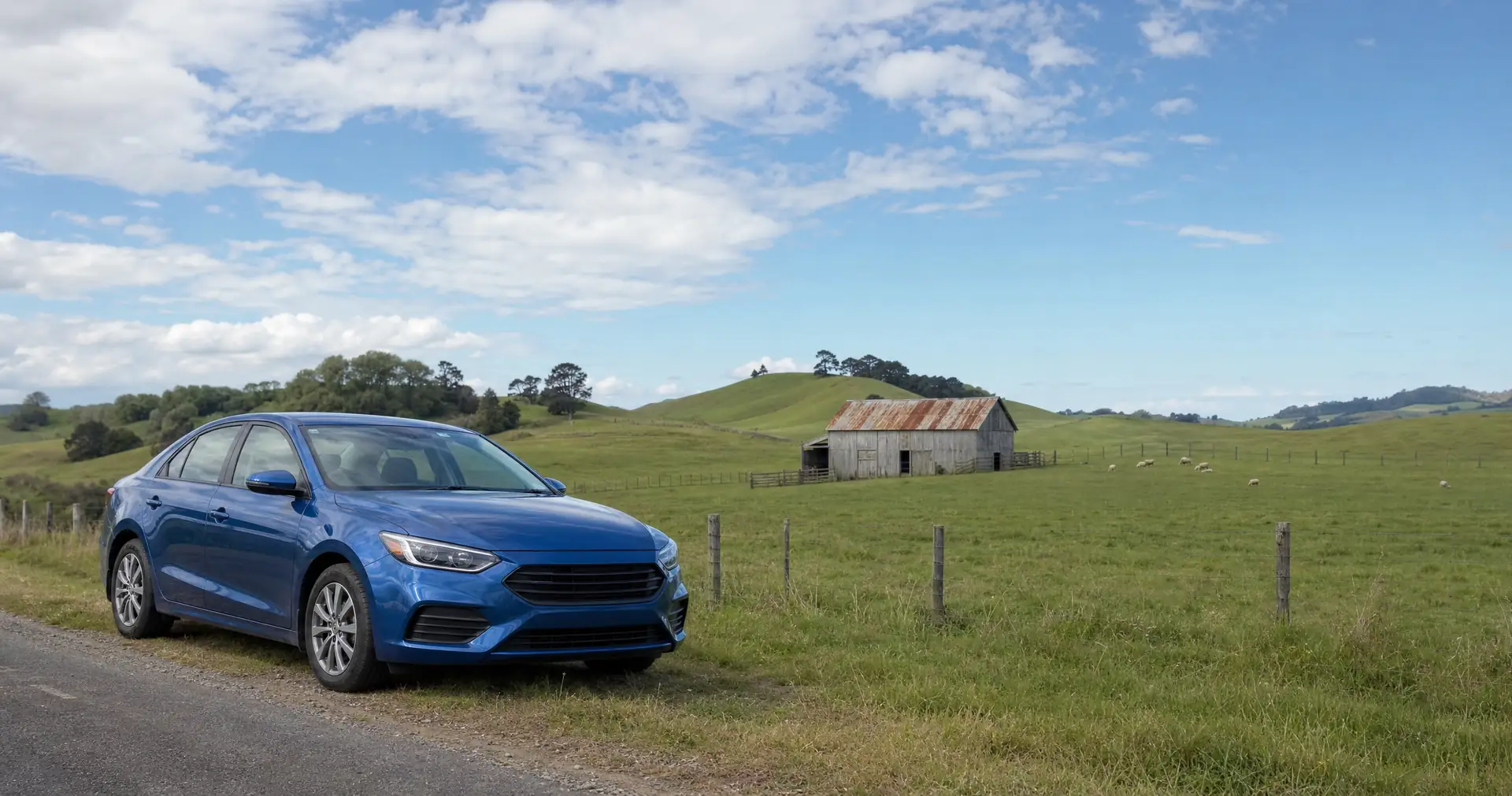
Gisborne at a glance
Gisborne is an isolated East Coast city, a long drive from any other centre, and its horticulture and forestry economy shapes how car finance looks locally.
The Tairāwhiti economy runs on citrus, grapes and vegetables grown on the Poverty Bay flats, and on forestry, with logs trucked in for export through the port. Both are highly seasonal, drawing seasonal and RSE labour through the harvest and the cutting cycle, so a large share of local income is variable rather than a flat fortnightly wage. A strong Māori economy and community sit alongside the growers, packhouses and logging crews, and regional incomes run below the national average.
Because a lender assesses a seasonal orchard worker differently from a self-employed grower or a salaried nurse, which one you're matters more than the car you've picked. Distance does the rest. The nearest large used market is three hours away, and that shows up in local prices.
Why Gisborne incomes shape the finance
Gisborne income moves with the season, so a lender is really trying to find the flat part of that curve. Gisborne carries an unusually seasonal and self-employed income base for a city its size, and each income type changes the car-finance conversation in a specific way.
Seasonal horticulture and forestry workers
The citrus, grape and vegetable harvests and the forestry cutting cycle mean many Gisborne workers earn a variable income that peaks in season and quietens between times. Lenders typically average that income over a longer window and ask about the low-season months, so a run of payslips from a busy picking or logging stretch alone rarely tells the full story, and many seasonal buyers keep to a modest used car to hold the repayment down. See the related loan type.
Growers and forestry contractors (self-employed)
Orchardists, grape growers and forestry contractors around Tairāwhiti often draw self-employed income assessed on IR3 returns rather than payslips, and that income can be lumpy across the season. Where a ute, quad or forestry vehicle is a working business asset, a chattel mortgage frequently fits better than a consumer loan, which is a question worth settling with an accountant before applying. See the related loan type.
Salaried health, education and council workers
Gisborne Hospital, the schools and Gisborne District Council give the city a base of PAYE workers on steady payslips. Consistent fortnightly income is straightforward to evidence, which makes these the simplest files a lender sees in an economy otherwise full of seasonal and self-employed earnings.
First-time and younger buyers
With regional incomes below the national average and a mostly mid-priced used-car market, many first-time Gisborne buyers come to finance with a thin credit file. Lenders fall back on steady part-time income, a deposit or a guarantor when there's no history to read. See the related loan type.
Typical loan sizes in Gisborne
Gisborne's below-average regional incomes and mostly mid-priced used-car market mean a lot of local finance sits on sensible used vehicles in roughly the $12,000 to $22,000 band rather than the top end, with growers and contractors financing a work ute reaching higher. A packhouse wage and a grower's season land at opposite ends of it.
| Buyer | Typical loan |
|---|---|
| Seasonal and first-car buyers | $8,000 to $15,000 |
| Salaried households | $15,000 to $24,000 |
| Growers and contractors (work ute) | $24,000 and up |
The calculator opens at $18,000. On a seasonal income the term does more for the weekly figure than the amount does, which the sliders make obvious.
Keeping the weekly cost comfortable
Household incomes in the Gisborne region sit below the national median on Stats NZ regional figures, and the seasonal, self-employed base means income can arrive lumpy rather than as a steady fortnightly wage, which is part of why the local used-car market skews toward mid-priced vehicles and why a deposit or a shorter term matters for keeping the weekly repayment comfortable through the quieter months. What counts is your own verified income, not what the region earns on average.
Gisborne is a long drive from any other centre, with Napier over the Wharerata hills and Ōpōtiki across the Waioeka Gorge both a few hours away, so a reliable, capable vehicle matters more here than in a big flat city. Much of the district is rural, and metalled orchard tracks and forestry roads are hard on tyres and suspension, so servicing and running costs sit higher and are worth folding into the budget alongside the loan. The distance to other centres also adds fuel cost to any trip out of town.
Dealers and private sales in Gisborne
Gisborne has a modest local dealer footprint for a city its size, so the choice of used stock in town is narrower than in a bigger centre, and a lot of local finance is written on private sales through TradeMe as well. Buyers chasing wider choice or keener prices often look over the hills to Hawke's Bay, to Napier and Hastings dealers, and fold the drive back into the decision.
The finance mechanics don't change east of the ranges. A search of the register comes first, and any loan on the trade-in gets cleared before the keys move. What changes is choice, because Gisborne yards are small and a lot of buying happens online from Hastings or Napier.